Still Not Seeing The Right Packaging Solution? Talk to Our Boss.
If you’ve reviewed our website or spoken with sales and still don’t see a clear path, send your request here. Your message goes directly to our General Manager for an executive review of feasibility, cost, and lead time. You’ll get a clear next step—what we can do, what we need from you, and the fastest route to a quote.
Built for packaging managers, procurement, and packaging engineers. Specify size, quantity, and finish to receive moq, lead time, and spec guidance for us/eu programs.
Quote-ready customization: diameter, height, wall thickness, inserts, liners, and closures
Cream is personal. People rub it on their face, their hands, their baby’s skin. So the box can’t feel like an afterthought. It has to protect the product, look legit, and make buyers feel good about paying for it.
That’s where a packaging partner matters. As a Top Custom Paper Tube Boxes Manufacturer, we support custom runs, bulk wholesale, and OEM/ODM for retailers, brand owners, cross-border sellers, distributors, agencies, and growing startups. We also run a modern purification workshop plus a 12,300m² warehouse, with daily output that can handle real volume (not just a few samples).
On a shelf (or an Amazon search page), your cream competes with a lot of “pretty.” Structure helps you win that fight.
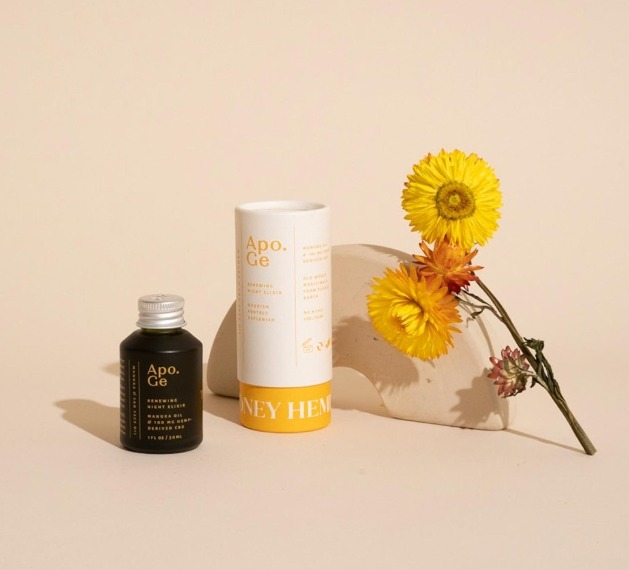
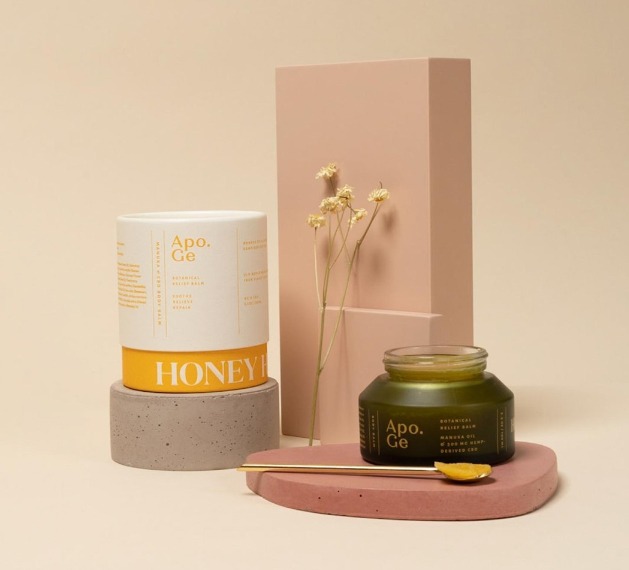
If you sell premium skincare, a paper tube can feel more gift-like than a basic folding carton. It stands taller, feels thicker in hand, and reads “keepsake,” not “cheap shipper.” For example, this cosmetics tube packaging style works well for night creams, body butters, and balm jars because the form itself signals quality.
If you need more surface area for brand story, ingredient callouts, or multi-language labeling, double-side print helps you pack info without cluttering the front. A format like double sides printed paper tube packaging gives you room for retail copy, QR instructions, and compliance text while keeping the hero panel clean.
Real-world scenario:
Cross-border seller ships a face cream to multiple regions. Front panel stays simple (brand + benefit), inside/outside print handles the rest (how to use, warnings, barcode, batch/lot). Your PDP looks premium. Your logistics stays tidy.
Window packaging makes information “visual”
Sometimes the fastest way to build trust is to show the product. A window turns “claims” into “proof.” Buyers can see the jar color, the cap finish, or the exact shade of a balm.
Window styles also help in gift sets. Think: a cream + roller + spatula. People want to see what they’re buying, especially when the set sits near checkout.
A good reference point is packaging with a clear display panel and a carry detail, like paper tube packaging with clear window and handle. Translate that idea to skincare: window for visibility, pull-tab or ribbon for easy open, and a clean front panel for branding.
Tip that saves headaches: keep the window modest. Big windows look cool, but they can weaken crush strength if you don’t reinforce the body.
Use inserts to turn “breakage risk” into “unboxing experience”
Cream often ships in glass jars, and that’s where returns start. If your product arrives chipped, leaking, or messy, the customer won’t “wait for a replacement.” They’ll leave a one-star review and move on.
A custom insert solves two problems at once:
Stability: it locks the jar in place, cutting movement during drops and vibration.
Experience: it makes opening feel intentional—like the product was meant to sit there.
If you do kits or heavier items, consider structures with stronger closures. A tinplate-style lid approach (common in food gifting) can inspire a “tight seal” feel for premium skincare sets. See how this style uses a sturdier top concept: metal cover kraft paper tube boxes.
Operational angle (the stuff buyers care about):
Fewer “DOA” complaints
Cleaner FBA prep
Less void fill and fewer damaged units in transit
Lower CS workload from shipping claims
Use foil stamping or spot UV to make your logo pop
You don’t need to print louder. You need to print smarter.
Foil and spot UV work because they create contrast. The customer’s eye lands on the logo first. That’s shelf impact without turning the box into a billboard.
A clean, high-end look often comes from:
matte base + glossy highlight (spot UV)
soft-touch feel + foil logo
minimal color + texture
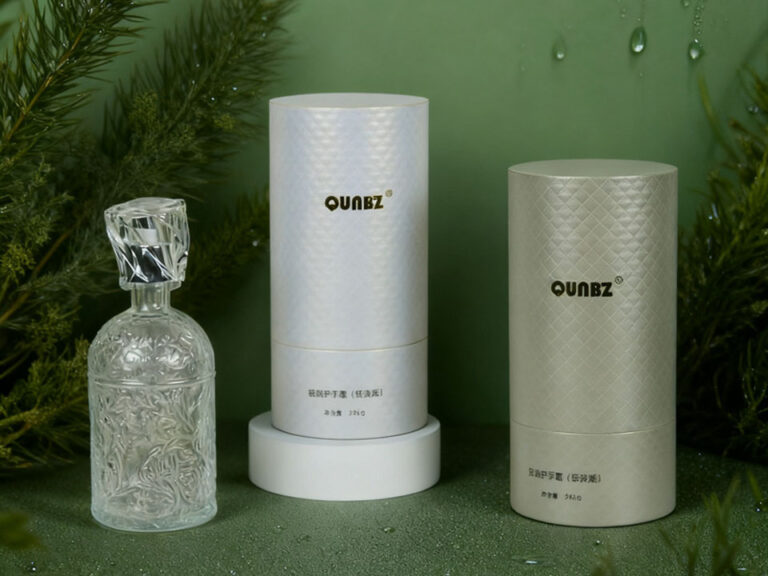
If you want a good “premium but controlled” vibe, look at a style like matt white paper tube packaging and imagine the same finish language for skincare: quiet, clean, and expensive-looking.
Real-world scenario:
Brand owner launches a retinol cream. They keep the tube matte, add a small foil mark, and use spot UV only on one icon. Result: high-end feel, easy brand recall, and photos that look sharp in influencer content.
When you choose finishing, focus on “process control”
Fancy finishes don’t help if they’re inconsistent.
If you’ve ever had packaging where the logo shifts, the gloss looks patchy, or the foil cracks, you know what I mean. Talk to your manufacturer about:
registration accuracy (foil/UV alignment)
scuff resistance for shipping
color consistency across batches (CMYK control or Pantone matching)
how the finish behaves on curved surfaces (paper tubes need steady wrap + tight tolerance)
This is where bulk buyers and wholesalers get picky, and they should. One bad batch can mess up a whole channel rollout.
“Added-value packaging” must look good and work better
Pretty packaging sells the first unit. Useful packaging sells the second.
For cream, “useful” usually means:
easy open (no tearing, no “fight the lid”)
easy store (stands well, doesn’t crush in a bathroom cabinet)
easy reuse (customers keep it, which keeps your brand around longer)
You can also build value with small functional touches:
a built-in spatula slot in the insert
a QR that opens a “how to layer” routine
tamper cues that reassure first-time buyers
Real-world scenario:
Spa / hotel supplier wants a clean look but fast restocking. A tube package stacks better, looks premium in the lobby shop, and protects jars in transit. Staff loves it because it stays neat on shelves.
Add anti-counterfeit and traceability so trust is measurable
If your cream sells well, copies show up. It’s not a “maybe.” It’s a “when.”
You don’t have to go overboard. Start with packaging that supports simple verification:
tamper-evident seals
serialized labels
QR codes tied to batch/lot
scratch-to-reveal codes (common in high-risk categories)
If you sell in channels where counterfeits are common (marketplaces, distributors, cross-border), a tube format also helps because it’s harder to replicate well at low effort.
Safety features don’t just block fakes. They also cut operational risk
Anti-counterfeit isn’t only about stopping bad actors. It also helps you:
manage distributor disputes (“which batch was that?”)
reduce chargebacks from “item not as described”
protect brand reputation in reviews
improve recall readiness if you ever need it
That’s why bigger brands treat packaging as part of their risk plan, not just marketing.
Write sustainability like a real plan, not a slogan
Buyers have heard the buzzwords. They want specifics.
A better approach: make sustainability feel practical.
Use paper-based structures that customers can understand
Reduce mixed materials where possible
Keep printing clean and readable (eco doesn’t mean “ugly”)
Design for reuse (tubes often get kept)
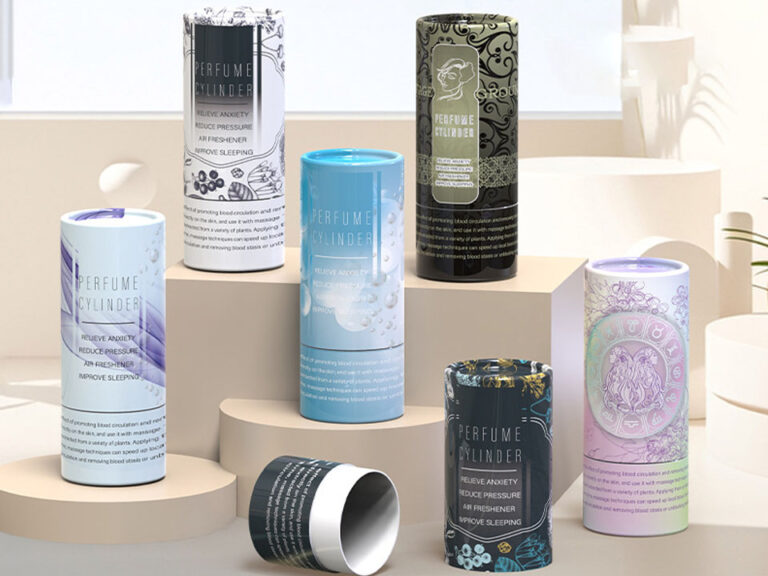
If you want a simple, clear message, lean into sturdy paper tube formats and clean branding. A product like eco-friendly paper tube cylinder packaging shows how a paper cylinder can carry “green” positioning while staying strong and retail-ready.
And if you’re scaling, sustainability also means your supplier can handle volume without chaos. Our production setup supports bulk wholesale and OEM/ODM needs, with warehouse capacity and daily output built for consistent supply.
Give a “materials roadmap” buyers can understand
If you sell to retailers, distributors, or agencies, they’ll ask, “What’s next?” A simple roadmap keeps you credible:
Now: paper tube + optimized print + right insert = strong protection and premium feel
Next: reduce plastic where possible (like window materials), improve recyclability, simplify components
Later: explore newer coatings or barrier layers if your product needs extra moisture/oil protection
You don’t need to promise miracles. You just need a clear direction that matches your category and your channel.
OEM/ODM workflow, bulk lead planning, storage capacity
Agencies, large brands, fast-growing sellers
Stable supply, fewer stock-outs
If you want a fast start, pick one “hero upgrade” (structure, insert, or finish) and one “risk reducer” (traceability or stronger protection). That combo usually moves the needle without making your packaging overly complex.