Still Not Seeing The Right Packaging Solution? Talk to Our Boss.
If you’ve reviewed our website or spoken with sales and still don’t see a clear path, send your request here. Your message goes directly to our General Manager for an executive review of feasibility, cost, and lead time. You’ll get a clear next step—what we can do, what we need from you, and the fastest route to a quote.
Built for packaging managers, procurement, and packaging engineers. Specify size, quantity, and finish to receive moq, lead time, and spec guidance for us/eu programs.
Quote-ready customization: diameter, height, wall thickness, inserts, liners, and closures
Standard vs Custom Tube Sizes: Spec Tables to Reduce Tooling and MOQ
Tooling is expensive. I’ve watched teams burn weeks arguing over a 2 mm diameter change, then act shocked when the quote comes back with new mandrels, new cap tooling, longer lead times, and a MOQ that magically jumped from “starter-friendly” to “call your bank.” Do you want a tube, or do you want a hobby?
If you’re building packaging with paper tubes, the fastest way to hit launch is to design around standard paper tube sizes first, not your mood board. Standard parts exist for a reason: factories already have the winding mandrels, cutting setups, and closure families dialed in, which means less risk, fewer surprises, and—this is the part procurement people care about—less cash trapped in cartons.
And yes, I’m going to say the quiet part out loud: “free tooling” often isn’t free. It’s hidden in price breaks, inflated MOQs, or a vendor lock where your “custom” size only runs smoothly on their line.
The search intent hiding inside the H1
Your title screams commercial + informational intent.
People searching this want:
A paper tube size chart they can hand to design and sourcing.
A hard comparison of standard vs custom tube sizes (lead time, MOQ, tooling exposure).
A way to pick stock paper tube dimensions that still look premium on shelf.
They’re not browsing for vibes. They’re trying to avoid a tooling bill and a missed launch date.
The hard truth about “custom” in paper tubes
Custom is not one thing. It’s a stack of dependencies:
Custom diameter can trigger new winding mandrels and QA gauges.
Custom height is often easy until you demand tight tolerances and fancy edge finishes.
Custom closures (especially injection-molded plastic caps) is where money disappears fast.
Custom decoration (embossing, hot foil, textured wraps) is usually manageable—but it doesn’t rescue a bad core size choice.
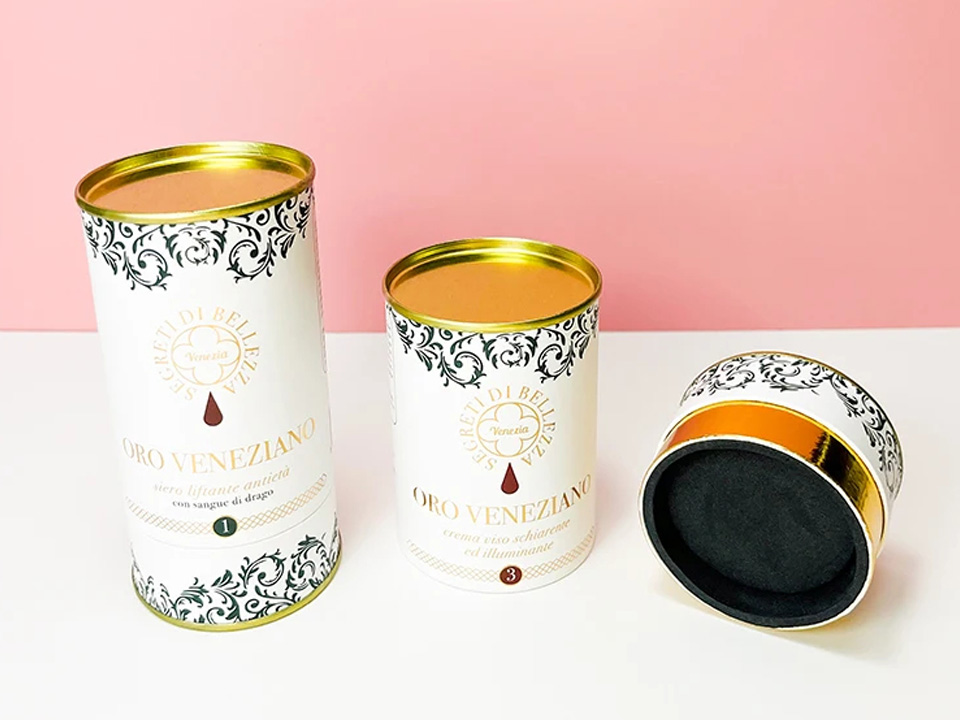
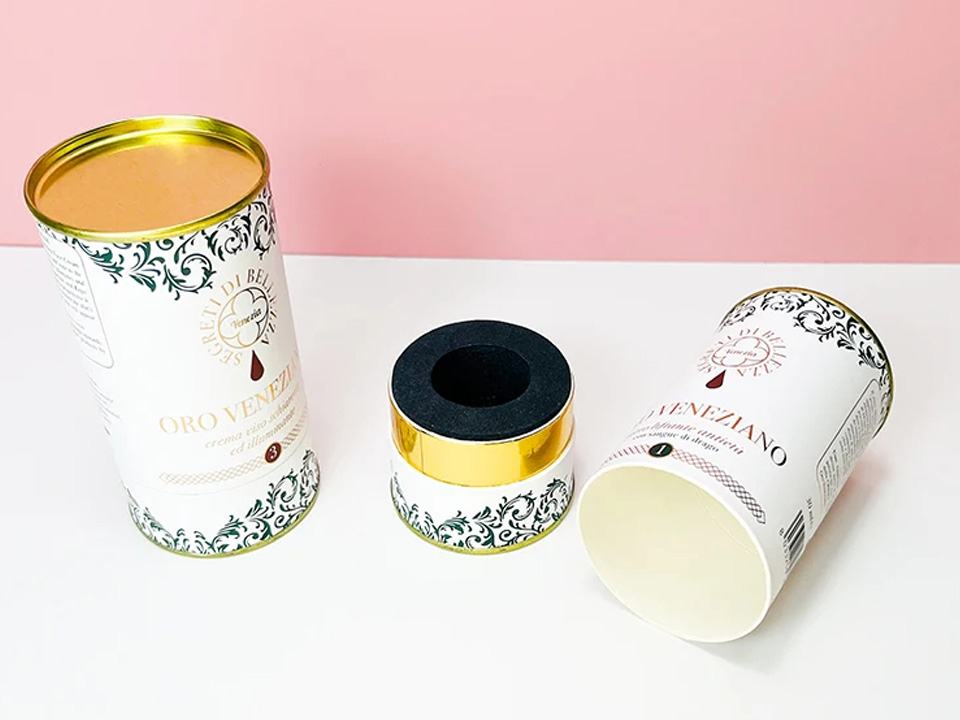
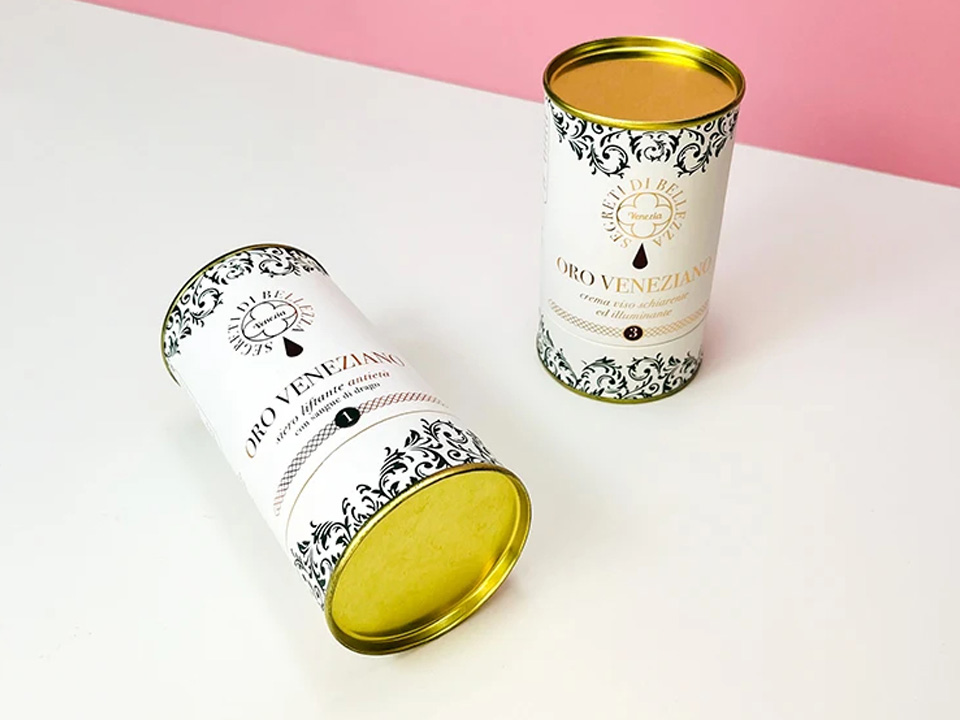
If you’re packaging cosmetics, you can often get 80% of the “custom look” by using a standard tube size with a custom wrap and label system. Start by looking at proven formats like cosmetics paper tube packaging where common diameters align with existing closures and filling equipment.
Why standard sizes matter more in 2024 than they used to
Paper packaging costs swing. When the Producer Price Index moves, your “small” unit-cost assumptions get wrecked, and suddenly that extra waste from a non-standard setup matters. The U.S. Bureau of Labor Statistics has repeatedly reported measurable year-over-year changes in paperboard and paper boxes/containers across 2023–2024 PPI releases, which is exactly the kind of “quiet inflation” that punishes custom-only thinking in low volumes. See BLS PPI releases like the October 2024 report and earlier 2023–2024 releases for paperboard and paper boxes/containers trends: BLS PPI 2024 M10 release, BLS PPI 2023 M12 release.
Regulation is also tightening the screws. In the EU, lawmakers agreed in March 2024 on revamped packaging rules with explicit waste-reduction targets (including a 5% reduction by 2030, scaling after that), pushing brands toward designs that are easier to source, standardize, and recycle at scale: European Parliament deal on new packaging rules (March 2024) and the Council’s parallel summary: Council–Parliament agreement (March 2024).
In the U.S., EPR is no longer theoretical. Maine’s packaging EPR work includes explicit details for smaller producers and fees, including a defined “low-volume producer” concept and a per-ton flat-fee option—exactly the kind of compliance math that makes standardized formats attractive when you’re scaling SKUs: Maine DEP EPR for Packaging.
So yeah. Standardization isn’t “boring.” It’s risk control.
A spec-first workflow that actually reduces tooling and MOQ
I use a simple order of operations:
Pick a closure family first Slip lid, plug, shoulder cap, screw cap, child-resistant (CR), tinplate end—each one constrains diameter and tolerances. If you need CR for regulated categories, don’t pretend you can “figure caps out later.”
Choose from common diameters (then match height to fill volume) Your product volume should drive height more than diameter—diameter drives tooling and closure availability.
Prototype with stock parts You’re validating: fit, line speed, label wrap, scuffing, drop performance.
Upgrade only what earns its keep Custom wrap, custom print, custom insert. Save custom diameter/cap molds for when volume forces the unit economics.
This is especially obvious in categories like candles: most brands don’t need a new diameter to look premium; they need a better unboxing and a better tactile surface. Start with formats similar to candle paper tube packaging and you’ll see how often standard tubes can carry premium finishes without custom tooling.
Paper tube size chart: what I see stocked most often
Below is a practical reference, not a law of physics. Suppliers vary by region and line.
Common stock diameters and “what they usually map to”
Ø70–90 mm: protein, coffee, larger candles, gift sets
If you’re in essential oils, don’t overthink it: you’re typically building an insert system and a closure that survives leakage/pressure changes. Look at essential oil paper tube packaging formats where inserts do most of the work and tube size stays standard.
Standard vs custom: the comparison procurement actually needs
Dimension
Standard / Stock tube sizes
Custom tube sizes
Tooling exposure
Low (existing mandrels, cutters, common caps)
Medium–high (new mandrels, gauges, cap molds, QA fixtures)
Typical MOQ behavior
Lower; easier to negotiate mixed SKUs
Higher; vendors protect setup time with MOQ
Lead time
Faster (materials + scheduling)
Longer (engineering + sampling + validation)
Cost at 1,000 units
Usually lowest risk, predictable
Often punishing due to amortized setup
Design flexibility
High on graphics/finishes, moderate on structure
High on structure, but every “yes” has a cost
Best for
MVP launches, line extensions, seasonal drops
High-volume core SKUs with stable forecasts
Failure mode
“Looks too generic” (fix with wrap/finish)
“Stuck in MOQ hell” (fix by redesigning to stock)
Perfume is where founders get emotionally attached to custom structure—and where I’ve seen the most wasted tooling. If you need that luxury feel, start with standard cores and spend on surface finish and inserts first; see how premium executions work in perfume paper tube packaging without inventing a new diameter on day one.
Where tooling and MOQ blow up (and how to dodge it)
1) Caps and closures If your cap is injection molded (common plastics: PP, ABS, sometimes bio-polymers like PLA ((C_3H_4O_2)_n)), tooling can be the single biggest upfront cost. My rule: if you’re not ordering tens of thousands per run, fight the urge to “own the mold.”
2) Tight tolerances you don’t need Founders demand ±0.2 mm on a tube that’s made of paperboard layers and adhesive systems. That’s not “premium.” That’s misunderstanding materials. Paper moves with humidity. Plan for it.
3) Non-standard diameters A weird diameter is the fastest path to vendor dependency. It’s also the fastest path to re-qualification pain if your supplier slips.
4) Height that breaks packing efficiency Sometimes the “custom height” isn’t expensive to make—it’s expensive to ship and cartonize. A 5 mm height tweak can cause master carton changes and pallet inefficiency.
paper tube packaging
FAQs
What are “standard paper tube sizes” in packaging?
Standard paper tube sizes are the commonly stocked tube diameters and heights that manufacturers already run frequently, with existing winding mandrels, cutting setups, and compatible closure families, which reduces engineering time, tooling requirements, and minimum order quantities compared with one-off custom dimensions. In practice, “standard” usually means you can source the same diameter from multiple suppliers, prototype quickly, and avoid being trapped in a single factory’s bespoke setup.
What is the difference between standard vs custom tube sizes?
Standard vs custom tube sizes refers to whether your tube diameter/height matches widely available stock dimensions (standard) or requires unique mandrels, fixtures, or closure tooling to manufacture consistently at scale (custom), affecting MOQ, lead time, and risk of supplier lock-in. Standard is typically faster and cheaper to launch; custom is a long-term play when volume stabilizes.
How does choosing stock paper tube dimensions reduce MOQ?
Choosing stock paper tube dimensions reduces MOQ by letting suppliers batch your run into existing production schedules, reuse established setups, and pull from standard materials and closures, which lowers the factory’s setup cost per job and makes smaller runs economically tolerable. If you want leverage in negotiation, standard sizes give you alternative suppliers—and alternatives reduce MOQs.
What is “custom paper tube tooling”?
Custom paper tube tooling is the set of dedicated manufacturing assets needed to produce a non-standard tube reliably, including winding mandrels, cutting fixtures, QA gauges, and often closure tooling such as injection molds or metal stamping dies, which adds upfront cost and extends sampling and validation cycles. If your vendor says tooling is “free,” ask where it’s being recovered: MOQ, unit price, or exclusivity.
How do I choose paper tube diameter and height for my product?
Choosing paper tube diameter and height means matching the tube’s internal volume, product geometry, insert system, and closure type while minimizing non-standard structural changes, so you can launch with standard parts and only customize what drives brand impact and line performance. Start with the closure family, then pick the closest standard diameter, then adjust height to hit volume and shelf presence.
Final Words
If you’re planning a launch, do this before you request quotes:
Pick two candidate diameters from common stock ranges.
Pick two candidate heights per diameter.
Decide closure family (slip lid vs plug vs screw vs CR).
Ask suppliers to quote both: stock-size build and custom-size build.
Then email your team one sentence: We launch on standard paper tube sizes first; custom comes after volume proves it. That decision alone saves tooling, shrinks MOQ, and keeps you out of “prototype purgatory.”