Still Not Seeing The Right Packaging Solution? Talk to Our Boss.
If you’ve reviewed our website or spoken with sales and still don’t see a clear path, send your request here. Your message goes directly to our General Manager for an executive review of feasibility, cost, and lead time. You’ll get a clear next step—what we can do, what we need from you, and the fastest route to a quote.
Built for packaging managers, procurement, and packaging engineers. Specify size, quantity, and finish to receive moq, lead time, and spec guidance for us/eu programs.
Quote-ready customization: diameter, height, wall thickness, inserts, liners, and closures
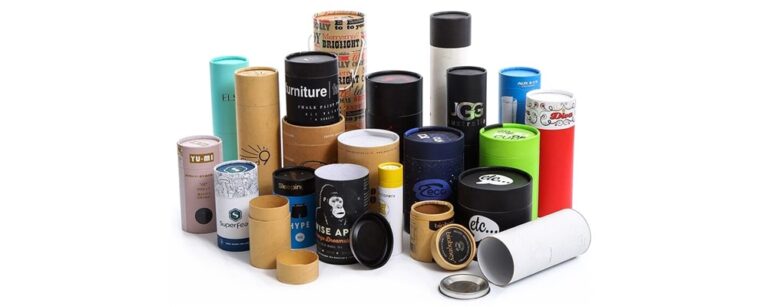
Are Composite Paper Tubes Recyclable? Metal Ends, US/EU Reality Check
I’m going to say it plainly: the industry often lies. Paper and cardboard fibres can be recycled if they’re simple and clean. But once you fuse them with metals (or even thin plastics), most real recycling systems reject them or send them to mixed waste. The difference between “theoretical recyclability” and what happens on conveyor belts in the US or EU is stark. Data and regulation bear this out — not marketing speak.
The Hard Facts Most Brands Won’t Tell You
Paper by itself is one of the best‑handled recycling streams globally. But when you add layers — adhesives, metallised ends, sealants — the product often stops being recyclable by standard collection systems.
Consumers see the recycling arrows and assume it’s easy. The reality? Once materials are inseparable without industrial delamination, most material recovery facilities (MRFs) regard them as contamination. Mixed materials often end up incinerated or landfilled.
Even the European Union’s newest Packaging and Packaging Waste Regulation (PPWR) — the most aggressive policy on the planet — aims for all packaging to be recyclable by 2030 through mandatory design criteria and minimum recycled content. That doesn’t magically erase the fact that composite, metal‑ended tubes are functionally non‑recyclable today.
Let’s break this down into things companies and technical auditors should care about.
What Real Recycling Data Tells Us
1. Mixed & Composite Waste Is Tough for Processing. Multiple studies show that once paper fibres are bonded with metal or plastic, sorting and separation become non‑economic in existing infrastructure — especially in the US where recycling infrastructure varies drastically by municipality.
2. Paper Composites Can Contaminate Streams. Data from Austria and Germany reflect that composites with fibre‑plastic or fibre‑metal content comprise a large fraction of mixed waste that facilities struggle to sort. A 2024 waste characterization study found that fibre‑plastic‑metal composites make up roughly 25–26% of problematic composites in municipal waste streams — and are difficult to separate manually.
3. Regulation Is Catching Up — But Implementation Is Slow. The EU’s PPWR makes recyclability a legal obligation by 2030 and introduces explicit design criteria. But the law is forward‑looking, not retroactive — and industry compliance timelines stretch years ahead.
4. What the US EPA Says (and What It Stops Short Of). The US EPA outlines recycling basics but doesn’t mandate uniform recyclability tests across states. It does note that consumer confusion and poor design are among the biggest hurdles to recycling effectiveness.
In plain language: composite tubes with metal ends? Unless those metals are easily separable or the tube qualifies under very narrow conditions, they’re often not recycled in practice, even if technically recyclable under ideal lab conditions.
Industry Imperative: Design for Real Recycling
You want something that gets actually recycled? Go mono‑material — period. That’s why innovative products like 100% fibre “eco‑tubes” exist: Smurfit Kappa touts an Eco‑Tube that meets common recycling streams today. That’s evidence of what is possible when you drop metal and multiple plastics out of the equation.
Here’s the comparison that matters most:
Attribute
Composite Tube With Metal Ends
Mono‑Material Recyclable Paper Tube
Theoretical recyclability
Medium – depends on separation
High – designed for common recyclers
Accepted in most US MRFs
No (often contamination)
Yes (paper/cardboard)
EU regulatory compliance by 2030
Challenging without redesign
More likely under PPWR design rules
Sorting machine compatibility
Poor
Good
Dependence on specialized recycling
Yes
No
Those design differences drive outcomes — not buzzwords.
Real World Case Studies & Evidence
EU Regulatory Trajectory: The EU’s PPWR explicitly requires that packaging must be recyclable or reusable by 2030 and mandates minimum recycled content and clear design‑for‑recycling criteria.
Recycling Infrastructure Limits: US EPA documentation stresses that a major barrier today is infrastructure that cannot adapt quickly to novel composites — particularly those with inseparable metals or multilayer materials.
Recycling Stream Contamination: Waste characterization studies across European cities show that fibre‑plastic‑metal composites constitute a significant sorting issue, often diverted to residual waste due to poor separability.
Practical Advice for Brands & Engineers
If you’re designing packaging that pretends to be recyclable but will hit a curbside bin tomorrow, you’re greenwashing by definition. Regulatory frameworks now penalize false claims more aggressively, especially in the EU. What really works:
Use single material families whenever possible.
Minimise or eliminate layers that can’t be separated economically.
Get verified recyclability certification (e.g., from How2Recycle) based on actual systems data — not just lab tests.
When you read “recyclable,” ask: Based on what system and which waste stream?
FAQs
What does “composite paper tubes recyclable” mean? It means packaging made from paper fibres joined with other materials (e.g., metal ends) that might be separated and returned to raw material flows in some recycling systems. In practice, most mixed materials are rejected by common sorting infrastructure because they can’t be disassembled economically without specialised processes.
Are paper tube recycling rates lower than single‑material packaging? Yes. Mixed and composite packaging (including metal‑ended tubes) significantly reduces the effective recycling rate because most facilities will not accept them without removal of non‑paper components.
Is “recyclable packaging composite tubes” accepted universally? No. Acceptance varies widely by municipality in the US, and even in the EU, where PPWR exists, compliance will depend on design and the presence of separable components.
How does “How2Recycle composite canisters recyclability” affect claims? Labels based on How2Recycle criteria can help companies communicate actual recycling instructions, but only if supported by data on collector and MRF acceptance into real systems.
Does “eco‑tube recyclable composite packaging” perform well in current systems? Only if it’s truly mono‑material or engineered for separation. True eco tubes without metal ends are already recyclable in most paper streams; composite versions with metal are often not.
Are paper tubes with metal ends recyclable in US and EU? In most curbside systems today, no — they are often treated as mixed waste or sorted out until future design standards improve. In the EU, upcoming PPWR regulations will push recyclability, but compliance timelines extend through 2030 and beyond.
Final Thoughts
If you’re a brand leader, quality engineer, or sustainability director: rethink the role of mixed materials in tubes today. Stop chasing vague “recyclable” claims and start engineering products that actually fit the bins and the regulations that govern them. Production decisions made now define compliance, recycling rates, and brand credibility for the next decade.