Still Not Seeing The Right Packaging Solution? Talk to Our Boss.
If you’ve reviewed our website or spoken with sales and still don’t see a clear path, send your request here. Your message goes directly to our General Manager for an executive review of feasibility, cost, and lead time. You’ll get a clear next step—what we can do, what we need from you, and the fastest route to a quote.
Built for packaging managers, procurement, and packaging engineers. Specify size, quantity, and finish to receive moq, lead time, and spec guidance for us/eu programs.
Quote-ready customization: diameter, height, wall thickness, inserts, liners, and closures
Luxury Perfume Paper Tube Unboxing: Structure, Inserts, Finishes
Most tubes lie.
I mean that literally and commercially: they promise luxury with black wrap, gold foil, and a heavy mood board, yet the second you lift the lid the bottle rattles, the insert looks improvised, the seam telegraphs itself, and the whole thing reads like a commodity core wearing evening clothes. Why does that still happen in a category where demand is strong enough that nobody can plead ignorance? According to Circana’s 2024 U.S. beauty report, prestige beauty hit $33.9 billion in 2024, fragrance grew 12%, fragrance reached 28% of prestige beauty sales, and higher concentrations such as parfums and eau de parfums grew 43% and 14% respectively; even earlier, Reuters reported that Coty lifted its fiscal 2024 outlook while saying U.S. prestige fragrance was still growing fast.
So here is my unfashionable view: luxury perfume packaging is not a graphics problem. It is a sequencing problem. The tube has to do four jobs in order: protect glass, control the reveal, quiet the interior, and earn the right to whatever finish you add afterward. Miss the order and the pack looks expensive only in static renders. Isn’t that the hard truth most agencies skip because “finish exploration” sounds nicer than “mechanical discipline”?
Structure decides the price signal
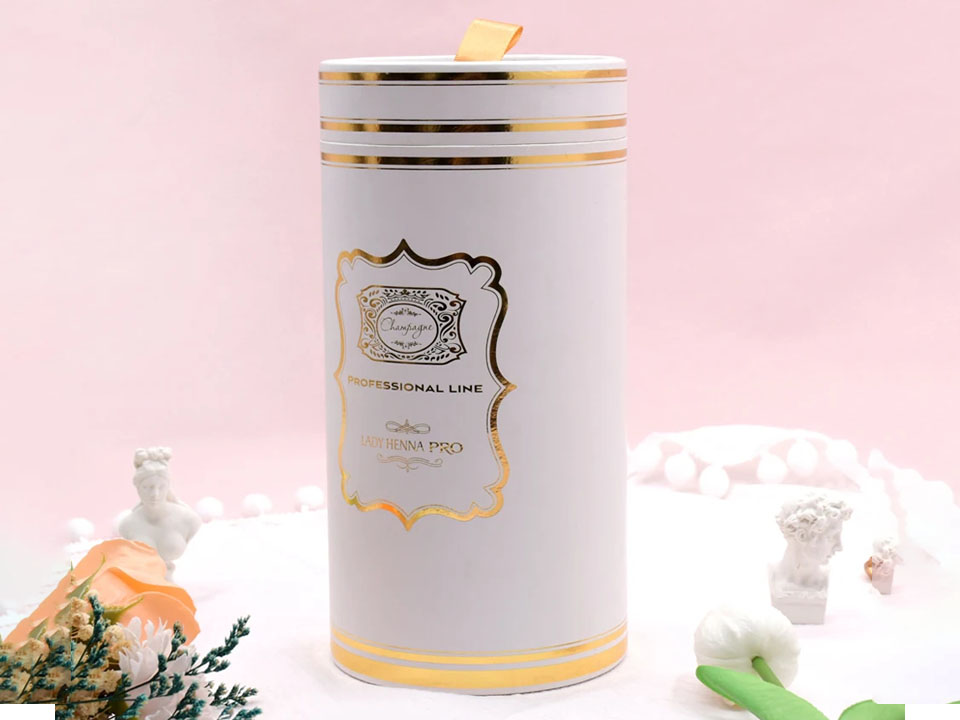
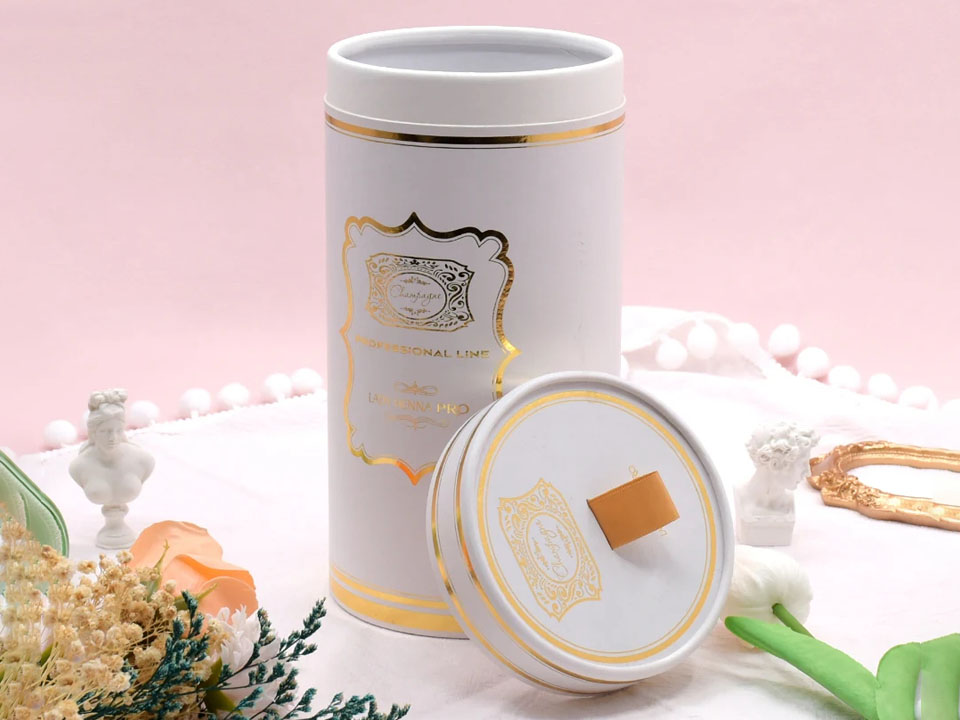
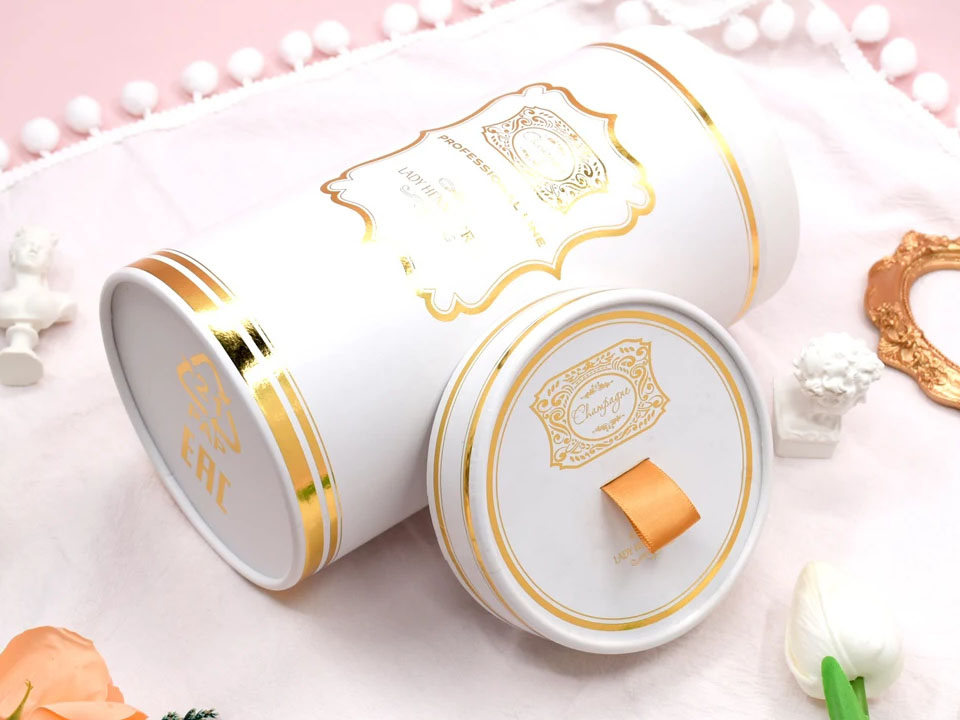
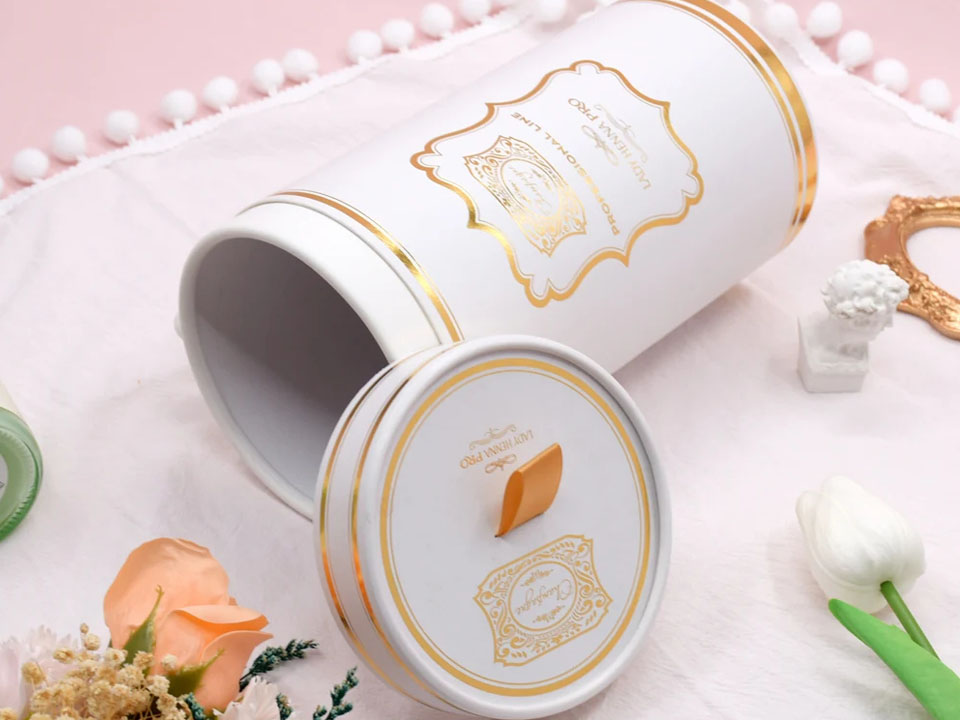
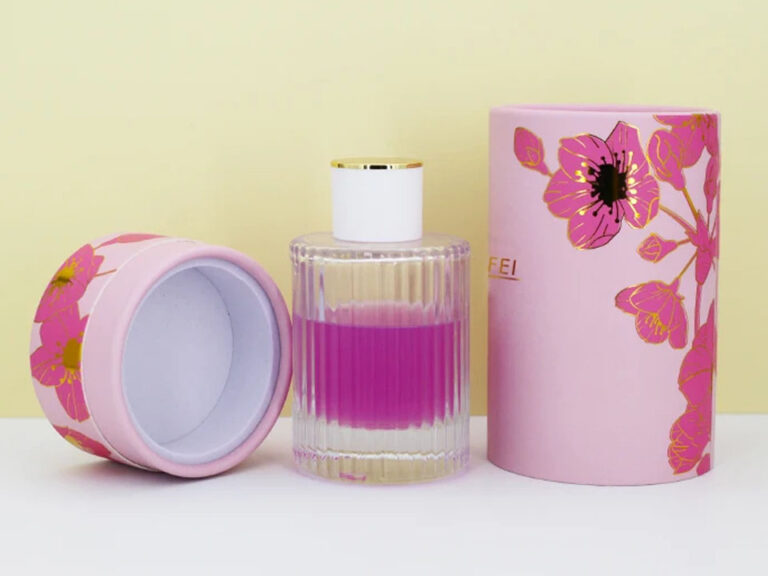
I do not think every fragrance deserves a paper tube. But when a brand wants ritual, vertical reveal, and a format that feels giftable without going full rigid shoulder box, a tube can outperform a rectangular carton because the cylinder slows the hand and forces attention. That is why a flat-edge custom perfume paper cylinder box usually reads sharper than a rolled-edge tube for premium SKUs: the silhouette is cleaner, the lid line is tighter, and the consumer sees intention instead of novelty. For broader shelf programs or holiday gifting, these cardboard cylindrical perfume gift boxes make sense when the visual brief is softer and more ceremonial.
What matters more than style names, though, is the opening resistance. A tube that releases with no friction feels cheap. A tube that vacuum-locks feels badly made. I want a controlled lift, a muted release, and a reveal that takes about one deliberate motion, not two hands and a desk edge. That “opening ritual” is not poetry; it is tolerance management.
And the structure brief should be ugly and specific. I want bottle diameter, filled weight, cap overhang, pump height, reveal direction, transit mode, and whether the insert must hide the base label. Skip those inputs and the factory guesses. Factories always guess toward speed.
Inserts are where fake luxury gets exposed
Nothing kills it faster.
A luxury unboxing dies the instant the bottle clicks against the wall, leans off-axis, or arrives with micro-scuffing around the shoulder because someone thought “snug enough” was engineering. The insert is not secondary decoration. It is the whole argument. For high-value glass, I usually prefer a two-point retention logic: body support plus neck or shoulder control. A velvet-wrapped foam presentation, like the direction shown in this luxury bespoke scented perfume cardboard tube box, works when the retail price and visual language can support it; for lighter bottles, a folded SBS or greyboard saddle can do the job with less material drama; for brands pushing a more sober sustainability story, molded pulp can work, but only if the bottle geometry is honest enough to tolerate draft angles and a less surgical fit.
Here is the part brand owners do not love hearing: the “best” perfume box inserts are usually the least visible ones. I would rather hide a smart EVA (ethylene-vinyl acetate) or EPE (expanded polyethylene) retention system than show off a decorative nest that photographs well and performs badly. And for narrow, tall formats such as diffuser or line-extension packs, a pack like this luxury car diffuser perfume bottle paper tube packaging box points in the right direction because those skinnier bottles punish weak center-of-gravity decisions very quickly.
Finishes should be restrained, not stacked for applause
This is where the industry loses its nerve.
The default move in luxury perfume packaging is still additive: foil, emboss, soft-touch, spot UV, maybe a ribbon if the team feels insecure. I think that is backwards. Cylinders already have form drama. They do not need every print effect in the catalog. What they need is one finish that catches light, one tactile note that survives handling, and enough empty space for the structure to speak.
Foil stamping perfume packaging works best, in my view, when it is selective and small. A restrained metal mark, a neck band, or a lid hit can make the pack feel exacting. A 360-degree foil flex, especially on a seam-sensitive tube, often does the opposite; it advertises registration risk and can make even good artwork look promotional. Embossed perfume boxes are stronger when the emboss is shallow, well-placed, and aligned away from the seam. Deep embossing on a curved surface can drift from “luxury” into “novelty souvenir” very fast.
Soft-touch perfume packaging is useful, but it is also oversold. I like soft-touch when the brand wants warmth and finger drag, and I dislike it when teams use it to mask weak paper choice or overprint. My bias is simple: if you are adding soft-touch, reduce something else. Fewer metallic hits. Less coverage. Cleaner typography. Otherwise the finish starts fighting the cylinder instead of supporting it.
The compliance problem nobody wants in the mood board
Luxury still answers to law.
And this matters more now because the packaging brief is no longer just about shelf appeal; it is also about what you can safely claim on pack and online. The European Commission’s packaging timeline says the Packaging and Packaging Waste Regulation entered into force on February 11, 2025 and generally applies from August 12, 2026, while Reuters’ analysis of Directive (EU) 2024/825 notes that environmental and circularity claims, including recyclability language, now sit squarely inside anti-greenwashing scrutiny. In the U.S., the FTC Green Guides still frame how marketers should avoid misleading environmental claims.
That is not abstract legal noise. Reuters also points to the March 20, 2024 Amsterdam ruling against an airline’s “Fly Responsibly” campaign as a live greenwashing precedent, and the same Reuters analysis says the updated EU rules prohibit generic environmental claims without substantiation and require specificity when the claim relates only to part of a product. So if your perfume paper tube packaging uses layered films, aggressive adhesives, or broad-surface decoration, I would be very careful with the word “recyclable,” and even more careful with softer phrases like “eco” or “sustainable.” Why invite a claim fight over a lid finish?
What I would specify first
Decision area
What usually works best
What I would avoid
Factory-ready starting point
Tube structure
Flat-edge rigid tube for cleaner lid line and sharper luxury cue
Loose rolled-edge construction on premium SKUs
Start with a wall and lid spec that prioritizes controlled friction over easy assembly
Reveal sequence
One smooth vertical lift with centered bottle presentation
Two-step openings that expose glue logic or loose collars
Design the lid release before approving artwork
Insert system
Two-point retention: bottle body support plus neck/shoulder control
Decorative nests that leave the bottle free to click in transit
Zero rattle is the standard, not a nice-to-have
Finishing stack
One hero finish plus one supporting tactile effect
Foil + emboss + soft-touch + spot UV all together
Use fewer effects and tighter registration
Sustainability copy
Specific, limited, region-aware wording
Generic “eco-friendly” or blanket recyclability claims
Validate substrate, adhesive, and finish combination before copy lock
Line extensions
Reuse the same structural logic across EDP, parfum, and diffuser variants
Forcing one insert geometry across different bottle masses
Re-engineer inserts when bottle weight or center of gravity changes
The larger point is simple. A tube is not premium because it is round. It is premium when every visible and invisible choice tells the same story: resistance, silence, fit, restraint. I have seen brands overspend on foil and underspend on insert testing so many times that I now treat finish-heavy briefs as a warning sign. When the team starts with texture names instead of bottle physics, I know the unboxing is headed for trouble.
FAQs
What makes perfume paper tube packaging feel luxurious?
Luxury perfume packaging feels premium when the structure controls motion, the insert fixes the bottle without rattle, and the finish adds tactile value without visual noise, so the customer reads precision, weight, restraint, and intent before they consciously process artwork, color, or brand storytelling.
After that, everything else is support work. The lid line, seam discipline, print registration, and quiet interior matter more than throwing four finishing effects at a mediocre core.
What are the best perfume box inserts for a paper tube?
The best perfume box inserts are the ones that lock the bottle body and neck under shipping stress, present the bottle upright on first reveal, and match the brand’s material truth, because perceived luxury collapses the moment glass shifts, clicks, tilts, or scuffs inside the tube.
For heavier bottles, I lean toward concealed foam engineering. For lighter formats, a paperboard saddle can be enough. Molded pulp works only when the bottle geometry, tolerance expectations, and sustainability claims are all honest.
Is soft-touch perfume packaging recyclable?
Soft-touch perfume packaging is not automatically recyclable just because the base substrate is paper, because coatings, laminations, adhesives, foil coverage, labels, and local mill acceptance rules determine whether the finished pack is actually sortable, repulpable, and defensible if you market it as recyclable in a specific region.
That is why I keep claims narrow and verified. The current EU and U.S. enforcement mood is not friendly to vague circularity language, and it should not be.
How do you design perfume tube packaging for unboxing?
To design perfume tube packaging for unboxing, start with bottle geometry, filled weight, reveal orientation, lid resistance, insert retention, and finish stack, then reduce each variable until the opening feels deliberate, quiet, and repeatable across production lots rather than dramatic in a single showroom prototype.
I would approve structure first, insert second, and finishes last. That order saves money, reduces rework, and produces a better unboxing nearly every time.