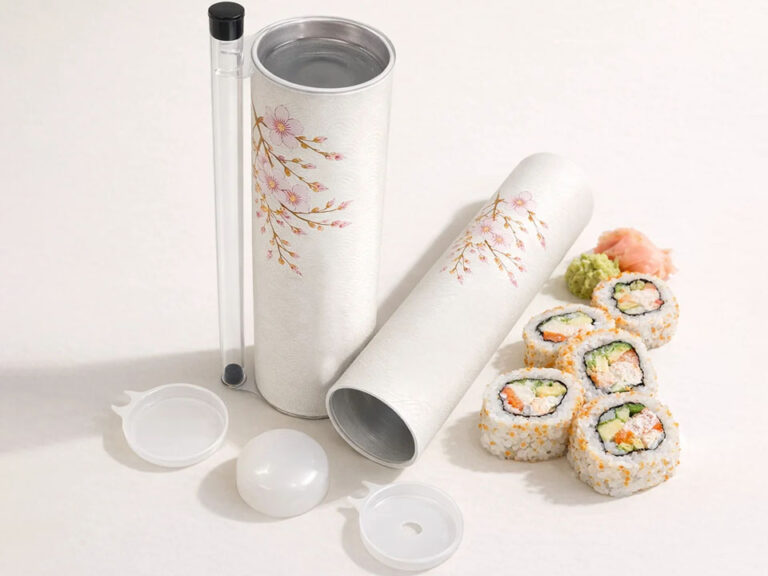
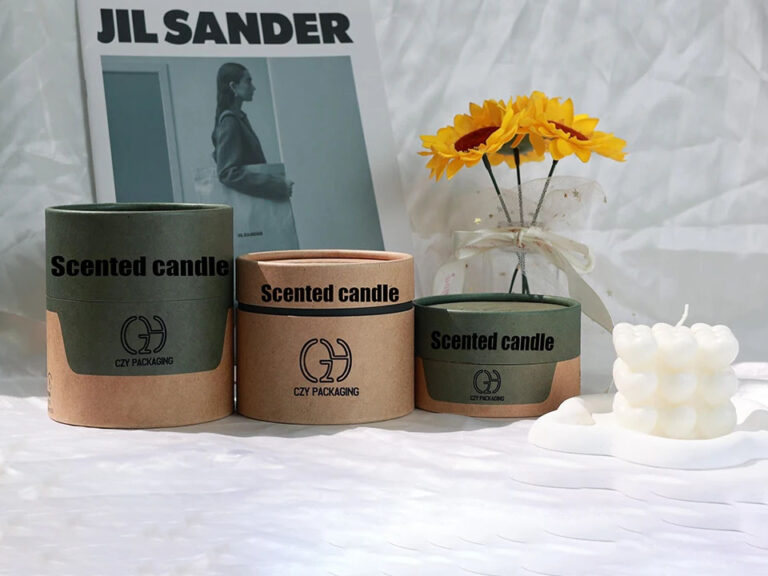
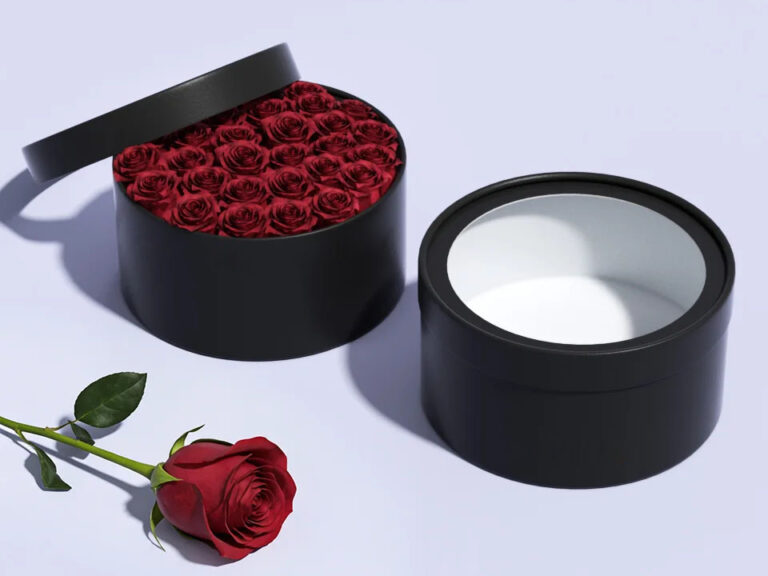
Still Not Seeing The Right Packaging Solution? Talk to Our Boss.
If you’ve reviewed our website or spoken with sales and still don’t see a clear path, send your request here. Your message goes directly to our General Manager for an executive review of feasibility, cost, and lead time. You’ll get a clear next step—what we can do, what we need from you, and the fastest route to a quote.
Direct GM review of your specs, use case, and constraints
Print/finish recommendations to match brand + budget
Cost-down alternatives and lead-time improvement options
Quote path clarity: MOQ, sampling plan, and what to next
Talk to Our Boss
Get a Fast Quote for Custom Paper Tube Packaging
Built for packaging managers, procurement, and packaging engineers. Specify size, quantity, and finish to receive moq, lead time, and spec guidance for us/eu programs.
Quote-ready customization: diameter, height, wall thickness, inserts, liners, and closures
Most articles about custom paper tube packaging stop right when the buying gets hard.
They show a few cylinder styles, say “eco-friendly,” mention printing, and call it a day. But when you’re the one choosing packaging for tea, snacks, beauty, gifts, or a premium retail launch, the real questions are different. You’re asking about barrier layers. Food contact. Reclose feel. Shelf life. Freight damage. Whether the thing will still look sharp after a week on a store shelf.
That’s the part that matters.
And it matters even more in 2026, because paper packaging is not a tiny side category anymore. Fortune Business Insights values the global paper packaging market at $392.28 billion in 2025 and projects $408.97 billion in 2026.
Table of Contents
Why brands keep choosing paper tubes
Because they do two jobs at once.
They protect the product, and they make the product feel more expensive.
That second point gets brushed past too often. Packaging is not just a shell. It’s part of the sale. A rigid paper tube in the hand feels different from a flat folding carton. It feels more permanent. More giftable. More “keep me on the counter” than “tear me open and toss me.”
There’s also a market signal behind that shift. In McKinsey’s 2025 global survey, recyclable packaging ranked as the most important sustainability factor across all 11 countries studied, and paper and glass both ranked in the top three perceived sustainable packaging types across every country in the sample. That’s not a blank check for every paper format. But it does tell you where buyer attention is leaning. See McKinsey’s 2025 global consumer packaging survey for the broader read.
And in the U.S., the signal is even cleaner: 77% of respondents in McKinsey’s March 2025 survey said recyclable packaging was extremely or very important. McKinsey’s 2025 U.S. packaging survey is worth reading if you sell into retail and want a better feel for what buyers actually notice.
Now add the recovery side. AF&PA says the U.S. recycled around 46 million tons of paper in 2024, with a 60%–64% paper recycling rate and 69%–74% cardboard recycling rate. That does not mean every paper tube is equally easy to recycle—liners, laminations, and mixed materials still matter—but it does mean the broader paper stream has real scale. AF&PA’s 2024 paper recycling update gives the newest industry benchmark.
What the numbers say right now
2025–2026 proof point
Latest figure
Why it matters
Global paper packaging market size, 2026
$408.97B
Paper packaging demand is still growing
U.S. paper recycled in 2024
~46M tons
The recovery system is established
U.S. consumers saying recyclable packaging is extremely/very important
77%
Recyclability still shapes perception
Countries in McKinsey’s 2025 global survey where recyclable packaging ranked first
11 of 11
The consumer signal is broad, not local
The figures above come from Fortune Business Insights, AF&PA, and McKinsey’s 2025 U.S. and global surveys.
What custom paper tube packaging actually includes
A paper tube is never just “a paper tube.”
It’s usually a stack of decisions:
Core structure — the rigid paperboard body that gives the pack shape and crush resistance.
Outer wrap — kraft, art paper, or printed paper that carries the branding.
Inner liner — plain paper, PE, aluminum foil, glassine, or another barrier layer depending on what sits inside.
Closure — slip lid, telescopic lid, metal lid, inner seal, peel film, machine-sealed end, or a child-resistant mechanism.
Finish — matte, gloss, foil stamp, emboss, soft-touch, spot UV, or something simpler if you need cost control.
That’s why two packages can both be called “custom paper tube packaging” and still perform very differently.
One might be perfect for candles or gifts.
Another might be made for dry tea with aroma protection.
Another might look premium but be a bad fit for direct food contact because the internal spec is wrong.
The main tube styles—and when they make sense
The competitor article does a decent job naming the common formats: single-tube, two-part telescopic, three-part/butted, plus push-up, windowed, and child-resistant versions. That basic taxonomy is sound. The missing piece is buyer logic—when each style earns its keep.
Single-tube packaging
This is the simple workhorse.
It’s cost-friendly, clean, and often used when one end is fixed and the opening method is simple. If you need tamper evidence or machine sealing, this style can work well for dry foods, powders, and straightforward retail formats. The competitor guide frames it as the most widely used format, which tracks with how often brands choose it for functional, budget-aware jobs.
Two-part telescopic tubes
These are the “premium without being fussy” option.
You get a base and an overlapping lid, which gives the pack a nicer reveal and a more gift-ready feel. For beauty, candles, apparel accessories, and certain teas, this is often the sweet spot between cost and presentation.
Three-part rigid or butted tubes
These are built for presence.
They open cleanly, stack well, and feel more structured. If the product is premium and the opening moment matters, this style starts to make sense fast. But yes—it usually costs more, and it can be more than you need for a basic commodity SKU.
Push-up, windowed, and child-resistant options
These are not “extra features.” They are format choices.
Push-up works when the product needs bottom access. Windowed tubes work when seeing the product helps sell the product. Child-resistant designs matter when safety is part of the category requirement, not just a nice add-on. The competitor post lists these correctly, but the practical rule is simple: use them only when the product and channel need them. Otherwise, they add cost and complexity for no good reason.
Food grade paper tube packaging: this is where teams get sloppy
Here’s the blunt version.
A paper tube that looks clean is not automatically a food-safe package.
FDA explains that a food contact substance includes food packaging and its components, and under U.S. federal law, a food contact substance that is a food additive must be authorized for that use before it is marketed, usually through a food contact notification. That is why “food grade” is a spec issue, not a design adjective. Read FDA’s food-contact packaging guidance if you need the regulatory baseline.
And there’s another update buyers should not miss.
FDA says that substances containing PFAS used as grease-proofing agents on paper and paperboard for food contact are no longer being sold into the U.S. market, and in January 2025 the agency said 35 PFAS-related food contact notifications tied to paper and paperboard grease-proofing uses are no longer effective. That matters for supplier conversations, especially if you sell food in markets where retailer and compliance teams ask sharper questions than they did a few years ago.
So when you spec food grade paper tube packaging, ask for more than a pretty mockup. Ask about:
the inner liner material
the food-contact status of adhesives, inks, and coatings where relevant
whether the pack is meant for direct contact or needs an inner bag or seal
whether the closure is just decorative or actually helps with freshness
what the supplier can provide in terms of compliance paperwork
Because if you skip that part, you are not buying a packaging solution. You are buying risk.
Liner choices: what each one is really doing
This is where many buying decisions get won or lost.
The competitor guide points to PE coating, food-grade aluminum lining, and glassine paper lining as common routes for food-oriented tubes. That’s a fair starting point. It also notes that paper tubes are not inherently airtight and may need machine sealing, inner lids, or sealing films for better freshness control.
Here’s the practical version.
PE coating
Useful when you need basic moisture and oil resistance and the product is fairly forgiving.
Think dry mixes, powders, or some pantry goods where the barrier requirement is real but not extreme. The trade-off? Mixed-material construction can complicate the recycling story, so don’t oversell a tube like this as “all paper” if it isn’t.
Aluminum foil lining
This is the tougher barrier option.
If your product is aroma-sensitive, moisture-sensitive, or just too expensive to risk going flat, foil lining usually makes more sense than pretending plain paper can do the same job. Tea, coffee, powdered milk, and premium dry foods often fall into this camp. The competitor post says aluminum lining gives stronger oxygen and moisture resistance, and your own tea-tube product pages use aluminum foil lining exactly for that freshness reason.
Glassine lining
A cleaner fit when grease resistance matters more than full-on barrier performance.
It can work nicely for some dry snacks and lighter-duty applications. But if you need a stronger block against air and moisture, glassine is usually not the first pick. The competitor article says that plainly, and it’s one of the few places where the original guide gets specific enough to be useful.
Are paper tubes airtight?
Not by default.
That’s the answer.
The competitor post is right on this point: paper tube packaging is not inherently airtight, and better freshness usually comes from machine sealing, inner lids, or sealing films layered into the pack structure.
So when a buyer says, “We need airtight paper tube packaging,” what they usually mean is one of three things:
They need a better liner.
They need a better closure.
They need a better inner seal.
Sometimes all three.
And that changes the quote, the filling process, and the recycling story.
Tea packaging is where custom paper tubes really prove themselves
Tea is a great stress test for packaging because it asks for shelf appeal and freshness at the same time.
You want the pack to feel premium. You want it to look calm, clean, and giftable. But you also want aroma retention, decent reseal behavior, and enough structure that the package still looks sharp after shipping, handling, and repeated opening.
That’s why tea paper tube packaging often ends up with a more layered spec than brands first expect.
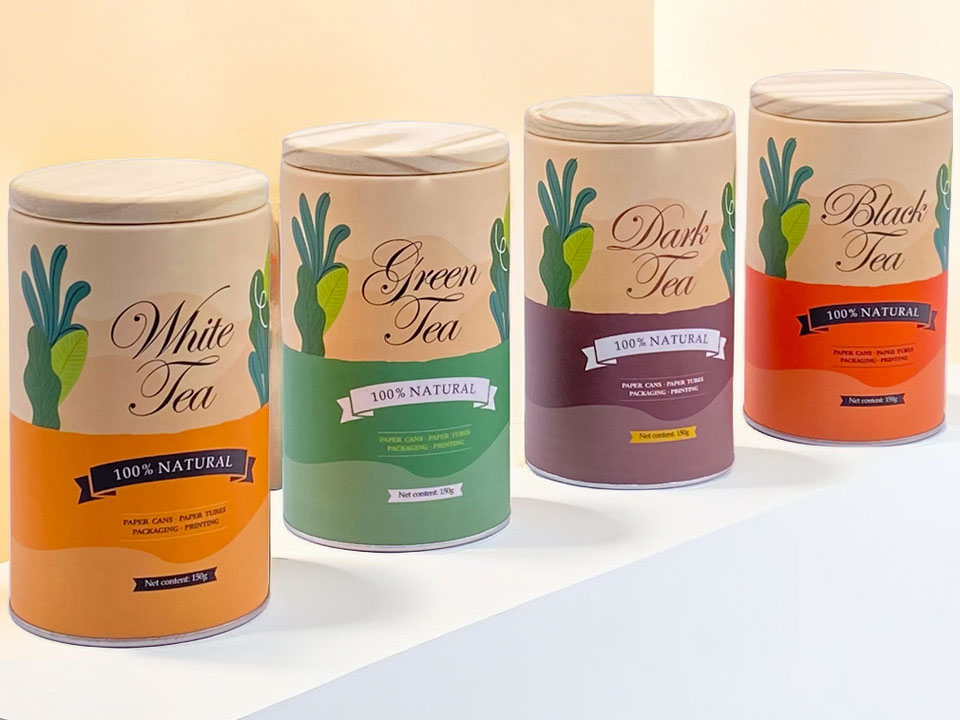
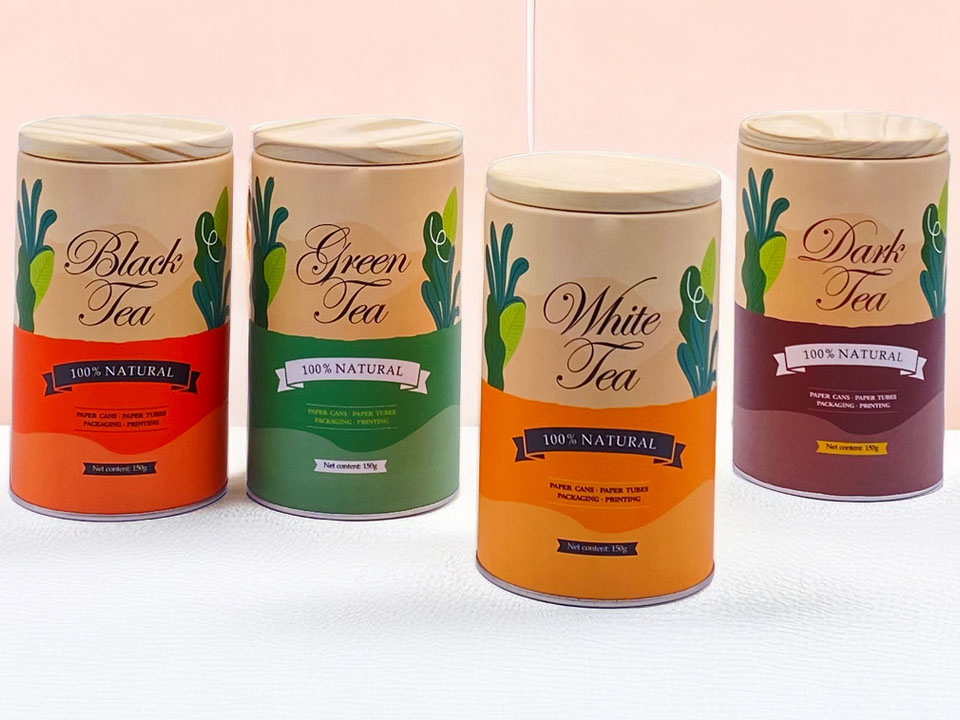
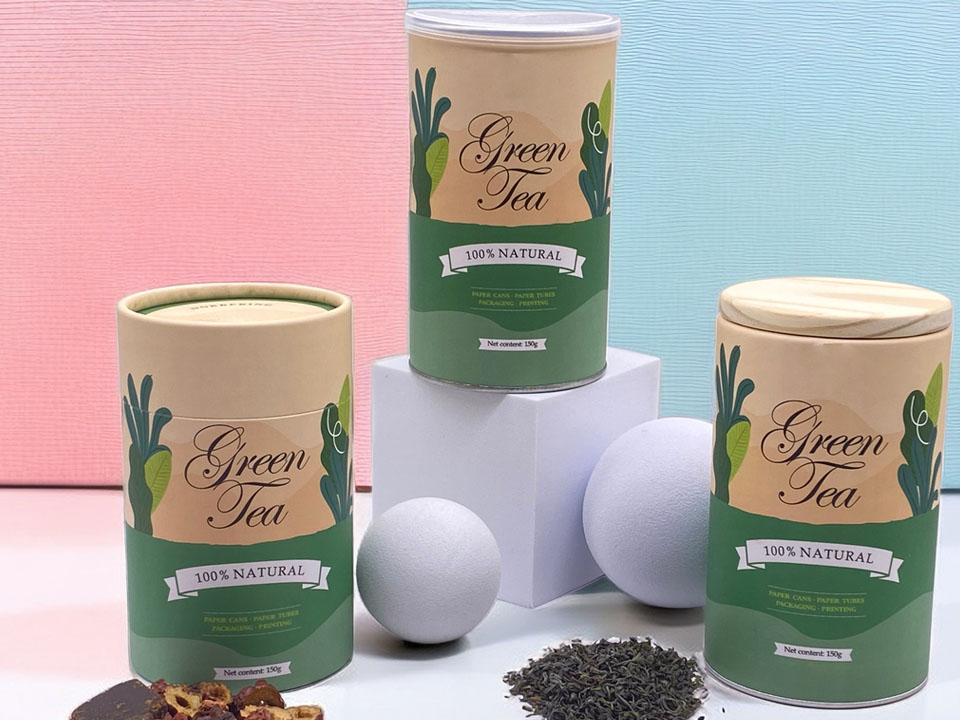
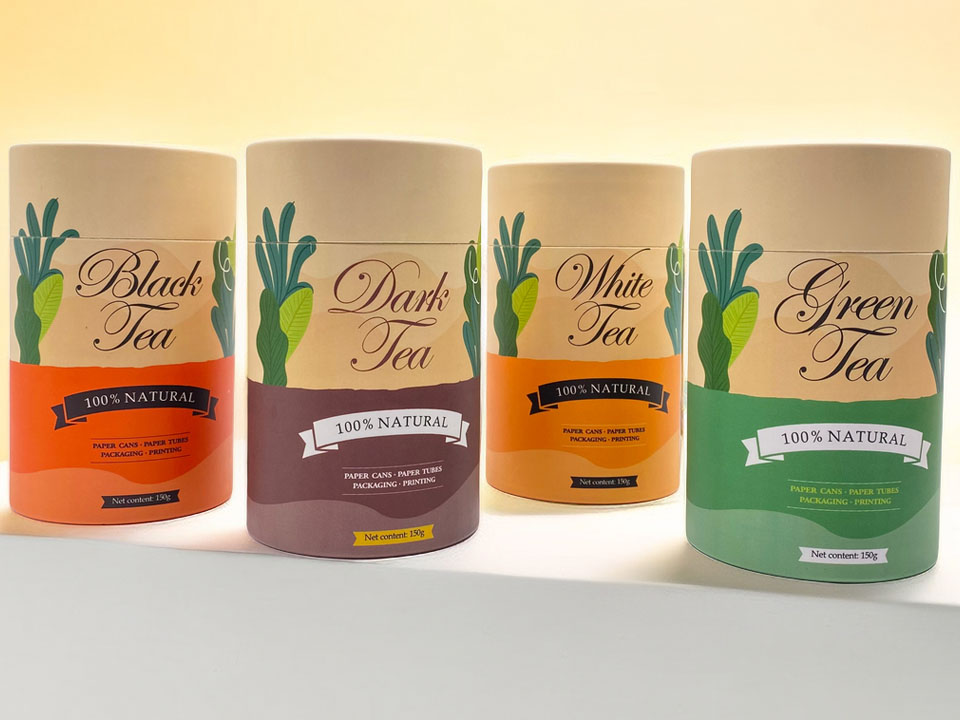
A plain kraft look might be enough for a rustic artisan line. A tighter metal or tinplate lid may be the smarter call for loose-leaf formats. And once aroma protection matters more, foil lining starts to move from “nice to have” into “yes, we should probably do that.”
Your own product range already maps neatly to those use cases:
That is how the spec usually moves in real buying conversations.
The design side: how to make a paper tube look expensive without wasting money
This is where too many brands overspend.
You do not need every finish.
You need the right finish.
A matte body with one sharp foil hit can look better than a tube overloaded with gloss, emboss, UV, and metallic noise. A clean kraft wrap with a metal lid can feel more honest and more premium than a louder, busier design. And for many tea, beauty, and gift products, the cylindrical form itself already gives you a head start because it feels less disposable than a standard folding carton.
The surface area helps too. Cylinders give you wraparound storytelling space—brand mark, flavor notes, product claims, instructions, and a cleaner unboxing rhythm than many flat packs. The competitor article makes that point in broad terms, but it misses the budget angle: most brands get better returns from one memorable finish and strong typography than from stacking every effect the printer offers.
Common buying mistakes we see again and again
1) Treating “eco-friendly” like a spec
It isn’t.
You need to say what you mean: recyclable, recycled content, PFAS-free, reusable, paper-heavy construction, or something else. McKinsey’s 2025 work shows consumers respond strongly to recyclability and recycled content. Those are clearer messages than vague green language.
2) Assuming every food tube can directly touch food
No.
FDA’s framework is clear enough here. Food-contact status depends on the actual material system and intended use, not on the shape of the package.
3) Calling a package airtight because the lid feels snug
A snug lid and a real barrier system are not the same thing.
If freshness matters, look at the liner, inner seal, and sealing method together—not one at a time.
4) Overbuilding the pack
This happens a lot with new premium brands.
They spec foil lining, metal lids, soft-touch lamination, emboss, and a rigid three-part structure before they’ve even proven the SKU. Sometimes that’s right. Often it isn’t. Match the barrier and finish to the product, margin, and sales channel.
5) Ignoring fill and sealing realities
A beautiful tube that slows down packing, causes rejects, or needs equipment you do not have is a bad packaging decision.
Period.
Quick answers buyers usually want
Are paper tubes recyclable?
Many paper-based tube formats can enter paper recovery streams, but recyclability depends on the full construction—liners, laminations, metal parts, and local acceptance rules all matter. That’s why broad “100% recyclable” claims should be checked against the actual spec. AF&PA’s 2024 data shows strong paper recovery overall, but mixed-material design still needs care.
Are paper tubes good for food?
Yes—when they are properly specified for food contact use. FDA says food packaging and its components fall under food contact substance rules, and relevant uses must be authorized where required.
What is the best paper tube for tea?
Usually, one with the right mix of rigid structure, good reclose feel, and a liner matched to freshness needs. For everyday dry tea, a simpler tube may work. For loose-leaf, premium blends, or aroma-sensitive products, foil lining and a stronger closure often make more sense. Your tea-focused tube range follows exactly that logic.
Is paper tube packaging good for premium products?
Yes, and that’s one of its best uses. Cylindrical packs naturally stand out on shelf, feel sturdier in hand, and give you more room for presentation than many flat cartons. The competitor guide is right to call out brand impact here. The missing point is that premium feel comes from the right structure and restraint in finishing, not from throwing every effect at the tube.
What we’d lock before asking for quotes
Before you send an RFQ, pin down these points:
exact product type and whether it has direct food contact
target diameter and height
required shelf life and freshness expectations
liner choice: plain paper, PE, glassine, or foil
closure choice: slip lid, telescopic lid, metal lid, inner seal, or machine-sealed end
shipping method and whether the tube must survive e-commerce abuse
compliance documents you expect the supplier to provide
MOQ, lead time, and whether the first run is a pilot or full production
That checklist sounds basic.
But it saves money.
And it saves revision rounds.
Because the best custom paper tube packaging is not the tube with the fanciest mockup. It’s the one that fits the product, clears the packaging questions early, and still looks like it belongs on the shelf when the customer finally picks it up.