Still Not Seeing The Right Packaging Solution? Talk to Our Boss.
If you’ve reviewed our website or spoken with sales and still don’t see a clear path, send your request here. Your message goes directly to our General Manager for an executive review of feasibility, cost, and lead time. You’ll get a clear next step—what we can do, what we need from you, and the fastest route to a quote.
Direct GM review of your specs, use case, and constraints
Print/finish recommendations to match brand + budget
Cost-down alternatives and lead-time improvement options
Quote path clarity: MOQ, sampling plan, and what to next
Talk to Our Boss
Get a Fast Quote for Custom Paper Tube Packaging
Built for packaging managers, procurement, and packaging engineers. Specify size, quantity, and finish to receive moq, lead time, and spec guidance for us/eu programs.
Quote-ready customization: diameter, height, wall thickness, inserts, liners, and closures
Aluminum Lining vs Wax Lining for Food Supplement Paper Tubes
My response is candid. For most shelf-stable powders marketed in food supplement paper tubes, I prefer to safeguard an aluminum liner in a launch meeting than discuss a wax lining after six months of caking, fragrance discolor, or consumer problems. Why gamble with a barrier system that was low on the first day?
Table of Contents
We are not speaking about a specific niche leisure activity item anymore. The NIH states multivitamin-mineral products are still made use of by concerning one-third of U.S. grownups, and CDC NHANES updates through August 2021– August 2023 program older grownups making use of more supplements typically than a decade ago, with noteworthy boosts in items having agricultural components, vitamin D, and zinc. Much more SKUs. Even more cases. More shelf-life pledges. Even more methods to obtain packaging wrong. According to one-third of U.S. adults and CDC’s NHANES August 2021– August 2023 white paper, that stress is just obtaining much heavier.
The brief decision I would certainly give any type of buyer
Below it is. If you are packaging healthy protein, collagen, greens, mushroom powders, electrolyte blends, or any type of formula that must remain free-flowing and presentable, light weight aluminum foil lined paper tubes are generally the safer commercial selection; wax lined paper tubes make sense just when the product is dry, fairly forgiving, short-cycle, and valued so tightly that every portion of a cent issues.
That seems extreme. It is. However hard truth defeats quite product packaging copy. Paper on its own is a weak obstacle for requiring food applications, and a 2023 testimonial in BioResources explains the noticeable issue numerous sales decks hide: fiber-based products have inadequate obstacle buildings, while transforming stresses such as creasing and folding can significantly damage obstacle coverings after the product is developed into a bundle. In other words, your lining does not obtain evaluated as a level laboratory example; it obtains evaluated after manufacturing misuse.
Why aluminum lining generally wins the actual fight
3 points issue. Dampness. Oxygen. Light.
Utah State University’s packaging assistance states clearly that a foil layer “dramatically decreases” oxygen and wetness transmission. And the Wisconsin Facility for Dairy Study is a lot more appropriate to protein powder paper tube packaging : whey powder is hygroscopic, airborne dampness can make powder cake, trigger lactose condensation, and add to oxidation, and their recommendation is basic– usage bags with a greater dampness obstacle if you want to limit clumping and storage space damages. I do not assume brand names selling costs powder solutions should pretend those cautions do not use even if the outside of the tube looks lasting. See Utah State‘s foil packaging note and the Wisconsin whey storage guide.
And there is an additional nuisance people miss over: aluminum foil only wins if you safeguard foil stability. A 2021 RIT packaging study discovered that pinholes enhance water vapor and oxygen permeation, especially under moist problems. So yes, aluminum is the better obstacle. However a badly transformed aluminum foil framework can still embarrass you. Much better lining, sloppy execution, very same frustration.
That is why I maintain informing brands the very same thing: dampness barrier supplement packaging is not a material-only choice. It is a material-plus-conversion-plus-closure choice. A paper tube with an easy-open system and a weak inner obstacle can still lose. A strong aluminum foil lining coupled with a bad joint or bad post-opening closure can likewise shed. If you are modeling the economics, do that before you think romantically the cheaper construct by running a personalized paper tube cost calculator. Then contrast it with genuine barrier requires, not hopeful financial savings.
Why wax cellular lining still has a market
Wax is not phony. It is just overused.
The science behind wax is very easy sufficient to recognize. Texas A&M’s review on edible dampness barriers notes that lipids are normally considered one of the most reliable wetness obstacle because of their low affinity with water, and the FDA’s food-contact framework makes clear that packaging elements utilized within relevant 21 CFR laws can be used without further FDA review; the paper-and-paperboard laws additionally list oil waxes among allowed compounds in specific problems. FDA additionally independently notes wax-coated paperboard amongst packaging products in 21 CFR 179.45 for irradiation of prepackaged foods. That means wax lined paper tubes are not some governing criminal; they are legit within the right solution and use conditions. See FDA’s food-contact product guidance, 21 CFR Part 176 , and FDA’s wax-coated paperboard listing.
However legitimacy is not the very same thing as physical fitness. In practice, wax earns its maintain mostly as a moisture and grease play, not as a full-spectrum oxygen-and-light guard. For completely dry treat powders, fast-turn blends, or lower-risk solutions with traditional shelf-life targets, that can be sufficient. For a premium environment-friendlies powder that is shipped through moist climates, opened up and reclosed daily, and marketed like a pharmaceutical? I would certainly not bet my margin on wax. Would you?
I additionally assume the sustainability pitch around wax obtains careless. Yes, wax can appear simpler and much more “natural” in a sales conference. However the exact same 2023 BioResources evaluation says layered paperboard commonly loses obstacle efficiency after converting stress, and paper continues to be inherently weak against wetness without help. So the straightforward conversation is not “wax is greener, consequently much better.” The straightforward conversation is “what obstacle degree makes it through converting, transport, storage space, and repeated customer opening?” ( ).
The contrast purchasers really require
Here is the variation I make use of when a client wants the truth without the theater.
Choice factor
Light weight aluminum foil lined paper tubes
Wax lined paper tubes
My take
Wetness obstacle
Strong, thinking foil stability is maintained
Valuable, however a lot more limited under demanding shelf-life problems
Aluminum foil wins for many powders
Oxygen obstacle
Strong
Normally not the initial reason to choose wax
Aluminum foil wins clearly
Light barrier
Solid
Minimal
Aluminum foil once more
Oil resistance
Great in the best laminate structure
Commonly excellent
Near tie
Transforming risk
Pinholes/flex cracks can harm efficiency
Coatings can likewise break or lose barrier after transforming
The table looks one-sided due to the fact that, for many supplement brands, it is prejudiced. Aluminum foil’s oxygen, moisture, and light efficiency is better recorded, while paper-based covered systems continue to be vulnerable to converting damage; wax stays meaningful as a moisture-oriented layer, however not a magic replacement for a high-spec barrier.
Another point. Sustainability insurance claims need adult supervision. The Light weight aluminum Organization reported that 43% of aluminum containers shipped in the united state in 2023 were eventually reused, much better than glass and PET because comparison, but still far from excellent. And supplement tubes are composite structures, not ordinary beverage canisters. So I would not oversell either choice as instantly “eco-friendly.” I would offer the one that shields the product first, then clean up the end-of-life story with honesty.
Law is where weak product packaging disagreements collapse
I have actually seen too many brands treat the liner as a design detail. FDA does not.
FDA’s dietary supplement CGMP framework requires specifications for tags and product packaging, specs for the product packaging and labeling of the completed set, visual checks of immediate containers and closures, and holding problems that shield versus contamination and damage. FDA’s audit comparison document goes even more: book examples should use the same container-closure system, or one with essentially the very same attributes to shield versus contamination or wear and tear. Check out that again. “Basically the exact same qualities.” The regulatory authority is informing you, in dry language, that closure efficiency is part of item high quality. See FDA’ guides and FDA’s audit comparison document.
The enforcement examples are not abstract either. In the report, FDA said the business did not have needed created procedures for product packaging and labeling operations, failed to record look for container damages or damaged seals that can trigger contamination or deterioration, and failed to analyze repackaged or relabeled supplements versus finished-package specs. In the FDA report, FDA pointed out missing contamination restrictions and incomplete labeling records in batch production paperwork. I do not care just how attractive television searches Instagram; if the barrier and control system are weak, the documentation at some point catches up.
How to select lining for food supplement paper tubes without misleading on your own
Start with the powder, not the bundle state of mind board
If the formula is hygroscopic, oxidizable, aroma-sensitive, or color-sensitive, begin with light weight aluminum. That consists of a great deal of products sold in “premium health” language: whey, plant healthy protein, eco-friendlies, mushrooms, collagen blends, agricultural mixes, electrolyte powders, strengthened beverage blends. If the product despises moisture, your liner selection is not branding; it is damage control.
After that ask how hideous the circulation chain is
Direct-to-consumer brands constantly undervalue this. Storage facilities get hot. Parcels rest. Consumers leave tubes open near kettles, sinks, gym bags, or balmy kitchens. If you want a 12- to 24-month shelf-life and duplicated opening without visible clumping, light weight aluminum foil lined paper tubes offer you a bigger safety margin. That margin deserves cash.
Use wax just when the item makes the right
I would consider wax lined paper tubes when the product is a completely dry, reasonably steady blend; the shelf-life target is moderate; the consumer use window is short; and the prices design can not sustain an aluminum foil liner. That is not an extravagant regulation. It is simply a successful one.
Do not neglect the closure system
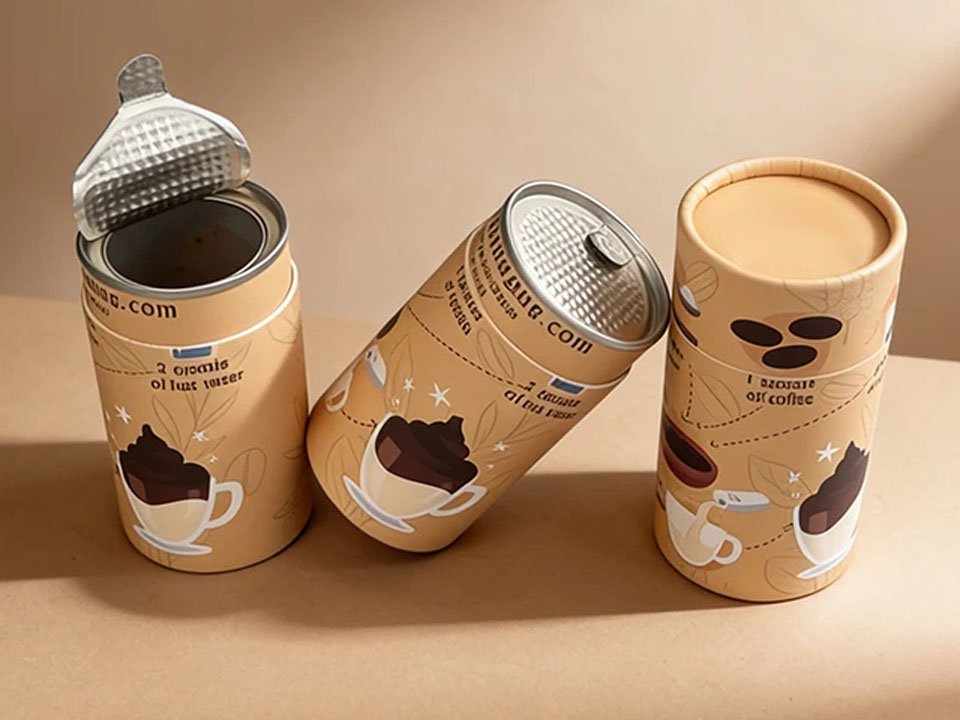
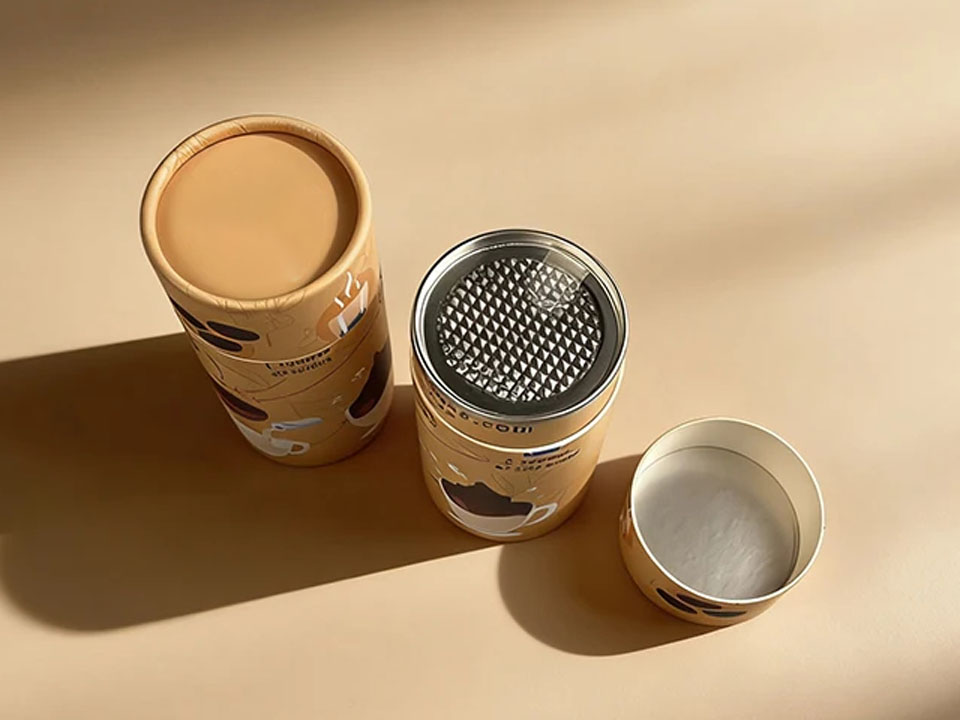
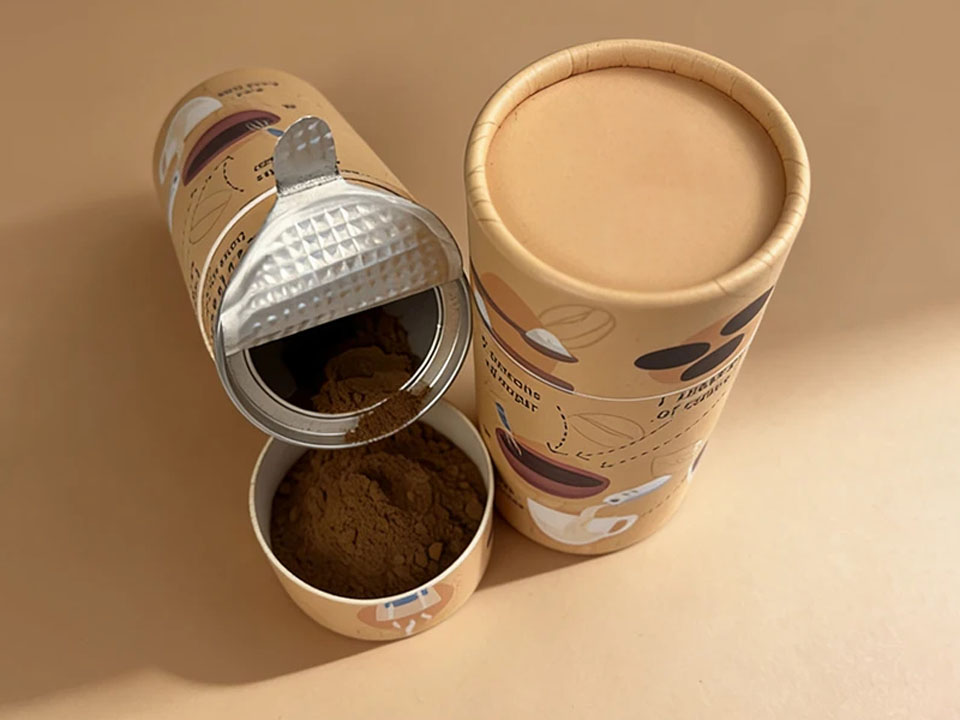
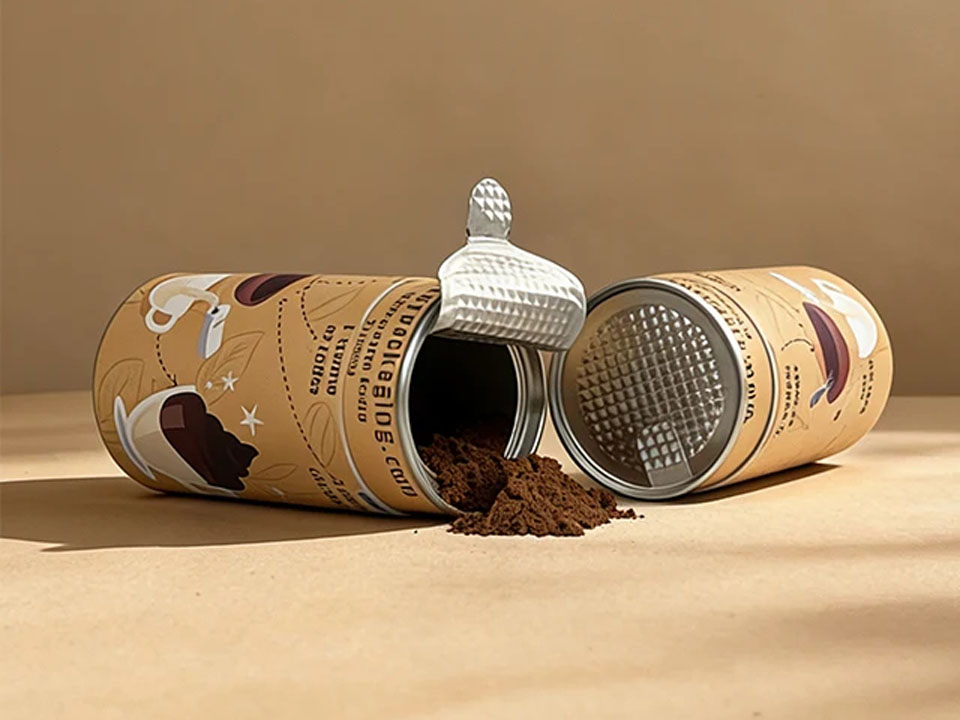
A poor cover can lose a good liner. If you desire instances of tube styles that make good sense for higher-barrier food applications, research study on tea paper tube box and very easy peel-off cover food grade paper canisters because the opening design issues once the client starts making use of the pack daily. I additionally watch coffee bean tube paper cylinders for a simple reason: aroma loss reveals weak obstacle decisions quick. Coffee is callous. Supplements are not much kinder.
Frequently asked questions
What is the best liner for supplement paper tubes?
The very best liner for supplement paper tubes is the obstacle system that matches the formula’s sensitivity to moisture, oxygen, light, shelf-life target, and distribution tension; for the majority of protein, environment-friendlies, collagen, mushroom, and vitamin powders, that normally means an aluminum-based liner instead of a wax-only covering. I would just put wax first when the formula is forgiving and the sales cycle is short.
Are wax lined paper tubes food secure?
Wax lined paper tubes are food-safe just when their materials and intended usages abide by the relevant food-contact laws, because food packaging legality relies on the specific wax chemistry, paper structure, and usage conditions instead of on the casual advertising and marketing expression “food risk-free” printed on an example sheet. That is why I prefer purchasers that request for conformity information, not vague reassurance.
Are aluminum foil lined paper tubes better for healthy protein powder?
Aluminum foil lined paper tubes are usually better for healthy protein powder because protein powders are frequently at risk to humidity pick-up, caking, scent drift, and look modifications, and foil-based obstacles are far stronger at minimizing oxygen, dampness, and light transmission than paper structures depending mostly on wax for defense. For whey and comparable powders, I believe this is the safer industrial default.
Can food grade paper tubes shield supplements from dampness?
Food quality paper tubes can shield supplements from moisture just when the paper body is coupled with a lining and closure system that maintain obstacle performance after transforming, loading, delivery, storage, and repeated customer opening, because plain or weakly coated paper is not enough for requiring supplement formulas. “Food grade” is not the exact same thing as “high barrier.” Individuals perplex those regularly.
Exactly how do I pick cellular lining for food supplement paper tubes?
Selecting lining for food supplement paper tubes indicates ranking 5 variables in order– formula level of sensitivity, target life span, climate exposure, opening-and-reclosing actions, and margin resistance– then picking the lightest, least expensive structure that still makes it through those stresses without product damage, conformity threat, or ugly customer-visible failing. If that seems unromantic, excellent. Packaging decisions must be unromantic.
Your Following Relocate
Below is my suggestion. Quit asking which liner sounds nicer and start asking which liner endures fact.
If your brand name offers major powder supplements and you need dependable food quality paper tubes , pick an aluminum-based liner initially, examination the closure, verify the converted tube after creasing and filling up, and only after that maximize cost. Use wax where it belongs: lower-risk, shorter-cycle, more forgiving products. Anything else is usually product packaging cinema.
And before you accept the following specification sheet, compare the obstacle construct, lid format, and expense alongside with your real product danger. That is just how you choose the finest lining for supplement paper tubes without spending for the wrong lesson twice.