ما زلت لا ترى حل التغليف المناسب؟ تحدث إلى رئيسنا.
إذا كنت قد راجعت موقعنا الإلكتروني أو تحدثت مع المبيعات وما زلت لا ترى مساراً واضحاً، أرسل طلبك هنا. ستنتقل رسالتك مباشرةً إلى مديرنا العام لإجراء مراجعة تنفيذية للجدوى والتكلفة والوقت اللازم. ستحصل على خطوة تالية واضحة - ما يمكننا القيام به، وما نحتاجه منك، وأسرع طريق للحصول على عرض أسعار.
مراجعة جنرال موتورز المباشرة لمواصفاتك وحالة الاستخدام والقيود
فحص الحجم + الهيكل: القطر، والارتفاع، وقوة الجدار، والإدخالات
توصيات الطباعة/الطلاء لمطابقة العلامة التجارية + الميزانية
بدائل خفض التكلفة وخيارات تحسين المهلة الزمنية
وضوح مسار التسعير: موك وخطة أخذ العينات وماذا بعد ذلك
تحدث إلى رئيسنا
احصل على عرض أسعار سريع للتغليف الأنبوبي الورقي المخصص
مصمم لمديري التغليف والمشتريات ومهندسي التغليف. حدِّد الحجم والكمية والتشطيب لتلقي إرشادات بشأن المواصفات والمهلة الزمنية والمواصفات لبرامجنا/برامج الاتحاد الأوروبي.
Why Coffee Packaging Tubes Have a Bottom Breath Valve
I’ve watched roasters obsess over roast curves, end temperatures, development ratios, and cupping scores, then completely fumble the last six inches of the process by shoving still-gassy beans into a rigid tube that looks sharp on Instagram but behaves like a tiny pressure bomb once it leaves the bagging line. That happens. A lot.
جدول المحتويات
But here’s the ugly truth: a coffee paper tube valve is not a decorative badge, and anyone selling it that way is either talking to beginners or hiding from the mechanics, because roasted coffee keeps bleeding off CO₂ well after it leaves the drum—research tied to the Zurich University of Applied Sciences and Tchibo notes that roughly 1% of fresh roasted coffee mass is CO₂, with whole beans continuing to degas for about a month depending on roast and storage conditions. That’s the load. The package has to deal with it.
So when people type weirdly phrased searches like why do coffee paper tube have valves, I know exactly what they’re really asking: why can’t a fancy rigid tube just be sealed tight and done with it? Because coffee isn’t dead cargo. It’s still moving—chemically, physically, commercially.
Fresh roast, trapped gas, predictable trouble
Yet the market keeps repeating the same mistake. Someone hears “airtight,” imagines safety, then forgets headspace pressure, seam strain, and the fact that post-roast gas doesn’t care about marketing copy; the U.S. Consumer Product Safety Commission’s recall of illy whole-bean cans missing a bottom air valve is the cleanest real-world warning I know, because the lid could detach suddenly when the canister lacked that vent path. Not subtle.
I frankly believe this is where a lot of “premium packaging” talk falls apart. If the structure can’t manage degassing, it’s not premium. It’s cosplay.
And no, I don’t think the bottom location is some mystical freshness hack by itself. It’s a packaging-layout decision. A smart one, usually.
Bottom placement is about function, not romance
From my experience, the best packaging decisions are boring when you strip off the sales language. Bottom valve placement is boring in that good way: it protects the visual real estate, avoids clutter on the sidewall, leaves the top opening clean, and still gives the canister a route to vent CO₂ without turning the whole format into a compromise. That’s how a proper coffee packaging valve earns its keep.
How does a coffee paper tube valve work?
It’s tiny hardware.
But the mechanics matter more than most buyers think, because a one-way degassing valve isn’t magic—it’s a pressure-sensitive device that stays sealed until internal gas pressure rises enough to overcome the opening threshold, then vents CO₂ and closes again so outside air doesn’t just stroll back in and start chewing through the aromatics. That’s the plain-English answer to how does a coffee paper tube valve work.
Here’s where buyers get burned, though: they spec the valve, feel clever, and never ask about assembly tolerances, interference fit, or process control on the line. Bad move. A 2015 industrial case study on coffee degassing valves found that component decoupling was driving defects, and tightening the weak point in manufacturing cut the defect rate by about an order of magnitude. So yes—the coffee degassing valve can fail in the real world, not just in theory.
The valve is also protecting aroma, not just package shape
However, the pressure story is only half the job. Coffee aroma compounds are fickle, volatile, and easy to trash with oxygen exposure, which is why the valve has to work with the rest of the barrier stack—liner, seam, peel seal, closure fit—instead of pretending to be a solo act; the packaging literature and coffee-degassing work both point to the same thing: fast packaging matters, but unmanaged gas and oxygen ingress are both trouble.
That’s why I keep coming back to the phrase aroma valve coffee packaging. It sounds a little salesy, sure. But technically, the idea is valid. The valve isn’t there merely to stop a bulge. It’s there to make early packing possible without throwing the aroma profile under the truck.
What the valve is actually buying you
Packaging condition
What usually happens
Fresh coffee in a sealed tube with no valve
Pressure builds, lids or seams are stressed, and the pack can deform
Fresh coffee in a tube with a bad or badly applied valve
CO₂ may vent inconsistently, or oxygen barrier performance gets compromised
Fresh coffee in a tube with a correctly specified bottom valve
Pressure is managed while oxygen ingress stays limited
Tube format with peel lid + rigid body + barrier liner + bottom valve
Better balance of retail appearance, opening experience, and freshness control
Rigid canister missing its venting path
You can move from “freshness problem” into a real safety and recall problem
That table isn’t theory for theory’s sake. It’s a distillation of coffee degassing research, valve-function work, an engineering failure case on defective valves, and the CPSC recall involving cans missing a bottom air valve. That’s enough evidence for me.
2024 turned this into a margin problem
Coffee got pricier.
And that matters, because packaging sloppiness hurts more when the green cost is high and the specialty buyer is pickier than they used to be; in Spring 2024, the National Coffee Association said 67% of U.S. adults had coffee in the past day—a 20-year high—and by June 2024 it reported 45% of American adults had specialty coffee in the past day, ahead of traditional coffee for the first time. More volume. More expectations. Less room to mail it in. (ncausa.org) (ncausa.org) (National Coffee Association)
Then the supply side got mean. Reuters reported in December 2024 that global coffee prices had climbed to their highest levels in nearly 50 years, and USDA’s December 2024 Coffee: World Markets and Trade report said global consumption for 2024/25 was forecast at 168.1 million 60-kg bags, with ending stocks down to 20.9 million bags. So when someone asks me whether a CO2 degassing valve for coffee paper tube formats is worth the bother, my answer is easy: if you’re packing fresh roasted coffee into a rigid tube, not using one is often the expensive decision.
That’s the part too many suppliers won’t say out loud. A fresh roasted coffee valve is not a cute extra. It’s insurance against preventable waste.
الأسئلة الشائعة
What is a coffee paper tube valve?
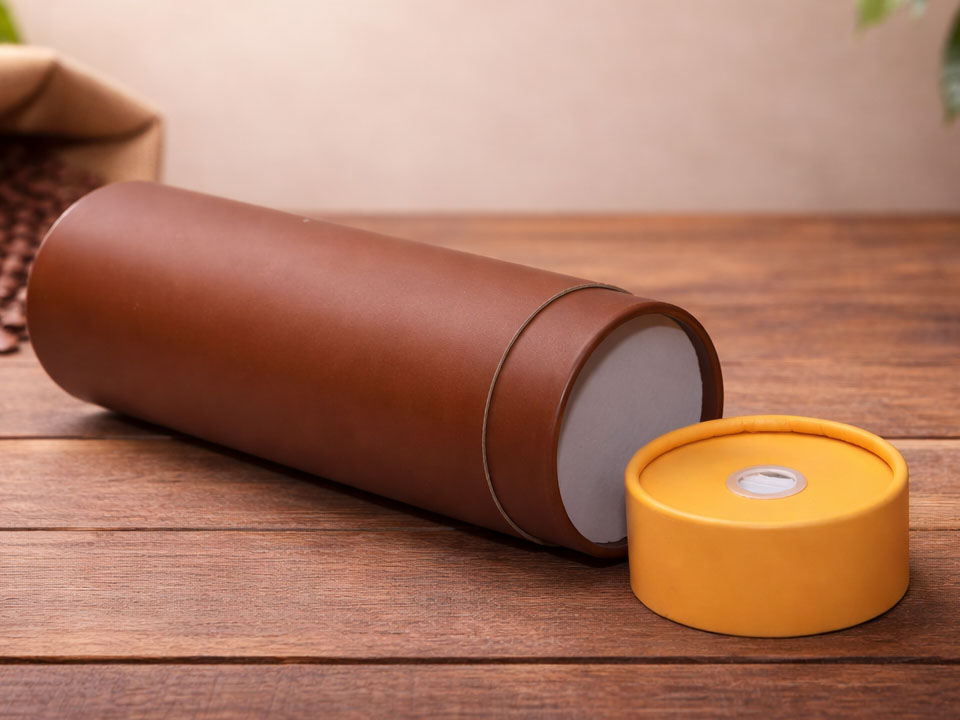
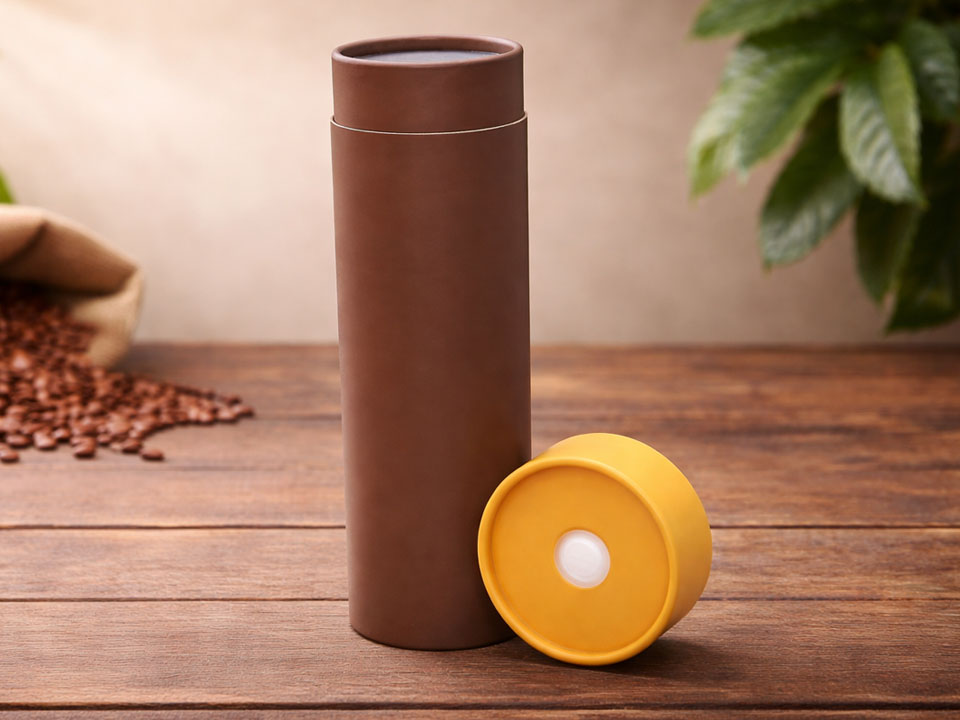
A coffee paper tube valve is a one-way pressure-release component fitted into a rigid paper canister, usually near the base, that vents post-roast CO₂ while resisting oxygen and moisture ingress, allowing fresh coffee to be packed earlier without swelling the tube, stressing the lid, or flattening aroma retention. Then the practical version kicks in: it lets a rigid tube behave like actual coffee packaging instead of an overbuilt gift can.
Why do coffee paper tubes have valves?
Coffee paper tubes have valves because roasted beans continue releasing CO₂ for days and often weeks after roasting, and a sealed rigid canister without venting can build internal pressure that deforms the pack, stresses closures, slows packing schedules, or in bad cases creates a real safety issue when the vent path is absent. Strip away the jargon and that’s it: the valve lets gas out without inviting oxygen back in.
How does a coffee paper tube valve work?
A coffee paper tube valve works by using a pressure-sensitive vent structure—often a diaphragm or sealed channel design—that stays shut under normal conditions but opens once internal CO₂ pressure exceeds the release threshold, then closes again as pressure drops to limit oxygen ingress and preserve the barrier environment around the beans. In shop-floor language, it “burps” the pack without letting the room back inside.
Is a CO2 degassing valve for coffee paper tube packaging necessary for whole beans and ground coffee?
A CO2 degassing valve for coffee paper tube formats is most important for very fresh whole beans and still highly relevant for fresh ground coffee, because ground coffee tends to release gas faster while also being more vulnerable to oxidation, making controlled venting and a solid barrier stack more—not less—important during the first stretch after packing. The deciding factor is your roast-to-pack timing, not your packaging mood board.
Does a bottom valve mean the tube is fully airtight forever?
A bottom valve does not mean the tube is permanently airtight; it means the package is engineered to vent excess internal CO₂ in one direction while keeping normal oxygen ingress low, so long-term freshness still depends on the entire pack system, including liner quality, seal integrity, closure fit, valve consistency, and storage conditions. That’s why weak assembly work can wreck a good spec on paper.
If you want, I can do a second pass that makes it even less polished-looking—more jagged, more contrarian, and closer to founder-operator voice than trade-publication voice.