Still Not Seeing The Right Packaging Solution? Talk to Our Boss.
If you’ve reviewed our website or spoken with sales and still don’t see a clear path, send your request here. Your message goes directly to our General Manager for an executive review of feasibility, cost, and lead time. You’ll get a clear next step—what we can do, what we need from you, and the fastest route to a quote.
Direct GM review of your specs, use case, and constraints
Print/finish recommendations to match brand + budget
Cost-down alternatives and lead-time improvement options
Quote path clarity: MOQ, sampling plan, and what to next
Talk to Our Boss
Get a Fast Quote for Custom Paper Tube Packaging
Built for packaging managers, procurement, and packaging engineers. Specify size, quantity, and finish to receive moq, lead time, and spec guidance for us/eu programs.
Quote-ready customization: diameter, height, wall thickness, inserts, liners, and closures
Coffee & Tea Packaging: Paper Tubes With Liners vs Valve Bags, Compared
Pretty packaging lies.
I’ve watched brands spend more on aesthetics than on oxygen control, then act surprised when their “12-month shelf life” tastes flat at month three, because the format decision was driven by Instagram unboxings, not OTR/MVTR, valve physics, or what recyclers actually accept in 2024.
So what are you really buying: shelf life, or a story you can print on the label?
Table of Contents
The uncomfortable baseline: coffee is a gas factory, tea is a sponge
Roasted coffee pushes out CO₂ for days to weeks; tea, meanwhile, doesn’t need degassing, but it does punish moisture ingress and aroma loss. That one fact splits the “coffee packaging” debate into two engineering problems pretending to be one marketing decision.
And if you’re tempted to treat barrier as optional because “it’s specialty, it’ll sell fast,” read the chemistry: published coffee work shows aroma compounds drop fast when oxygen is high; at oxygen levels ≥5% the decline in key aroma markers accelerates, while around ~2% oxygen the decline slows. That’s not vibes, that’s oxidation kinetics.
Paper tubes with liners: the premium look is the easy part
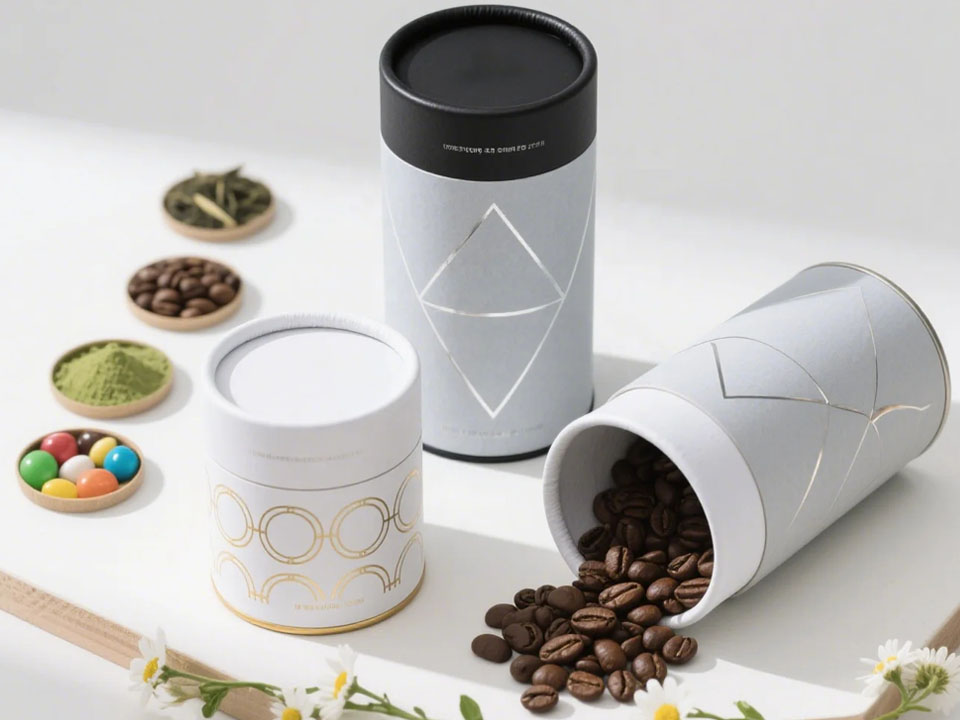
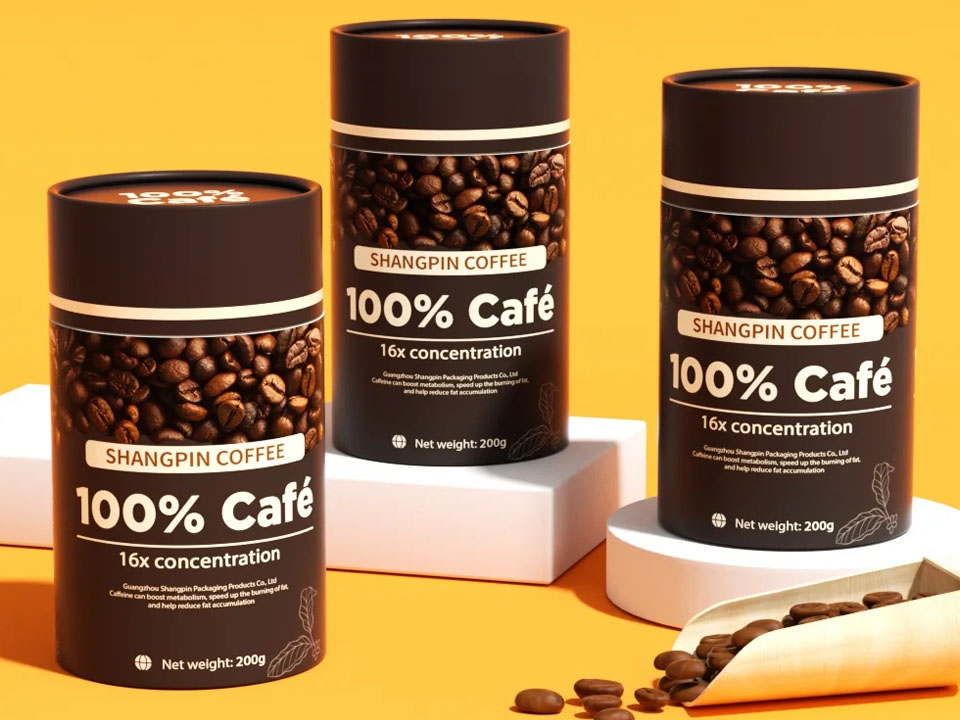
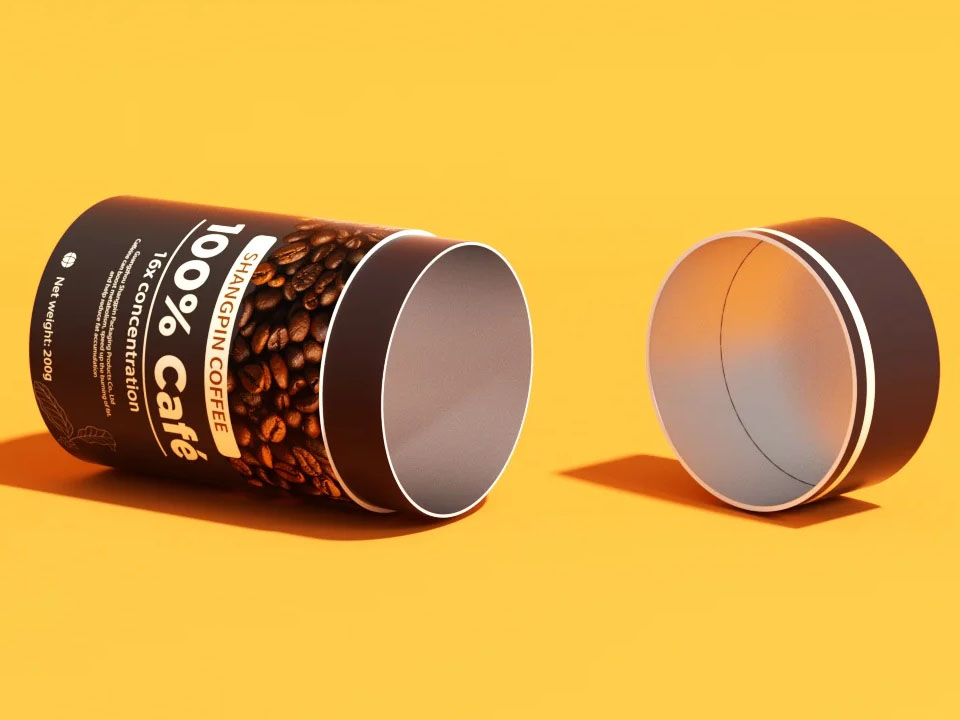
When someone says paper tube coffee packaging with liner, what they usually mean is a spiral-wound paperboard shell plus an inner liner that does the real work: PE, EVOH, aluminum foil, metallized films, or coated papers, plus a closure system (metal lid, plug, membrane, induction seal, sometimes a valve).
Here’s my hard truth: a paperboard canister (composite can) coffee packaging format is only as “green” as its separability—and most of them aren’t designed for easy separation at all. You can make a tube that feels recyclable. You can’t “feel” repulping yield, adhesive contamination, or multi-material rejection.
If you’re building a line around tubes, at least be honest about what you’re selecting:
Barrier is dominated by liner + seal integrity, not the paper body.
Failure mode is usually the closure, not the wall: bad thread tolerances, warped lids, imperfect membrane seals.
Shipping protection is excellent (crush resistance, light protection), which is why tubes win in retail gift sets.
If you need reference formats, compare typical executions:
Barrier reality check: “paper-based” still needs measurement discipline
The packaging industry is quietly admitting what coffee people already learned the expensive way: you must measure oxygen barrier properly, especially for paper-based structures; recent research on paper-based packaging points out that oxygen presence drives off-taste and that OTR measurement methods can be limiting depending on the structure and test standard (they cite DIN 53380–5 constraints). (ScienceDirect)
Valve bags: ugly to some, brutally effective to everyone who ships coffee
A coffee bag with one-way degassing valve exists because coffee is still emitting CO₂ after packing and you either vent it or you build a balloon. For most roasters, a block bottom coffee valve bag hits the practical sweet spot: good shelf block, good billboard, decent machinability, scalable costs.
But. And this matters. Valves create sustainability and labeling liabilities. They’re small, they’re plastic, and they complicate recovery. If your marketing team wants to stamp “recyclable coffee bag with valve” on the front panel, you’re taking on legal and reputational risk that has nothing to do with your roast.
I’m not guessing. U.S. attorneys general have been suing over “recyclable” messaging when infrastructure doesn’t match the claim. Minnesota’s AG sued over “recycling” bag marketing because recyclables arriving bagged often get trashed for worker safety and processing reasons—meaning the claim can directly increase landfill outcomes. That’s the opposite of what the label implies.
California’s AG went bigger in September 2024, suing ExxonMobil over alleged deception around recyclability myths—same theme, larger target, same consumer harm theory: don’t sell the public a recycling fairy tale to justify more disposability. If you’re a coffee brand leaning on “recyclable” claims, you’re swimming in that same current.
Retail vs e-commerce: channel dictates tolerance for failure
Retail forgives a lot if the package is beautiful and stable on shelf. E-commerce forgives nothing because parcels get dropped, crushed, and left in hot trucks.
My field rule:
Retail + gifting + in-store discovery → tubes can win, because the form factor sells.
E-commerce + subscription + third-party fulfillment → valve bags usually win, because failure rates kill you quietly (returns, stale reviews, repeat loss).
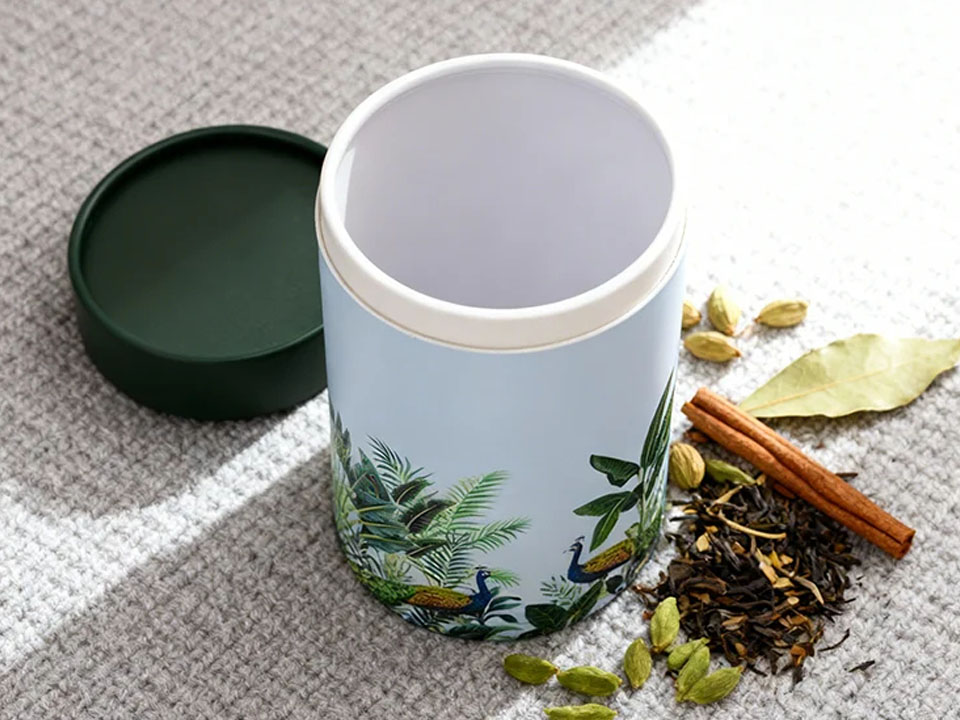
If you’re selling tea, tubes are easier to justify because you don’t need a valve to stay sane. Look at purpose-built tea paper tube packaging and the more functional end of the spectrum like airtight food-grade metal lid paper tea tube packaging. Tea is about humidity control, light control, and aroma retention; a proper lid and seal strategy matters more than a degassing feature.
Comparison table: what actually changes your outcomes
Decision factor
Lined paper tubes (composite canisters)
Valve bags (incl. block bottom)
Oxygen control
Depends on liner + closure; failure often at lid/membrane
Strong when using high-barrier laminates + good seals
CO₂ degassing
Usually none unless you add a valve (adds complexity)
Built for it with one-way degassing valve
Moisture control
Good with proper liner; closures vary widely
Excellent with barrier films; needs seal discipline
Light protection
Excellent (opaque walls)
Depends on film (foil/metallized better)
E-commerce abuse tolerance
High crush strength; bulkier to ship
Flexible, lighter, but corner/crease damage risk
“Recyclable” truthfulness
Often composite; acceptance is local and inconsistent
Multi-layer films + valve complicate recovery; be cautious with claims
Line speed & capex
Filling + sealing varies; closures can slow lines
Mature equipment ecosystem; common formats
Unit economics (typical market behavior)
Higher cost per unit; higher perceived value
Lower cost per unit at scale; performance per dollar is strong
The decision framework I actually use
If you want high-barrier coffee & tea packaging (oxygen/moisture barrier), stop arguing format first. Decide specs first, then pick the format that can reliably hit them in your channel.
Shelf-life target (real, not aspirational) If you need 6–12 months for roasted coffee, engineer for low oxygen ingress and stable seals. The literature is explicit that oxygen level is a driver of aroma loss; treat headspace oxygen like a KPI, not a footnote. ([PMC][1])
Channel punishment (retail vs best coffee packaging for e-commerce shipping) If DTC is >50% of volume, bulky tubes raise freight and dimensional weight pain; bags reduce volume, and the right laminate survives abuse better than people assume.
Claim risk (recyclability realities) If your format is composite, multi-layer, or valve-equipped, you can still be responsible. But don’t posture. Enforcement trends show regulators are willing to treat misleading recyclability messaging as consumer deception. (Minnesota Attorney General)
Operations reality (what you can run every day) A gorgeous tube that jams your line is not premium. It’s a tax.
FAQs
Do coffee beans need a one-way degassing valve?
A one-way degassing valve is a pressure-relief component that lets CO₂ exit freshly roasted coffee packaging while resisting outside air ingress, which reduces bloating and helps preserve sensory quality; it’s most relevant for whole beans packed soon after roasting and shipped through variable temperature and altitude conditions. If you pack after extended degas, nitrogen flush well, and sell locally fast, you can sometimes skip it. Subscriptions and long distribution? You’re usually asking for swollen packs or staled flavor if you skip it.
Are lined paper tubes actually recyclable?
A lined paper tube is a composite package made from paperboard plus one or more functional layers (plastic, foil, coatings, adhesives, and often a separate closure), which means recyclability depends on whether local systems can separate or tolerate those layers without degrading paper recovery, not on whether the outer surface looks like paper. If you can’t explain how it’s processed, don’t claim it’s “recyclable.” That posture is getting riskier in the U.S. as AG actions focus on misleading recycling claims.
What barrier spec should I demand for 6–12 month coffee shelf life?
A coffee barrier spec is a defined oxygen and moisture transmission performance target (often tracked via OTR and MVTR at stated temperature and humidity) that aims to keep oxidative staling low enough that aroma and flavor remain acceptable through your intended distribution window, rather than a vague “high barrier” label. Practically: require test conditions, require seal integrity testing, and treat closure systems (for tubes) as part of the spec, not an accessory.
Which format is best for e-commerce shipping?
The best e-commerce format is the one that minimizes damage rates and customer-perceived staling while keeping dimensional weight and fulfillment handling manageable, meaning you evaluate crush resistance, seal survivability, and freight costs together rather than choosing based on aesthetics or a single sustainability claim. In most DTC coffee businesses I’ve audited, valve bags beat tubes on freight math; tubes beat bags on unboxing and crush resistance. The winner is your return rate.
Can tea use the same packaging as coffee?
Tea packaging is a moisture-and-aroma protection system that typically does not require degassing, meaning the format choice is driven by humidity control, light control, and odor barrier needs rather than CO₂ venting, so tea can often use simpler closures and still maintain quality if seals and liners are appropriate. For tea, a well-designed tube with a genuinely tight lid can be excellent—see purpose-built paper tea tube packaging and more function-forward metal-lid airtight tea tubes.
How do I avoid greenwashing when comparing tubes vs valve bags?
Greenwashing avoidance is the practice of making packaging claims only when you can substantiate them with local acceptance, material structure disclosure, and test-backed performance data, so that marketing language matches real end-of-life pathways and doesn’t imply recycling success where systems routinely fail. If you want to be aggressive, be aggressive with data: publish structure, publish test conditions, and use qualified language. Regulators are already using deception theories in recycling-related cases.
Final thoughts
If you’re deciding how to choose between paper tubes and valve bags for coffee & tea shelf life, don’t start with “what looks premium.” Start with your shelf-life target, channel mix, and what you’re willing to claim on-pack without getting dragged into the next wave of recyclability scrutiny.
If you want a tube-first approach, review these coffee paper tubes and the valve-enabled option (paper tube with breath valve)—then decide whether you’re optimizing for optics or oxygen.