Still Not Seeing The Right Packaging Solution? Talk to Our Boss.
If you’ve reviewed our website or spoken with sales and still don’t see a clear path, send your request here. Your message goes directly to our General Manager for an executive review of feasibility, cost, and lead time. You’ll get a clear next step—what we can do, what we need from you, and the fastest route to a quote.
Direct GM review of your specs, use case, and constraints
Print/finish recommendations to match brand + budget
Cost-down alternatives and lead-time improvement options
Quote path clarity: MOQ, sampling plan, and what to next
Talk to Our Boss
Get a Fast Quote for Custom Paper Tube Packaging
Built for packaging managers, procurement, and packaging engineers. Specify size, quantity, and finish to receive moq, lead time, and spec guidance for us/eu programs.
Quote-ready customization: diameter, height, wall thickness, inserts, liners, and closures
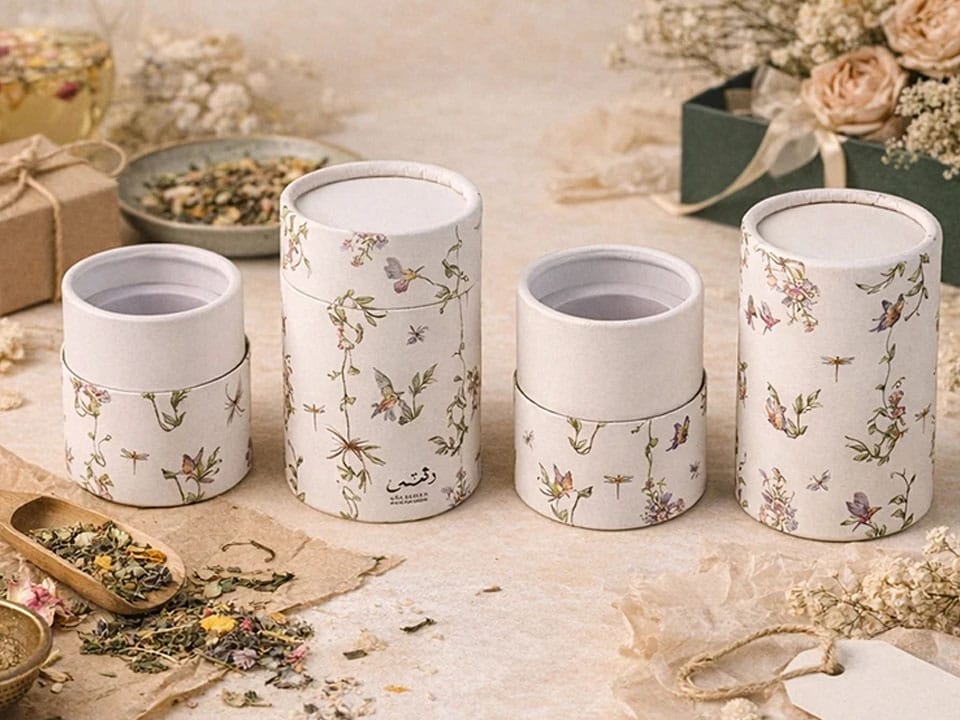
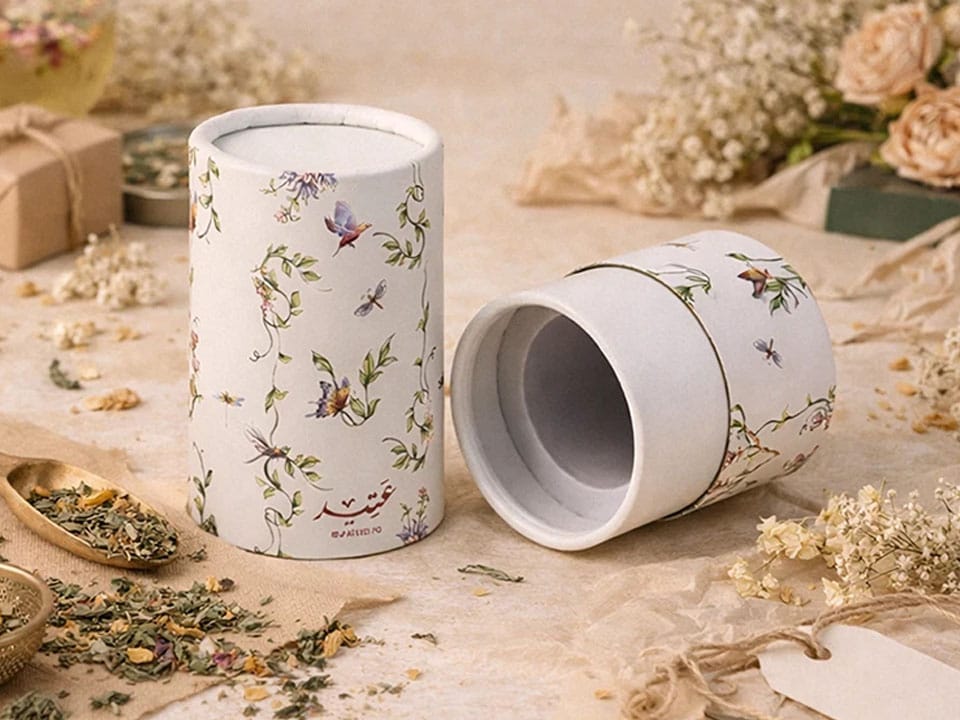
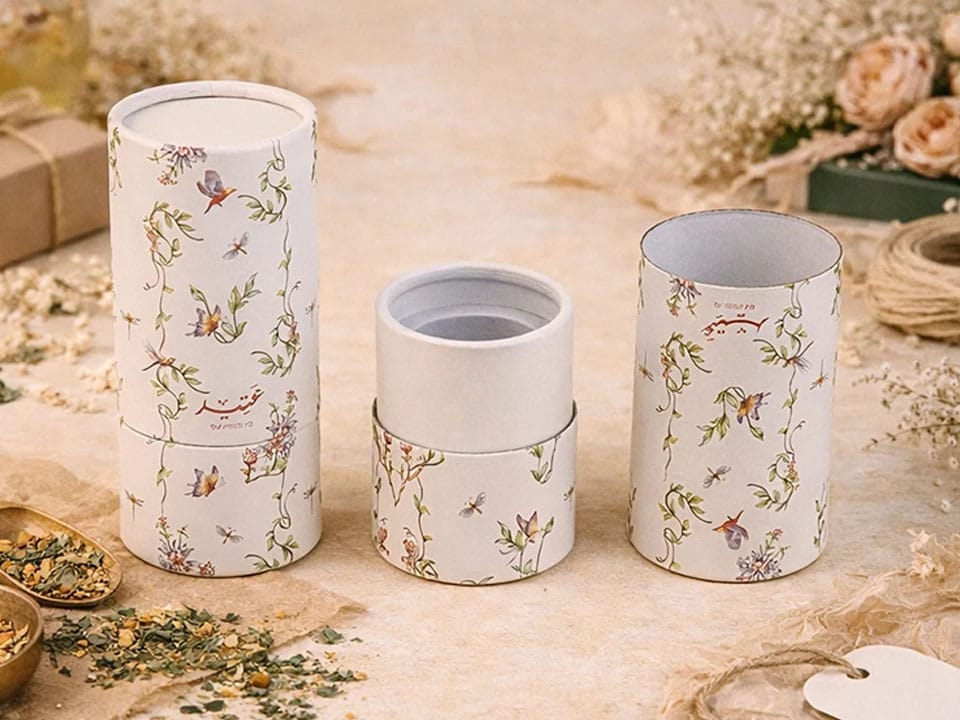
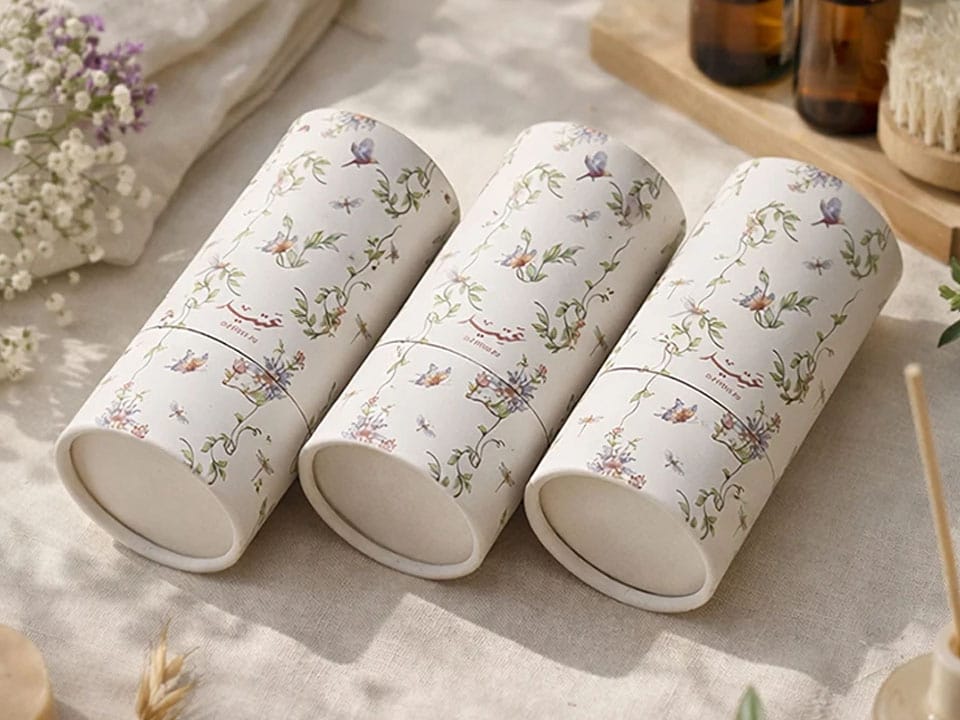
Eco-Friendly Perfume Paper Tube Packaging Solutions
I’ve been in those packaging sign-off calls where the room gets weirdly sentimental about finishes—soft-touch here, foil line there, maybe a nested insert because somebody wants a slower reveal—and then, right when the budget starts to squeal, someone says, “Can we make it sustainable too?” as if that’s a garnish you sprinkle on top of a bloated secondary pack and call it strategy. It isn’t. Not even close.
Table of Contents
Three words: show receipts.
Because here’s the ugly truth: a lot of “eco-friendly perfume packaging” isn’t a redesign. It’s a costume change. The bottle stays the same, the material stack stays messy, the embellishment package stays inflated, and the paper tube gets drafted into doing PR work it was never meant to do. That’s not sustainability. That’s narrative management.
And the market pressure behind this isn’t made up by agencies trying to sell trend decks. In 2023, the EU generated 79.7 million tonnes of packaging waste, with paper and cardboard accounting for 32.3 million tonnes, or 40.4% of the total, and in April 2024 the European Parliament adopted new packaging measures aimed at making packaging more sustainable and reducing waste. That’s not fringe. That’s the direction of travel, whether brands like it or not.
So, yes, I still believe paper tube packaging can be the right move for fragrance. But only when the claim boundary is tight. Secondary pack improvement? Fine. Lighter spec? Good. Cleaner substrate story? Better. Whole-product redemption arc? Don’t push it.
Why paper tube packaging still makes sense in fragrance
Funny thing is, tubes do a lot of jobs well when people stop overdirecting them.
That’s where outsiders usually miss the plot. They think “paper tube” is one thing. It isn’t. In the real world, it’s caliper, fit, seam quality, closure tolerance, rub resistance, print holdout, freight cube, and line handling. Boring words. Expensive consequences.
And I frankly believe too many brands fetishize kraft for the optics. Kraft can look honest, sure. It can also scuff, mute graphics, and go muddy if the art direction wasn’t built for it. White paper, meanwhile, gets treated like a sellout option, when in fact it often gives you cleaner typography, better contrast, and less panic in prepress—especially if the brand identity leans clinical, modern, or high-definition.
What actually helps recyclability, and what quietly wrecks it
But let’s get into the part nobody likes discussing in the kickoff deck.
The substrate isn’t the whole story. Not remotely. The recyclability signal lives in the whole stack: laminates, over-varnish, fitments, windows, medallions, foam, collars, tags, odd little glued-on “premium” bits that look clever in a render and become a nuisance the second they hit the MRF conversation. That’s the shop-floor reality.
How2Recycle’s 2024 guidance says attachments on paper packaging can reduce overall recycled material yields and create wear on MRF and recycler equipment. The FTC’s Green Guides push from the other side of the table, warning marketers away from environmental claims that mislead consumers. Put those together and the takeaway is pretty plain: if you’re going to sell sustainable perfume packaging, the pack spec needs to survive both engineering scrutiny and claim scrutiny.
Here’s the same table, because honestly, it still does the job better than a hundred vague adjectives:
Format
Best use case
Hidden risk
My verdict
Uncoated kraft paper tube
Natural, botanical, apothecary, low-ink branding
Print precision is lower; scuffing is visible
Best honesty-to-impact ratio
White paper tube with light varnish
Premium fragrance brands needing crisp graphics
Teams often over-finish it into a pseudo-luxury laminate job
Best balance for most brands
Soft-touch laminated tube
Prestige gifting and seasonal theatrics
Recyclability story weakens fast; claim risk rises
Looks expensive, reads slippery
Tube with foam insert, window, medallion, extra attachments
Simplified cardboard cylindrical box with paper fitment
Bottle protection where retail abuse is a factor
May add bulk if not dimensioned tightly
Good when protection really matters
My bias is obvious. I’m fine with that. Strip the thing back, keep the tube doing real work, and stop using embellishment as a confidence crutch.
The cost story people keep trying to talk around
Paper isn’t clean by default.
That fantasy falls apart the minute you zoom out and look at demand pressure. Reuters reported in 2023 that global demand for paper packaging had risen more than 65% over the prior 15 to 20 years, and the same report cited Canopy’s estimate that three billion trees are cut down every year to meet global paper packaging demand. So no, I’m not buying the saintly version of the paper story. Better than some alternatives in some use cases? Sure. Morally pure? Come on.
It gets worse.
Because once procurement walks in, the conversation usually stops sounding poetic. Reuters reported in February 2024 that Mondi said customers had been reluctant to switch to sustainable packaging because of cost concerns. I’ve seen the same movie too many times: everyone loves the sustainability language until the costing sheet shows the impact of finish layers, assembly time, MOQ, material yield, freight, and reject risk. Then the room gets very philosophical, very quickly, about “brand heritage.”
From my experience, if the packaging only looks sustainable before anyone opens Excel, it wasn’t really sustainable thinking. It was moodboard theater.
The spec I’d back with my own name on it
So what would I actually approve?
A tight paper tube packaging structure around the real bottle dimensions. Minimal dead air. Either uncoated kraft or white paper, depending on how demanding the graphic system is. Sensible print coverage. Varnish used like a technical layer—not a status drug. No random plastic window. No foam insert unless the fragility case is real. No “luxury” attachments added because someone got nervous the pack looked too calm.
That’s the move.
And the funny part is this: the best eco-friendly perfume packaging often doesn’t look aggressively green at all. It looks resolved. The dimensions make sense. The closure feels deliberate. The print doesn’t fight the board. The pack survives handling. Nothing’s rattling around like a bad mockup that slipped into production.
Compliance isn’t an afterthought anymore
Yet this is where a lot of teams still act like it’s 2019.
They write “eco-friendly” on a concept board as if legal will sort it out later. Bad habit. Reuters’ May 2024 analysis of the EU’s Empowering Consumers Directive made the direction clear: the EU is moving against generic environmental claims, unverified sustainability labels, and claims that imply an entire product is green when the statement only applies to one aspect of it. That’s a big deal for perfume, where the paper tube is usually just the outer shell.
California’s moving too. CalRecycle says packaging makes up over 50% of what gets dumped in California landfills by volume, and SB 54 puts pressure on the whole packaging ecosystem through producer responsibility. That doesn’t mean every fragrance founder needs to become a regulatory scholar overnight. It does mean lazy claims are getting riskier.
And then there’s chemistry—always treated like backroom trivia until it turns into the headline. In February 2024, the FDA announced that PFAS-containing grease-proofing substances were no longer being sold by manufacturers for food-contact use in paper and paperboard packaging. Perfume tubes aren’t food packs, obviously, but the signal is still worth reading properly: coatings, barriers, and treatment chemistries aren’t invisible anymore. People are looking.
What smart brands do differently
They narrow the claim.
That’s it. That’s the grown-up move. Instead of trying to crown the whole product sustainable, they say what changed. Fiber-based secondary packaging. Reduced plastic in the outer pack. Simpler structure. Fewer attachments. Cleaner spec. Those are defensible statements. They don’t sound sexy in a launch deck, but they age better.
And I’d test like a cynic. One kraft route. One white route. One premium route with all the decorative junk stripped out. Then beat them up a little—scuff, transit, squeeze, rub, shelf, assembly line timing, freight efficiency. You learn more from ten honest minutes in that phase than from forty pages of sustainability copy.
That’s the part I keep coming back to. The strongest custom perfume packaging tubes aren’t the ones trying hardest to perform virtue. They’re the ones that can handle scrutiny without wobbling.
FAQs
What is eco-friendly perfume paper tube packaging?
Eco-friendly perfume paper tube packaging is a fiber-based secondary pack for fragrance bottles designed to reduce unnecessary material complexity, avoid exaggerated environmental claims, and improve end-of-life handling through simpler structures, lighter finishing, and fewer problematic add-ons than many traditional luxury secondary packaging formats.
That’s the clean definition. The messy part is implementation. Because the minute a brand loads the tube with nonessential extras, the “eco” story starts leaking from the seams.
Are perfume paper tubes recyclable?
Perfume paper tubes are potentially recyclable when the package remains predominantly paper-based, limits mixed-material attachments, and avoids embellishments that interfere with sorting or fiber recovery, but that answer gets much less confident once windows, foam inserts, laminates, or glued decorative components enter the bill of materials.
That’s the nuance people try to skip. Don’t skip it.
Is kraft paper better than white paper for sustainable perfume packaging?
Kraft paper is not automatically better than white paper for sustainable perfume packaging, because overall environmental credibility depends more on the full specification—print coverage, finish stack, inserts, closures, and material simplicity—than on whether the outer wrap looks raw, earthy, bright white, minimalist, or prestige-coded.
I know kraft gets romanticized. Sometimes it deserves that. Sometimes it’s just harder to print well.
Can a brand legally call paper tube packaging “eco-friendly”?
A brand can describe paper tube packaging as eco-friendly only when the claim is specific, substantiated, and accurately limited to the part of the product being discussed, because regulators are increasingly challenging vague environmental language, unsupported sustainability claims, and broad statements that overstate what the packaging change actually achieves.
Personally, I’d rather see a narrow claim than a loud one. Safer. Smarter. More believable.
Your next move
Don’t chase a vibe. Build a spec.
Run three versions. Kraft. White. Premium-with-restraint. Then judge them the unromantic way: bottle protection, scuffing, print behavior, freight cube, assembly speed, material mix, and claim defensibility. Not just shelf beauty. Not just “brand feel.” Not just what looked nice in a render.