Vous n'avez toujours pas trouvé la bonne solution d'emballage ? Parlez-en à notre patron.
Si vous avez consulté notre site web ou discuté avec le service des ventes et que vous ne voyez toujours pas la voie à suivre, envoyez votre demande ici. Votre message sera transmis directement à notre directeur général, qui examinera la faisabilité, le coût et le délai de mise en œuvre. Vous obtiendrez une étape suivante claire - ce que nous pouvons faire, ce que nous attendons de vous, et la voie la plus rapide pour obtenir un devis.
Examen direct par GM de vos spécifications, cas d'utilisation et contraintes
Vérification de la taille et de la structure : diamètre, hauteur, résistance des parois, inserts
Recommandations en matière d'impression et de finition en fonction de la marque et du budget
Possibilités de réduction des coûts et d'amélioration des délais
Clarté du cheminement du devis : MOQ, plan d'échantillonnage et étapes suivantes
Parler à notre patron
Obtenir un devis rapide pour l'emballage de tubes en papier sur mesure
Conçu pour les responsables de l'emballage, de l'approvisionnement et les ingénieurs de l'emballage. Spécifiez la taille, la quantité et la finition pour obtenir un devis, un délai de livraison et des conseils sur les spécifications pour les programmes américains/européens.
Personnalisation prête à l'emploi : diamètre, hauteur, épaisseur de paroi, inserts, doublures et fermetures
Finitions haut de gamme : CMYK/Pantone, film, gaufrage, UV
Clarté de l'approvisionnement : spécifications claires + conseils en matière de contrôle de la qualité et de gestion des défauts de fabrication
Durable : Papier FSC® disponible sur demande
Sécurité enfants : conforme à la norme ISO 8317 / PPPA
Concepts novateurs pour un emballage en tube papier personnalisé unique pour les tasses
Table des matières
Les tasses semblent simples. Les expédier (et les vendre) ne l'est pas.
Un paquet de tasses doit faire deux choses à la fois : arrêter les dommages en cours de transport et faire en sorte que le produit vaille la peine d'être conservé. L'emballage en tube de papier convient parfaitement à cette tâche, car il protège la forme, s'empile proprement et offre une surface de déballage de première qualité.
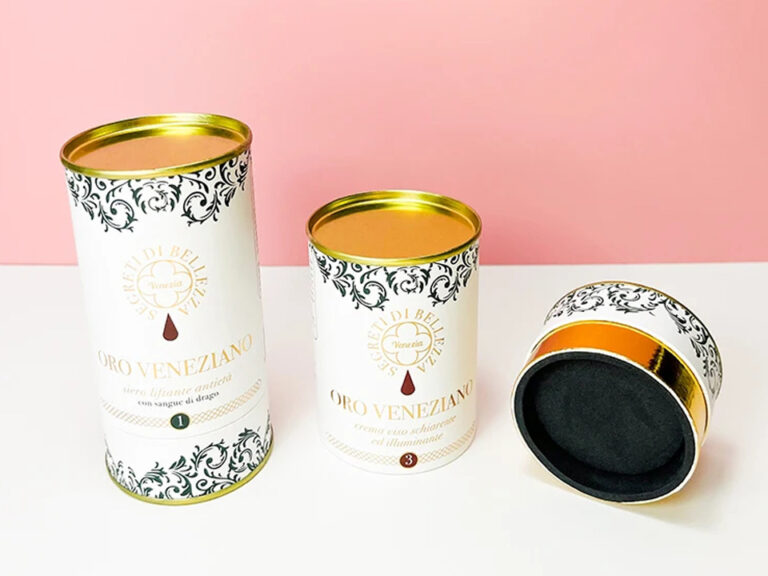
Si vous construisez pour la vente en gros, l'OEM/ODM ou l'achat en gros, vous avez également besoin d'une production qui ne vacille pas lorsque le volume augmente. C'est pourquoi les marques commencent souvent par faire appel à un fabricant capable de produire des séries régulières et de réaliser des finitions reproductibles. Vous pouvez voir la gamme complète des styles de tubes sur la page d'accueil du site Web de la Commission européenne. Boîtes en papier tubulaire fabriquées sur mesure la page d'accueil, puis de passer à la page d'accueil plus large de la produits d'emballage en tube de papier pour des comparaisons rapides.
Psychologie des couleurs
La couleur est votre première poignée de main. Elle crée l'ambiance avant même que quiconque ne lise un mot.
Cohérence des couleurs pour les UGS et les collections
Si vous vendez plusieurs modèles de tasses, ne traitez pas chaque tube comme une œuvre d'art distincte. Créez un système de couleurs:
Une couleur de marque principale (qui reste la même pour toutes les UGS)
Une couleur d'accent (change en fonction de la saveur, de la saison ou de la collaboration)
Cette approche est utile dans trois scénarios courants :
Miniatures du marchéLa couleur uniforme est immédiatement reconnaissable.
Jeux d'étagères pour le commerce de détailla collection semble intentionnelle, ce qui aide les acheteurs à faire confiance à la marque.
Commandes en grosIl est plus facile de conserver une gamme de produits restreinte sans avoir à tout redéfinir.
Des couleurs prêtes à être utilisées pour les cadeaux sans être surchargées
Si le mug est un article cadeau, la couleur peut faire toute la différence. Une base calme avec un accent prononcé est souvent synonyme de “premium” sans qu'il soit nécessaire d'utiliser des graphiques trop voyants. Associez ce look à un style de fermeture haut de gamme pour un sentiment plus fort de “garder ceci”. Pour une référence sur ce type de fermeture et de cadeau, voir ceci tube en papier kraft avec couvercle en fer blanc.
Typographie
La typographie n'est pas une décoration. Elle est synonyme de clarté, de tonalité de la marque et d'aide à la conversion.
Copie du panneau frontal à balayage rapide
La plupart des gens ne lisent pas de longs textes d'emballage. Ils scannent. La face avant doit donc fonctionner en trois secondes :
Nom de marque
Nom de la tasse (ou nom de la collection)
Un court avantage (pas un paragraphe)
Déplacez ensuite tout le reste sur le panneau latéral ou sur une carte d'insertion :
Instructions d'entretien
Notes sur le matériel
Informations sur la conformité (si nécessaire pour la chaîne)
La typographie au service de l'épanouissement
Voici une réalité logistique : dans un entrepôt, le préparateur de commandes n'admire pas votre crénage. Il cherche rapidement la bonne UGS. Une hiérarchie de caractères claire réduit les erreurs de prélèvement, en particulier lorsque vous proposez plusieurs variantes de mugs avec des illustrations similaires.
Respect de l'environnement
Les emballages respectueux de l'environnement doivent donner l'impression d'être réels, et non performants.
Réduire la “sensation de poubelle” lors de l'ouverture de la boîte
Les tasses sont souvent expédiées avec un supplément de remplissage. Trop de remplissage peut donner l'impression que l'emballage est un gaspillage, même si le mug est excellent. Les tubes en papier sont utiles car leur structure est serrée et protectrice, ce qui permet souvent de réduire le remplissage aléatoire.
Rendre le tri et le recyclage évidents
Si vous ajoutez des encarts, veillez à ce que les matériaux soient faciles à séparer. Imprimez ensuite un bref message sur le recyclage en langage clair. Ne le noyez pas dans un texte minuscule.
Si vous vendez des tasses dans le cadre d'offres groupées de bien-être (tasse + suppléments, tasse + échantillons nutritionnels), vous pouvez emprunter des idées structurelles aux emballages de bouteilles utilisés dans les catégories de poudre. Ce type d'emballage peut être utilisé pour les produits en poudre. format de tube cylindrique respectueux de l'environnement montre une orientation propre et adaptée aux rayons.
Récit de la marque
Une tasse est personnelle. On y boit tous les jours. Votre emballage doit être à la hauteur de cette intimité.
Le mouvement “inside story
Au lieu de remplir le tube extérieur de textes, mettez l'histoire à l'intérieur :
Une ligne de marque
Un détail réel (origine, inspiration, note artisanale)
Un code QR vers une page plus longue (idéal pour les vendeurs transfrontaliers qui ont besoin d'un support multilingue)
Des formats d'articles adaptés aux différents canaux
DTCun message intérieur ressemble à une note, pas à du marketing.
Cadeaux d'entrepriseune histoire simple de la marque aide le destinataire à comprendre pourquoi elle est spéciale.
Vente au détailune ligne courte et claire sur la raison d'être de ce mug permet d'instaurer la confiance sans nuire à l'esthétique du rayon.
Si votre marque vend des produits de style de vie dans différentes catégories, vous pouvez vous inspirer de la manière dont les emballages de cosmétiques haut de gamme associent l'histoire et la finition. Cet emballage a été conçu dans le but d'améliorer la qualité du produit. style d'emballage des tubes de cosmétiques est un point de référence utile.
Personnalisation
La personnalisation est l'un des moyens les plus rapides de transformer un mug en un produit cadeau.
Une personnalisation qui n'interrompt pas votre flux de production
Il n'est pas nécessaire de reconstruire l'ensemble du tube pour ajouter une touche personnalisée. Essayez l'un de ces produits :
Une “zone de message” dédiée sur le tube (permet de maintenir la stabilité de la mise en page)
Une pochette ou une étiquette pour les produits à diffusion limitée (pour que l'emballage de base reste cohérent)
Une carte à insérer avec le nom du destinataire pour les commandes d'entreprises (facile pour les équipes de kitting)
Des idées de personnalisation qui font mouche dans la réalité
Les gouttes d'eau des influenceursL'étiquette : une courte note de l'auteur à l'intérieur du couvercle donne une impression d'exclusivité.
Faveurs de mariage: un moment nom/date sans modifier l'ensemble de l'œuvre d'art.
Cadeaux saisonniersLe tube de base est conservé, le message et l'accent sont échangés.
Si vous aimez l'idée que les caractéristiques ajoutent de la valeur, regardez comment une fenêtre + poignée modifie la qualité perçue avec un changement structurel minimal. Ce projet concept de fenêtre transparente et de poignée en soie est également une source d'inspiration pour les mugs qui ont envie de faire des cadeaux.
Approche minimaliste
L'emballage minimal n'est pas vide. Il est contrôlé.
Un minimalisme bien photographié
Pour le commerce électronique, les designs minimaux l'emportent souvent parce qu'ils donnent une impression de propreté dans les photos de produits et les CGU. Vous obtenez un meilleur “contenu de déballage” sans vous faire prier.
Une bonne formule minimale :
Un élément de héros (logo, symbole ou motif unique)
Une grande marge de manœuvre
Une finition haut de gamme (et non cinq)
Si vous voulez une référence pour une esthétique de tube propre et de première qualité, cette papier blanc mat style tube montre que la sobriété peut encore donner l'impression d'être haut de gamme.
Un minimalisme qui soutient les planogrammes du commerce de détail
Les détaillants se soucient de la mise en rayon. Un emballage minimal et cohérent donne l'impression que vos tasses sont organisées et qu'elles appartiennent à la marque, ce qui rend les commandes plus faciles à justifier.
Les pièges à éviter
La plupart des problèmes liés à l'emballage des tasses ne sont pas dus à un mauvais goût. Ils sont dus au fait que l'on a omis les contrôles ennuyeux.
L'écueil : “L'aspect premium, la qualité médiocre”.”
Si la tasse se déplace à l'intérieur du tube, la poignée devient un point de tension. C'est ainsi que l'on obtient des fissures, des ébréchures et des retours.
Fixer : Utiliser une stratégie d'insertion appropriée.
Verrouiller le corps de la tasse
Protéger la jante
Garder une distance suffisante pour que le mug ne heurte pas le couvercle.
Piège : Couvercles difficiles à ouvrir
Un couvercle hermétique peut donner une impression de “sécurité”, mais si les clients s'y opposent, le déballage commence par une frustration.
Fixer : Ajustez l'ajustement pour qu'il soit sûr et souple. Testez-le comme le ferait un vrai client : d'une seule main, sans outil, sans effort.
Piège : Texte trop petit ou trop chargé
Les textes minuscules et les icônes denses ne donnent pas l'impression d'être de première qualité. Ils donnent l'impression d'être anxieux.
Fixer : Ne mettez que ce qui est important à l'extérieur. Déplacez les détails sur une carte encartée ou une impression intérieure.
Piège : Pas de différenciation en rayon
Si votre tube est générique, c'est votre marketing qui doit faire tout le travail.
Fixer : Choisissez un élément de la signature :
Une règle de couleur unique
Un type de verrouillage reconnaissable
Une finition ou une texture caractéristique
Si vous vendez dans des catégories qui exigent des fermetures plus sûres (ou si vous souhaitez que l'ingénierie soit axée sur la sécurité), il est intéressant d'étudier les structures tubulaires à l'épreuve des enfants. Il s'agit d'une format d'emballage en tube de papier à l'épreuve des enfants peut également susciter des idées pour des fermetures plus étroites et plus intelligentes dans les kits de tasses de qualité supérieure.
Tableau des concepts d'emballage pour les tubes en papier pour mugs personnalisés
Mot-clé du concept
Ce qu'il améliore
Ce qu'il faut intégrer dans le tube
Canal le mieux adapté
Référence interne
Psychologie des couleurs
Impact de l'étagère, confiance, reconnaissance
Système de couleurs de la marque + plan de couleurs d'accentuation
Commerce de détail, places de marché, commerce de gros
Si vous souhaitez un emballage “unique” pour le tube de la tasse qui soit réellement efficace, commencez par les éléments de base : structure + insertion + lisibilité. Ensuite, ajoutez les mouvements de la marque : la psychologie des couleurs, la typographie, l'histoire, la personnalisation et la discipline de conception minimale.
C'est ainsi que l'on crée des emballages qui protègent le produit, facilitent le traitement des commandes et transforment le déballage en une opération de marketing gratuite, sans s'appuyer sur des éléments superflus ou une complexité risquée.