Vous n'avez toujours pas trouvé la bonne solution d'emballage ? Parlez-en à notre patron.
Si vous avez consulté notre site web ou discuté avec le service des ventes et que vous ne voyez toujours pas la voie à suivre, envoyez votre demande ici. Votre message sera transmis directement à notre directeur général, qui examinera la faisabilité, le coût et le délai de mise en œuvre. Vous obtiendrez une étape suivante claire - ce que nous pouvons faire, ce que nous attendons de vous, et la voie la plus rapide pour obtenir un devis.
Examen direct par GM de vos spécifications, cas d'utilisation et contraintes
Vérification de la taille et de la structure : diamètre, hauteur, résistance des parois, inserts
Recommandations en matière d'impression et de finition en fonction de la marque et du budget
Possibilités de réduction des coûts et d'amélioration des délais
Clarté du cheminement du devis : MOQ, plan d'échantillonnage et étapes suivantes
Parler à notre patron
Obtenir un devis rapide pour l'emballage de tubes en papier sur mesure
Conçu pour les responsables de l'emballage, de l'approvisionnement et les ingénieurs de l'emballage. Spécifiez la taille, la quantité et la finition pour obtenir un devis, un délai de livraison et des conseils sur les spécifications pour les programmes américains/européens.
Personnalisation prête à l'emploi : diamètre, hauteur, épaisseur de paroi, inserts, doublures et fermetures
Finitions haut de gamme : CMYK/Pantone, film, gaufrage, UV
Clarté de l'approvisionnement : spécifications claires + conseils en matière de contrôle de la qualité et de gestion des défauts de fabrication
Durable : Papier FSC® disponible sur demande
Sécurité enfants : conforme à la norme ISO 8317 / PPPA
La révolution matérielle de l'emballage cylindrique : Décodage du code technologique et de l'expression esthétique des boîtes d'emballage modernes
Table des matières
L'emballage cylindrique n'est plus seulement une “boîte plus jolie”. Il s'agit d'une spécification de performance, d'un point de contact avec la marque et d'un outil de la chaîne d'approvisionnement.
Si vous achetez en gros (OEM/ODM, vente en gros, marque privée, programmes de détaillants), votre tube doit survivre à la vie réelle : entrepôts humides, manutention 3PL, transit transfrontalier, retours du marché et étagères en désordre. Les choix de matériaux déterminent si votre emballage reste net, s'il se ferme hermétiquement, s'il s'imprime proprement et s'il conserve un aspect de qualité supérieure après le dernier kilomètre parcouru.
Les tubes en papier semblent simples, mais les constructions modernes sont superposées. Pensez structure + barrière + finition. Lorsque les spécifications sont bonnes, les composites en papier gèrent la pression d'empilage, le risque d'humidité et la présentation de la marque sans transformer l'emballage en un cylindre à l'aspect plastique.
Couches d'étanchéité et contrôle de l'humidité
Si vous expédiez du thé, du café, des compléments alimentaires ou des poudres, l'humidité est un ennemi juré. Un tube composite en papier peut ajouter un revêtement barrière, des fermetures plus serrées et une protection de surface pour que l'emballage ne se ramollisse pas ou ne s'érafle pas pendant l'expédition.
Les tubes résistent naturellement mieux à la compression verticale que de nombreuses boîtes pliantes. C'est important lorsque les cartons sont empilés en hauteur, cerclés ou serrés dans des palettes mixtes.
Pour les produits nutritionnels en vrac, vous spécifierez généralement une paroi plus épaisse + un noyau rigide afin que le tube reste rond et que le couvercle reste aligné. Voici un bon exemple pour cette catégorie : emballage en tube de papier pour protéines en poudre.
Impression et finitions tactiles
Le papier l'emporte lorsque vous souhaitez que la “sensation de la main” fasse une partie de la vente. Toucher doux, gaufrage, texture kraft, pelliculage mat : autant de signaux de marque que les clients comprennent instantanément.
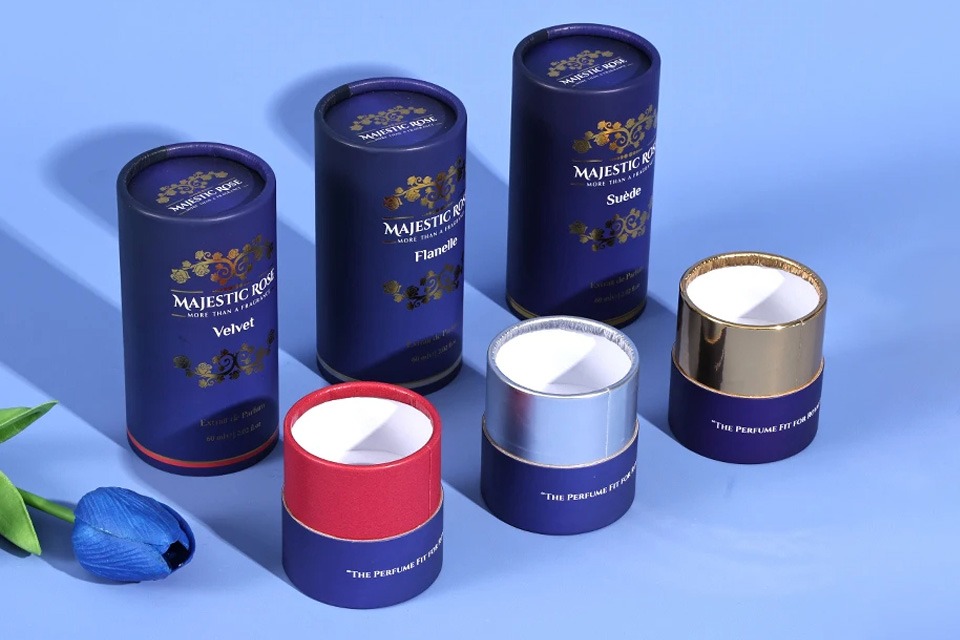
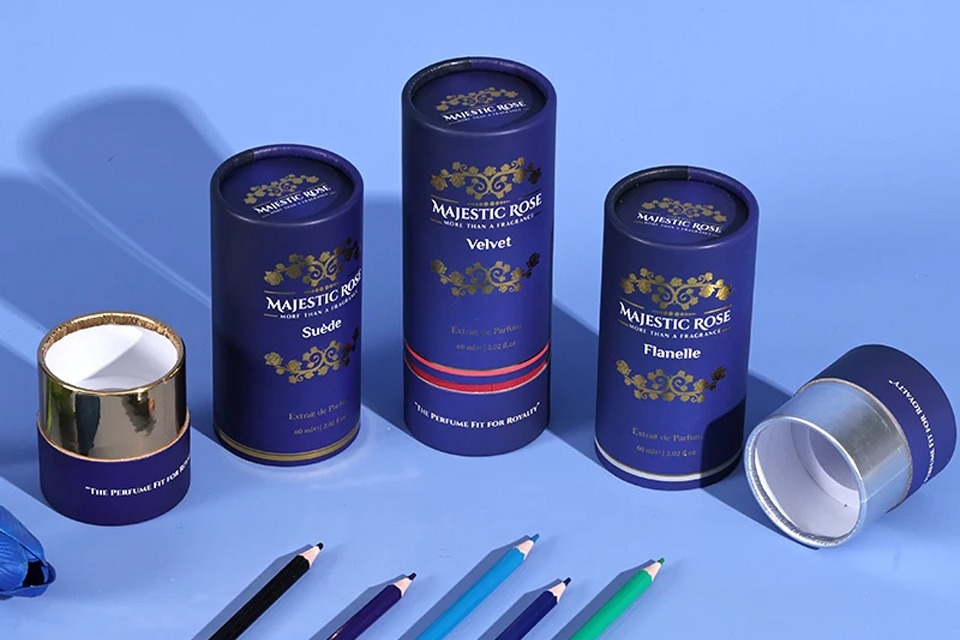
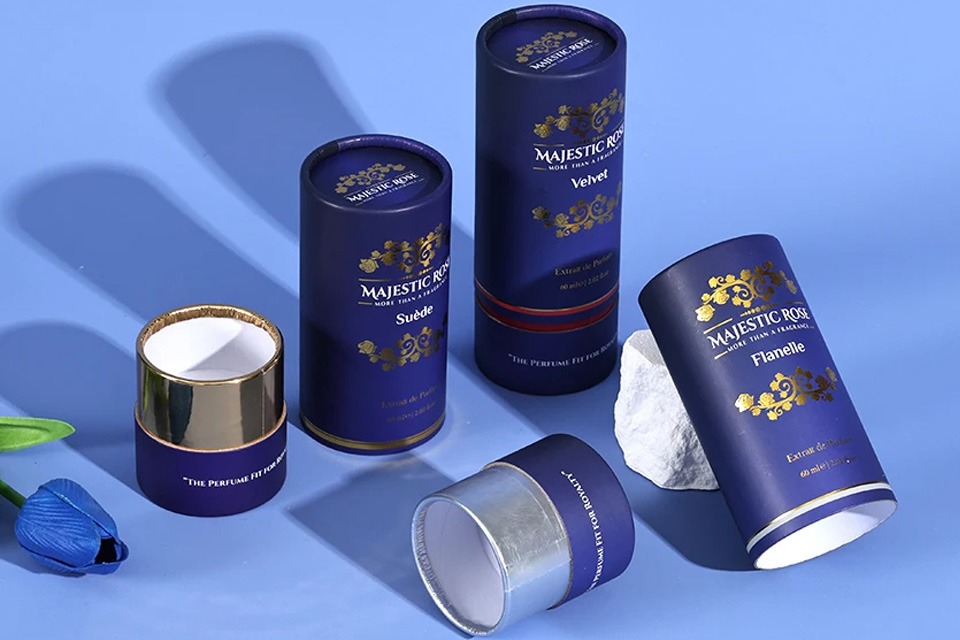
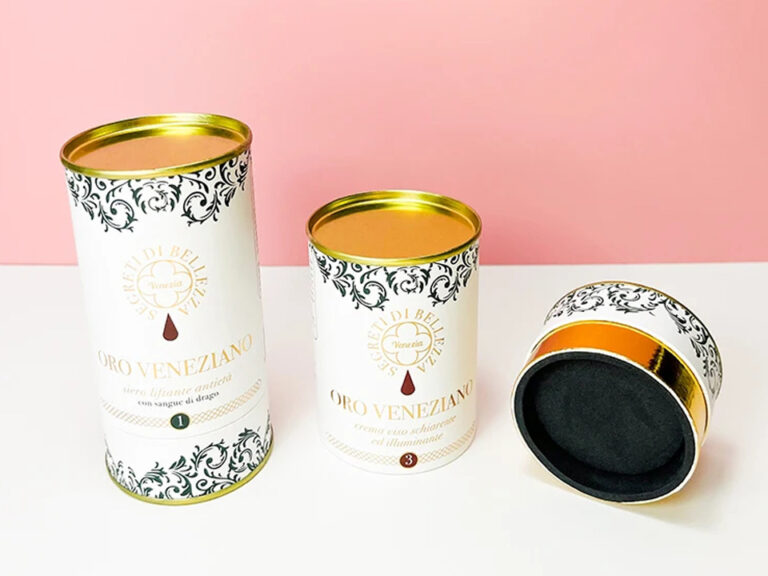
Si vous êtes dans le domaine de la beauté et que vous souhaitez une adhérence de qualité supérieure et des graphismes épurés, ce style montre la voie à suivre : tubes en carton pour cosmétiques.
Plastiques techniques
Dans les tubes, les plastiques ne devraient pas être une option par défaut. Ils doivent mériter leur place. Utilisez-les lorsque vous avez besoin de visibilité, de résistance aux chocs, de tolérances plus strictes ou d'une couche interne stable, en particulier pour les produits transfrontaliers et les produits à forte valeur ajoutée.
Visibilité et résistance aux chocs
Si les clients veulent “voir avant d'acheter”, un tube fenêtré augmente la conversion et réduit les hésitations. Il permet également de clarifier les variantes lorsque vous avez beaucoup d'UGS.
Structures hybrides : tube de papier + fenêtre transparente
Il s'agit d'un compromis courant pour les marques qui souhaitent une histoire axée sur le papier, mais qui ont besoin d'un comportement d'affichage. En termes d'approvisionnement, il est également plus facile à gérer : vous gardez l'approvisionnement en tubes de papier stable, puis vous adaptez la taille de la fenêtre, le type de film et les spécifications de la colle en fonction de votre canal.
Alliages métalliques
Le métal dans les emballages cylindriques est synonyme de confiance et de réutilisation. Une fermeture en métal donne une impression de sécurité. Il signale “frais et de première qualité” et encourage les clients à conserver le tube sur une étagère, longtemps après que le produit a disparu.
Couvercles en fer blanc et indices de fraîcheur
Pour le thé, le café et la confiserie, le toucher du couvercle n'est pas un détail. C'est un élément déclencheur de la perception. Un couvercle métallique solide réduit les doutes quant à l'état de conservation du produit et peut améliorer le moment du déballage sans le rendre tape-à-l'œil.
Finition de la surface et contrôle de la couleur de la marque
Les métaux peuvent également améliorer l'aspect du produit, en particulier lorsque vous avez besoin d'une couleur homogène, de bords nets ou d'un aspect plus “collector”. Si votre marque dépend d'un ton caractéristique (correspondance Pantone, tons clairs, design minimal), les fermetures métalliques permettent de conserver l'aspect intentionnel de l'emballage sous l'éclairage de la vente au détail.
Matériaux biosourcés
Le terme "biosourcé" n'est pas forcément synonyme de "fragile". Ce que les acheteurs souhaitent généralement est simple : une structure à base de fibres qui permette d'atteindre les objectifs de performance et de répondre aux exigences de durabilité dans les circuits de vente au détail et d'exportation.
Structures recyclables à base de fibres
Pour de nombreuses marques, le gain pratique est le même : des tubes en papier qui s'adaptent, qui s'expédient bien et qui répondent aux attentes en matière de recyclage sur les marchés clés. L'histoire de votre emballage reste ainsi cohérente lorsque vous passez de petites séries à des cycles de réapprovisionnement importants.
Emballage en tube de papier à l'épreuve des enfants
Dans les catégories réglementées, la “sécurité dès la conception” est importante. Vous avez besoin d'un emballage qui soit conforme, qui réduise les risques et qui ait l'apparence d'une vraie marque, et non d'un contenant générique.
“Dans le domaine de l'emballage, le terme ”intelligent" signifie généralement l'une ou l'autre chose : suivre et tracer ou indices de condition. Il ne s'agit pas de gadgets. Il s'agit de réduire le nombre de litiges et de contrefaçons et de faciliter le contrôle des canaux.
Emballages NFC et anti-contrefaçon
Si vous vendez sur des places de marché ou par l'intermédiaire de plusieurs distributeurs, les contrefaçons et les fuites de canaux peuvent devenir un casse-tête hebdomadaire. Les caractéristiques des emballages intelligents peuvent soutenir les flux d'authentification, vérifier les lots et renforcer les revendications du registre des marques.
Cela est très important dans des catégories comme le CBD, où les acheteurs se soucient de la confiance et de la provenance. Voici un format qui correspond à ce scénario : boîtes en papier pour cartouches CBD.
Encres indicatrices de température et risque de la chaîne du froid
Pour les produits qui ne peuvent pas être surchauffés ou mal manipulés, les indicateurs visuels aident à réduire les litiges logistiques de type “il a dit, elle a dit”. Même un simple indice de température peut contribuer à améliorer le traitement des réclamations et les conversations avec les détaillants.
Matrice de sélection des matériaux
Voici une manière conviviale de mettre en correspondance les matériaux avec les points de douleur réels des acheteurs. Utilisez-le lorsque vous élaborez votre appel d'offres, que vous resserrez votre ligne de conduite ou que vous vous alignez sur votre 3PL.
Système de matériaux
Point de douleur le mieux adapté
Approche typique de la construction
Catégories à forte adéquation
“Langue ”Résultat de l'acheteur
Matériaux composites à base de papier
résistance à l'écrasement, contrôle des éraflures, sensation de qualité supérieure
âme en papier rigide + doublure barrière + emballage de qualité supérieure
suppléments, cosmétiques, cadeaux alimentaires
moins d'unités endommagées, des rayons plus propres
Plastiques techniques
visibilité du produit, performance des chutes, tolérances plus strictes
tube en papier + fenêtre transparente / couche intérieure stable
accessoires, UGS à forte variante, kits
un taux de conversion plus élevé, moins de demandes d'indemnisation pour cause de panne
Alliages métalliques
confiance en la fraîcheur, valeur de réutilisation
tube en papier + couvercle en fer blanc
thé, café, confiserie
meilleure qualité perçue, plus grand attrait pour les cadeaux
Matériaux biosourcés
l'alignement sur le développement durable, l'approvisionnement modulable
structures en fibre optique, constructions en papier d'abord
bien-être, beauté, catégories réglementées
une intégration plus facile des détaillants, une mise en conformité plus claire
Matériaux intelligents
lutte contre la contrefaçon, traçabilité, signaux de la chaîne du froid
Structure prête pour NFC/QR, caractéristiques de l'indicateur
marché lourd, réglementé, exportation
moins de litiges, un meilleur contrôle des canaux
Scénarios d'emballage qui se produisent dans le monde réel
La plupart des projets n'échouent pas sur le plan de la conception. Ils échouent à cause des frictions opérationnelles : retours, éraflures, mauvais ajustement des couvercles, couleurs incohérentes ou emballages qui ralentissent la préparation des commandes et la mise en kit.
Exécution des commandes pour le commerce électronique et expédition sur les marchés
Si votre UGS passe par un 3PL, prévoyez des frictions : cartons trop serrés, convoyeurs, livraisons sur le dernier kilomètre et conditions météorologiques aléatoires.
Une règle simple : la spécification pour maintien de la forme et stabilité de la fermeture. Le tube reste ainsi rond, le couvercle reste aligné et les réclamations des clients sont réduites.
Planogramme du commerce de détail et conversion des rayons
La vente au détail est brutale. Votre colis doit avoir l'air impeccable après avoir été manipulé, et non pas tout juste sorti de sa boîte.
Pour les compléments de beauté ou les produits de “routine quotidienne”, un graphisme fort et une cohérence d'impression sont importants. C'est l'orientation stylistique adoptée par de nombreuses marques : emballage en tube de papier imprimé sur les deux faces.
Gestion des variantes et mise à l'échelle des UGS
Lorsque votre ligne s'agrandit, votre système d'emballage doit rester ordonné. Les formats cylindriques permettent de standardiser les diamètres et les hauteurs tout en vous permettant de varier les étiquettes, les finitions et les fermetures. Cela permet de réduire le désordre dans la production et d'assurer un approvisionnement plus propre.
Exécution OEM/ODM en gros pour les marques en croissance
Les acheteurs en gros sont attentifs à la reproductibilité : cohérence des couleurs, délais stables, contrôle de qualité irréprochable et production fiable - en particulier lorsque vous fournissez des détaillants ou que vous effectuez des opérations transfrontalières.
C'est pourquoi nous soutenons les programmes OEM/ODM et de vente en gros conçus pour les propriétaires de marques, les fabricants, les vendeurs transfrontaliers, les distributeurs, les agences et les équipes de marques privées, afin que vos emballages puissent évoluer sans être constamment retravaillés.
Choisissez le système de matériaux en fonction de votre canal : l'expédition sur la place de marché, dans les rayons du commerce de détail ou les cadeaux se comportent très différemment.
Les composites en papier sont la solution idéale lorsque vous avez besoin d'un toucher haut de gamme, d'une image de marque forte et d'une structure évolutive.
Les plastiques ont leur place là où la visibilité et la performance des gouttes protègent directement les revenus.
Les fermetures métalliques renforcent la confiance, les indices de fraîcheur et l'exposition à long terme de la marque grâce à la réutilisation.
Les caractéristiques intelligentes sont plus efficaces en tant qu'outils de protection de la marque et de traçabilité qu'en tant qu'éléments décoratifs.