Still Not Seeing The Right Packaging Solution? Talk to Our Boss.
If you’ve reviewed our website or spoken with sales and still don’t see a clear path, send your request here. Your message goes directly to our General Manager for an executive review of feasibility, cost, and lead time. You’ll get a clear next step—what we can do, what we need from you, and the fastest route to a quote.
Direct GM review of your specs, use case, and constraints
Print/finish recommendations to match brand + budget
Cost-down alternatives and lead-time improvement options
Quote path clarity: MOQ, sampling plan, and what to next
Talk to Our Boss
Get a Fast Quote for Custom Paper Tube Packaging
Built for packaging managers, procurement, and packaging engineers. Specify size, quantity, and finish to receive moq, lead time, and spec guidance for us/eu programs.
Quote-ready customization: diameter, height, wall thickness, inserts, liners, and closures
Local vs China Packaging Sourcing: Cost, Lead Time, and Risk
Price lies.
I’ve watched buyers get hypnotized by a neat ex-works quote, nod through a glossy sample review, and then act shocked when the real bill shows up carrying freight spikes, customs drag, sample-loop creep, scrap, reprint exposure, and the one cost nobody wants to model honestly—the revenue you lose when the pack misses shelf date by two weeks. It happens. Usually.
Table of Contents
But let’s not do the fake either-or routine. China is still very much in the mix. According to the U.S. Census Bureau’s 2024 trade data, the U.S. imported $438.7 billion in goods from China in 2024 and exported $143.2 billion, which tells me this sourcing lane is still alive, still dense, still commercially relevant no matter how many procurement decks try to sound post-China.
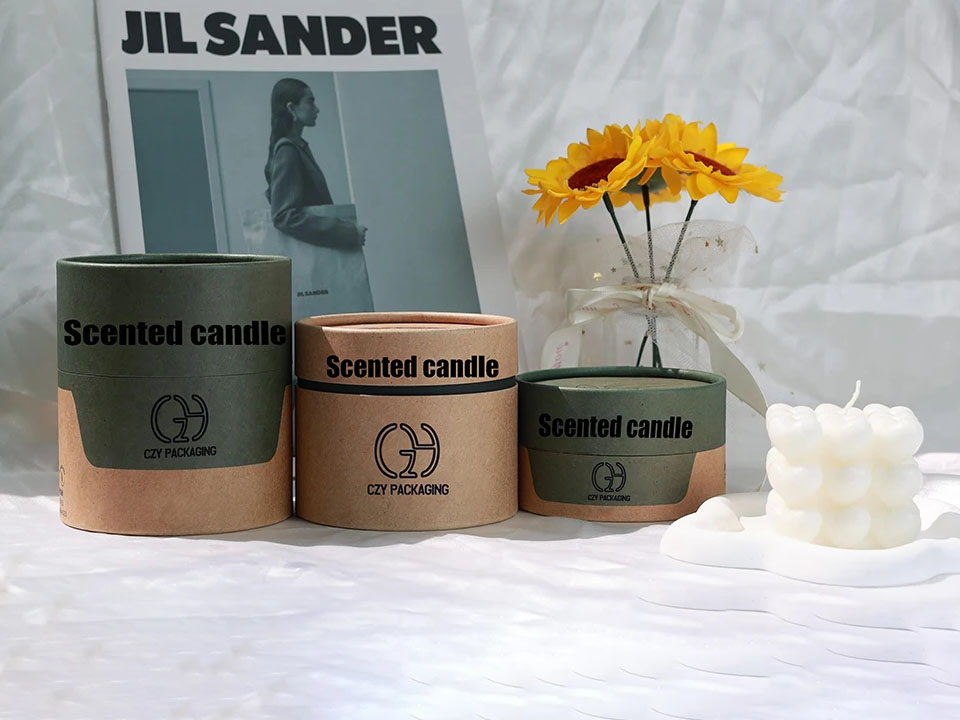
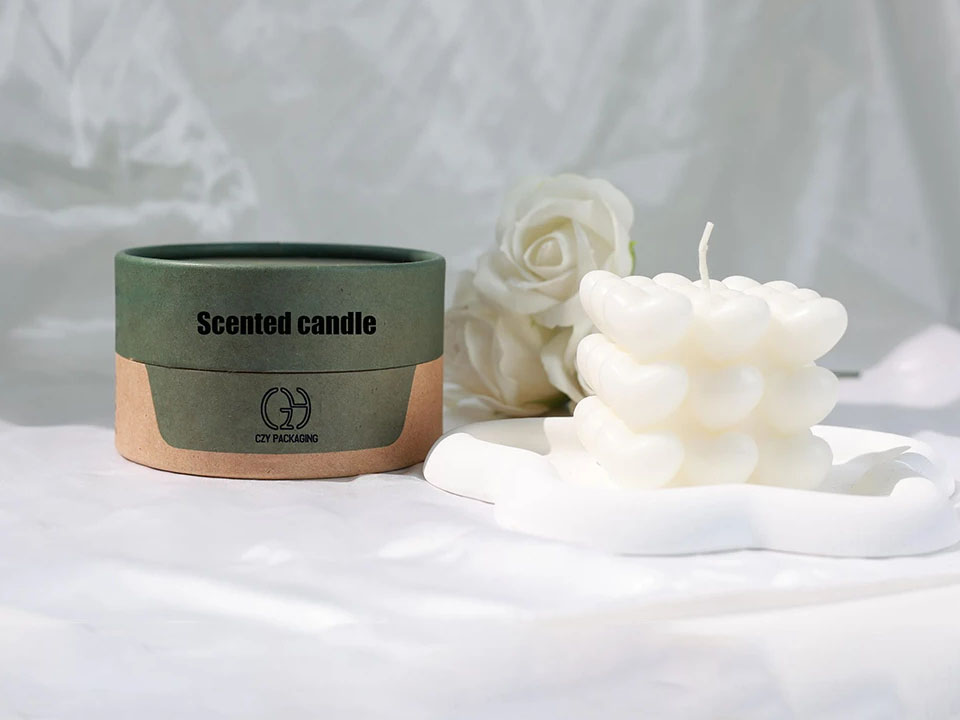
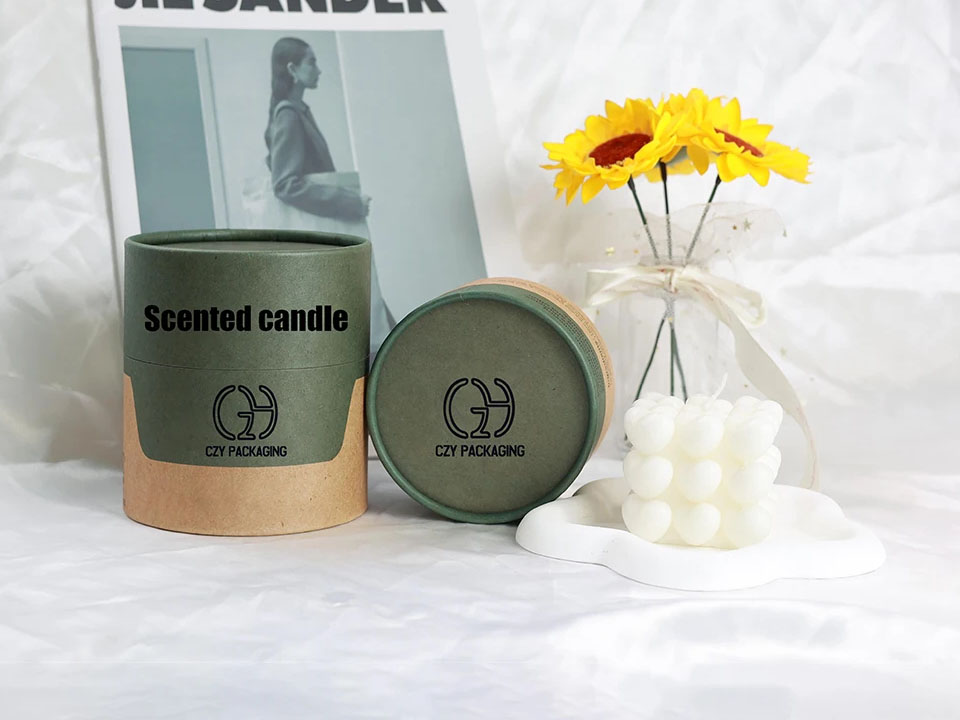
And here’s the ugly truth: when the packaging brief gets finish-heavy, tolerance-sensitive, and just plain annoying to execute, China packaging sourcing often still has the sharper edge. I’m talking about jobs where you’ve got lid fit, wrap tension, emboss registration, foil hit consistency, insert geometry, and that premium hand-feel all stacked into one spec sheet. A rigid spirits tube with a carry handle isn’t just “a box.” It’s a conversion program. The same goes for candle formats that need a clean retail silhouette, foil accents, matte lamination, and decent crush resistance without looking overbuilt. That’s why examples like luxury wine and whisky paper tube boxes with silk handles and wholesale scented candle round tube packaging matter—they show the kind of spec density buyers keep underestimating.
Cost is not the quote, it is the landing
A cheap quote? Dangerous.
From my experience, most teams still compare factory price instead of packaging landed cost, which is how bad sourcing decisions get dressed up as “savings.” Real math includes tooling, protos, make-readies, freight, insurance, duty, brokerage, drayage, domestic delivery, defect allowance, and working capital tied up in longer pipeline inventory. Miss one of those, and your spreadsheet becomes fan fiction.
Yet local packaging sourcing can absolutely beat China on cost—yes, cost—when the order volume is modest, art files keep changing, and the brand team can’t stop touching the spec. Why? Because every extra revision across time zones adds friction, and friction always invoices you eventually. That’s the bit junior buyers learn late.
And freight is where the tidy story falls apart. In January 2024, Reuters reported that rates from Shanghai to Europe rose 8.1% to $3,103 per 20-foot container, while the rate to the U.S. West Coast jumped 43.2% week on week to $3,974 per 40-foot container. I frankly believe half the bad “China is always cheaper” takes should’ve died right there.
So I’d do the boring thing first. Freeze the structure. Then quote it. If the pack is still moving—diameter, insert depth, label panel, shoulder fit, reveal sequence—use paper tube packaging design services with digital dielines and 2–3 functional prototypes before you start vendor beauty contests, because that front-end engineering work changes the commercial answer more than people admit.
Lead time is not transit time
Lead time gets abused.
People say “production is 25 days” as if that settles anything. It doesn’t. Real lead time is art lock, structural proof, white sample, print proof, revisions, production slotting, booking, sailing, clearance, final-mile delivery—and, when things go sideways, the rework loop nobody put in the kickoff deck. That’s the timeline. Not the factory’s best-case number.
But here’s where domestic packaging suppliers can embarrass overseas packaging suppliers. If you’re running promo SKUs, retailer exclusives, seasonal refreshes, or a fragrance launch where legal copy and shades keep changing at the last minute, local wins on speed-to-fix. Faster proofs. Faster press checks. Faster decision loops. Less dead time. It’s not romantic. It’s operational.
And then the route itself started misbehaving. In May 2024, Reuters reported again that Maersk expected Red Sea disruption to cut Asia-Europe capacity by up to 20% in Q2, with ships diverting around the Cape of Good Hope and longer voyages pushing rates upward. So no, “transit is just transit” isn’t serious analysis anymore.
I keep coming back to the same thing. The unboxing moment has mechanics. A tube opening can feel crisp or sloppy depending on friction fit, insert tolerance, board memory, wrap smoothness, and the way the finish catches fingerprints under retail light. That’s why I’d look at luxury wine and whisky paper tube boxes with silk handles or wholesale scented candle round tube packaging less as inspiration and more as manufacturing clues. What looks like “luxury” on a mood board is usually just disciplined spec writing in disguise.
Risk is where margin goes to die
Risk compounds fast.
I’ve never liked the lazy version of supplier due diligence—the factory tour, the handshake, the sample box on a conference table, the vague promise that “we control quality.” That’s theater. Real packaging supplier risk management means traceability, sub-supplier visibility, print consistency data, corrective-action discipline, backup capacity, Incoterm clarity, import compliance, and a clear answer to one nasty question: what happens when the first bulk run is wrong?
Here’s the legal part people still treat like a sidebar. According to Reuters’ September 2024 legal industry report, since 2022 U.S. Customs and Border Protection has reviewed more than 9,000 shipments valued at over $3.5 billion, denied entry to almost 4,000 of them, and in 2024 alone detained shipments valued at more than $1.63 billion under the UFLPA. That’s not “background risk.” That’s a budget item with teeth.
And the courts weren’t exactly sentimental. In Ninestar Corp. v. United States, the U.S. Court of International Trade dated the opinion February 27, 2024, and the opinion states, right on its face, that the plaintiffs’ motion for preliminary injunction was denied. I read that as a flashing warning light for anyone who thinks upstream sourcing opacity is a paperwork problem instead of a business problem.
Sustainability is mostly a spec question, not a passport question
This part gets sentimental fast.
I frankly believe buyers waste too much time trying to assign virtue by geography. Local can still give you a wasteful build. China can still give you a cleaner one. What matters is the bill of materials, the print system, the liner choice, and whether the pack was engineered for recovery instead of just marketed that way.
That’s why eco-friendly paper tube packaging specifications matter more than generic brand language. The page explicitly references FSC Mix for custom tubes, FSC 100% Recycled for stock tubes, soy-based inks, PASS results for repulpability across multiple constructions, and plant-based alternatives like bagasse paper and PLA when PE avoidance matters. In other words: sustainability lives in the BOM and conversion choices, not in a slogan.
My blunt comparison table
Decision factor
Local sourcing
China sourcing
My read
Unit price at higher volume
Usually weaker
Usually stronger
China often wins when the spec is frozen and the volume is real
Freight and landed-cost volatility
Lower
Higher
China savings can vanish fast when freight spikes
Proofing and revision speed
Stronger
Weaker
Local wins when artwork, fit, or inserts keep moving
Premium finish density
Mixed
Often stronger
Foil, emboss, soft-touch, and insert-heavy builds often favor China
MOQ flexibility for custom work
Mixed
Often stronger on factory-built programs
Depends on supplier model, not just country
Compliance exposure
Lower logistical complexity
Higher documentation burden
Import compliance is where “cheap” turns expensive
That table isn’t ideology. It’s what the current evidence keeps pointing back to: China still matters at scale, freight can wreck lazy assumptions, and compliance now has real commercial consequences. So the smart move is not choosing a flag. It’s choosing the right lane for the right SKU.
What I’d actually do if this were my money
I wouldn’t force one answer.
Launch SKUs, rush projects, retailer variants, and anything with unstable artwork? I’d bias local. Replenishment programs, repeatable premium tubes, and finish-dense jobs where the spec is already nailed down? I’d at least keep China in the running. Split-sourcing isn’t indecision. Sometimes it’s the only adult answer in the room.
And I’d write the RFQ like I mean it. Diameter. Height. Wall thickness. Insert callout. Pantone references. Foil area. Emboss height. Tolerance notes. Transit assumptions. Pack-out. QC gates. Claim language. The more precise the brief, the less nonsense you get back. That’s also why the design and prototype workflow, the sustainability specification options, a benchmark luxury spirits tube format, and a reference candle tube construction are worth reviewing before you ever ask who’s “cheapest.”
FAQs
What is packaging landed cost?
Packaging landed cost is the full financial burden of getting finished packaging from approved factory output to your warehouse, including unit price, tooling, prototypes, freight, insurance, duty, brokerage, inland transport, defect exposure, and the cash cost of delay-related inventory or missed launch timing. That’s the real number. Not the quote on page one. When buyers ignore freight volatility or rework risk, they don’t get a bargain—they just delay the pain until later in the P&L.
How to compare local vs China packaging sourcing?
To compare local vs China packaging sourcing correctly, you need to evaluate both options against the same operating brief: annual volume, finish complexity, revision frequency, MOQ tolerance, landed cost exposure, compliance burden, and the business impact of slower recovery when something goes wrong. I’d also layer in one question most teams dodge: how often does your brand change its mind after “final approval”? If the answer is “a lot,” local usually gets more attractive, fast.
Which is the best packaging supplier for low lead time?
The best packaging supplier for low lead time is usually the supplier with the shortest total path from proof to sellable inventory, which includes revision speed, production slot availability, logistics predictability, and how quickly the team can correct a bad sample or a drifting print run. That’s why local often wins the scramble. Not because every domestic plant is magic, but because fewer handoffs and fewer miles usually mean fewer places for the schedule to break.
What is packaging supplier risk management?
Packaging supplier risk management is the process of reducing sourcing failure before it reaches margin, by checking traceability, upstream material exposure, compliance status, QC systems, sub-supplier dependence, backup capacity, contract terms, logistics vulnerability, and the supplier’s real ability to contain defects or shipment interruptions. It’s not glamorous. It is expensive to ignore. The 2024 UFLPA detention numbers alone should cure anyone of the idea that risk is just a compliance-team footnote.