Ainda não está a ver a solução de embalagem certa? Fale com o nosso chefe.
Se consultou o nosso sítio Web ou falou com o departamento de vendas e ainda não vê um caminho claro, envie o seu pedido aqui. A sua mensagem vai diretamente para o nosso Diretor Geral para uma análise executiva da viabilidade, custo e prazo de entrega. Obterá um próximo passo claro - o que podemos fazer, o que precisamos de si e o caminho mais rápido para uma cotação.
Revisão direta pela GM das suas especificações, casos de utilização e restrições
Verificação do tamanho + estrutura: diâmetro, altura, resistência da parede, inserções
Recomendações de impressão/acabamento para corresponder à marca + orçamento
Alternativas de redução de custos e opções de melhoria do prazo de entrega
Clareza no processo de cotação: MOQ, plano de amostragem e o que fazer a seguir
Falar com o nosso chefe
Obter um orçamento rápido para embalagens de tubos de papel personalizadas
Criado para gestores de embalagens, aprovisionamento e engenheiros de embalagens. Especifique o tamanho, a quantidade e o acabamento para receber orientações sobre o orçamento, o prazo de entrega e as especificações para os programas dos EUA e da UE.
Personalização pronta para orçamento: diâmetro, altura, espessura da parede, inserções, revestimentos e fechos
Acabamentos de qualidade superior: CMYK/Pantone, folha de alumínio, relevo, UV
Clareza de abastecimento: especificações claras + CQ + orientação DFM
Sustentável: Papel FSC® disponível a pedido
Resistente às crianças: concebido de acordo com a norma ISO 8317 / PPPA
Abordagem artística à embalagem sustentável de recipientes de papel
Índice
As embalagens sustentáveis só funcionam quando se adaptam à vida real. As pessoas querem algo que tenha um aspeto de qualidade superior, que abra de forma limpa, que proteja o produto e que não pareça um desperdício. É por isso que embalagens de latas de papel brilha.
Um bom recipiente para papel tem três funções ao mesmo tempo:
É sinais de sustentabilidade sem soar a pregador
É cria impacto nas prateleiras com visuais fortes
É manuseia a expedição e a utilização diária como um pacote sério, não um projeto artesanal
Se está a adquirir em grande escala, também precisa de um fabricante que consiga manter as especificações apertadas em todos os lotes. Esta é a diferença entre uma “boa amostra” e uma “embalagem pronta a ser encomendada”. Comece com o página inicial quando quiser ter uma visão geral rápida de como apoiamos a venda por grosso a granel, OEM/ODM e produção repetida.
Tabela de provas: argumentos que pode reutilizar no seu próprio marketing deck
Título do argumento
O que significa para as marcas
O que resolve (problema do cliente)
Tipo de fonte
Para além do feijão: Embalagem sustentável com uma declaração
O seu recipiente torna-se parte da mensagem da marca
Os clientes compreendem rapidamente os seus valores
Estudo de caso + realidade do retalho
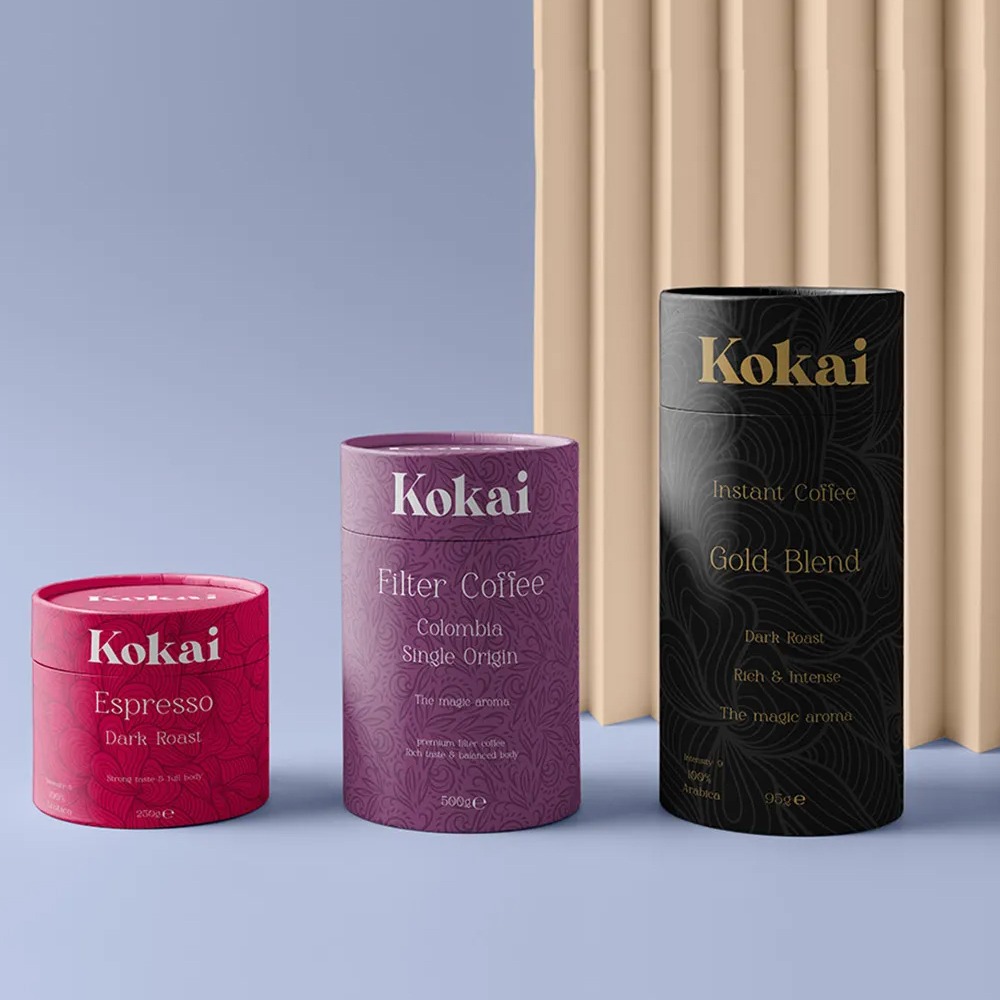
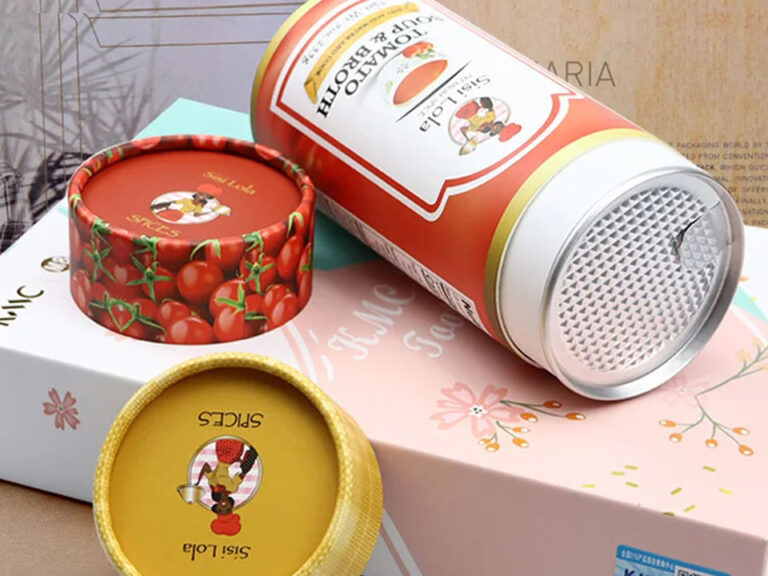
Uma sinfonia visual em cada recipiente
A conceção torna-se um sistema que pode ser escalonado entre SKUs
Impede que a “dispersão de SKU” destrua a prateleira
Prática de design de embalagens
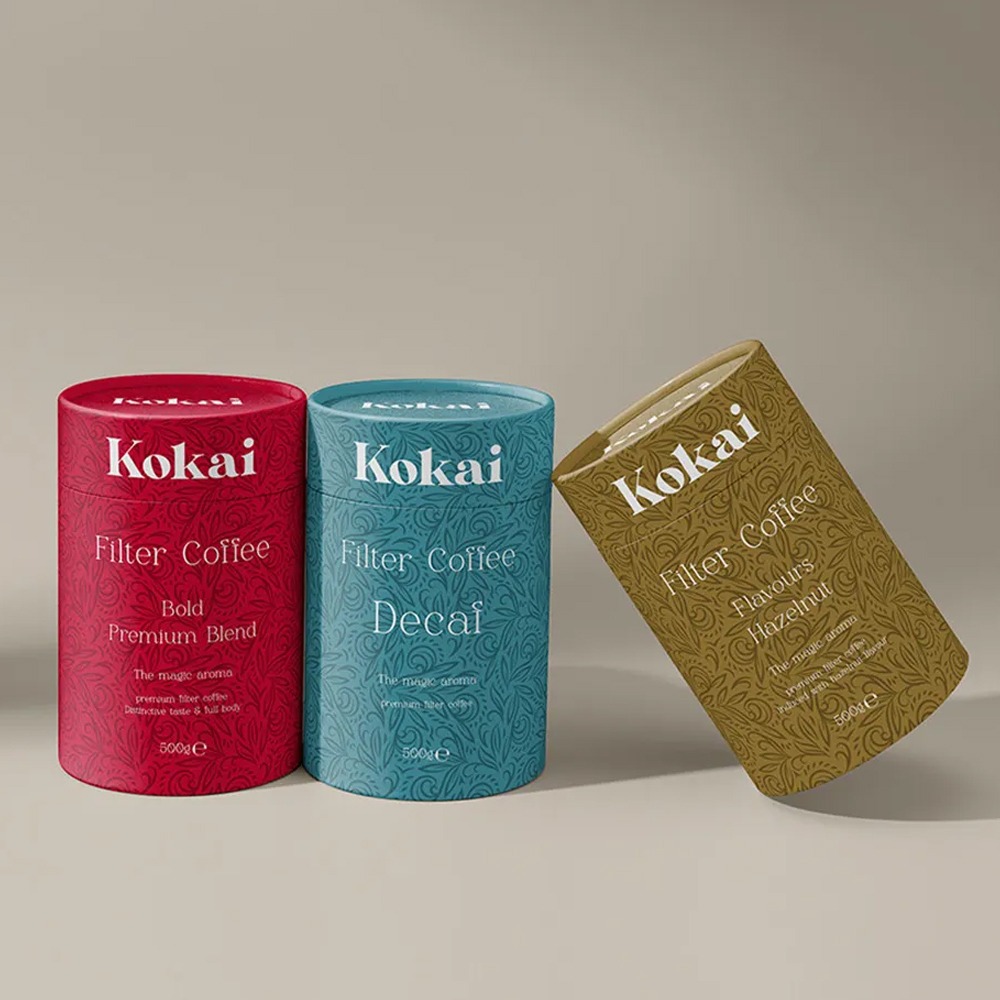
Esquema de cores para cada variedade de café
O código de cores facilita a seleção
Reduz o cansaço da decisão; aumenta a conversão
Lógica de comercialização
Mais do que arrumação: Um início de conversa no seu balcão
O recipiente fica de fora, para que a sua marca seja vista
Aumenta as “impressões diárias” e as encomendas
Padrão de comportamento do cliente
Estrutura do recipiente de papel e opções de barreira
A estrutura e as opções de revestimento correspondem ao produto
Menos amolgadelas, menos fugas, melhor frescura
Engenharia de fabrico
Para além do feijão: Embalagem sustentável com uma declaração
“O termo ”sustentável" não pode ser uma nota lateral. Tem de parecer que pertence.
As caixas de papel fazem-no bem porque têm um aspeto naturalmente quente e intencional. Não gritam “industrial”. Sentem-se mais próximas de produtos de estilo de vida - café, suplementos, cosméticos, presentes de luxo.
Aqui está a jogada simples:
Apresentar a alegação de sustentabilidade em linguagem simples (sem slogans vagos)
Torná-lo visível no painel frontal ou na área da tampa
Mantenha o formato consistente para poder lançar novas variantes sem ter de redesenhar o caos
Se ainda estiver a mapear categorias, navegue o nosso catálogo de produtos e escolher a referência mais próxima da sua SKU. Acelera a tomada de decisões, especialmente para as equipas que lidam com várias linhas.
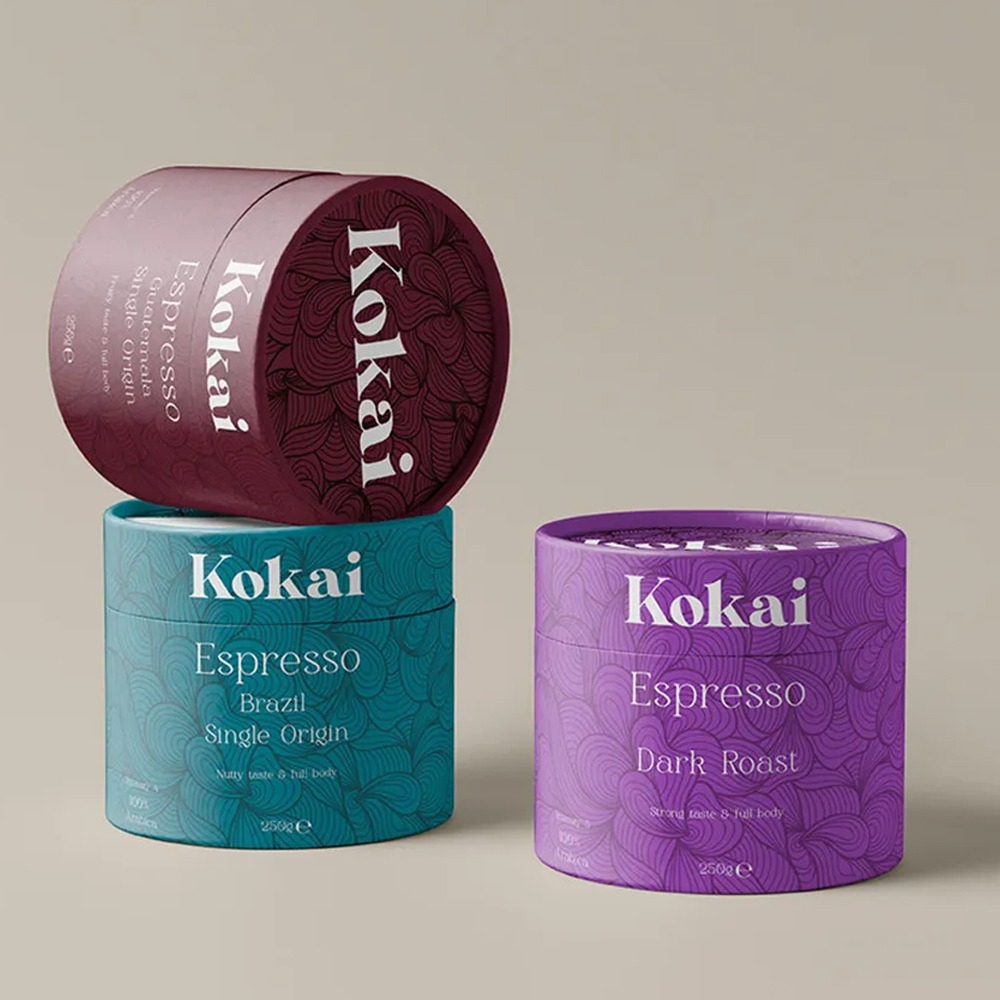
Uma sinfonia visual em cada recipiente
“Artístico” não significa complicado. Significa coeso.
Quando a sua caixa de papel parece um objeto de primeira qualidade, as pessoas tratam-na de forma diferente. Guardam-na. Expõem-no. Até a reutilizam. Esta é uma vitória da marca que não se obtém com embalagens frágeis.
Para tornar o visual escalável, crie um sistema visual com três alavancas:
Linguagem de padrões (o seu estilo de assinatura)
Lógica das cores (como as pessoas identificam as variantes)
Hierarquia de acabamento (como se separam os níveis)
É assim que mantém o seu conjunto de prateleiras limpo enquanto lança novos sabores, aromas ou fórmulas.
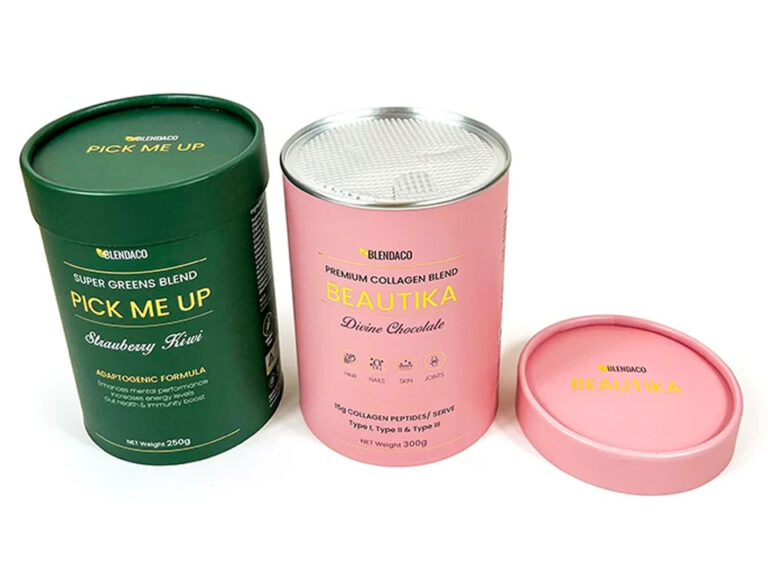
Esquema de cores para cada variedade de café
O código de cores é um dos movimentos mais práticos na embalagem. É também uma das decisões mais baratas que se pode errar se não for planeada com antecedência.
Uma abordagem limpa:
Cor = sabor / benefício / força
Padrão = linha de produtos (café vs. chá vs. suplementos)
Acabamento = escalão (principal vs. premium vs. de distribuição limitada)
Ajuda os compradores a comprar rapidamente. Também ajuda a sua equipa de operações. Os armazéns, o pessoal de recolha/embalagem e os retalhistas adoram embalagens que sejam fáceis de identificar.
Mais do que arrumação: Um início de conversa no seu balcão
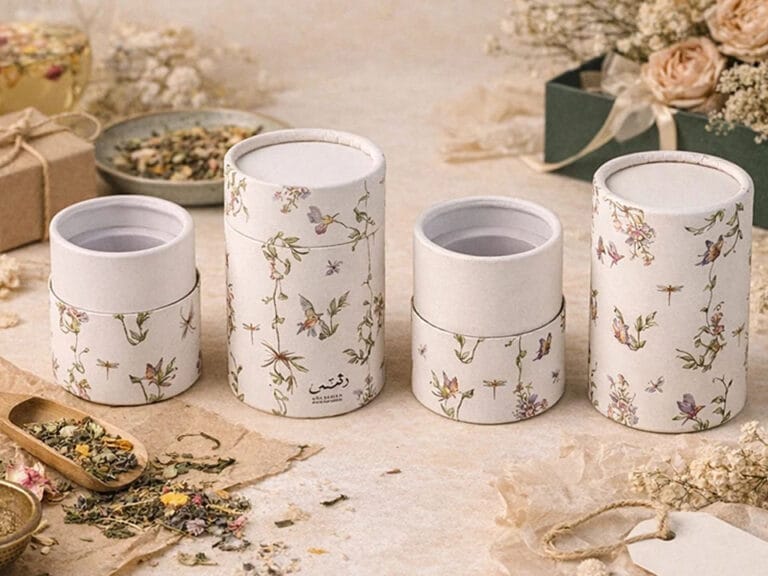
Um recipiente de papel não é apenas um recipiente. É um objeto de bancada.
Quando as pessoas o guardam no balcão, obtém-se algo que os comerciantes raramente compram diretamente: repetir a visibilidade. Cada colher de café da manhã torna-se um microponto de contacto com a marca. Cada dose de suplemento torna-se um lembrete.
É por isso que o formato de recipiente funciona tão bem:
Café e chá (produtos rituais)
Suplementos (produtos de uso diário)
Cosméticos (produtos de exposição)
Artigos para oferta (embalagens de recordação)
Se o seu produto se vende através de uma história e de um estilo de vida, o formato de recipiente apoia essa história sem palavras extra.
Estrutura do recipiente de papel e opções de barreira
Uma embalagem bonita que se desmorona em trânsito é uma máquina de reembolso. Falemos então de estrutura.
Um recipiente de papel fiável resume-se geralmente a:
Resistência da parede do tubo (grau do painel + espessura)
Encaixe da tampa (encaixe por fricção, encaixe por encaixe ou fecho especial)
Barreira interior (com base na migração de humidade, oxigénio, aroma, óleo ou pó)
Reforço da base (especialmente para aterros mais pesados)
É aqui que os fabricantes ganham o seu sustento. Pretende-se escolhas de engenharia sólidas, tolerâncias consistentes e um controlo de qualidade que se mantenha lote após lote.
Cenários de ajuste de categoria com referências reais
Se necessitar de um ponto de partida rápido, utilize estas páginas como “amostras de trabalho” para orientação da estrutura:
Embalagem de recipientes de papel OEM/ODM para venda por grosso a granel
Se compra a granel, o seu verdadeiro problema não é “encontrar um design bonito”. É tornar a embalagem repetível.
Isso significa que:
uma especificação estável da linha e da estrutura
padrões de impressão que não se desviam entre lotes
definições claras de acabamento (mate, brilhante, soft-touch, colocação de folha)
Pontos de controlo de CQ que detectam problemas antes da expedição
É aqui que o OEM/ODM é importante. Não se trata apenas de encomendar tubos. Está a construir um pipeline de embalagens que suporta lançamentos, reabastecimentos e extensões de linha sem drama.
Uma forma simples de manter o seu programa limpo:
Bloquear primeiro a estrutura
Em seguida, fixe os elementos visuais num sistema modular
Em seguida, adicione “trocas sazonais” controladas (arte de embrulho, encartes, mangas) sem tocar na construção do núcleo
É assim que as grandes marcas se movem rapidamente sem quebrar a consistência.
Caixas de tubos de papel para embalagem de jóias e pulseiras
As caixas de papel não são apenas para consumíveis. Também são óptimas para artigos para oferta em que a embalagem tem de parecer parte do produto.
A joalharia é um exemplo forte porque o comprador espera:
É um bom lembrete de que “sustentável” não tem de parecer simples. Pode parecer requintado.
Embalagens de papel sustentáveis que vendem
Se quiserem a versão resumida, aqui está:
Direção artística chama a atenção e recorda a marca
Lógica das cores conduz a decisões de compra rápidas
Estrutura e barreira impulsionar o desempenho e as encomendas
Consistência OEM/ODM mantém a sua cadeia de abastecimento sã
Se estiver a criar um programa de recipientes de papel para distribuição a retalho, D2C ou grossista, o melhor passo seguinte é simples: escolha uma página de referência mais próxima do seu produto e, em seguida, defina o que significa “premium” para os seus clientes - aspeto, toque e desempenho. Depois disso, tudo se torna mais fácil.
Se quiser explorar mais formatos antes de bloquear as especificações, comece com o nosso catálogo de produtos, e, em seguida, voltar à estrutura, acabamento e planeamento de encomendas em massa.