Still Not Seeing The Right Packaging Solution? Talk to Our Boss.
If you’ve reviewed our website or spoken with sales and still don’t see a clear path, send your request here. Your message goes directly to our General Manager for an executive review of feasibility, cost, and lead time. You’ll get a clear next step—what we can do, what we need from you, and the fastest route to a quote.
Direct GM review of your specs, use case, and constraints
Print/finish recommendations to match brand + budget
Cost-down alternatives and lead-time improvement options
Quote path clarity: MOQ, sampling plan, and what to next
Talk to Our Boss
Get a Fast Quote for Custom Paper Tube Packaging
Built for packaging managers, procurement, and packaging engineers. Specify size, quantity, and finish to receive moq, lead time, and spec guidance for us/eu programs.
Quote-ready customization: diameter, height, wall thickness, inserts, liners, and closures
The Art of Minimalist Packaging Design for a Modern Market
Table of Contents
Minimalist packaging looks “easy” until you try to ship it, stack it, photograph it, and still make it feel premium. When you remove the noise, every detail gets louder: material, typography, color, closure feel, and how cleanly the box survives logistics.
If you sell in a modern market—DTC, Amazon, retail shelves, or cross-border—minimalism isn’t a trend. It’s a performance strategy. It helps you win the first three seconds (scroll + shelf), and it also reduces friction for your supply chain (SKUs, pick-and-pack, damage rate, compliance space).
Below, I’ll break down minimalist packaging design in a way you can actually use—especially if you’re building with custom paper tube packaging at scale.
Minimalist packaging design: what “minimal” really means
Minimal doesn’t mean “blank.” It means only what earns its place.
A practical definition you can hand to your designer and your factory:
One hero message (brand + product type, or brand + one key benefit)
One visual system (a single type family + consistent spacing)
One hero finish (matte soft-touch, emboss, foil, spot UV—pick one)
One “proof point” area (compliance, ingredients, specs—kept organized)
Think of it like a clean storefront window. You’re not hiding the product. You’re framing it so the buyer doesn’t have to work.
Minimalist packaging materials: paper tube boxes as a clean canvas
Minimalism relies on “quiet confidence,” and material choice is where that confidence starts.
Paper tube packaging works well for minimal design because:
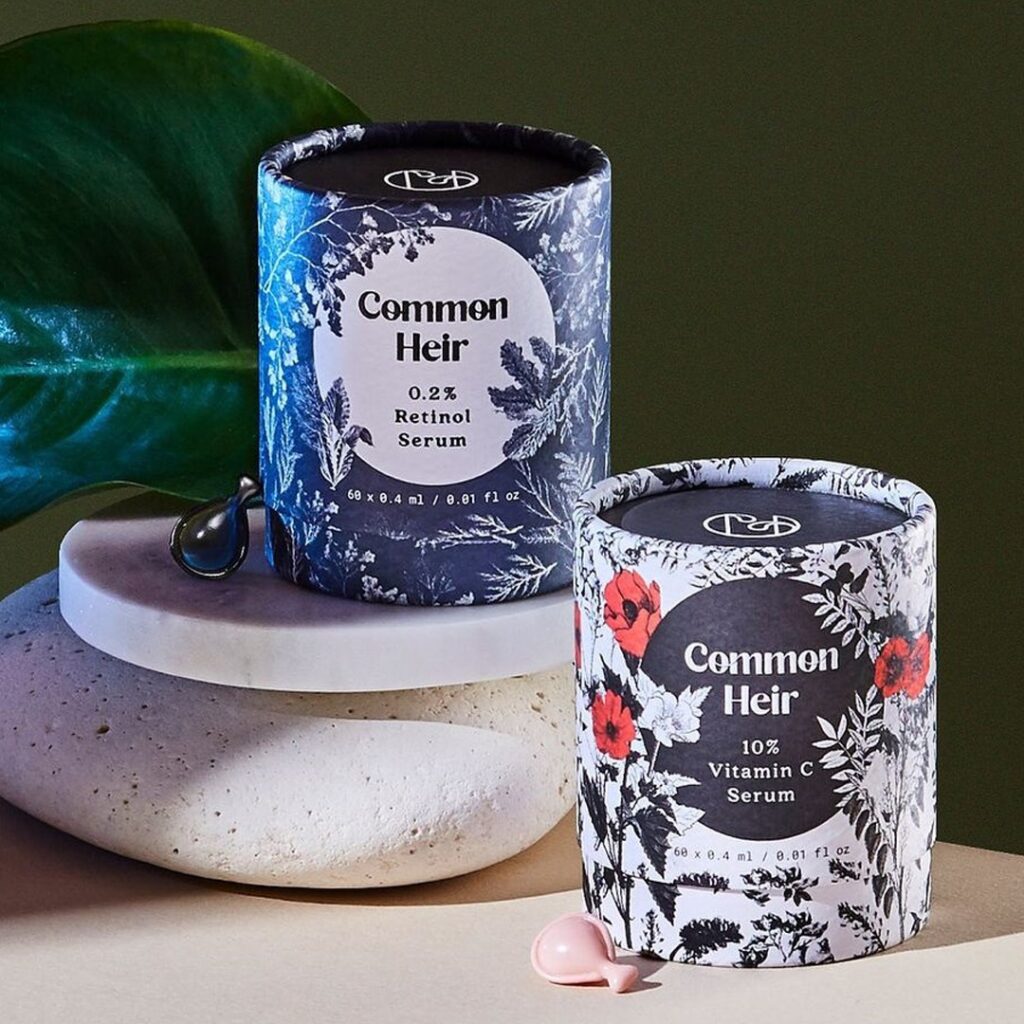
The cylindrical shape already stands out. You don’t need heavy graphics to get noticed.
The surface gives you a continuous wrap for clean typography and strong negative space.
You can build a premium feel with structure instead of clutter (tight tolerances, snug lid fit, solid edge finishing).
If you’re selling wholesale or OEM/ODM, the material-first approach also helps you keep branding consistent across batches. You can lock your dieline, lock your color targets, and focus on controlled upgrades (finish, label, insert) without re-inventing the whole look.
Minimalist color palette and typography: make one thing win
When you strip away graphics, type becomes the design. That’s why minimalist packaging lives or dies on a few choices:
Minimalist color palette
Use one base (white, kraft, black, or a single brand color), then add one accent. The accent can be a thin band, a small icon, or a lid color. This keeps your line extension simple: same tube, different accent, clean SKU logic.
Minimalist typography
Pick a type system that’s readable at arm’s length:
Clear product name
Short descriptor line (what it is, not a slogan)
Microcopy where it matters (size, count, flavor, scent)
If you sell cross-border, typography clarity isn’t just design. It’s conversion. Buyers don’t want to guess what’s inside.
Key minimalist packaging design arguments you can use (with execution notes)
Here’s a practical table you can drop into your internal brief or send to your packaging supplier.
Minimalist packaging argument (use as talking points)
What you do on the box
Where it pays off
Internal page example
Less visual clutter improves scan speed
One hero message + strong spacing + no “feature soup”
Minimalist packaging structure: closure, protection, and unboxing
Minimal packaging can’t rely on graphics to “feel expensive.” The hand-feel has to do the job.
Here are the structural details that matter most in paper tubes:
Lid fit and tolerance control
A good tube has that smooth, confident open/close—no wobble, no stuck lid, no loose rattle. That’s not decoration. That’s engineering.
Inserts that protect without noise
If you ship fragile or regulated items, you still need protection. The minimalist move is a clean insert that holds the product tight, instead of adding more outer printing.
Surface durability
Minimalist designs show scuffs faster, especially on solid colors and matte finishes. Add an anti-scuff strategy early, and test it with your fulfillment flow (carton friction, label rub, shelf handling).
Information hierarchy and compliance: clean layout without legal risk
Minimalist packaging often fails in one place: the “tiny text explosion.”
You still need ingredients, warnings, barcodes, batch/lot, and multilingual content in many markets. The fix isn’t shrinking everything. The fix is separating zones:
Front face: brand + product name + one short descriptor
Side/back panel: compliance block with consistent grid spacing
Bottom: barcode + batch/lot + manufacturer info
For regulated categories, your goal is simple: the buyer sees a clean front, and auditors see a complete info panel.
Minimalist packaging for modern selling scenarios
Minimalism changes depending on how you sell. Here are realistic use-cases that match what brands and distributors deal with daily.
Cosmetics packaging for brand owners and agencies
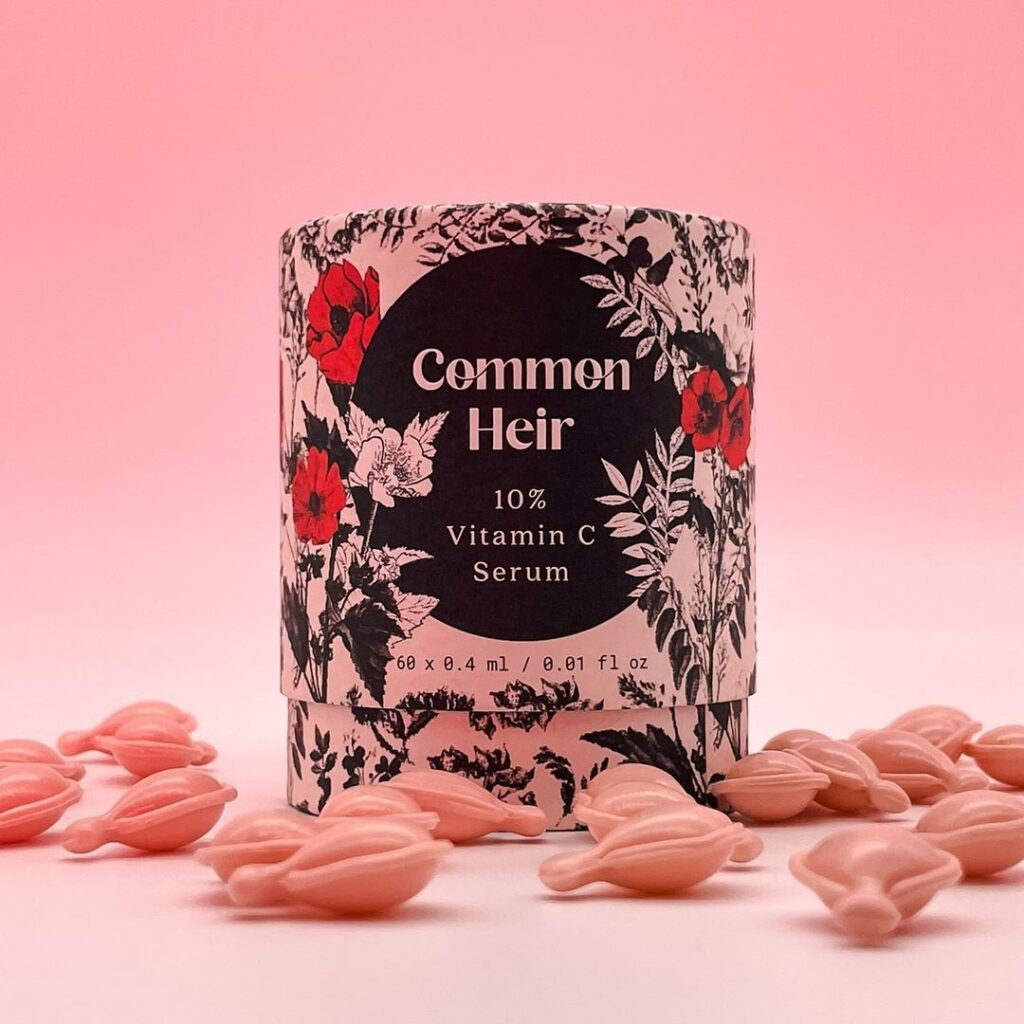
Cosmetics buyers decide fast. They look for “clean,” “safe,” “modern.” Minimal typography on a solid tube nails that vibe, especially when you keep the finish controlled and the copy tight.
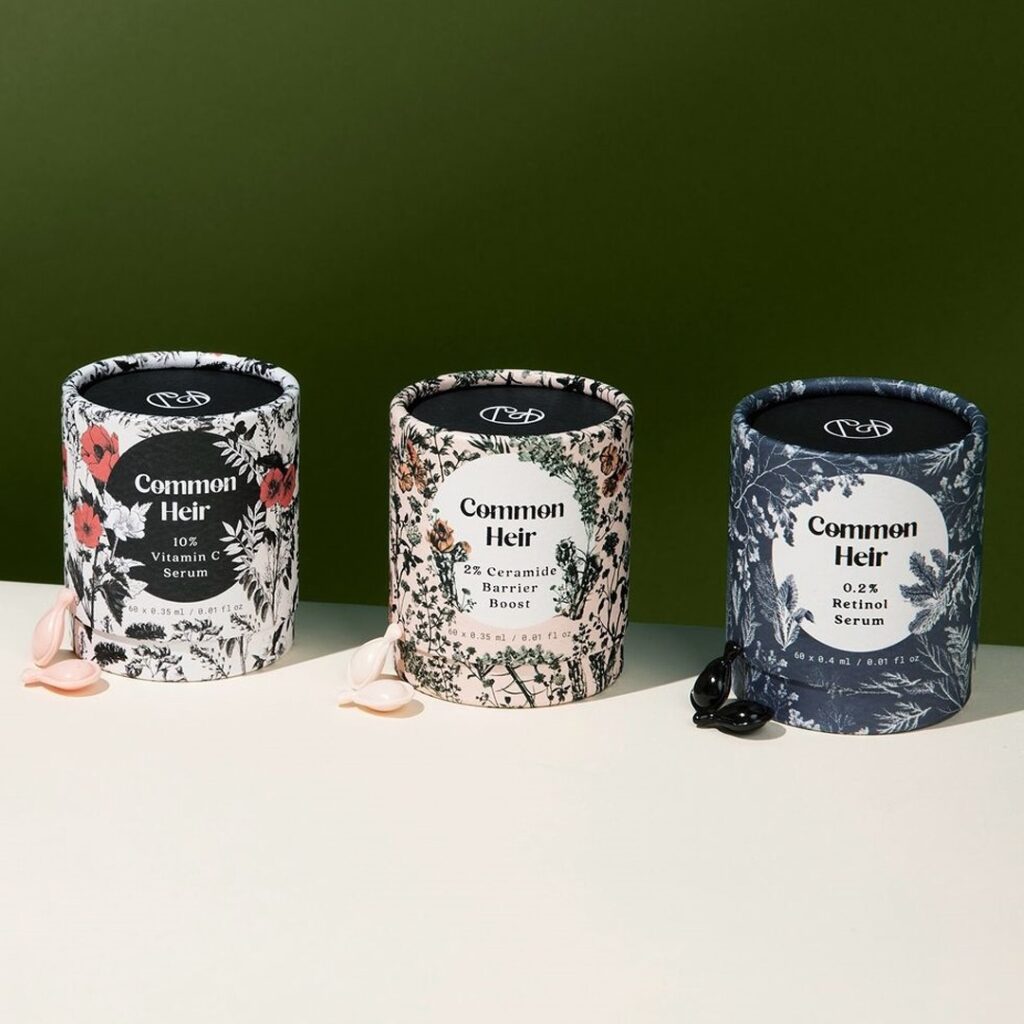
If you’re producing variants (day/night, scent lines, seasonal kits), keep one master layout and rotate only the accent color or a small descriptor line. That keeps your brand consistent and your SKU system sane.
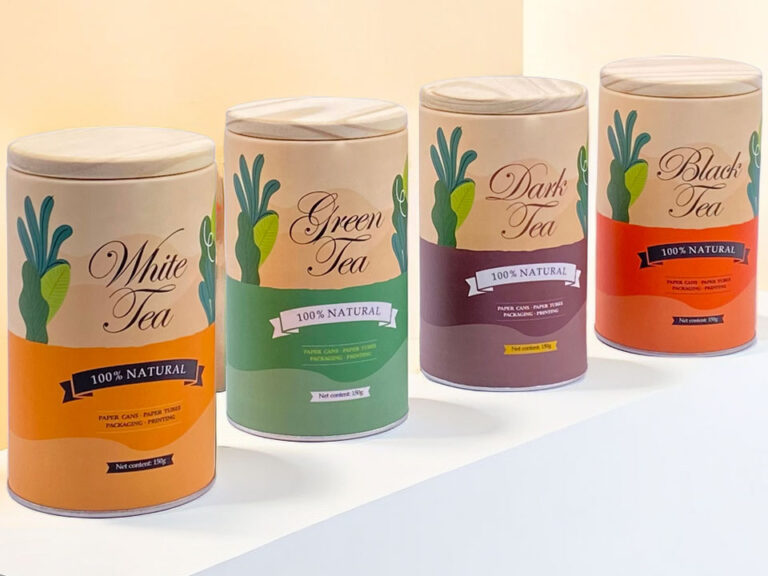
Tea is a “ritual” product. Minimal kraft + a clean label system makes it feel grounded and premium at the same time. If you ship subscription boxes, the tube also protects aroma-sensitive goods better than flimsy cartons.
Supplements compete in brutal scroll environments. Minimal packaging works when you keep the front clear (brand + product + flavor) and push the heavy info to a structured panel. It also photographs well for PDP images.
Cannabis child-resistant packaging for regulated markets
This is where “minimal but compliant” matters most. You want a clean premium look, but you also need child-resistant structure and a clear warning hierarchy. The smartest approach is a calm front face and a disciplined compliance panel.
CBD brands often over-design because they’re trying to “look trustworthy.” Minimalism usually does that job better—especially with a controlled finish (like one foil mark) and clean product identification.
Jewelry is emotional. Minimal packaging makes the product feel more valuable because it doesn’t compete with it. You can keep the outside quiet and let the “moment” happen when the lid comes off.
Sometimes you need visibility. A window can still feel minimalist if you treat it like a design feature, not a compromise. Keep the window clean, keep the typography tight, and let the product do the talking.
Minimalist packaging production checklist for bulk OEM/ODM
Minimalist design punishes sloppy execution, so your production checklist matters:
Lock the dieline early, then reuse it across variants
Confirm color targets (CMYK vs Pantone) and keep a physical approved sample
Pick one hero finish and test scuff resistance
Validate lid fit and insert hold with real product samples
Plan the compliance panel grid before you design the front
Standardize SKU logic (accent color, label code, or lid color)
If you’re buying in bulk, this checklist also protects your lead time. Less redesign means fewer rounds of sampling.
Why minimalist packaging makes business sense for wholesalers and brand sellers
Minimalism isn’t just “pretty.” It’s operationally smart:
Better conversion: clean packs read faster in ads and listings
Brand consistency: one system scales across product lines
Smoother fulfillment: standardized sizes and inserts reduce packing errors
More premium perception: structure and finish do the heavy lifting
And if you’re sourcing from a manufacturer that can handle scale—OEM/ODM, wholesale orders, and stable output—you can keep that minimalist standard consistent across markets. Your workshop and warehouse capacity claims (12,300m² warehouse and daily output over 300,000 pcs) support exactly that kind of repeatable production story.