Still Not Seeing The Right Packaging Solution? Talk to Our Boss.
If you’ve reviewed our website or spoken with sales and still don’t see a clear path, send your request here. Your message goes directly to our General Manager for an executive review of feasibility, cost, and lead time. You’ll get a clear next step—what we can do, what we need from you, and the fastest route to a quote.
Direct GM review of your specs, use case, and constraints
Print/finish recommendations to match brand + budget
Cost-down alternatives and lead-time improvement options
Quote path clarity: MOQ, sampling plan, and what to next
Talk to Our Boss
Get a Fast Quote for Custom Paper Tube Packaging
Built for packaging managers, procurement, and packaging engineers. Specify size, quantity, and finish to receive moq, lead time, and spec guidance for us/eu programs.
Quote-ready customization: diameter, height, wall thickness, inserts, liners, and closures
Transitioning to Plastic-Free Packaging: A Guide to Paper Tube Boxes
Table of Contents
If you’re trying to cut plastic out of your packaging, you’ve probably noticed something annoying: “plastic-free” isn’t one single switch. It’s a bunch of small decisions—materials, closures, labels, coatings, even how the box behaves in a humid warehouse.
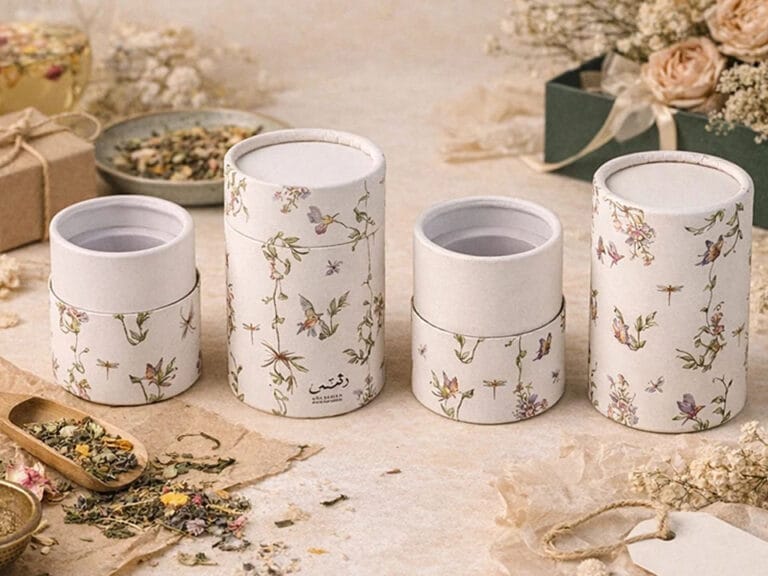
Paper tube boxes make that switch easier because they’re built around one simple idea: a strong paper cylinder can replace a lot of plastic formats without killing your shelf look or shipping performance. And when you’re running bulk orders, wholesale programs, or OEM/ODM packaging projects, that matters.
On our side, we’re set up for scale (modern food packaging purification workshop, a 12,300m² warehouse, and daily capacity above 300,000 pieces). That’s why brands, cross-border sellers, wholesalers, and agencies use us as a production partner, not just a vendor.
Plastic-free packaging is no longer a “nice-to-have” story for marketing. It’s a risk-control move.
Retailers tighten packaging rules. Platforms push sustainability tags. Consumers screenshot packaging waste and post it. So when you swap a plastic clamshell or jar for a paper tube box, you’re doing two things at once:
Reducing plastic leakage risk (less mixed-material packaging in the wild)
Simplifying your sustainability message (“paper-based” is easier to explain than “mostly recyclable except…”)
A practical example: many beauty brands move from plastic outer boxes to cosmetics tube packaging when they want a premium unboxing feel without the plastic guilt.
Fossil fuel dependency and carbon footprint
Most plastics come from fossil feedstocks. Even when your product is small, your packaging can quietly carry a “petrochemical” footprint that’s hard to defend in ESG reviews.
Paper tube boxes give you more levers:
You can spec paper grades, recycled fiber options, and responsible sourcing.
You can reduce extra plastic components like trays, blisters, and shrink.
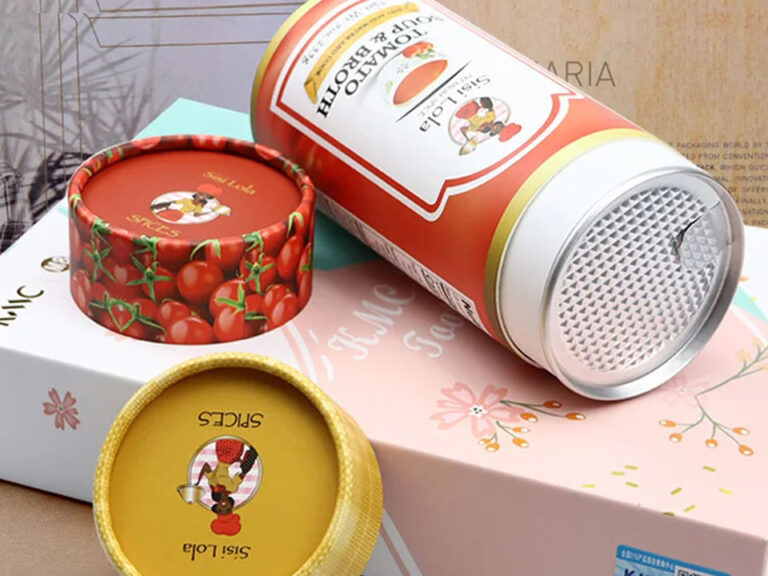
If you sell pantry goods or gifts, a tube format can also replace plastic jars in certain kits, while still protecting aroma and freshness (with the right inner barrier).
People don’t read packaging specs. They judge what they can see and feel.
Paper tubes tend to “read” as premium and responsible because:
They feel rigid and giftable.
They photograph well (big deal for UGC).
They don’t look like cheap disposable plastic.
This is especially useful for DTC brands and marketplace sellers because your packaging has to do double duty: protect the product and sell the brand in a 10-second unboxing clip.
One quick scenario: A wellness brand ships a supplement starter kit. A strong tube with clean labeling looks like a “real brand,” not a private-label flip. That can lift repeat purchase because customers trust what they receive.
Right-size packaging and void fill reduction
Void fill is the silent budget-killer. It also makes your sustainability claim look fake because customers open a big box and see air pillows.
Paper tube boxes help you right-size because they’re easy to design around your product’s exact diameter and height. That means:
Less dead space
Fewer add-on fillers
Cleaner pack-out for 3PL teams
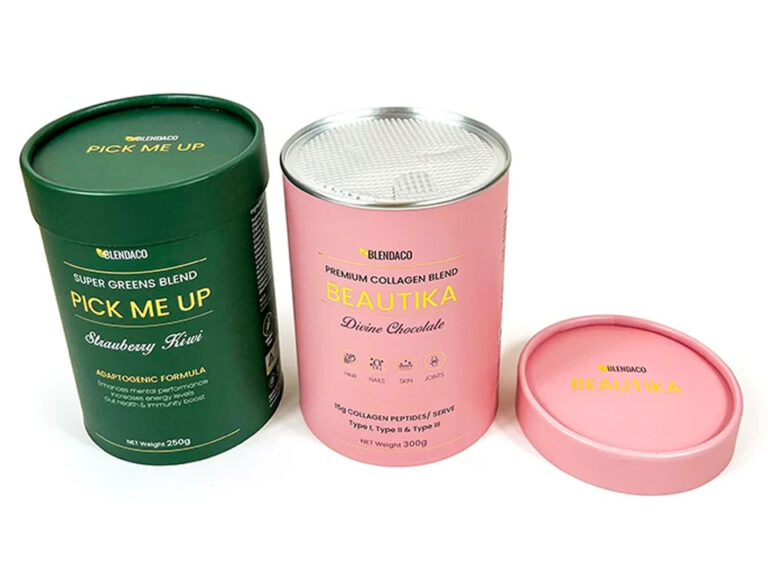
This matters a lot for powders and nutrition products. A protein powder paper tube box can reduce “rattle” in transit compared with loose-fit cartons, which often need extra padding.
Material reduction and packaging components
Plastic-free packaging dies in the details. You remove plastic on the main body, then someone adds:
a plastic shrink band
a plastic window
a plastic inner tray
a laminated film that breaks recyclability
Paper tube boxes give you a cleaner parts list. In many builds, you can keep it to:
paper tube body
paper lid (or paper + thin metal lid when you need a tighter seal)
paper label / direct print
When you do need special features (tamper evidence, barrier, child resistance), you can design them intentionally instead of patching them on later.
Post-consumer recycled content and greenwashing risk
Lots of brands get burned here. They claim “eco packaging,” then customers ask: “What’s it made of?” or “Is it recyclable in my city?” If you can’t answer cleanly, it looks like greenwashing.
A safer approach:
Use clear material specs (paper grade, recycled content where feasible, inks, adhesives).
Avoid vague claims like “100% eco-friendly.”
Back your story with supplier documentation (FSC chain-of-custody, test reports, and material declarations when required).
Total cost of ownership and shipping damage reduction
I’m not going to throw cost numbers at you because they’re meaningless without your size, print spec, and MOQ. But you can think in total cost of ownership, which is what smart buyers care about:
Rigid paper tubes often outperform flimsy cartons because the cylinder resists crushing. That’s why premium items like jewelry paper tube packaging work so well for gifting and shipping.
Supplier collaboration and OEM/ODM packaging development
Plastic-free packaging goes smoother when your supplier thinks like a packaging engineer, not just a factory.
For OEM/ODM and bulk wholesale, you want a supplier who can help you lock:
dielines and tolerances
closure friction (too loose feels cheap, too tight frustrates users)
print consistency (especially for brand color matching)
This matters a lot if you’re selling across regions. One SKU might need different compliance labeling, inserts, or language versions. Your packaging architecture should stay stable while the artwork swaps cleanly.
If you’re launching a beauty line extension, you can keep the same tube structure and change the graphics. For instance, hair/skin/nails paper tube packaging fits that model well.
FSC-certified paper and responsible sourcing
If you sell to big retailers or you’re pitching enterprise procurement, sourcing language matters. FSC-certified paper (when requested/spec’d) helps you answer the “where did this come from?” question with less friction.
This is also where you build a more defensible sustainability claim:
responsible forestry signals (FSC)
recycled fiber options where possible
traceable supply chain documentation
It’s not just ethics. It’s procurement hygiene. Your buyer wants fewer supplier risks.
Water-based adhesives and low-VOC glues
Adhesives and finishes can quietly undermine a plastic-free goal. If your tube relies on heavy solvent glue or hard-to-recycle laminations, you create downstream issues.
A cleaner direction usually includes:
water-based adhesives where feasible
low-VOC ink systems
smart surface finishes (enough scuff resistance, without overbuilding)
For food and ingestible categories, you also need material discipline. That’s why we highlight controlled production environments for food packaging workflows.
Argument table: what to say, what to measure, and what to spec
Argument keyword
What it means in plain English
What you should measure
Packaging spec lever
Suggested source type
Plastic pollution
Less plastic waste and fewer mixed materials
Plastic components per pack
Remove trays, shrink, windows
UNEP / OECD plastics reports
Plastic-free packaging
A clear claim customers understand
Pack material breakdown
Paper-first architecture
Retailer packaging guidelines
Carbon footprint
Lower petrochemical dependency
Material mix + shipping efficiency
Paper tube + right-size design
GHG Protocol concepts
Brand trust
Packaging that feels honest and premium
Reviews, repeat purchase, returns
Print quality, tactile finish
Consumer behavior studies
Right-size packaging
Less air shipped
Dimensional weight flags
Tube diameter/height fit
Carrier packaging rules
Material reduction
Fewer parts, less waste
Component count
Simplified closure/label
Sustainable packaging standards
PCR content
Recycled fiber story that holds up
Spec sheets, supplier docs
Paper grade selection
FTC-style claim guidance
Shipping damage reduction
Fewer dents, fewer refunds
Damage rate, complaint rate
Tube wall thickness, inserts
ISTA-style test methods
OEM/ODM
Custom build without chaos
Lead time stability, defect rate
Tolerance + QA plan
Manufacturing QA frameworks
Water-based adhesives
Cleaner chemistry profile
VOC policy compliance
Glue/ink selection
Material safety standards
Quick fit table: paper tube box setups by product scenario
A simple rollout plan for bulk and wholesale buyers
If you want the switch to feel easy internally, run it like a controlled launch:
Pick one SKU that sells steadily (not your weird seasonal item).
Lock the “plastic-free” target (what plastic parts must disappear?).
Prototype with real shipping conditions (humidity, drops, stacking).
Set your QA checklist (dimensions, closure fit, print, odor, scuff).
Scale into bulk production once the pack-out workflow feels smooth.
If you’re still deciding which tube styles match your category mix, start by scanning the product catalog and shortlist 3–5 references. That shortlist makes OEM/ODM development faster because you’re reacting to real structures, not abstract ideas.