Still Not Seeing The Right Packaging Solution? Talk to Our Boss.
If you’ve reviewed our website or spoken with sales and still don’t see a clear path, send your request here. Your message goes directly to our General Manager for an executive review of feasibility, cost, and lead time. You’ll get a clear next step—what we can do, what we need from you, and the fastest route to a quote.
Direct GM review of your specs, use case, and constraints
Print/finish recommendations to match brand + budget
Cost-down alternatives and lead-time improvement options
Quote path clarity: MOQ, sampling plan, and what to next
Talk to Our Boss
Get a Fast Quote for Custom Paper Tube Packaging
Built for packaging managers, procurement, and packaging engineers. Specify size, quantity, and finish to receive moq, lead time, and spec guidance for us/eu programs.
Quote-ready customization: diameter, height, wall thickness, inserts, liners, and closures
Why Opt for Kraft Paper Tube Box Packaging for Food Products
Table of Contents
If you sell food, your package does more than “hold product.” It has to protect freshness, survive shipping abuse, look premium on a shelf, and still feel responsible in a world that’s done with wasteful packaging.
That’s exactly where kraft paper tube box packaging shines. It’s sturdy, brandable, and easy to position as a paper-forward choice. But here’s the real win: you can tune a paper tube for different food products by dialing in liner + seal + structure. That’s how you stop crushed tubes, stale snacks, and “arrived damaged” refunds.
Kraft paper tube boxes help you tell a clean sustainability story without getting preachy. Customers see kraft and instantly read “natural, minimal, less plastic.” That’s a conversion boost, especially for tea, snacks, supplements, and gift sets.
Still, don’t oversell it. A tube becomes “more recyclable-friendly” when you keep the structure simple and avoid heavy mixed-material builds. When you need extra barrier performance, you can add the right liner, but you should treat it as a performance choice, not a marketing shortcut.
What this solves (real buyer pain):
You reduce “greenwashing risk” because kraft looks honest and familiar.
You offer a paper-forward option that aligns with many retailer packaging policies.
You can keep premium presentation without switching to rigid plastic.
A cylinder naturally handles compression better than many folding cartons. That’s why tubes perform well in messy logistics—3PL handling, cross-border parcels, and retail replenishment.
When brands talk about “damage rate,” they usually mean three things:
corner crush in cartons
denting under stacked loads
scuffing during transit
A tube helps because it distributes pressure around the wall instead of collapsing at corners. You can also adjust wall thickness, height, and diameter to match the product’s weight and shipping route.
Where this pays off:
Amazon-style fulfillment, where boxes get squeezed and dropped
subscription shipments that stack in mailers
wholesale cartons that sit under load in a warehouse
Let’s be blunt: paper alone isn’t a barrier. Food packaging needs protection from humidity, oxygen, odor transfer, and sometimes oil migration. If you skip the liner conversation, you’ll get returns and bad reviews.
That’s why food brands typically pair kraft tubes with a functional inner layer and a tight closure. You match the barrier to the product’s enemy:
Oily items: fight grease staining + flavor transfer
You don’t have to drown readers in lab metrics. Just show that you understand the job: pick a liner that supports freshness targets and compliance needs.
Quick reality check: A “high barrier” build often increases material complexity. If recyclability is the priority, you can aim for a balanced barrier instead of maxing it out.
Airtight sealing and tamper evidence
Most “stale product” complaints come from weak sealing, not weak paperboard. If you want repeat purchases, you need a closure system that fits how people actually use the product.
Common tube sealing options include:
peel-and-seal membrane for first-open assurance
inner plug + outer lid for reclose convenience
shrink band for tamper evidence
specialty lids (metal, paper, or composite) for premium feel
Tea is the perfect example. Customers open it daily. If the lid feels loose or cheap, they’ll blame the brand, even if the tea is great. A stronger lid can lift perceived value fast, especially in gifting.
If you sell food products, you can’t treat “food-grade” like a slogan. You need a real compliance path. In practice, that means you control:
paper and board specs
inks and coatings
adhesives
liners and membranes
odor and migration risk (especially for aromatics)
Serious buyers usually ask for documentation early. That’s normal. Retailers, importers, and distributors want paperwork before they greenlight a new packaging format.
lock artwork files and dielines so nothing drifts between batches
If your product sits in the “functional” space (supplements, gummies, nutraceuticals), you may also care about child resistance or tamper evidence. This tube format shows that direction: recyclable cannabis child resistant paper tube packaging box.
PFAS-free grease resistance
Grease resistance matters for plenty of foods, but buyers now care how you achieve it. PFAS has become a sensitive topic across markets, and brands don’t want surprise risk in their packaging stack.
So the smarter move is simple:
treat grease resistance as a design requirement
specify “no intentionally added PFAS” where appropriate
validate with material documentation, not marketing claims
This helps you sell into stricter channels and avoids rework when regulations tighten or a platform updates policies.
360° branding and shelf impact
A tube gives you a full wrap canvas. That’s a big deal in retail because packaging competes in two seconds. You can build a look that’s clean, premium, and easy to recognize at a glance.
Popular brand directions that work well on kraft tubes:
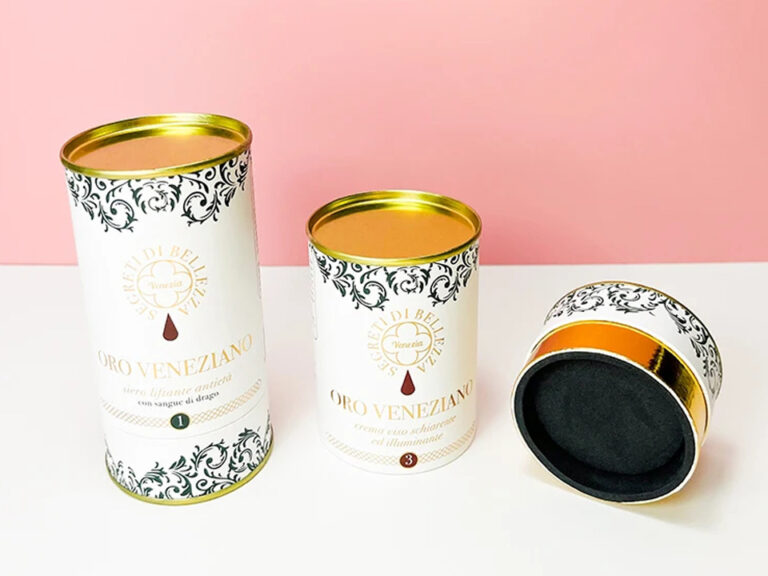
matte white tube with crisp graphics (modern, premium)
spot UV or foil accents for gifting
If your brand leans premium, you might like a cleaner base style such as matt white paper tube boxes packaging. The page is shown for finish reference, and the same surface strategy can translate well to food gifting and specialty items.
If you want heavier graphics coverage, you can also reference a print-forward format like double sides printed paper tube packaging to visualize high-ink design possibilities.
Wholesale-ready supply chain and bulk orders
Food brands live and die by repeatability. You don’t want “great first batch, messy second batch.” You want stable specs, stable color, and stable delivery.
That’s where a manufacturer’s production system matters as much as the packaging design. We support customization, OEM/ODM, and bulk wholesale for brand owners, cross-border sellers, distributors, design agencies, and private-label teams. We’ve built a modern food packaging purification workshop and a 12,300㎡ warehouse, with daily output that supports large-volume purchasing and campaign spikes.
If you sell online, this operational stability directly impacts your business:
fewer stockouts during promotions
fewer packaging variation issues that trigger complaints
smoother reorders for SKUs that move fast
For teams running multiple SKUs, start with the products catalog and build a small “tube family” (same diameter, different heights). It simplifies cartons, labels, and 3PL storage.
Food product use cases for kraft paper tube box packaging
Here’s a practical pairing table you can use as a buying guide.
Food product category
Main risk
Recommended tube build
Typical buyer goal
Tea / herbs
aroma loss + humidity
kraft tube + stronger lid + freshness barrier liner
premium shelf feel + repeat open/close
Protein powder / drink mix
moisture + clumping
thicker tube wall + secure lid + moisture barrier
reduce damage rate + protect texture
Nuts / roasted snacks
oxygen + rancidity
barrier liner + tamper-evident first-open
keep flavor stable in transit
Cookies / candies
breakage + staleness
tube strength + insert/inner wrap as needed
cut refunds, protect presentation
Supplements / gummies
compliance + tamper
tube + tamper evidence; add child-resistant if required
Wrap-up: kraft paper tube packaging that sells and ships
Kraft paper tube box packaging works for food products because it balances four things that rarely sit together:
strong protection in shipping
freshness-friendly sealing and liners
brand impact in retail and online unboxing
a paper-forward look that customers trust
If you want a fast starting point, pick one hero SKU (tea, powder, snacks), lock the diameter, then scale the rest of the lineup from that base. It keeps your supply chain clean and your branding consistent.