Still Not Seeing The Right Packaging Solution? Talk to Our Boss.
If you’ve reviewed our website or spoken with sales and still don’t see a clear path, send your request here. Your message goes directly to our General Manager for an executive review of feasibility, cost, and lead time. You’ll get a clear next step—what we can do, what we need from you, and the fastest route to a quote.
Direct GM review of your specs, use case, and constraints
Print/finish recommendations to match brand + budget
Cost-down alternatives and lead-time improvement options
Quote path clarity: MOQ, sampling plan, and what to next
Talk to Our Boss
Get a Fast Quote for Custom Paper Tube Packaging
Built for packaging managers, procurement, and packaging engineers. Specify size, quantity, and finish to receive moq, lead time, and spec guidance for us/eu programs.
Quote-ready customization: diameter, height, wall thickness, inserts, liners, and closures
Why Protein Brands Are Switching to Paper Tube Packaging
Let’s be real.
The old plastic tub still works. It holds powder. It survives shipping. It stacks like a champ.
But it also makes a lot of protein brands blur together. Same shape. Same shelf presence. Same tired signal.
We have noticed something else, too. In 2026, that sameness gets expensive fast. Protein keeps growing as a category, shoppers keep paying closer attention to packaging, and brands need packs that do more than sit there. Fresh 2025 and 2026 data from McKinsey, NIQ, AF&PA, and Grand View all point in the same direction. Buyers care about recyclability, they still put food safety and shelf life at the top, paper recovery remains strong, and the protein supplements market keeps expanding.
Table of Contents
The pressure changed
Look, a few years ago, a brand could toss a leaf icon on the label, talk about sustainability for a minute, and move on.
That does not cut it now.
McKinsey’s 2025 global packaging survey found that recyclability ranks as the most important sustainability trait worldwide. Its U.S. work says shoppers still care most about food safety and shelf life when they judge packaging overall. Then you add NIQ’s 2026 retail data, which shows protein based foods up 9.6% and supplements up 18.4% in recent UK sales data. Then layer on AF&PA’s latest recycling figures, which put U.S. paper recycling at 60%–64% in 2024 and cardboard at 69%–74%. That is not a soft trend. That is a market signal.
In our experience, buyers now ask three blunt questions. Will it keep the powder fresh. Will it make the brand look better. Can we stand behind the sustainability story without stretching the truth. Brands that switch to tubes usually answer all three at once.
What the fresh data says
Market signal
Market data
What it means for protein brands
Recyclability
Global consumers rank recyclability as the top sustainability trait; 77% of U.S. consumers say recyclable packaging is extremely or very important.
If the pack does not look and feel recyclable, the brand story starts behind.
Food safety & shelf life
These remain the top packaging concerns for U.S. consumers.
Good looks do not matter if the pack feels risky or flimsy.
Paper recovery
U.S. 2024 paper recycling rate: 60%–64%; cardboard: 69%–74%.
Paper-based packs have a recycling story buyers already understand.
Protein momentum
UK protein-based foods rose 9.6%; supplements rose 18.4% in recent 2026 data.
Growing shelves reward formats that stand out fast.
Category size
Global protein supplements market was estimated at $29.78B in 2025; protein powders held 48.8% of product revenue share.
Big, crowded categories need better packaging codes, not more sameness.
We like this table because it gets to the point. No fluff. Just the case in plain English. Buyers want packs they trust, protein shelves keep getting noisier, and paper based formats already speak a language many shoppers understand faster than another giant rigid tub.
Why tubes are getting picked over tubs
Because they fix two problems at once.
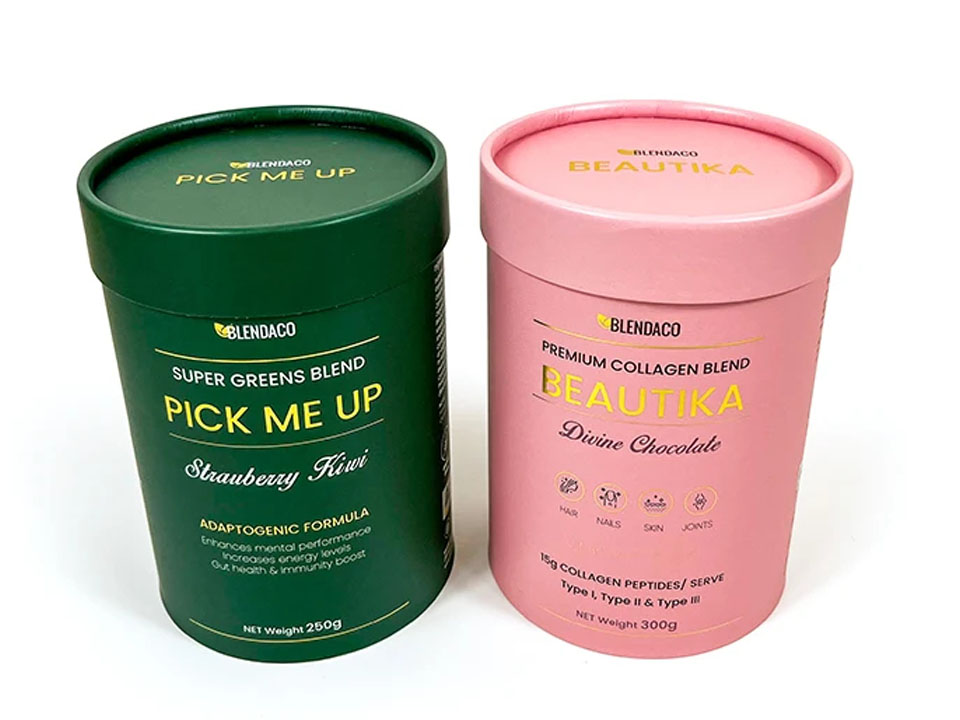
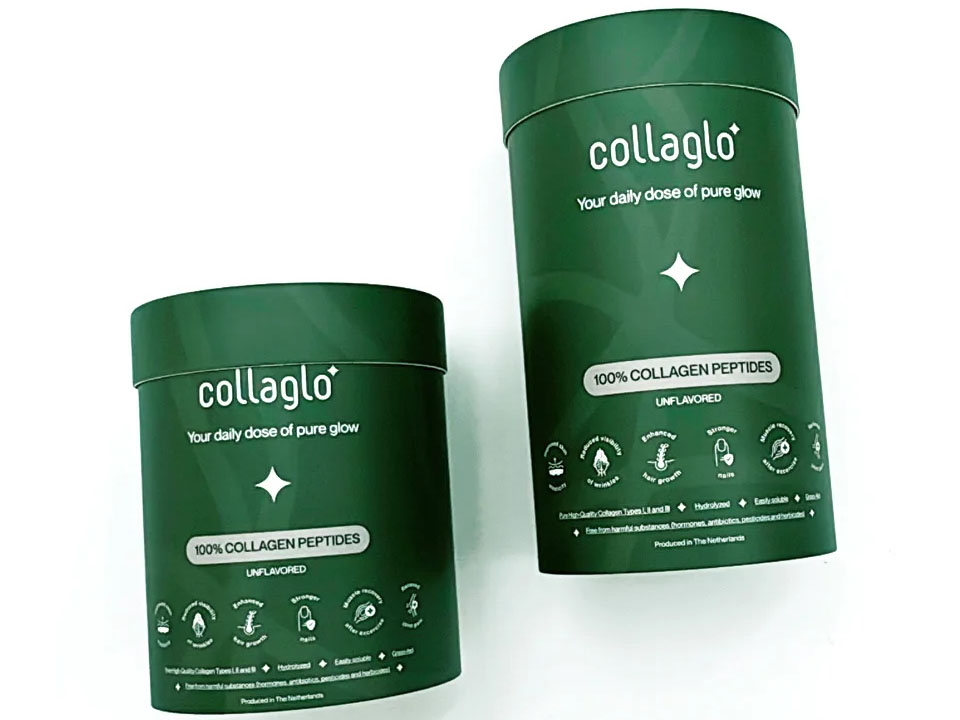
First, they break the visual pattern. That matters. Walk down a supplement aisle and you see the same black jar shape over and over. A tube changes the silhouette. It changes the hand feel. It changes how the graphics land. For plant based, clean label, or more premium protein lines, that shift does real work before anyone reads a word.
Second, tubes let us match the structure to the product. That is where things get interesting. Need a peel seal. Need a foil lining. Need a tighter close. Need a pack that feels pantry friendly instead of warehouse generic. A paper tube format gives you room to build for that. And that matters because shoppers still put food safety and shelf life above appearance when they judge packaging.
That part gets skipped all the time.
Paper does not win because it sounds nice.
Paper wins when the structure fits the powder.
Not every paper tube is the same
Here’s the thing.
We have seen brands treat every paper tube like it is the same object with a different label. That is where bad packaging decisions start.
A vegan blend. A whey isolate. A collagen creamer. Different products. Different risks. Different user expectations. So no, they should not all get the same closure and barrier setup just because the outer shape looks similar.
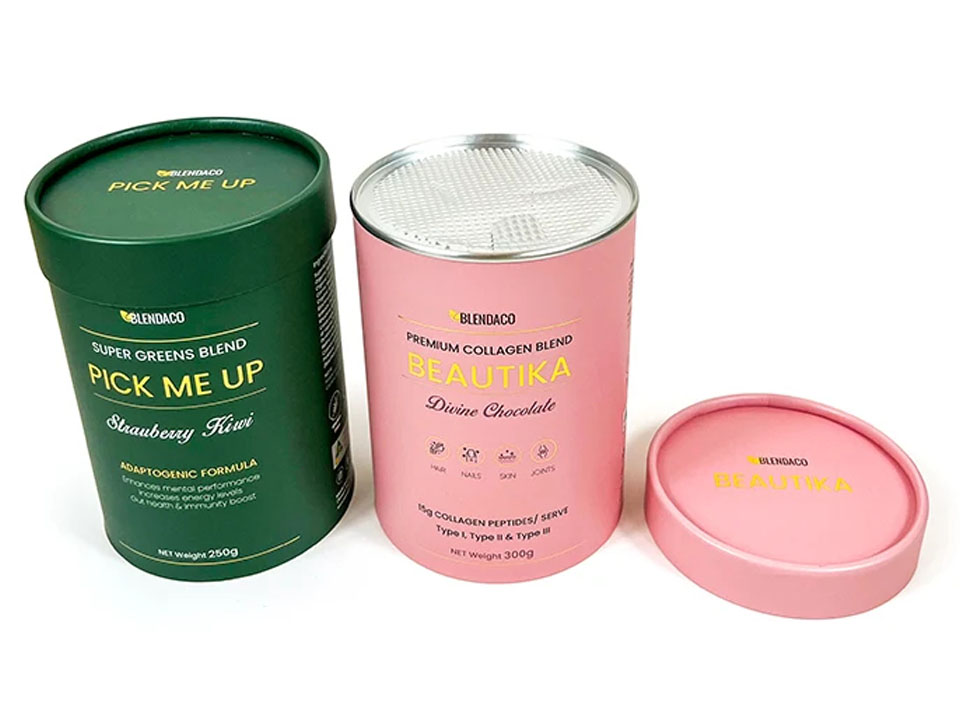
If your team cares most about first open freshness and a more convincing tamper feel, a peelable lid paper canister gives you that clean break shoppers notice right away.
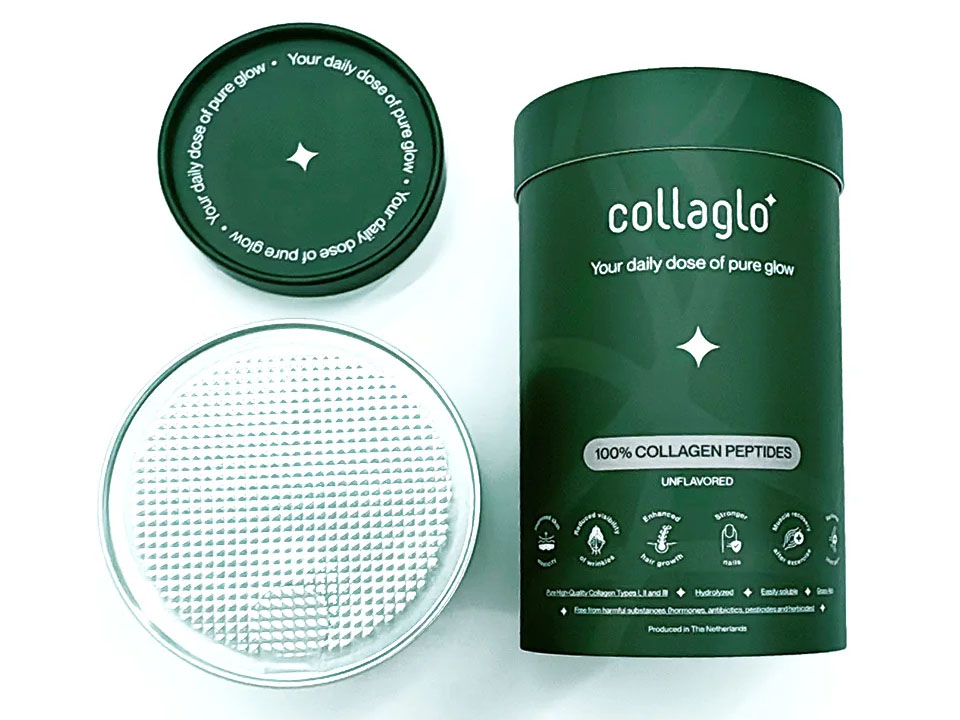
And for collagen, creamers, or powders that need stronger protection from moisture and aroma loss, airtight aluminum foil paper tube boxes usually fit the brief better.
Different product. Different pack. Simple.
The part most posts skip
Let’s say it straight.
Paper tubes are not magic.
A foil lined composite build may be exactly what a protein powder needs for freshness. But that same build can make recycling claims more complicated than the marketing team wants. McKinsey’s 2025 U.S. findings make that tension pretty clear. Consumers care a lot about recyclability, but multimaterial packaging creates tougher questions for real world recovery systems. So when a tube uses foil, membranes, metal ends, or mixed substrates, we need to describe it honestly. No fuzzy language. No blanket curbside claim that sounds nice in a pitch deck and falls apart later.
Trust disappears fast when packaging copy outruns packaging reality.
And once that happens, the product has to work twice as hard to earn that trust back.
What buyers should check before they switch
1. Bulk density, fill weight, and scoop placement
We would not copy the dimensions of an old tub and hope for the best. Protein powders settle. Scoop sizes vary. Headspace changes the feel of the first open. A tube can look terrific in a render and still feel awkward after filling if the pack out was wrong from day one.
2. Barrier needs
Not all powders need the same level of protection. Whey, plant protein, meal replacement, collagen, and flavored blends all bring different moisture, aroma, and freshness demands. Start with the formula. Then pick the liner and closure.
3. Opening experience
People notice opening friction immediately. They notice freshness cues, too. Peel top, friction fit, paper cap, membrane, metal end—each option changes how the product feels on first use. Buyers read that feeling as part of brand quality whether we like it or not.
4. Compliance and claims
Food contact suitability. Migration. Print durability. Tamper evidence. Coding. Transit performance. We have seen teams leave these details until late in the process, and that always gets expensive.
Boring details.
Important details.
The kind that keep a smart packaging idea from turning into a mess.
Why this format works so well for protein, specifically
Protein packaging stopped being only functional a while ago.
That changed everything.
People still buy protein for macros, recovery, satiety, and training goals. Sure. But we also watch them buy it for identity. Cleaner eating. Plant based living. Better aging. Better routines. Better mornings. Better workouts. The old tub worked when the category felt narrower and more uniform. Now protein powders sit next to wellness blends, collagen systems, meal replacements, and lifestyle products that ask the pack to do more than just hold powder.
That is why tubes keep showing up.
They feel less industrial. Less copied. More intentional.
And when the structure is right, they deliver that feel without giving up the freshness and protection people still care about most.
Questions protein brands ask before they move
Are paper tubes actually recyclable?
Some are straightforward. Some are not. A paper based pack does not automatically mean every local program will take it the same way. That is the honest answer. U.S. paper recovery remains strong, and consumers clearly respond to recyclable packaging cues, but composite builds need tighter claim language and market by market care.
Can paper tubes really protect protein powder?
Yes, when we spec them correctly. Foil linings, peel seals, and tighter closures exist for a reason. They help protect against moisture and aroma loss, which matters because consumers still rank food safety and shelf life above appearance when they judge packaging.
Is this only for premium brands?
No. Premium brands moved early, sure. But the logic reaches much further. Grand View estimates the global protein supplements market at $29.78 billion in 2025, and protein powders held 48.8% of product revenue share that year. In a category that big, and that crowded, brands at every price point need a stronger shelf signal.
Why are plant-based and clean-label brands leaning in faster?
Because the pack matches the message. When a formula leans into cleaner ingredients, lower plastic presentation, or a more natural visual code, a paper tube makes that story easier to read before anyone turns the pack around. And with the protein supplements market still expanding, brands want packaging that helps shoppers understand the product faster.
So why are protein brands switching to paper tube packaging.
Because the old tub still stores powder. It just does not say enough anymore.
A well built tube says more before the first scoop. It says the brand paid attention. It says the product belongs in a modern wellness aisle. It says the pack was chosen, not defaulted. And for brands trying to stand out in a category that keeps growing, that difference shows up fast—on shelf, in hand, and in the story customers tell themselves before they buy.