¿Aún no encuentra la solución de envasado adecuada? Hable con nuestro jefe.
Si ha consultado nuestro sitio web o hablado con el departamento de ventas y sigue sin ver claro el camino a seguir, envíe su solicitud aquí. Su mensaje irá directamente a nuestro Director General para que realice una revisión ejecutiva de la viabilidad, el coste y el plazo de entrega. Obtendrá información clara sobre el siguiente paso: qué podemos hacer, qué necesitamos de usted y la ruta más rápida para obtener un presupuesto.
Obtenga un presupuesto rápido para Envasado de tubos de papel a medida
Diseñado para directores de envasado, compras e ingenieros de envasado. Especifique el tamaño, la cantidad y el acabado para recibir información sobre precios, plazos de entrega y especificaciones para programas de EE.UU. y la UE.
Personalización lista para cotizar: diámetro, altura, grosor de pared, insertos, revestimientos y cierres
Envases de tubo de papel ecológicos: materiales, diseño y reciclaje
Los envases de tubo de papel ecológicos pueden reducir la dependencia de los envases de plástico rígido convencionales, pero un envase cilíndrico no se convierte en sostenible simplemente porque su exterior parezca papel kraft. Para los compradores profesionales, las preguntas relevantes son más específicas: ¿Qué porcentaje del envase está realmente compuesto por fibra? ¿Necesita una barrera de polímero o de lámina? ¿Se pueden separar el cierre y el inserto? ¿Es la estructura final compatible con los sistemas reales de reciclaje de papel del mercado de destino?
Estos detalles influyen en la reciclabilidad, el coste, la protección del producto, las declaraciones medioambientales y la cualificación de los proveedores. Por lo tanto, la especificación más sólida para un tubo de papel debe equilibrar tres requisitos al mismo tiempo: suficiente material para proteger el producto, una complejidad que no supere la que requiere la aplicación y una vía de gestión al final de su vida útil que pueda demostrarse, en lugar de suponerse.
¿Por qué los envases de tubo de papel son respetuosos con el medio ambiente?
El embalaje ecológico en tubo de papel es un sistema de embalaje cilíndrico compuesto principalmente por fibra, diseñado para reducir el impacto medioambiental del material sin dejar de cumplir los requisitos en materia de protección del producto, fabricación, imagen de marca, distribución y fin de vida útil.
En un proyecto B2B, la sostenibilidad debe evaluarse en toda la estructura:
origen y contenido reciclado del papel;
peso total del material;
estructura de la pared del tubo;
material de revestimiento o de barrera;
tapa y base;
insertar;
acabados de impresión y decorativos;
separabilidad de los componentes que no son de papel;
eficiencia del transporte;
potencial de reutilización;
compatibilidad con la infraestructura de reciclaje.
Esa distinción es importante porque «renovable», «reciclado», «reciclable», «reutilizable», «biodegradable» y «compostable» describen diferentes características. Una afirmación no prueba automáticamente otra.
El Consejo de Administración Forestal (FSC), por ejemplo, distingue entre las declaraciones de material «FSC 100%», «FSC Mix» y «FSC Recycled». Una etiqueta FSC proporciona información sobre el origen de la fibra y la cadena de custodia; no debe considerarse una prueba de que todos los envases acabados sean reciclables en todos los mercados.
¿Qué materiales de los tubos de papel deberían comparar los compradores?
La mayoría de los tubos de papel rígidos se fabrican con varias capas de cartón o cartón kraft enrolladas para formar la pared cilíndrica. La capa exterior constituye, a su vez, la superficie imprimible o decorativa.
El material del núcleo es solo una parte de las especificaciones.
Componente
Opciones habituales
Por qué lo eligen los compradores
Consideraciones principales en materia de sostenibilidad y abastecimiento
Pared del tubo
Papel kraft virgen, cartón reciclado, cartón de fibras mixtas
Resistencia a la compresión y rigidez
Solicita información sobre la composición de las fibras, la declaración de contenido reciclado y la documentación relativa a la cadena de custodia.
Envoltura exterior
Papel kraft marrón, papel blanco, papel estucado, papel especial
Imagen de marca y calidad de impresión
Los sustratos decorativos pueden incorporar recubrimientos o tratamientos
Superficie interior
Papel de revestimiento, papel recubierto de polietileno, película de polímero, laminado de papel de aluminio
Protección contra la humedad, la grasa, los olores, el oxígeno o la luz
Las capas adicionales pueden modificar el proceso de reciclaje
Cierre
Cartón, fibra moldeada, madera, plástico o metal
Experiencia de apertura y protección del producto
Se debe evaluar si los cierres compuestos por varios materiales se pueden separar
Inserte
Cartón plegado, pulpa moldeada, espuma, EVA u otros polímeros
Inmoviliza productos frágiles o de alta gama
Los insertos de papel suelen simplificar un diseño centrado en la fibra.
Evalúa la obra en su conjunto, en lugar de juzgar cada acabado por separado.
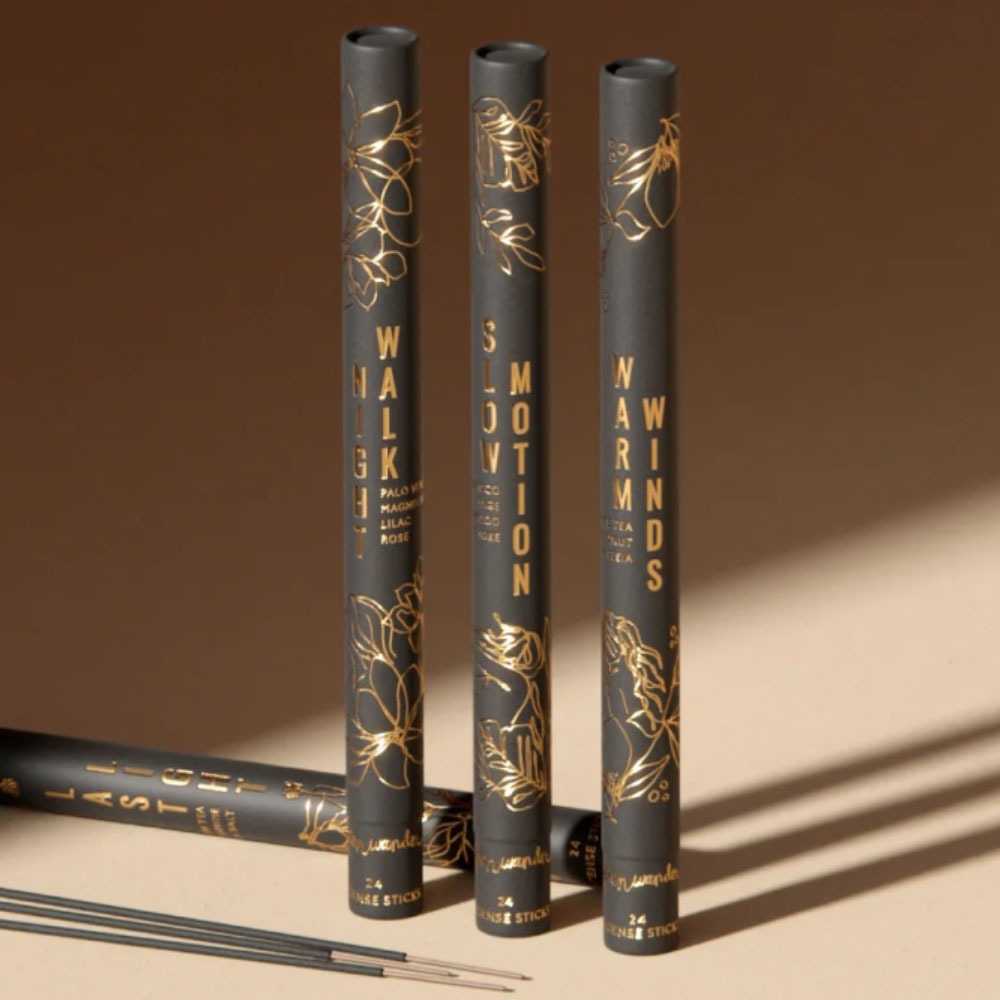
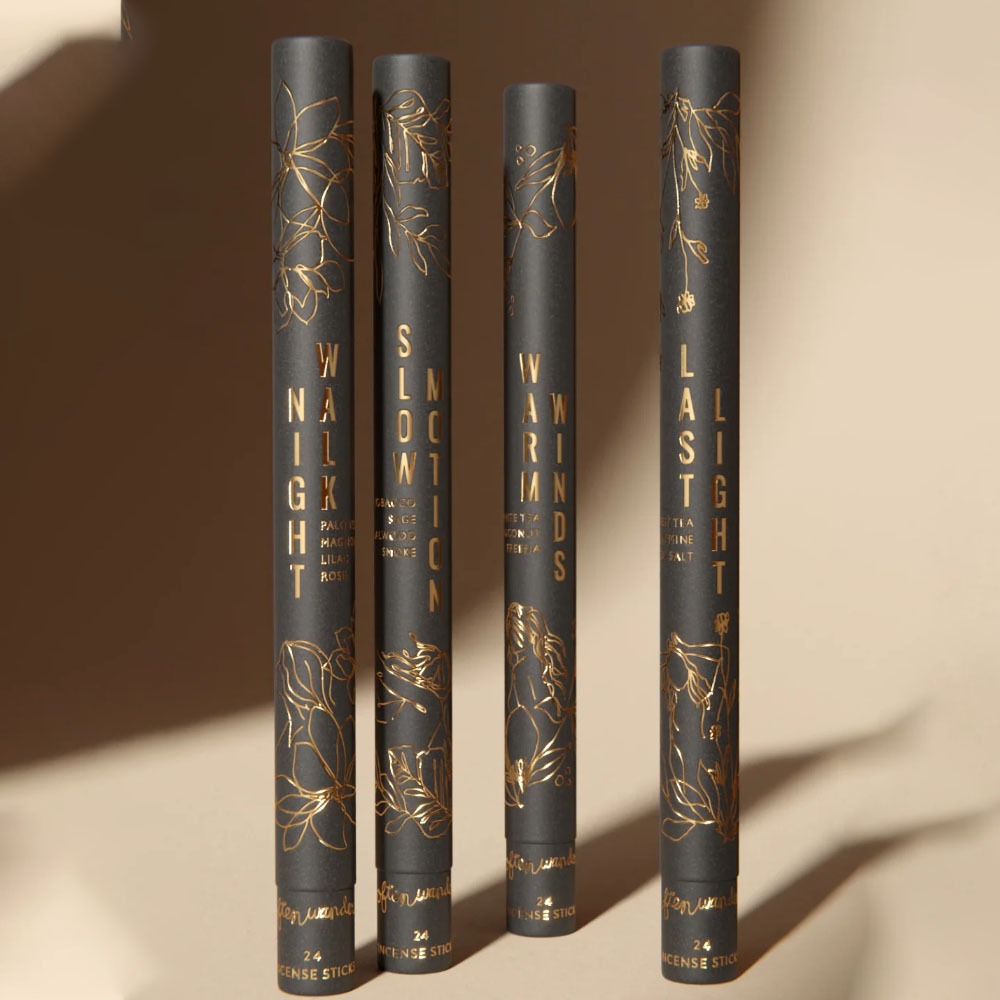
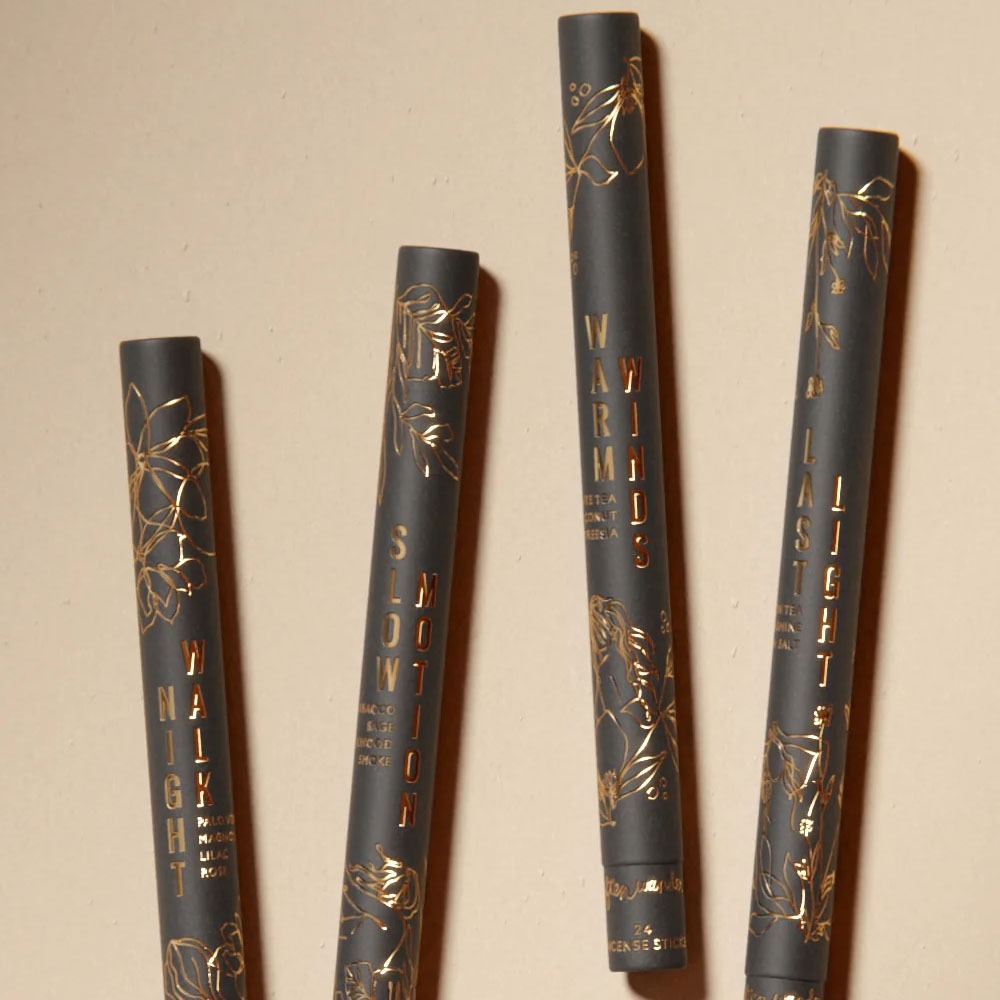
Un aspecto natural tipo kraft puede resultar útil para el posicionamiento en el sector del cuidado personal, tal y como ilustra Envases de tubo de papel kraft para productos de cuidado personal. No obstante, la decisión comercial debería seguir basándose en la construcción y el rendimiento, más que en el color.
¿Fibra reciclada o fibra virgen?
No existe ninguna regla universal que establezca que el mayor porcentaje posible de contenido reciclado dé como resultado el mejor envase.
La fibra reciclada puede reducir la demanda de material virgen y favorecer el uso circular de la fibra. La fibra virgen puede ofrecer ventajas en cuanto a resistencia, limpieza, aspecto o rendimiento en determinadas aplicaciones. La especificación adecuada depende de la función que deba cumplir el tubo.
Un enfoque práctico consiste en solicitar a los proveedores:
la composición en fibra de cada componente del papel;
si el contenido reciclado es de origen preconsumo o posconsumo, cuando proceda;
Certificado FSC o documentación equivalente sobre la cadena de custodia, cuando sea necesario;
el rendimiento mecánico obtenido con la estructura de tablero propuesta.
Reducir el peso de la pared sin mermar el rendimiento a la compresión puede, en ocasiones, ofrecer un mejor resultado global que optar por un tubo más grueso simplemente para que el producto dé una sensación de mayor calidad.
Un tubo de papel no es reciclable por sí solo
Esta es una de las cualificaciones más importantes para los compradores de envases sostenibles.
La infraestructura de recuperación de papel está bien consolidada en muchos mercados. La AF&PA informó de que Estados Unidos recicló alrededor de 45 millones de toneladas de papel en 2025, con una tasa de reciclaje de papel de entre el 61% y el 65% y una tasa de reciclaje de cartón de entre el 70% y el 75%.
Esas cifras a nivel del sistema sí que no significa que todos los envases de papel sean igualmente aptos para el reciclaje.
Una fábrica de papel debe separar la fibra aprovechable de las tintas, los adhesivos, los recubrimientos, las películas, las láminas y otros componentes que no sean fibra durante el proceso de reprocesamiento. Las directrices sobre reciclabilidad de la AF&PA identifican específicamente los elementos que no son fibra, como los recubrimientos y los aditivos, como variables que pueden afectar al comportamiento de los envases de papel en las plantas de reciclaje.
En el caso de los programas europeos, el Protocolo de Evaluación de la Reciclabilidad de 4evergreen va más allá al evaluar los envases a base de fibra en función de diferentes procesos de reciclaje, entre los que se incluyen el reciclaje convencional, el desentintado por flotación y el reciclaje especializado. Por lo tanto, los ensayos técnicos aportan pruebas más sólidas que el simple cálculo del porcentaje de papel en peso.
Diseñar pensando en el reciclaje, no solo para conseguir un “aspecto de papel”
Una jerarquía útil para un nuevo proyecto es la siguiente:
En primer lugar: Utiliza una estructura en la que predomine el papel cuando los requisitos del producto lo permitan.
Segundo: eliminar los componentes que no desempeñen una función cuantificable.
Tercero: Cuando sea necesario utilizar materiales no de papel, hay que reducirlos al mínimo y facilitar su separación siempre que sea posible.
Cuarto: verificar que la estructura terminada se adapta al entorno de reciclaje del mercado de venta previsto.
Por eso, un simple tubo rígido de cartón con una tapa de papel puede tener una vía de reciclaje de fibra más clara que un tubo de aspecto similar que contenga una ventana de plástico, un envoltorio laminado, un relleno de espuma, un tapón de plástico y una base metálica unida de forma permanente.
La diferencia no se aprecia en la fotografía del producto.
Cómo las barreras alteran la ecuación de la sostenibilidad
Los requisitos de barrera suelen ser el motivo por el que un tubo de papel, en principio sencillo, se convierte en un envase compuesto por varios materiales.
El té, el café, los suplementos y otros productos sensibles a la humedad o al oxígeno pueden requerir una protección de barrera más resistente que la que ofrece una caja secundaria de cosméticos o un embalaje de productos electrónicos. Entre las posibles opciones se incluyen el papel estucado, los films poliméricos, los laminados que contienen aluminio o una bolsa interior independiente.
La pregunta correcta no es:
“¿Podemos fabricar el tubo sin ningún tipo de plástico?”
La pregunta más adecuada desde el punto de vista de la ingeniería es:
“¿Cuál es el sistema de barrera mínimo que garantiza la vida útil requerida y la protección del producto?”
Si las especificaciones de una barrera son insuficientes, puede provocar el deterioro del producto, la pérdida de aroma, la absorción de humedad o devoluciones. Por el contrario, unas especificaciones excesivas pueden aumentar los costes y dificultar la recuperación del material.
Por ejemplo, Envase de té en forma de tubo de papel estampado con tapa de madera muestra cómo una estructura de papel puede combinarse con un material de cierre diferente por motivos de presentación y funcionalidad. Esto no tiene por qué ser una mala decisión desde el punto de vista de la sostenibilidad. Simplemente significa que hay que tener en cuenta el conjunto completo de componentes a la hora de definir las instrucciones de reciclaje y las declaraciones medioambientales.
El embalaje directo y el embalaje secundario requieren especificaciones diferentes
El embalaje secundario envuelve un producto que ya cuenta con su propio envase, como un frasco de perfume, un tarro de cosméticos o un dispositivo electrónico. Por lo tanto, es posible que el tubo apenas necesite, o no necesite en absoluto, una barrera de contacto con el producto.
El envase directo tiene una función más compleja. Puede que deba ser resistente al aceite, a la humedad, al oxígeno, a la transferencia de aromas o a la contaminación.
A menudo no es necesario utilizar una barrera compleja, diseñada para el contacto directo con los alimentos, en un tubo de regalo secundario. Por el contrario, eliminar una barrera de eficacia probada con el único fin de aumentar el porcentaje de papel puede comprometer el rendimiento del producto.
La ingeniería de la sostenibilidad debería eliminar innecesario material, no protección necesaria.
Los cierres y los insertos pueden determinar la vía de eliminación al final de la vida útil
Los equipos de marca suelen centrarse en la pared cilíndrica, ya que ocupa la mayor superficie visible. Los ingenieros de envases también deberían examinar con detenimiento los componentes que se ocultan en su interior.
Insertos de papel y fibra moldeada
En el caso de botellas, frascos, productos cosméticos y aparatos electrónicos, un inserto de cartón o de fibra moldeada bien diseñado puede:
El inserto debe dimensionarse en función del producto real, y no solo a partir de una cota nominal del CAD. Los hombros de las botellas, los tapones, las cajas de recarga, los frascos de cristal y las superficies decoradas pueden requerir diferentes puntos de contacto y holguras.
En el caso de los productos de consumo delicados, Envase de tubo de papel impreso para auriculares inalámbricos También pone de manifiesto que el envase debe combinar la presentación comercial con la sujeción de un producto relativamente pequeño.
Inserto de espuma y EVA
La espuma puede ofrecer una amortiguación muy eficaz y un aspecto de alta calidad. La contrapartida es la complejidad del material.
Si necesitas espuma, pregunta:
¿Se puede sacar fácilmente el inserto?
¿Existe alguna alternativa basada en fibra que supere la misma prueba de protección?
¿La reducción del grosor de la espuma sigue protegiendo el producto?
¿Se distinguirán claramente los componentes en las instrucciones de eliminación del embalaje?
“Papel por fuera, espuma por dentro” sigue siendo un embalaje compuesto por varios materiales.
Impresión y acabado: utiliza el efecto que realmente necesitas
Los tubos de papel ofrecen una amplia superficie cilíndrica imprimible, por lo que las marcas suelen aplicar una película mate, un laminado brillante, estampado en caliente, relieve, grabado en hueco, barniz selectivo y otros procesos decorativos.
Algunos acabados de alta calidad pueden estar justificados. Pueden mejorar la resistencia a la abrasión, el aspecto en el punto de venta o la diferenciación de la marca. Sin embargo, añadir todos los acabados disponibles rara vez constituye una estrategia de sostenibilidad.
Una especificación más rigurosa podría utilizar:
un diseño gráfico contundente, en lugar de varias capas decorativas;
relieve para la diferenciación táctil;
una lámina limitada, en lugar de una superficie decorativa totalmente metalizada;
un barniz adecuado cuando sea necesario proteger la superficie;
papel kraft sin plastificar, siempre que las condiciones de impresión y distribución lo permitan.
El objetivo no es que los envases sostenibles resulten visualmente sencillos, sino que cada capa de material se gane su lugar en el diseño.
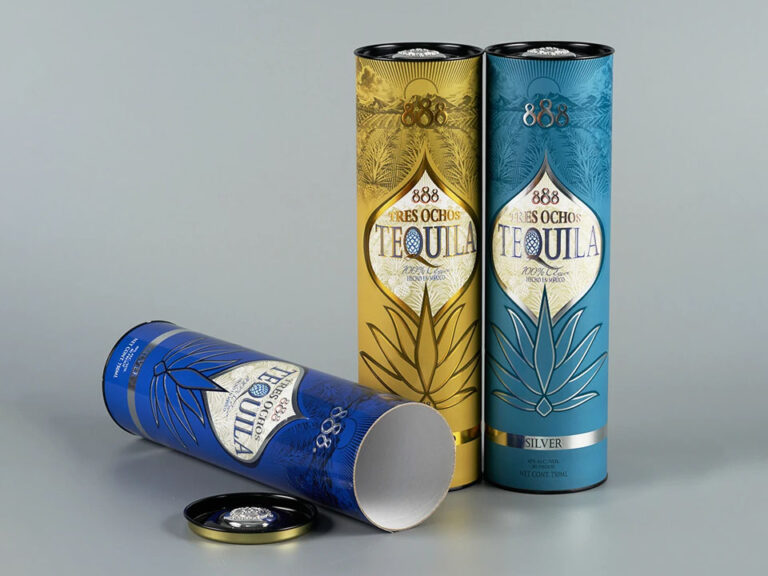
Un minimalista Tubo de papel kraft para juegos de tarros de cosméticos También puede favorecer la reutilización, ya que el diseño rígido de tapa y base sigue siendo funcional tras el desembalaje inicial. La posibilidad de reutilización es útil, pero debe considerarse una ventaja adicional y no una excusa para fabricar el tubo con un diseño excesivamente robusto.
¿Cómo deberían evaluar los compradores el reciclaje en los distintos mercados?
“El hecho de que algo sea ”reciclable» no es solo una propiedad del material. La recogida, la clasificación, la tecnología de las plantas de reciclaje y la normativa regional también son factores importantes.
En el caso de los envases destinados a la UE, esto está adquiriendo una importancia comercial cada vez mayor. La Comisión Europea afirma que el Reglamento sobre envases y residuos de envases entró en vigor el 12 de agosto de 2026 y que los envases comercializados en el mercado de la UE deben ser reciclables, de conformidad con el marco normativo, de aquí a 2030.
Por lo tanto, una marca multinacional debería evitar aprobar un tubo de papel basándose en una declaración global genérica como “100% reciclable” sin saber dónde se venderá realmente el envase acabado.
En el caso de una solicitud de presupuesto que abarque varios destinos, pide a los proveedores que distingan entre:
composición del material;
reciclabilidad técnica;
aceptación de recogidas locales;
instrucciones de reciclaje;
declaraciones normativas o relativas al etiquetado.
Son conceptos relacionados, pero no idénticos.
Por qué una mayor cantidad de papel no siempre es la mejor especificación
Hay una suposición habitual que merece una matización: Aumentar al máximo el porcentaje de papel no equivale automáticamente a reducir al mínimo el impacto medioambiental.
Imagina dos diseños.
El diseño A utiliza una pared rígida extremadamente gruesa, una tapa de gran tamaño, una sección de hombros amplia y múltiples piezas de papel insertadas, lo que permite a la marca afirmar que se trata de un formato casi íntegramente de papel.
El diseño B utiliza menos cartón en total, pero conserva un pequeño componente extraíble que no es de papel y que resulta necesario para garantizar una protección fiable.
Sin un análisis del ciclo de vida (ACV) o una evaluación equivalente, no estaría justificado afirmar que el diseño A es más respetuoso con el medio ambiente simplemente porque su porcentaje de fibra es mayor.
La reducción de materiales, la prevención de daños, el transporte, la compatibilidad con el reciclaje, el abastecimiento y la vida útil son factores importantes.
Un tubo que no supera las pruebas de compresión y provoca daños en el producto no es una solución de envasado sostenible.
¿Qué factores influyen en el coste de los envases de papel en rollo sostenibles?
La expresión “material ecológico” es demasiado imprecisa para poder fijar un precio exacto.
Los precios de los tubos de papel suelen variar en función de varias variables relacionadas entre sí.
Dimensiones de los tubos y estructura de las paredes
El diámetro, la altura final y el espesor de la pared influyen directamente en el consumo de material. Las dimensiones personalizadas también pueden afectar al utillaje, a la configuración del bobinado, al corte y a la densidad de empaquetamiento.
Especificaciones de los materiales
El cartón reciclado, el papel certificado, los envoltorios especiales, los revestimientos de barrera y los componentes de fibra moldeada pueden tener diferentes costes de material y de procesamiento.
Impresión y acabados
La impresión en CMYK o Pantone, el laminado metálico, los soportes especiales, el laminado, el relieve y otros procesos suponen operaciones de preparación adicionales y un mayor coste.
Inserciones y cierres
Una tapa básica de papel es diferente de una estructura ajustada al cuello y los hombros, un inserto moldeado, una tapa de madera o un cierre de diseño específico.
MOQ
El embalaje personalizado conlleva unos costes fijos: preparación de las maquetas, configuración de la maquinaria, troqueles o utillaje, control del color, muestras y cambios de producción. Los pedidos pequeños reparten estos costes entre un número menor de unidades.
Esto se refleja en los debates reales sobre el abastecimiento de envases. En un hilo reciente del subreddit r/Packaging, un comprador se planteaba la posibilidad de... Muestra personalizada de tubo de papel $200 y preocuparse por el coste de solicitar muestras a tres o cuatro proveedores. El consejo más útil que se dio en el debate fue reducir primero la lista de proveedores y confirmar exactamente qué materiales, dimensiones, impresión y proceso de producción representa la muestra personalizada.
Esa es una buena práctica en materia de contratación pública. Una muestra barata que no sea representativa de la producción en serie tiene un valor limitado a la hora de evaluar la idoneidad del producto.
Carga y densidad de embalaje
Los envases rígidos cilíndricos pueden ocupar más volumen de transporte que las cajas plegables planas. Por lo tanto, los compradores que comparen dos opciones “sostenibles” deberían tener en cuenta lo siguiente:
precio del embalaje + embalaje para la exportación + flete + riesgo de daños + almacenamiento + requisitos de eliminación
en lugar de solo el precio unitario.
¿Qué hay que comprobar durante el muestreo y el control de calidad?
Una especificación de sostenibilidad sigue requiriendo un control de calidad del embalaje convencional.
Antes de dar el visto bueno a la producción, comprueba lo siguiente:
Dimensiones y ajuste
Comprueba el diámetro interior, el diámetro exterior, la altura del tubo, el solapamiento de la tapa, el ajuste del cierre y las dimensiones del inserto, comparando estos valores con las tolerancias de fabricación.
Compresión y manipulación
Evalúa el tubo en su entorno logístico real. Un tubo para regalos destinado al comercio minorista, que se envía dentro de una caja de cartón principal, tiene requisitos diferentes a los de un contenedor que debe servir como protección principal durante el transporte.
Ilustraciones y colores
Aprobar las referencias de color, el registro de impresión, la legibilidad del texto, la legibilidad de los códigos de barras, la posición del laminado y el acabado de la superficie.
Coherencia de los componentes
Comprueba que la muestra aprobada utilice lo mismo:
construcción de tableros;
envoltura exterior;
revestimiento;
sistema adhesivo;
cierre;
insertar;
proceso de impresión;
tratamiento de superficies
destinado a la producción a gran escala.
Documentación sobre sostenibilidad
En función de las afirmaciones que se hagan, solicita los certificados de fibra correspondientes, la documentación sobre el contenido reciclado, las declaraciones de materiales y la información sobre las pruebas de reciclabilidad.
Las declaraciones de sostenibilidad de los proveedores deberían figurar en las especificaciones y los documentos de compra, y no solo en las presentaciones de marketing.
Cómo evaluar a un proveedor de tubos de papel
Un buen proveedor debería ser capaz de explicar las ventajas e inconvenientes, en lugar de limitarse a aceptar todas las características solicitadas.
Algunas preguntas útiles son:
¿Cuál es la lista completa de materiales?
¿Qué componentes son de papel y cuáles no?
¿Cuál es el porcentaje de contenido reciclado?
¿Se puede acreditar el requisito de certificación FSC mediante una cadena de custodia válida?
¿Qué barreras son necesarias para el producto envasado?
¿Puede un inserto de papel sustituir a la espuma?
¿Se ha evaluado la reciclabilidad de la estructura terminada?
¿Qué tolerancias se controlarán durante la producción?
¿Qué pruebas se realizarán antes del envío?
¿La producción en serie seguirá el mismo diseño que la muestra aprobada?
¿Qué cambios requieren la aprobación del cliente?
¿Cómo se gestionan los lotes no conformes?
Un proveedor que pueda responder a estas preguntas con especificaciones, muestras y resultados de ensayos resulta más útil que uno que ofrezca el precio inicial más bajo por tubo.
¿Qué deben especificar los compradores antes de solicitar un presupuesto?
En el caso de una solicitud de presupuesto comparable, facilite información suficiente para que todos los proveedores puedan presentar un presupuesto para el mismo sistema de embalaje.
Incluir:
producto que se está embalando;
si el tubo es un envase primario o secundario;
las dimensiones del producto y, preferiblemente, muestras físicas o datos en 3D;
diámetro interior y altura requeridos, si ya se conocen;
cantidad del pedido y previsión anual;
mercados objetivo;
requisitos relativos a la fibra preferida o a la certificación;
objetivo de contenido reciclado, si procede;
requisitos relativos a las barreras;
configuración de la tapa y la base;
introducir los requisitos;
colores de impresión;
procesos de acabado;
estado de la obra;
pruebas obligatorias;
fecha prevista de entrega;
lugar de entrega;
restricciones relativas a los palés o las cajas de cartón;
las declaraciones medioambientales que la marca tiene previsto realizar.
No empieces con “dinos cuál es tu tubo más ecológico”.”
Empieza por los requisitos del producto y, a continuación, pide al proveedor que elimine el material y la complejidad innecesarios, sin que ello afecte al rendimiento. De este modo, se toma una decisión más fundamentada en materia de embalaje sostenible.
Preguntas frecuentes
¿Se pueden reciclar los tubos de papel?
Muchos tubos fabricados principalmente con papel pueden ser aptos para el reciclaje de papel, pero su reciclabilidad depende de su composición total y del sistema de reciclaje disponible. Las películas plásticas, los revestimientos metálicos, los insertos de espuma, las piezas metálicas, los recubrimientos y los cierres pueden modificar la vía de reciclaje adecuada.
¿Son los envases de papel kraft más sostenibles que los de papel blanco?
No necesariamente. El papel kraft marrón puede requerir menos tratamientos decorativos en algunos diseños, pero el color por sí solo no determina el rendimiento medioambiental. El origen de la fibra, el contenido reciclado, el gramaje del material, las capas protectoras, los acabados, el transporte y la reciclabilidad son factores más importantes.
¿Pueden los tubos de papel estar completamente libres de plástico?
Algunas aplicaciones pueden utilizar estructuras totalmente de papel o compuestas principalmente por fibra. Los productos que requieran barreras eficaces contra la humedad, el oxígeno, la grasa o los productos químicos pueden necesitar materiales adicionales. Los compradores deben especificar los requisitos de rendimiento antes de exigir una estructura sin plástico.
¿Significa la certificación FSC que un tubo de papel es reciclable?
No. La certificación FSC se refiere al abastecimiento responsable de fibra y a la cadena de custodia. La reciclabilidad depende de la composición del envase acabado y de los sistemas de recogida y reciclaje del lugar donde se vende el envase.
¿Se pueden reciclar los tubos de papel laminado?
Algunos envases de fibra recubiertos o laminados pueden ser reciclables, mientras que otras estructuras pueden requerir un proceso de reciclaje especializado. La respuesta depende de la composición química del recubrimiento, su cantidad, la facilidad para separarlo y la compatibilidad con las plantas de reciclaje. Es preferible realizar pruebas técnicas de reciclabilidad antes que basarse únicamente en su aspecto.
¿Cuál es el inserto más reciclable para un tubo de papel?
Los separadores de cartón plegado o de fibra moldeada pueden simplificar los envases a base de fibra siempre que ofrezcan una protección adecuada del producto. El uso de espuma o EVA puede seguir estando justificado para determinados productos frágiles, pero su uso y facilidad de extracción deben evaluarse por separado.
¿Qué datos se necesitan para elaborar un presupuesto de tubos de papel sostenibles?
Como mínimo, facilita las dimensiones del producto, la cantidad, el tamaño del tubo, los mercados de destino, los requisitos de materiales o certificaciones, las necesidades de barrera, el cierre, el inserto, la impresión, los acabados, los requisitos de ensayo y el destino de entrega. Unas especificaciones completas permiten realizar comparaciones entre proveedores mucho más significativas que limitarse a solicitar un tubo “ecológico”.