Vous n'avez toujours pas trouvé la bonne solution d'emballage ? Parlez-en à notre patron.
Si vous avez consulté notre site web ou discuté avec le service des ventes et que vous ne voyez toujours pas la voie à suivre, envoyez votre demande ici. Votre message sera transmis directement à notre directeur général, qui examinera la faisabilité, le coût et le délai de mise en œuvre. Vous obtiendrez une étape suivante claire - ce que nous pouvons faire, ce que nous attendons de vous, et la voie la plus rapide pour obtenir un devis.
Examen direct par GM de vos spécifications, cas d'utilisation et contraintes
Vérification de la taille et de la structure : diamètre, hauteur, résistance des parois, inserts
Recommandations en matière d'impression et de finition en fonction de la marque et du budget
Possibilités de réduction des coûts et d'amélioration des délais
Clarté du cheminement du devis : MOQ, plan d'échantillonnage et étapes suivantes
Parler à notre patron
Obtenir un devis rapide pour l'emballage de tubes en papier sur mesure
Conçu pour les responsables de l'emballage, de l'approvisionnement et les ingénieurs de l'emballage. Spécifiez la taille, la quantité et la finition pour obtenir un devis, un délai de livraison et des conseils sur les spécifications pour les programmes américains/européens.
Personnalisation prête à l'emploi : diamètre, hauteur, épaisseur de paroi, inserts, doublures et fermetures
Finitions haut de gamme : CMYK/Pantone, film, gaufrage, UV
Clarté de l'approvisionnement : spécifications claires + conseils en matière de contrôle de la qualité et de gestion des défauts de fabrication
Durable : Papier FSC® disponible sur demande
Sécurité enfants : conforme à la norme ISO 8317 / PPPA
Révolutionner l'industrie grâce à l'emballage durable des poudres dans des tubes en papier
Table des matières
Les poudres ne pardonnent pas les emballages négligés. Un peu d'humidité et vous obtenez des grumeaux. Un peu d'oxygène et vous perdez en arôme ou en puissance. Une fermeture déficiente et le produit se retrouve poussiéreux dans le carton. Viennent alors les remboursements, les mauvaises critiques et les photos “votre poudre a coulé partout”.
C'est pourquoi de plus en plus de marques s'éloignent des pots en plastique et optent pour des pots en plastique. emballage durable des poudres dans des tubes en papier. Vous pouvez conserver l'aspect haut de gamme de l'étagère, renforcer la protection, tout en racontant une histoire écologique qui semble réelle - surtout lorsque vous associez le bon pile de barrières avec le bon système de fermeture.
Si vous créez une nouvelle UGS ou refaites un produit phare, commencez par les bases :
Barrière (humidité + oxygène)
Sécurité alimentaire (couche de contact de qualité alimentaire)
Fermeture (preuve d'effraction + refermeture)
Impression (espace de marque à 360° qui fait vendre)
L'emballage durable des poudres dans des tubes en papier : ce qu'il faut résoudre
La plupart des projets concernant les poudres échouent pour une raison : les équipes se concentrent d'abord sur l'aspect extérieur et ne se posent la question que plus tard : “Cela permettra-t-il de garder les poudres au sec ?”
Utilisez plutôt cet état d'esprit de la liste de contrôle.
Point faible de la poudre (ce dont les clients se plaignent)
Ce qu'il faut dans le cahier des charges
Ce qu'un tube de papier peut faire
Agglutination après ouverture
Barrière contre l'humidité + refermeture solide
Doublure intérieure + couvercle étanche
Perte de goût / “goût plat”
Barrière à l'oxygène
Revêtement en feuille ou revêtement barrière
Poussière dans les cartons d'expédition
Joint solide + corps rigide
Résistance du cylindre + étanchéité de la membrane
“Semble bon marché” sur l'étagère
Finition haut de gamme + impression propre
Impression intégrale + finition spéciale
Préoccupations en matière de sécurité
Preuve de falsification
Scellé détachable / bande d'inviolabilité
Trop difficile à utiliser au quotidien
Ouverture et fermeture faciles
Options d'ajustement par friction / couvercle en fer blanc
Si vous vendez sur des places de marché, n'oubliez pas ceci : l'annonce peut promettre n'importe quoi, mais l'emballage doit le prouver la première fois que l'acheteur ouvre le couvercle.
Emballage en tube de papier de qualité alimentaire pour la poudre : là où c'est le plus important
Pour tout ce qui est comestible, “qualité alimentaire” n'est pas un slogan. C'est un point de contrôle.
Les poudres restent en contact avec la couche interne pendant des semaines, voire des mois. Cette couche interne doit rester propre, stable et adaptée au contact alimentaire. Ceci est particulièrement important pour :
Protéines et collagène (cycles quotidiens d'ouverture/fermeture)
Mélanges à café et cacao (l'arôme est le produit)
Matcha et mélanges de super-aliments (sensibles à l'humidité)
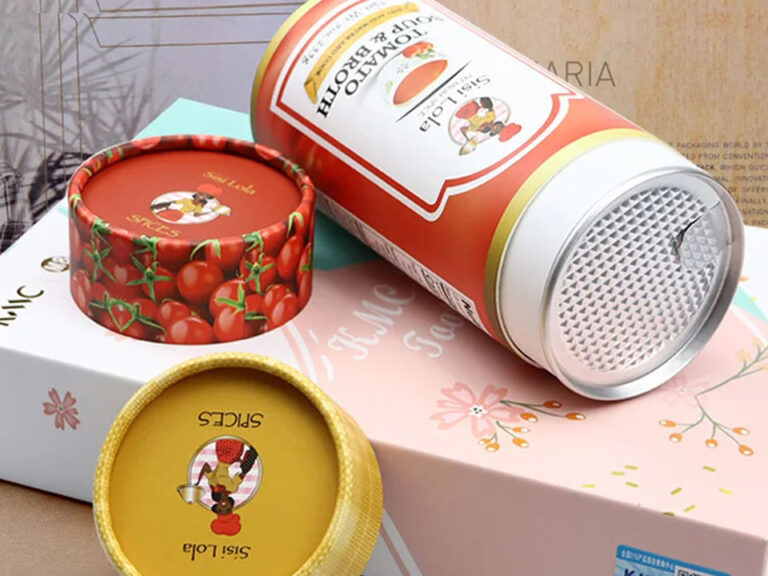
Assaisonnements (particules fines + risques de transfert d'odeurs fortes)
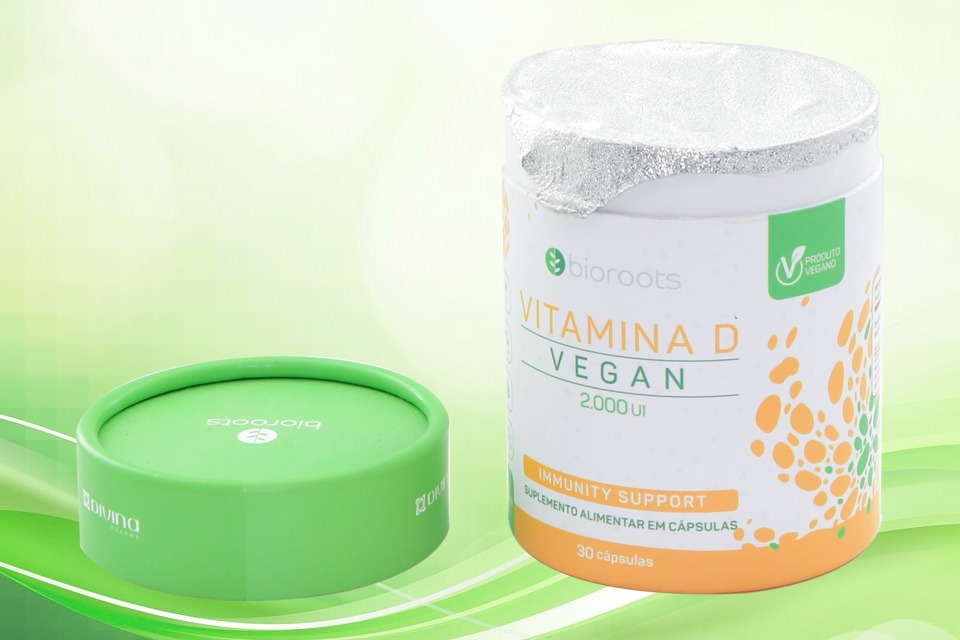
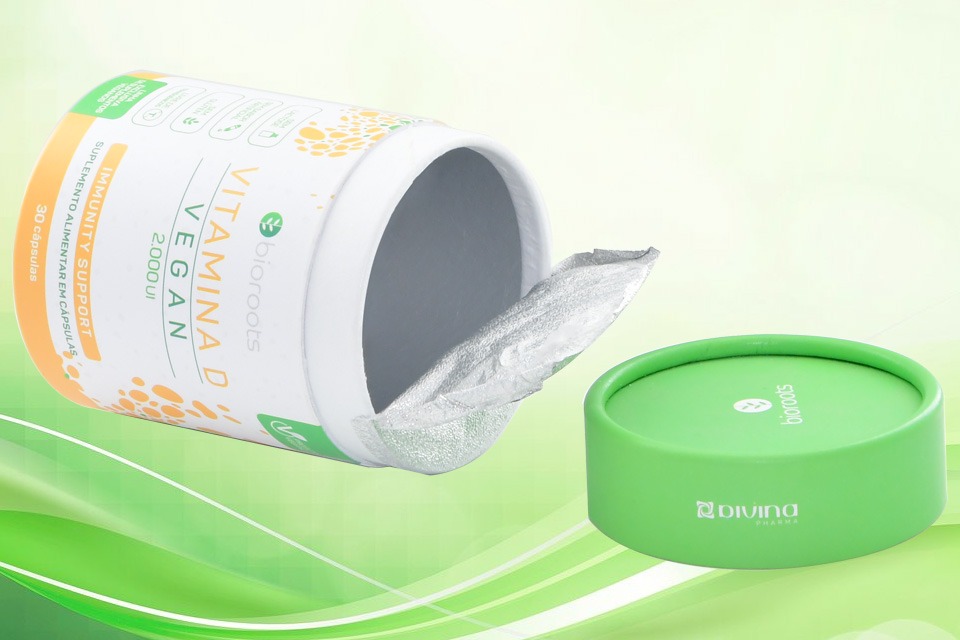
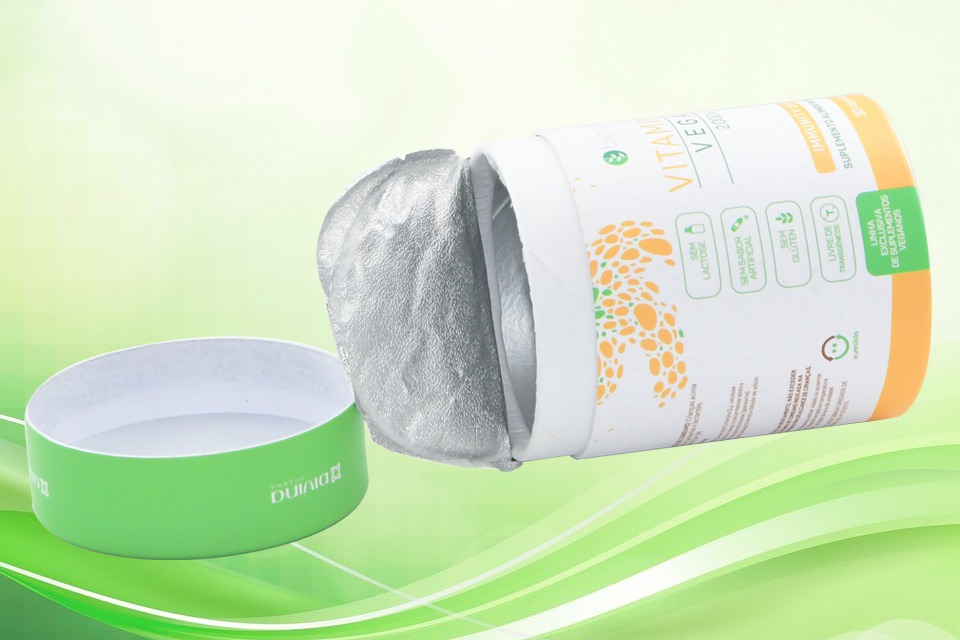
Revêtement en feuille d'aluminium pour l'emballage de tubes en papier : quand vous avez besoin d'une barrière sérieuse
Si votre poudre est sensible, ne prenez pas de risques. Utilisez une couche de protection plus résistante.
Beaucoup d'acheteurs vous poseront directement la question :
“Quelle est la pile de barrières ?”
“Pouvez-vous faire une doublure en papier d'aluminium ?”
“Est-ce qu'il restera fluide après plusieurs ouvertures ?”
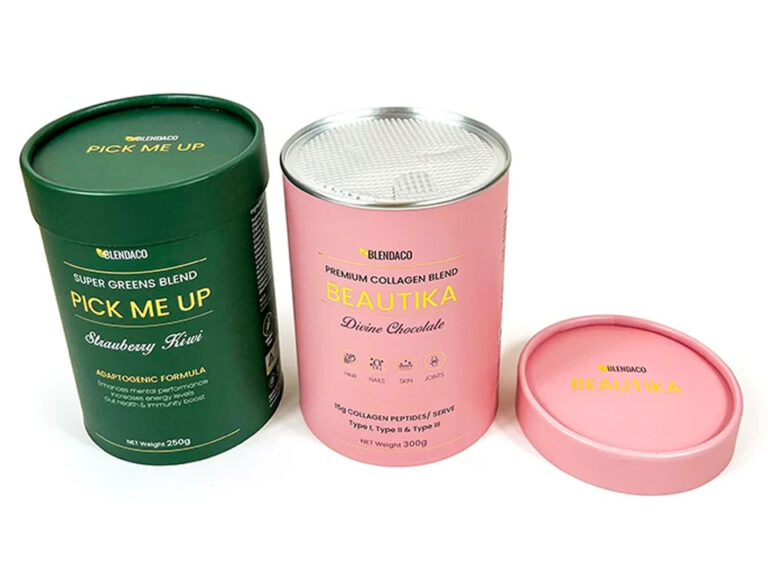
La doublure en aluminium est utile lorsque vous avez besoin d'une meilleure protection contre l'humidité et l'oxygène. Il permet également d'obtenir une sensation plus serrée et plus “scellée” à la première ouverture, ce qui est important pour les suppléments et les poudres fonctionnelles.
Cela ne signifie pas que toutes les poudres doivent être recouvertes d'une pellicule. Cela signifie que vous le choisissez lorsque la formulation et les attentes en matière de durée de conservation l'exigent.
Boîtes en papier pour l'emballage des poudres : pourquoi le format cylindrique fait vendre
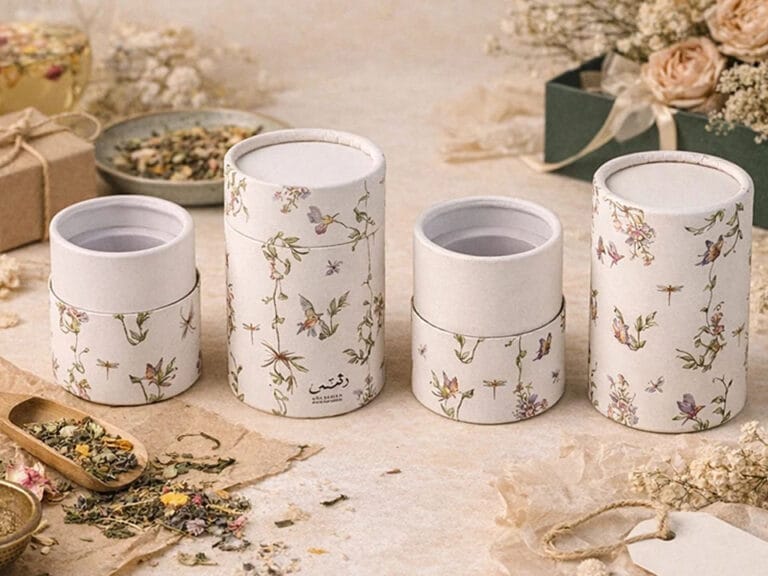
Les boîtes en papier (tubes en papier) conviennent bien pour les poudres, car leur forme correspond à l'habitude.
Les gens l'ouvrent d'une main, le transvasent de l'autre et le referment rapidement. Le cylindre rigide supporte également mieux les abus de transport que de nombreux emballages à paroi mince.
Mais le véritable avantage, c'est ce que les équipes de marque adorent : le panneau d'affichage à 360. Vous avez de la place pour :
Des instructions d'utilisation qui réduisent les questions des clients
Informations sur les ingrédients ou la conformité sans texte minuscule
Codes QR de lot/traçabilité
Une histoire de marque claire qui n'a pas l'air surchargée
Si vous construisez un emballage prêt à être mis en rayon, cet espace enveloppant peut avoir un réel impact sur les ventes.
Boîtes en tube de papier personnalisées pour la poudre : ce que vous pouvez personnaliser sans ralentir le projet
La personnalisation doit aider votre ligne de remplissage et votre logistique, et pas seulement votre équipe de conception.
Voici ce qui importe généralement dans les commandes groupées :
Diamètre et hauteur (correspondent au poids de remplissage et à la taille de la pelle)
Choix de la doublure (définir le niveau de la barrière)
Options d'insertion (maintien de la stabilité des écopes, réduction du cliquetis)
Si vous souhaitez une orientation “supplément premium” claire, cette page présente un style couramment utilisé pour le positionnement des produits de beauté et de bien-être : emballage en tube de papier pour cheveux/peau/ongles.
Le papier de doublage dans l'emballage en tube de papier : la partie que la plupart des gens oublient
Le tube extérieur peut sembler parfait et échouer si la couche intérieure n'est pas correcte.
Considérez la doublure comme votre couche fonctionnelle:
Il sépare le produit du carton extérieur
Il aide à gérer l'humidité et l'exposition à l'oxygène
Il favorise la propreté et un contact constant avec le produit
Voici un moyen simple d'en parler avec les acheteurs :
Si la poudre est sensible → utiliser un revêtement plus résistant (souvent une feuille d'aluminium).
Si la poudre est modérée → utiliser un revêtement barrière qui concilie les objectifs de protection et de durabilité.
S'il ne s'agit pas d'un produit alimentaire → vous pouvez donner la priorité à la maniabilité et à la sensation de qualité supérieure tout en gardant une protection raisonnable.
Les poudres cosmétiques ont souvent besoin d'un tube propre, de qualité supérieure et facile à utiliser au quotidien. Il s'agit d'un modèle de référence solide : emballage de tubes en papier pour cosmétiques.
Couvercle détachable pour les tubes en papier : une preuve d'effraction digne de confiance
Pour les poudres, la confiance commence dès la première ouverture.
Un scellé détachable a deux effets importants pour les acheteurs :
Il montre clairement les traces d'altération
Il aide à préserver la fraîcheur avant la première utilisation.
Ensuite, le système de refermeture maintient le produit stable pendant l'utilisation quotidienne. Ceci est particulièrement important pour les marques DTC, où l'unboxing fait partie du produit.
Si vous vendez des catégories réglementées ou des produits nécessitant un message de sécurité supplémentaire, vous combinerez généralement l'inviolabilité avec une approche de fermeture plus contrôlée.
Produits apparentés pour Emballage en poudre : les petits ajouts qui éliminent les grandes plaintes
Les modules complémentaires ne sont pas “agréables à avoir”. Ils permettent de réduire le nombre de tickets d'assistance.
Voici des scénarios courants que les équipes chargées des achats reconnaissent immédiatement :
Catégorie de poudre
Mode de défaillance typique
Une idée complémentaire pratique
Protéines / collagène
Agglutination après ouverture
Stabilité de l'écope + contrôle de l'humidité en option
Préparations pour boissons
L'arôme s'estompe
Une doublure plus résistante
Assaisonnements
Transfert d'humidité et d'odeurs
Fermeture plus étanche + barrière améliorée
Poudres cosmétiques
Distribution désordonnée
Insertion/aménagement pour contrôler l'accès
Catégories réglementées
Pression de sécurité et de conformité
Sécurité enfants + inviolabilité
Pour les références d'emballages réglementés, ces pages montrent comment les marques spécifient généralement le format :
Emballage des poudres : un aide-mémoire pratique sur les spécifications à utiliser lors des appels d'offres
Utilisez ce tableau lors de votre prochain appel aux fournisseurs. Il permet d'ancrer la conversation dans la réalité et de gagner du temps.
Ce que vous décidez
Pourquoi c'est important
Formulation favorable aux marchés publics
Niveau de barrière
Prévenir la formation de grumeaux et la perte d'arôme
“Nous avons besoin d'une protection contre l'humidité et l'oxygène pour les poudres.”
Type de revêtement
Contrôle des risques liés à la durée de conservation
“Options de devis : doublure standard ou doublure en aluminium”.”
Système de fermeture
Utilisation quotidienne + fraîcheur
“Nous avons besoin d'un reclassement et d'une preuve d'altération.”
Dimensions du tube
Efficacité du remplissage
“Faire correspondre la taille du tube au poids du remplissage et à l'écope.”
Impression + finition
Conversion des étagères
“Nous voulons une image de marque à 360°, des options de finition haut de gamme”.”
Flux de commandes en vrac
Stabilité du lancement
“Confirmer la qualité de fabrication, le délai de livraison et la cohérence des commandes.”
Clôture : comment faire en sorte que l'emballage durable des poudres soit réellement efficace
L'emballage durable des poudres dans des tubes en papier fonctionne lorsqu'il est conçu comme un système et non comme une affiche.
Commencez par protéger le produit. Choisissez la bonne doublure et la bonne fermeture. Utilisez ensuite l'espace de marquage du tube pour vendre la valeur et réduire les doutes de l'acheteur. Vous obtiendrez ainsi un emballage de qualité supérieure, qui sera expédié proprement et qui favorisera les achats répétés.
Si vous planifiez un nouvel UGS en poudre, il est généralement plus rapide de choisir d'abord une structure de référence, comme un tube de poudre de protéines ou un tube à thé avec couvercle en fer blanc-puis d'adapter l'empilement de barrières et la finition à votre marque.