Still Not Seeing The Right Packaging Solution? Talk to Our Boss.
If you’ve reviewed our website or spoken with sales and still don’t see a clear path, send your request here. Your message goes directly to our General Manager for an executive review of feasibility, cost, and lead time. You’ll get a clear next step—what we can do, what we need from you, and the fastest route to a quote.
Built for packaging managers, procurement, and packaging engineers. Specify size, quantity, and finish to receive moq, lead time, and spec guidance for us/eu programs.
Quote-ready customization: diameter, height, wall thickness, inserts, liners, and closures
Paper Tube Packaging for Powders: A Sustainable Buyer’s Guide
Paper tube packaging for powders can replace part of the rigid plastic used in conventional canisters while giving brands a large printable surface and a familiar wide-mouth format. But the paperboard cylinder itself is only one part of the package.
For protein powder, collagen, matcha, coffee blends, superfoods, powdered supplements, botanicals, and cosmetic powders, the important questions are what touches the product, what controls moisture and oxygen, how the package is sealed before first use, how it recloses afterward, and whether the complete structure meets the intended shelf-life and regulatory requirements.
That is the right place to start a sustainable powder-packaging project.
Key Takeaways
Start with the powder’s barrier, shelf-life, food-contact, and dispensing requirements, not the exterior artwork.
A paper tube can be either the primary package or a secondary shell around a sealed pouch; those two applications need very different specifications.
Aluminum foil can provide useful barrier performance, but it should be selected because testing or product requirements justify it—not as an automatic upgrade.
First-open tamper evidence and everyday reclosure are separate functions and may require different components.
FSC-certified fiber, recycled content, and recyclability describe different aspects of sustainability and should not be used interchangeably.
Approve a production-intent sample using the actual liner, seal, closure, dimensions, and product before scaling the order.
What Does Paper Tube Packaging for Powder Actually Need to Do?
A powder canister normally performs five different functions:
Contain the product without dust or leakage.
Protect the formulation from relevant environmental exposure.
Provide safe product-contact surfaces where required.
Allow convenient opening, scooping, dispensing, and reclosing.
Carry branding, instructions, regulatory information, and disposal guidance.
The structural paperboard contributes rigidity, shape, stacking performance, and the printable exterior. It does not automatically provide the moisture, oxygen, aroma, grease, or sealing performance required by every powder.
That functional performance normally comes from the liner, membrane, bottom construction, and closure system.
First Decide: Is the Paper Tube the Primary Package or the Secondary Package?
This is the most important early decision.
Option 1: Powder contacts the paper-tube liner directly
Here, the tube is functioning as the primary container.
The specification may need to address:
product-contact compliance;
moisture barrier;
oxygen barrier;
aroma retention;
seal integrity;
bottom sealing;
first-open tamper evidence;
repeated reclosure;
scoop access;
filling equipment.
The internal material system becomes critical.
FDA guidance states that food-contact substances include packaging components as well as coatings, adhesives, colorants, and other substances applied to packaging surfaces. Where applicable, food-contact substances must be authorized for their intended use.
“Food-grade paper tube” is therefore too vague for a serious RFQ.
Ask instead:
Which exact material contacts the powder, and what documentation supports its intended conditions of use?
Option 2: Powder remains inside a sealed pouch
The paper tube then functions mainly as a rigid secondary package.
This structure can simplify the tube because the inner pouch may already provide the required moisture and oxygen barrier.
The tube can concentrate on:
compression protection;
branding;
product information;
shelf presentation;
scoop or accessory storage;
unboxing;
shipping.
It can also make material separation easier because the high-barrier component is physically separate from the fiber-based outer structure.
The correct architecture depends on filling, shelf-life, disposal, cost, and consumer-use requirements.
How Should You Select the Barrier Liner?
Choose the liner according to the actual barrier requirement, not according to which option sounds most premium.
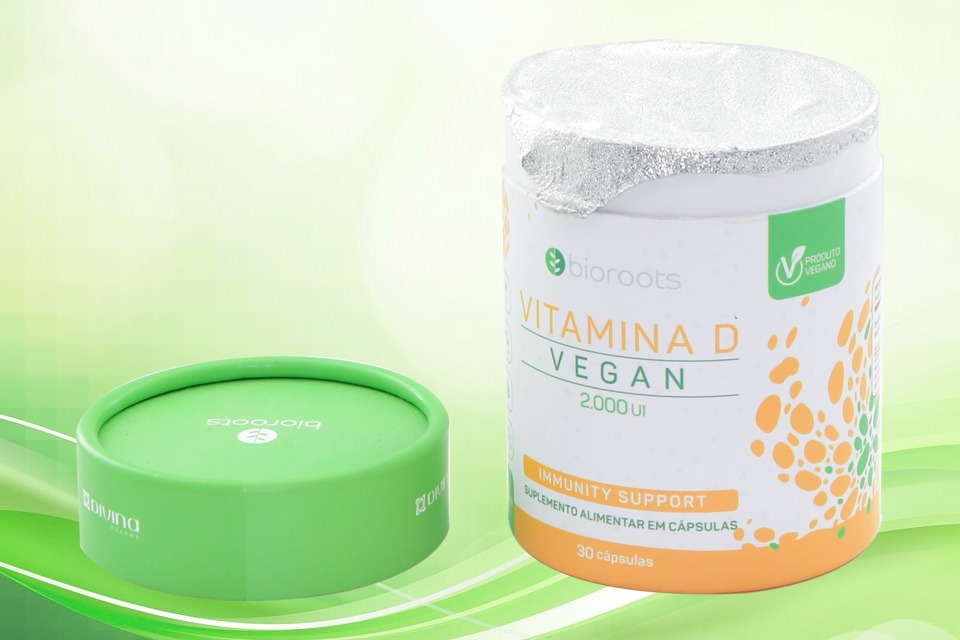
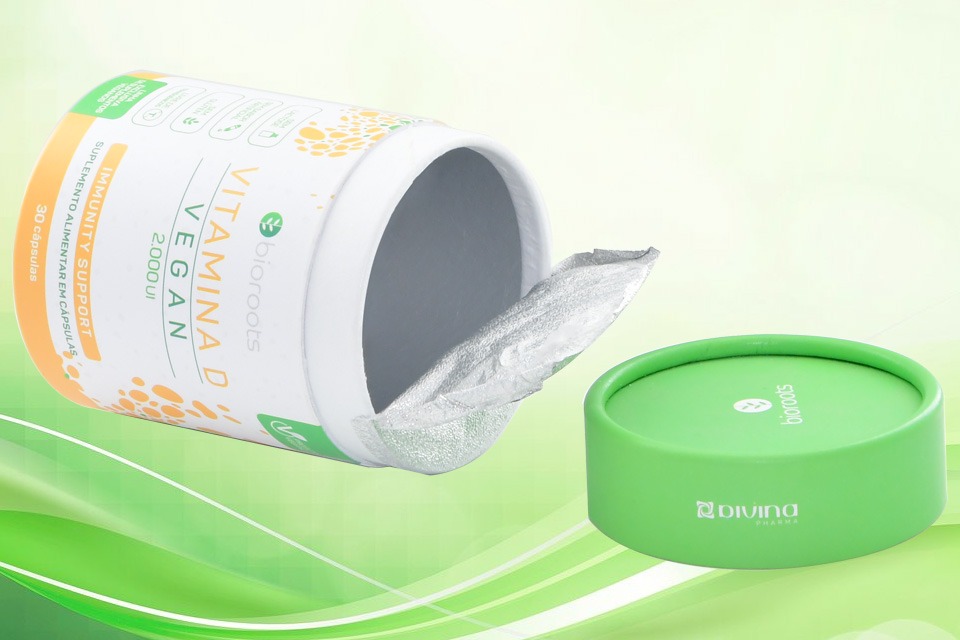
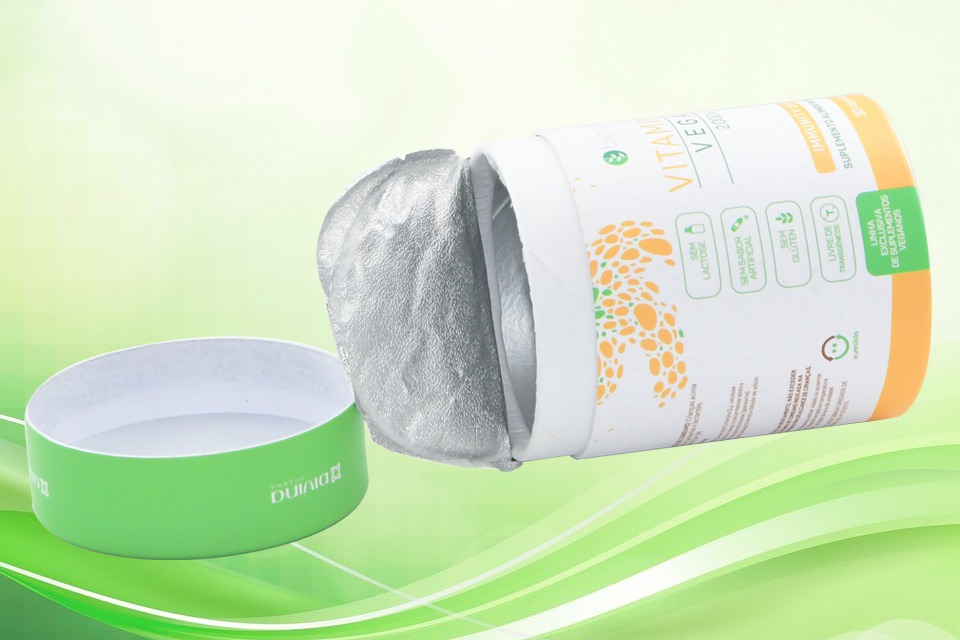
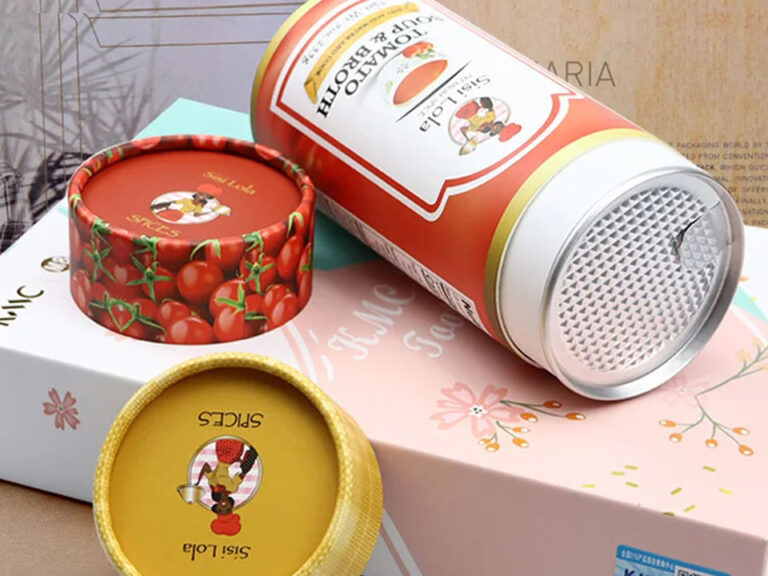
A custom printed round paper tube can be specified with different inner constructions, including paper-based surfaces, aluminum-foil structures, or PE-film options. That range illustrates why “paper tube” alone does not define the functional package.
Plain or coated paper liner
A relatively simple paper-based inner surface may be appropriate when:
the product is already contained in a pouch or jar;
the package is secondary packaging;
barrier requirements are low;
the formulation is not highly sensitive under the intended storage conditions.
Its main advantage is lower material complexity.
Its limitation is that ordinary paper should not be assumed to provide strong moisture or oxygen protection.
Polymer-coated or film-lined paper
A polymer layer can improve moisture or product-contact performance depending on the chemistry and construction.
This may be appropriate where a powder requires more protection than an uncoated paper structure can provide but where a high-barrier foil structure is unnecessary.
For food-contact applications, verify the regulatory status of the specific material and conditions of use rather than relying on a generic “food-safe” statement.
Aluminum-foil laminate
A foil-containing laminate can provide substantially stronger light, gas, or moisture-barrier performance in an appropriately designed construction.
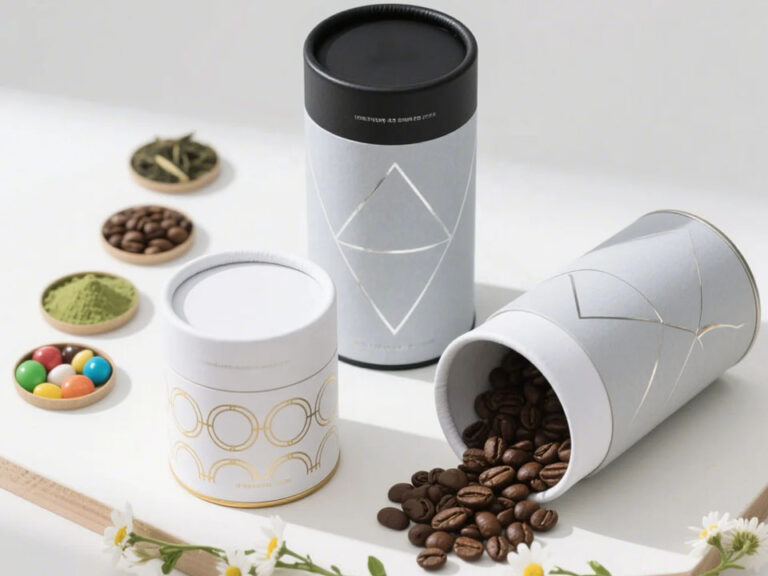
An herbal tea and wellness powder tube illustrates a product family where food-contact and aluminum-foil lining options are available according to the packed product.
But foil should not be the default answer to every powder.
It can:
increase material complexity;
affect recycling pathways;
change sealing requirements;
affect converting and assembly;
add cost.
The correct question is not:
“Can you add aluminum foil?”
It is:
“What moisture, oxygen, light, or aroma barrier does the product require over its intended shelf life?”
Once that requirement is defined, suppliers can propose an appropriate construction and the brand can validate it.
First-Open Seal and Reclosure Are Different Jobs
Powder packaging often needs two closure stages.
Stage 1: protect the unopened product
An easy-peel or other membrane seal can provide:
visible evidence that the package has not already been opened;
powder containment;
an additional pre-opening barrier.
The membrane must work with the rim and sealing process used on the final canister.
Stage 2: protect the product after opening
Once the membrane is removed, the consumer may open and close the product dozens of times.
The reclosure needs to remain practical even when fine powder gets around the rim.
Common options include:
friction-fit paper or plastic lids;
plug caps;
metal lids;
threaded or specialized closures.
The right design depends on the powder and user behavior.
A daily protein supplement has different reclosure requirements from a cosmetic powder used occasionally or a powder packed into individual sachets inside the canister.
Size the Tube Around Fill Weight, Scoop and Filling Process
Diameter is not only an aesthetic decision.
For powders, it influences:
scoop access;
fill-line compatibility;
product headspace;
shelf footprint;
shipping cube;
consumer handling;
label area.
A 500 g powder with a large scoop may require a very different opening diameter from a dense 500 g ingredient that is poured rather than scooped.
Do not size by nominal fill weight alone
Ask the product team or co-packer for:
target net weight;
bulk density;
required headspace;
scoop dimensions;
filling method;
expected product settling;
maximum fill height.
Then develop the canister around that data.
For dietary supplements sold in the United States, the package also needs space for mandatory information. FDA guidance requires key label elements including the statement of identity, net quantity, Supplement Facts, ingredients, and responsible business information, with requirements for where those statements appear.
The cylindrical surface gives designers substantial 360-degree area, but mandatory copy should be allocated before decorative graphics consume the layout.
Should Sustainable Powder Packaging Use Kraft Paper?
Kraft can be a useful outer material and visual direction, but it is not a complete sustainability specification.
A custom kraft paper tube can combine a fiber-based cylindrical body with different liner, bottom, lid, and finish options. Those additional components determine much of the complete package’s functionality and end-of-life behavior.
For procurement, separate these questions:
Fiber sourcing
Do you require:
FSC-certified paper?
recycled content?
virgin fiber?
a particular paper grade?
FSC Chain of Custody verifies qualifying forest-based materials as they pass through the supply chain; it is a sourcing and traceability mechanism, not a recyclability certification for the complete package.
Complete-package recyclability
Also evaluate:
barrier coatings;
foil laminates;
plastic films;
adhesives;
metallic elements;
plastic or metal closures;
windows;
labels;
inserts.
4evergreen’s current Circularity by Design guidance specifically considers coatings, adhesives, inks, and integrated components because each can influence collection, sorting, or fiber recycling.
Environmental marketing claims
Avoid assuming that a brown paper appearance justifies broad terms such as “eco-friendly” or “100% recyclable.”
The FTC advises marketers to qualify recyclability claims when appropriate and to state recycled content accurately when only part of the product or package contains recycled material.
A specific statement such as:
“Outer tube made with X% recycled fiber”
is more informative when substantiated than a generic green claim.
When Does a Window Make Sense on Powder Packaging?
Usually only when it does not compromise the functional package.
A paper tube with a display window uses a die-cut transparent viewing area as a merchandising feature. That can work well for gifts, candles, cosmetics, confectionery, or individually wrapped products.
For a moisture-sensitive loose powder, however, cutting through the canister wall simply to expose the product is usually incompatible with the idea of maintaining a continuous protective barrier.
A window becomes more practical when:
the powder is inside a sealed inner pouch;
the window displays a separate accessory;
the tube is secondary presentation packaging.
This is a good example of why attractive packaging features should follow the product-protection architecture rather than dictate it.
Premium Printing Should Stay Outside the Functional Layer
Powder packaging can still look premium without complicating the product-contact structure unnecessarily.
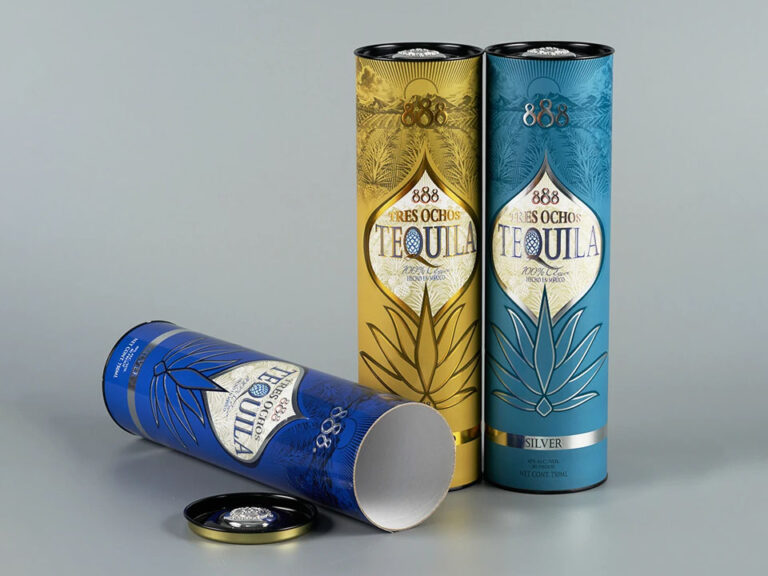
A black paper tube with gold foil branding demonstrates how matte exterior paper and foil decoration can create a premium outer presentation while liner and closure specifications remain separate technical decisions.
Exterior options can include:
full-color printing;
Pantone spot colors;
natural kraft;
matte coatings;
foil stamping;
embossing;
debossing;
spot UV;
specialty papers.
The important sourcing principle is functional separation:
structural core handles rigidity;
liner handles product compatibility/barrier;
seal handles initial closure;
lid handles reclosure;
exterior wrap handles most of the branding.
This makes technical decisions easier to document and troubleshoot.
Do Not Oversize the Canister to Make It Look Premium
Large containers can create perceived value, but unused package volume also increases material and freight requirements.
This issue is becoming more important for European programs.
The EU Packaging and Packaging Waste Regulation states that packaging should be designed to minimize weight and volume while retaining its necessary functions and recyclability. It also makes clear that marketing or consumer acceptance alone should not justify additional packaging weight or volume.
For powder packaging, right-sizing means balancing:
fill volume;
expected settling;
scoop access;
closure geometry;
necessary headspace;
packing-line requirements.
Do not simply enlarge the tube because a taller canister looks more substantial on a rendering.
Powder Packaging Options Compared
Packaging Architecture
Best For
Main Benefit
Main Limitation
Buyer Priority
Paper tube + sealed inner pouch
Brands prioritizing material separation
Barrier function separated from outer tube
Two packaging components
Pouch barrier + tube dimensions
Paper tube + paper/coated liner
Lower-barrier or secondary applications
Simpler material system
Limited barrier depending on coating
Validate shelf-life requirement
Paper tube + polymer liner
Moisture-sensitive dry products
Improved functional protection
Mixed-material construction
Food-contact and recycling review
Paper tube + foil laminate
Higher-barrier applications
Strong barrier potential
Higher material complexity
Barrier validation and sealing
Decorative tube + window
Wrapped products/secondary pack
Product visibility
Not suitable as exposed barrier wall for sensitive loose powder
Keep primary package intact
What Should Be in a Powder-Packaging RFQ?
A professional RFQ should give the supplier enough information to engineer the package rather than guess.
Include:
powder category;
food, supplement, cosmetic, or other application;
direct contact or sealed inner pouch;
target net weight;
powder bulk density;
required shelf life;
moisture sensitivity;
oxygen sensitivity;
aroma sensitivity;
light sensitivity where relevant;
target inner diameter;
target usable height;
scoop dimensions;
fill method;
required barrier performance;
liner preference if already determined;
first-open sealing method;
reclosure requirement;
bottom construction;
exterior paper;
printing and finish;
FSC or recycled-content requirements;
destination markets;
regulatory requirements;
MOQ by SKU;
expected annual volume;
master-carton requirements;
required testing.
If barrier requirements have not yet been established, do not invent them.
Ask the formulation, QA, packaging, or shelf-life team to define what the product actually needs.
How Should You Evaluate Samples?
A visual sample is not enough for a direct-contact powder package.
One recent paper-tube procurement discussion involved a buyer being quoted $200 for a fully customized sample. Industry participants advised confirming whether the sample would use the same material, dimensions, printing, and production process intended for the final run.
For powder packaging, extend that requirement.
The sample should represent:
production-intent structural board;
production-intent liner;
actual rim/sealing surface;
actual membrane;
intended closure;
intended bottom;
printed wrap;
real product dimensions;
real scoop where applicable.
Then check:
product filling;
membrane application;
powder leakage;
opening force;
reclosure;
scoop removal;
rim contamination during repeated use;
label readability;
surface scuffing;
packed-product transport performance.
A rendering can approve graphics. It cannot validate barrier performance or sealing compatibility.
What Should Buyers Ask a Paper Tube Supplier?
A useful supplier conversation should go beyond unit price.
Ask:
Which component is in direct contact with the powder?
What documentation supports that material for the intended use?
What liner alternatives can you quote?
What is the proposed barrier construction?
Which sealing equipment is compatible with the membrane?
How is bottom integrity controlled?
What closure is used after the membrane is removed?
Is the MOQ per diameter, artwork, liner, or total order?
Which components require tooling?
Will the approved sample use production materials?
How are dimensions and closure fit inspected?
How are material substitutions controlled on repeat orders?
Can you provide FSC documentation if an FSC claim is required?
What recycling or material-separation assumptions are being made?
The objective is not simply to buy a paper cylinder.
It is to purchase a documented packaging system that can be repeated consistently.
Frequently Asked Questions
Are paper tubes suitable for protein powder?
Yes, provided the complete package is engineered for the product. Protein-powder packaging may require an appropriate food-contact layer, moisture or oxygen barrier, first-open seal, resealable closure, adequate scoop access, and sufficient structural strength. The paperboard body alone does not provide all of those functions.
Do powder paper tubes need aluminum foil liners?
Not necessarily. A foil-containing liner can be useful when stronger moisture, oxygen, aroma, or light protection is required, but the correct construction should follow product and shelf-life requirements. A lower-complexity liner may be sufficient for some products, particularly when the powder is already sealed in a separate pouch.
What does “food-grade paper tube” mean?
The phrase by itself is not sufficiently specific for procurement. Buyers should identify the actual food-contact materials—including liners, coatings, adhesives, seals, and closures—and confirm that they are appropriate for the intended food type and conditions of use. FDA treats packaging components and applied substances as food-contact substances where applicable.
Are paper tubes more sustainable than plastic tubs?
It depends on the complete system. Paper tubes can replace some rigid plastic with fiber-based material, but liners, seals, closures, coatings, package weight, recyclability, fiber sourcing, and product protection all influence the result. Compare complete constructions rather than judging sustainability from the outer material alone.
Can paper powder tubes be recycled?
Some designs may be compatible with paper-recycling systems, while composite barriers and additional components can change the appropriate recycling pathway. Evaluate the full construction—including coatings, liner, bottom, seal, and closure—against the recycling infrastructure and guidance applicable to the target market.
What information should I give a supplier before requesting a quote?
Provide the powder application, contact method, net weight, bulk density, shelf-life requirements, barrier needs, scoop dimensions, tube size, liner, seal and closure preferences, artwork, destination market, quantity by SKU, and required certifications. A more complete RFQ produces quotations that are much easier to compare.