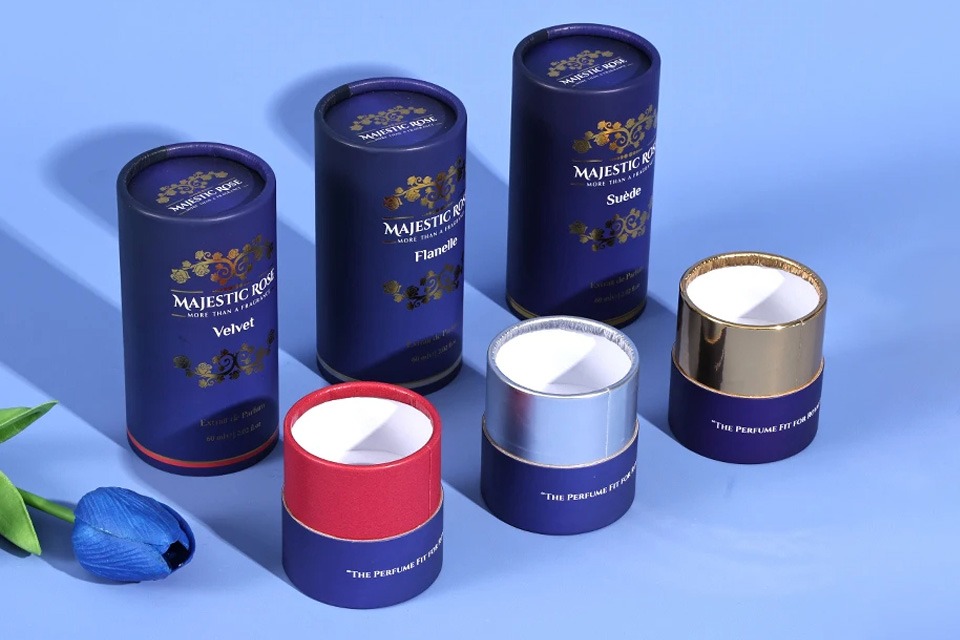
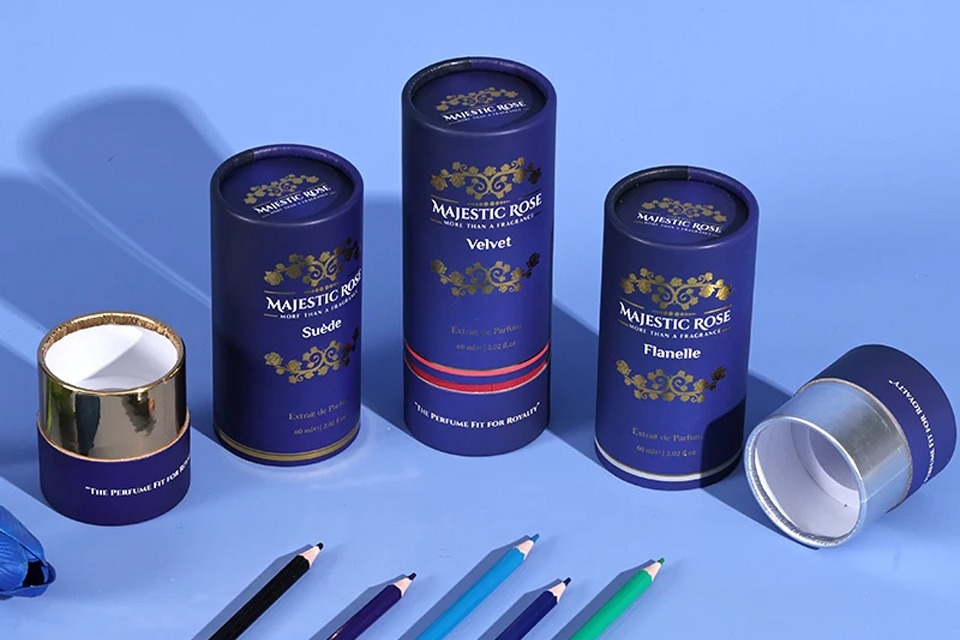
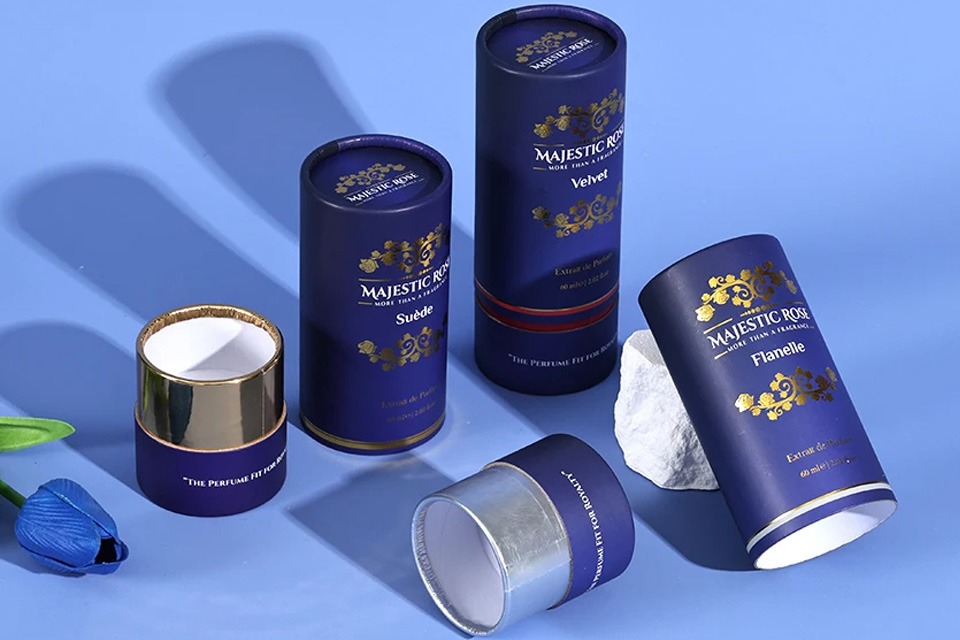
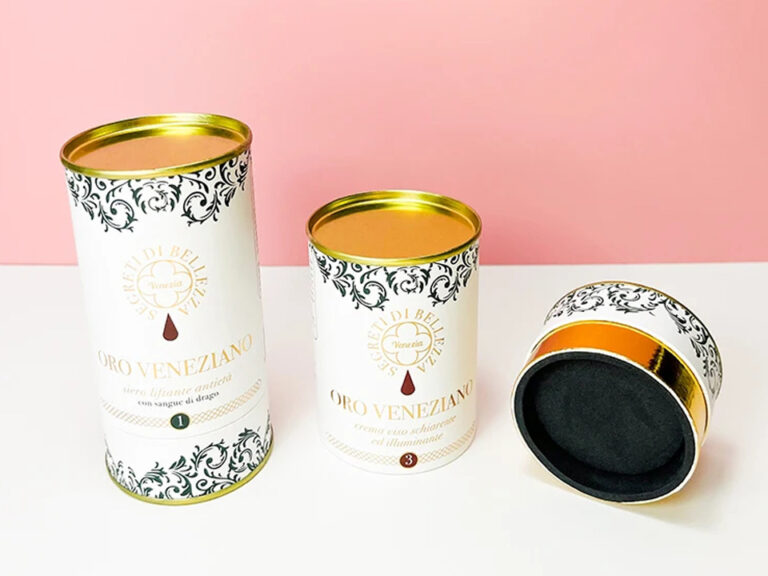
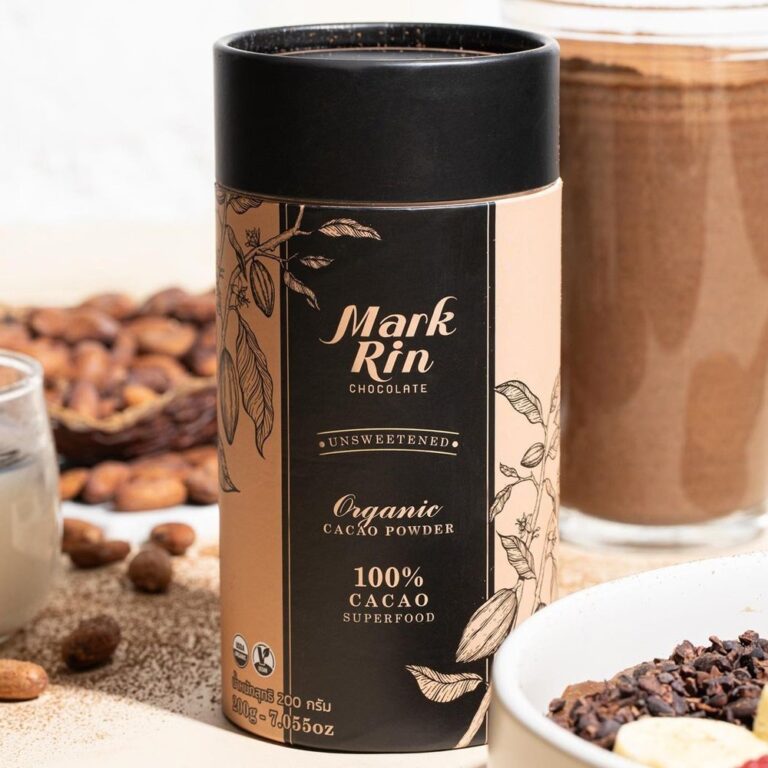
Still Not Seeing The Right Packaging Solution? Talk to Our Boss.
If you’ve reviewed our website or spoken with sales and still don’t see a clear path, send your request here. Your message goes directly to our General Manager for an executive review of feasibility, cost, and lead time. You’ll get a clear next step—what we can do, what we need from you, and the fastest route to a quote.
Built for packaging managers, procurement, and packaging engineers. Specify size, quantity, and finish to receive moq, lead time, and spec guidance for us/eu programs.
Quote-ready customization: diameter, height, wall thickness, inserts, liners, and closures
Paper Tube Packaging Materials: 5 Layers for Performance & Design
Paper tube packaging is often described as if it were made from a single material. In practice, a custom retail tube is usually a multi-layer packaging system.
The structural paperboard provides rigidity. An exterior paper creates the printable and tactile surface. A liner may control moisture, grease, aroma, or direct contact. The lid and base determine closure performance. An insert may locate or cushion the product.
For packaging engineers and procurement teams, the right question is therefore not simply “Which paper should we use?”
It is:
Which combination of materials delivers the required protection, appearance, manufacturability, compliance, and end-of-life performance without adding unnecessary complexity?
Key Takeaways
Treat a paper tube as a material stack, not one substrate.
Structural paperboard should be specified according to dimensions, product weight, stacking, closure fit, and distribution—not thickness alone.
Kraft, coated white paper, black paper, and specialty wraps mainly influence the exterior appearance and printing system; they do not necessarily determine structural strength.
Barrier liners should be chosen according to measurable product requirements such as moisture, grease, oxygen, aroma, or food contact.
Metal, plastic, and paper closures each solve different functional problems and change cost, appearance, assembly, and recyclability.
Inserts should provide the minimum protection and retention required rather than being added automatically.
A Paper Tube Is a Material Stack
A typical custom paper tube can contain several distinct material layers:
Layer
Main Function
Typical Options
Structural core
Rigidity, shape and compression resistance
Wound paperboard, greyboard, recycled or virgin fiber board
Exterior wrap
Graphics, color, touch and abrasion protection
Kraft, coated white paper, black paper, specialty paper
Paper liner, coated paper, polymer coating, film or foil laminate
Lid/base
Closing, opening, resealing and structural support
Paperboard, metal, plastic or hybrid components
Insert
Retention, cushioning and presentation
Paperboard, molded fiber, EVA/EPE-style foam
Inks, adhesives, coatings, foil stamping and laminates can then be added to the system.
This distinction matters because two paper tubes that look nearly identical outside may behave very differently in storage, filling, transport and recycling.
1. Structural Paperboard: The Material That Holds the Shape
The structural core is the wound paperboard cylinder underneath the decorative surface.
Its job is primarily mechanical.
It influences:
tube roundness;
compression performance;
resistance to denting;
lid alignment;
hand feel;
product protection;
stackability;
dimensional stability.
A rigid retail tube is typically manufactured from multiple paper layers wound and bonded into a cylindrical wall. Changing the paper grade, number of plies, winding construction, wall thickness, diameter, or adhesive system changes the behavior of the finished tube.
Thicker is not automatically better
A frequent specification mistake is assuming that the thickest wall must be the premium option.
Extra wall thickness can increase rigidity, but it can also affect:
outside diameter;
package weight;
raw-material consumption;
freight;
lid dimensions;
component compatibility;
material cost.
A small cosmetic jar does not necessarily require the same structural wall as a heavy bottle or tall gift set.
The correct structural specification should consider the assembled package, including product weight and distribution channel.
A printed paper tube for facial mask powder illustrates the basic construction: a rigid rolled-paper cylinder provides the form while the visible printed layer handles branding. Optional dimensions and inserts can then be adapted to the actual skincare product.
Recycled versus virgin fiber
Structural paperboard can use different fiber sources depending on strength, appearance, sourcing policy, and supplier capability.
Recycled content and FSC certification should not be treated as interchangeable terms.
FSC Chain of Custody is a sourcing and traceability system for eligible forest-based materials. It does not by itself specify the recycled content, structural strength, coating, liner, closure, or recyclability of the complete tube.
For an RFQ, state the exact requirement:
FSC-certified material;
specific FSC claim where applicable;
minimum recycled content;
virgin fiber requirement;
color/appearance requirements;
mechanical-performance target.
2. Exterior Wrap Papers: Kraft, Coated and Specialty Surfaces
The outer wrap is the material consumers see and touch.
It can influence:
print reproduction;
color density;
tactile character;
perceived positioning;
scuff resistance;
foil and embossing performance;
surface gloss;
recyclability considerations.
The exterior does not always provide most of the tube’s structural strength. Its main job is often presentation and surface performance.
Natural kraft paper
Brown kraft is useful when the brand wants a visible fiber texture and relatively restrained appearance.
It works particularly well with:
black or dark spot colors;
simple illustrations;
labels;
embossing;
selective foil.
However, the natural brown substrate affects printed color reproduction. A pale Pantone or photographic image will not behave the same way on brown kraft as it will on a white coated sheet.
The kraft paper tubes with printed logos demonstrate how a natural exterior can be combined with a clean interior, branded printing and optional decorative processes.
White coated paper
White surfaces provide a more neutral printing base.
They are usually preferable when the design requires:
precise brand colors;
photographic artwork;
light colors;
fine gradients;
high graphic contrast.
A white printed wrap can still receive matte or gloss protection, foil, embossing, debossing or spot UV depending on the required presentation.
Black and colored paper
Using a through-colored or dark specialty paper can create a different appearance from printing a large area of black ink on white stock.
This can be useful when exposed edges or internal components need to coordinate visually.
Specialty papers
Textured, pearlescent, metallic-effect, fibrous or other specialty sheets can create a premium tactile effect, but they should be tested with the intended printing and finishing processes.
A highly textured surface may affect:
fine typography;
foil edge definition;
screen printing;
adhesive behavior;
lamination.
For seasonal graphics and high print coverage, printed Christmas gift tubes demonstrate the opposite direction: the exterior functions as a full-color branding surface rather than emphasizing the underlying natural paper texture.
3. Inner Liners and Barrier Materials: Match Them to the Product
The inner layer can be one of the most technically important parts of a paper tube.
For secondary packaging around a sealed cosmetic bottle, candle jar, pouch, or sachet, a simple paper interior may be sufficient.
For direct-contact powders, foods, aromatic products, oils, or other sensitive contents, the material requirements can be substantially different.
Potential functions include:
moisture resistance;
oxygen barrier;
grease resistance;
aroma retention;
light protection;
direct-contact safety;
sealing.
Do not specify “food-grade” without defining the use
Food packaging requirements depend on what actually contacts the food and under what conditions.
The U.S. FDA explains that food-contact substances include packaging components as well as substances applied to packaging surfaces, including adhesives and coatings. Where a food-contact substance is regulated as a food additive, its intended use must be authorized.
A useful buyer brief therefore states:
direct contact or secondary packaging;
dry, oily, aqueous or other product;
expected shelf life;
filling temperature if relevant;
humidity exposure;
oxygen sensitivity;
aroma sensitivity;
sealing requirement;
destination market.
Then the supplier can propose and document a suitable liner system.
Typical liner directions
Plain paper liner
Suitable when the tube is primarily a secondary presentation package and no significant barrier is required.
Coated paper
Can add grease, moisture or other functional performance depending on the coating chemistry.
Polymer-coated or laminated paper
Can provide stronger functional barriers, but introduces another material into the construction.
Foil or metallized laminate
Useful for demanding oxygen, aroma, light, or moisture conditions in appropriate applications, but usually increases material complexity.
The correct answer is not automatically the highest-barrier laminate.
If the primary product is already sealed inside another container, duplicating its full barrier system in the outer tube may provide little benefit.
4. Lid, Base and Closure Materials: Paper, Metal or Plastic?
Closures have a disproportionate effect on how a paper tube performs.
They determine:
opening force;
resealability;
stackability;
moisture ingress;
product access;
reuse;
visual character;
production assembly.
Common closure materials include paperboard, metal and plastic.
Paperboard lids and bases
Paper-based components can keep the material system relatively simple and create a consistent visual appearance.
They work particularly well for:
candles;
cosmetics;
gifts;
apparel accessories;
secondary food packaging;
premium presentation tubes.
Telescopic structures can create a complete rigid-paper exterior with no visible plastic or metal component.
For example, custom kraft paper tube boxes use a rigid two-piece paperboard construction that can be finished in kraft, white, black or custom printed papers.
Metal bases and lids
Metal is useful when the component needs additional rigidity, a different closure behavior, or a particular aesthetic.
A paper tube with a metal base demonstrates a hybrid construction: rigid paperboard provides the main cylindrical body, while the metal end component changes the base performance and visual character.
Metal can be appropriate for some dry goods, powders, tea, coffee, confectionery, household products, and reusable canister designs.
But it should be specified because it solves a requirement—not simply because metal appears more premium.
Plastic closures
Plastic components may be useful where the project requires:
specific dimensional tolerances;
repeated opening and closing;
dispensing features;
transparent components;
child-resistant mechanisms;
impact-resistant caps.
The tradeoff is a more complex material system.
Think about separation
If the lid or base uses a materially different component, determine whether the consumer can remove it easily and whether local recycling systems recognize the complete package appropriately.
The latest 4evergreen Circularity by Design guidance explicitly evaluates additional components and sorting disruptors, not just the amount of paper present in the pack.
5. Insert Materials: Protection Without Unnecessary Complexity
The insert is the material between the tube and the product.
Its purpose may include:
locating a bottle;
preventing rattle;
protecting glass;
separating several items;
controlling presentation height;
cushioning an impact;
improving removal.
Common options include paperboard, molded fiber, foam and occasionally plastic thermoformed components.
Die-cut or folded paperboard
Paperboard is often the first material to evaluate for:
cosmetics;
candles;
bottles;
accessories;
gift sets.
Advantages include:
printable surfaces;
efficient shipping before assembly;
compatibility with paper-forward design;
relatively simple customization.
It is less suitable where substantial cushioning is necessary.
Molded fiber
Molded fiber can create shaped cavities around unusual products and maintain a visible fiber-based appearance.
It can be useful for:
bottles;
electronics;
gift sets;
accessories.
Tooling and minimum-order economics should be evaluated before selecting it for short-run programs.
Foam
EVA, EPE and related foam materials can provide strong cushioning and precise product retention.
They are useful where:
glass breakage is a major risk;
product position must be controlled tightly;
high-value items require cushioning.
The downside is another material stream and potentially more difficult end-of-life separation.
No insert
Sometimes this is the correct answer.
If the product already fits the tube securely and is sufficiently durable, adding an insert simply because the packaging looks “premium” adds material, cost and assembly.
The better engineering principle is:
Use the minimum insert necessary to achieve the required retention and protection.
How Do Coatings, Adhesives and Decoration Affect the Material System?
They may be thin, but they should not be ignored.
Paper-based packaging can include:
adhesives;
polymer coatings;
lamination films;
inks;
varnishes;
foil stamping;
metallization;
release coatings.
4evergreen’s 2026 Circularity by Design framework evaluates barrier coatings, adhesives, inks and varnishes, decorative metallic elements, and additional components because these parameters can affect compatibility with conventional or specialized recycling processes.
This leads to a useful sourcing principle:
Do not choose a coating only from the sample book.
Ask what function it provides.
If matte lamination is required for scuff resistance, document that requirement. If an unlaminated or dispersion-coated surface passes the same handling tests, that alternative may deserve consideration.
Paper Tube Material Comparison
Material / Component
Main Purpose
Advantages
Main Limitations
Typical Uses
Wound paperboard
Structural body
Rigid, printable through wrap, customizable dimensions
Performance depends on construction and moisture exposure
Most retail tubes
Kraft exterior paper
Natural visual surface
Visible fiber, simple branding
Alters color reproduction
Tea, coffee, wellness, gifts
Coated white paper
High-quality print surface
Accurate graphics and bright colors
May need surface protection
Cosmetics, gifts, retail
Specialty paper
Tactile/premium presentation
Texture and differentiation
Higher cost; finishing needs testing
Fragrance, luxury gifts
Barrier liner
Product protection
Moisture/grease/aroma/oxygen control as specified
Can increase complexity
Food, powders, aromatic goods
Paper closure
Opening and presentation
Paper-forward appearance
Limited for some functional requirements
Gifts, cosmetics, candles
Metal closure/base
Rigidity or closure performance
Durable, distinctive
Mixed-material construction
Food canisters, powders, reusable tubes
Paperboard insert
Product positioning
Lightweight and paper-based
Limited cushioning
Cosmetics, bottles, gifts
Molded fiber insert
Shaped support
Formed cavities
Tooling required
Electronics, bottles
Foam insert
Cushioning
Strong product retention
Mixed material
Fragile or high-value products
How Should Material Selection Change by Product?
The packed product should drive the bill of materials.
Cosmetics and skincare
A sealed jar or bottle often uses the paper tube mainly for secondary protection and branding.
Priorities may include:
smooth print surface;
accurate brand colors;
insert retention;
scratch protection;
premium lid fit.
A full food-style barrier liner may be unnecessary if the cosmetic product is already sealed in primary packaging.
Candles
A candle jar needs dimensional fit, glass protection, and enough tube rigidity to protect the jar during handling.
Important decisions include:
wall construction;
base strength;
insert requirement;
exterior scuff resistance.
Tea and coffee
If the paper canister functions as the primary package, aroma, oxygen, moisture, and closure requirements become more important.
A decorative kraft outer surface does not provide those functions by itself.
Powders
Clarify whether the powder contacts the paper tube directly or remains inside a sealed pouch, bottle, or other primary container.
That decision fundamentally changes liner and regulatory requirements.
Gifts and promotional sets
Barrier performance is often less important than:
structural rigidity;
print;
tactile finish;
product positioning;
inserts;
unboxing.
That allows simpler material combinations in many cases.
Material Choice Also Changes MOQ and Cost
Material decisions affect purchasing economics because each additional component can introduce another supplier, process, setup, tooling requirement, or minimum purchase.
Potential cost drivers include:
specialty paper minimum quantities;
custom board construction;
barrier-liner sourcing;
metal tooling;
molded-fiber tooling;
foam cutting;
lamination;
custom foil;
special inks;
multi-component assembly.
This is why the cheapest material quotation is not necessarily the lowest-cost package.
Sample the intended production construction
A recent buyer discussion about custom paper tubes highlights this issue. The buyer faced a $200 charge for a customized sample and wanted to compare several suppliers. Industry responses advised confirming whether the sample used the same dimensions, materials, printing, and production processes as the final order.
That is critical.
A standard sample can demonstrate general factory quality.
A production-intent sample should verify:
structural board;
exterior paper;
liner;
closure;
insert;
adhesive behavior;
printing;
finish;
actual product fit.
Do not approve one construction and quietly switch materials for mass production.
Does More Paper Automatically Mean Better Sustainability?
No.
Fiber sourcing, package weight, coatings, barriers, mixed-material components, recyclability, product protection, and the local recycling system all matter.
FSC certification can establish responsible forest-material sourcing and chain-of-custody control, but it does not automatically determine whether the complete packaging format is recyclable.
The EU Packaging and Packaging Waste Regulation also moves packaging toward explicit design-for-recycling criteria and recyclability performance grades, which reinforces the need to evaluate the complete material system rather than the paper body alone.
For European programs in particular, material selection should increasingly answer two separate questions:
Where does the fiber come from?
How will the complete packaging system perform in collection, sorting and recycling?
Those are related sustainability questions, but they are not the same question.
What Should Procurement Put in a Paper Tube Material Specification?
A useful RFQ should define:
packed product;
product weight;
product dimensions;
whether the tube is primary or secondary packaging;
direct-contact requirements;
required shelf life;
humidity or barrier requirements;
structural wall requirement;
external paper type;
color and print system;
required certification;
recycled-content target if applicable;
liner material;
lid/base material;
insert material;
coatings or lamination;
foil or embossing;
distribution route;
testing requirements;
quantity per SKU;
destination market.
Ask the supplier to identify any proposed material substitutions before production.
For critical projects, maintain an approved specification sheet and physical master sample.
Validate Materials Through Distribution Testing
Material selection is not complete when the package looks correct on a conference-room table.
The assembled package needs to survive its actual distribution system.
ISTA explains that appropriate test selection depends on understanding the real distribution environment, including transportation, handling, storage, drops, vibration, compression, temperature, and humidity.
Testing requirements therefore differ.
A glass cosmetic bottle sent individually through parcel fulfillment does not experience the same hazards as empty paper tubes shipped palletized to a co-packer.
Test the product-and-package system that represents the intended sales channel.
Common Paper Tube Material Mistakes
Specifying only “kraft paper”
That describes an appearance direction, not the complete construction.
Define the structural board, exterior kraft, liner, closure, and insert separately.
Assuming thicker walls always provide better packaging
Wall thickness should follow mechanical requirements. Overspecification adds material, weight, and cost.
Using aluminum or plastic automatically for moisture protection
First establish the actual barrier requirement. Do not select the highest-barrier system before knowing what the product needs.
Asking for “food-grade paper” without defining contact conditions
Specify whether the food contacts the tube, the product type, barrier needs, and intended market.
Selecting foam because it looks premium
Use foam when cushioning or precision retention justifies it. Otherwise evaluate paperboard or molded fiber first.
Treating FSC certification as a recyclability certificate
FSC addresses forest-material sourcing and chain of custody. Recyclability depends on the complete packaging construction and relevant recycling infrastructure.
Approving a sample made from different materials
Material substitutions between sample and production can change color, strength, lid fit, tactile feel, barrier performance, and recycling characteristics.
Frequently Asked Questions
What materials are paper tubes made from?
Most custom retail paper tubes use a wound paperboard structural core plus an exterior paper wrap. Depending on the product, they may also use an inner liner, paper/metal/plastic closure, and paperboard, molded-fiber, or foam insert. Coatings, adhesives, inks, and decorative finishes complete the material system.
Is kraft paper stronger than regular paperboard?
Not necessarily in the way buyers often assume. Kraft may offer useful fiber characteristics and a natural appearance, but the strength of a finished tube depends on the complete board grade, winding construction, number of layers, wall thickness, diameter, adhesive system, and finished geometry.
What is the best material for food paper tubes?
There is no single universal material. The correct construction depends on whether the food contacts the tube directly and on moisture, oxygen, aroma, grease, shelf-life, sealing, and regulatory requirements. Food-contact components should be verified for the intended use and destination market.
Are foil-lined paper tubes recyclable?
They may require different recycling pathways depending on their composition, liner construction, local collection system, and the recycling technology available. Do not assume that a paper exterior makes every foil- or polymer-lined structure compatible with standard paper recycling. 4evergreen provides design and evaluation guidance for composite paper-based packaging.
Is recycled paper always better for paper tube packaging?
Not automatically. Recycled content can support circular-material goals, but the material still needs to meet structural, appearance, cleanliness, product-contact, and manufacturing requirements. The right fiber specification depends on the application.
Should I choose paper, metal, or plastic lids?
Choose according to function. Paper closures work well for many premium secondary packages; metal can add rigidity or support certain canister constructions; plastic can offer repeated opening, dispensing, transparency, or precision features. Evaluate performance and end-of-life implications together.
The best paper tube packaging material specification is rarely the one with the most layers or the thickest board.
It is the simplest verified material stack that protects the product, presents the brand correctly, satisfies applicable contact and sourcing requirements, survives distribution, and can be manufactured consistently at the required volume.
Start with performance requirements. Then remove any material that cannot justify its function.
That produces a stronger packaging specification—and usually a better sourcing decision.