Still Not Seeing The Right Packaging Solution? Talk to Our Boss.
If you’ve reviewed our website or spoken with sales and still don’t see a clear path, send your request here. Your message goes directly to our General Manager for an executive review of feasibility, cost, and lead time. You’ll get a clear next step—what we can do, what we need from you, and the fastest route to a quote.
Built for packaging managers, procurement, and packaging engineers. Specify size, quantity, and finish to receive moq, lead time, and spec guidance for us/eu programs.
Quote-ready customization: diameter, height, wall thickness, inserts, liners, and closures
Wine Bottle Paper Tube Packaging: 7 Benefits for Wine Brands
Walk through a premium wine aisle and one thing becomes obvious: most bottles are competing within roughly the same physical format.
Glass bottle. Label. Closure. Maybe a neck tag.
That leaves packaging teams with limited room to create a stronger first impression without redesigning the primary package. This is where wine bottle paper tube packaging becomes interesting.
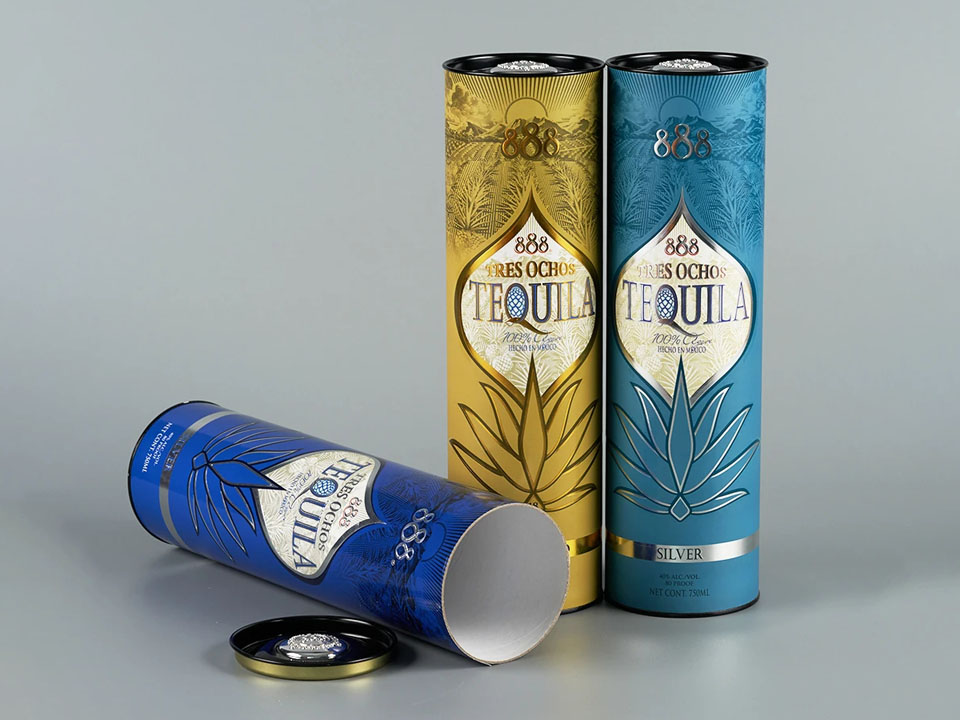
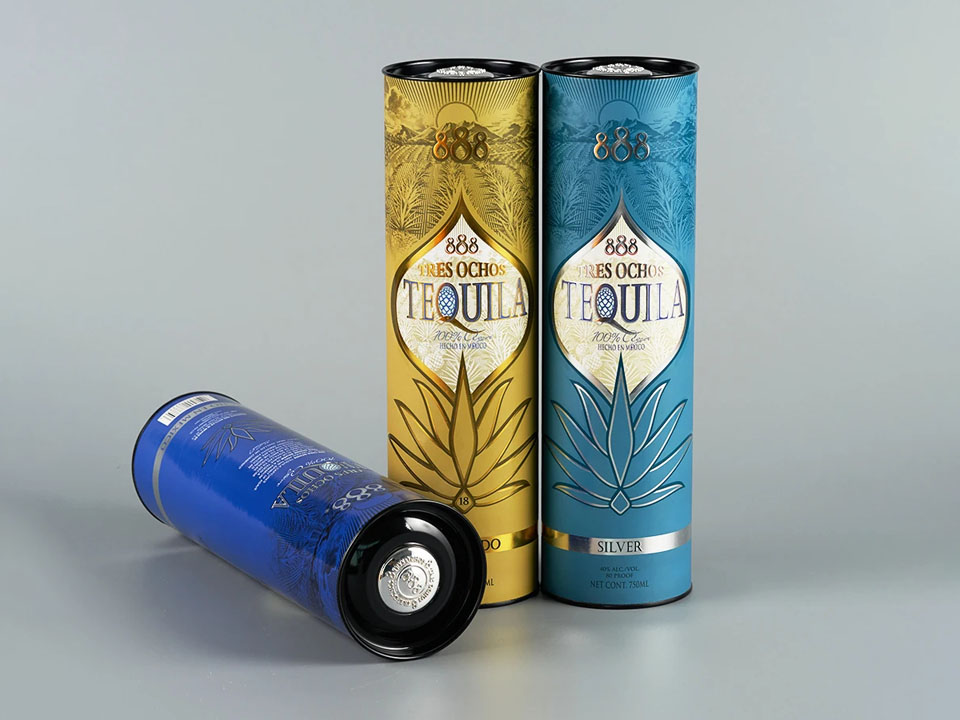
A rigid cylindrical tube gives the bottle a second layer of presentation. It can protect the printed label, provide room for brand storytelling, create a gift-ready format, and make a standard bottle look much more intentional on a retail shelf.
But there is another side to the story.
I have seen buyers become so focused on foil color, paper texture, and unit price that they barely discuss bottle movement, insert tolerance, moisture exposure, transit cartons, or how the package will actually be handled after it leaves the filling line.
That is where expensive mistakes start.
For packaging managers, procurement teams, brand owners, and packaging engineers, wine tube packaging should be evaluated as an engineered packaging system—not simply as a decorative cylinder.
Here are seven benefits that actually matter.
1. Wine Paper Tubes Create a Stronger Premium Presentation
Wine buyers make fast visual judgments.
The bottle may contain an excellent product, but before anyone tastes it, the packaging has already communicated price positioning, gifting suitability, craftsmanship, and brand personality.
A paper tube changes the silhouette completely.
Instead of sitting beside dozens of similarly shaped bottles, the product becomes a cylindrical presentation pack with much more visual mass. That can be particularly useful for:
premium wines;
champagne and sparkling wine;
anniversary releases;
private-label collections;
duty-free products;
holiday campaigns;
wine clubs;
corporate gifts;
collaboration editions.
This is one reason buyers exploring custom wine tube packaging usually need to think beyond simply printing a logo on an existing tube. Diameter, overall height, cap proportion, paper texture, opening resistance, insert design, and surface finishing all contribute to how premium the finished pack feels.
Small details matter.
A lid that is too loose feels cheap. A tube that is unnecessarily oversized feels hollow. A poorly aligned foil logo can ruin an otherwise excellent design.
Premium packaging is often won or lost in millimeters.
2. It Adds a Protective Layer Around the Bottle
A rigid paper tube can protect a wine bottle against several common handling problems.
It can reduce direct contact with neighboring bottles, help prevent label abrasion, provide a barrier against dust, and protect decorated bottle surfaces during retail handling and gifting.
For heavier bottles, a properly engineered tube can also create a more stable presentation structure when paired with suitable top, bottom, or internal supports.
That does not mean the tube is automatically suitable for parcel shipping.
Recently, while reviewing wine-shipping discussions, I came across an older Wine Berserkers thread where buyers described bottle shipments arriving with badly damaged protective material. One customer reported that the bottom of the shipper had broken through; another suspected that the internal liner did not fit tightly enough inside the cardboard box.
What caught my attention was the winery representative’s response. They immediately said they needed to research better wine-packaging options.
That story has stuck with me because it illustrates a mistake packaging teams still make: they evaluate individual components instead of the complete system.
A beautiful tube sitting on a meeting-room table tells you very little about what happens after thousands of packed bottles enter distribution.
Bottle weight changes everything.
So does clearance.
So does movement.
So does humidity.
When assessing cardboard wine tube packaging, packaging engineers should consider the tube body, bottle geometry, closure, insert, bottom construction, pack-out method, master carton, pallet pattern, and distribution channel together.
A wine tube is secondary packaging, not magic armor
UPS currently requires wine shipments to use protective inner packaging that secures bottles toward the center of a sturdy corrugated outer container. Accepted systems include molded fiber, corrugated trays, thermoformed trays, and EPS configurations.
That supports a position I wish more buyers would adopt:
A beautiful paper tube is not a shipping solution.
Stop asking only:
“How thick is the tube?”
Start asking:
“What happens to the filled package after vibration, drops, stacking pressure, warehouse humidity, truck movement, and parcel handling?”
Those questions produce much better packaging specifications.
3. Custom Sizing and Inserts Improve Bottle Fit
There is no universal “wine bottle.”
Bordeaux, Burgundy, Champagne, Riesling, dessert wine, and custom-molded bottles can differ substantially in diameter, shoulder profile, height, glass weight, punt design, and closure configuration.
Even two bottles that look almost identical can create different packaging problems.
That is why stock tube dimensions should never be approved from bottle volume alone.
A packaging engineer should start with the actual bottle or an accurate technical drawing and define:
maximum bottle diameter;
bottle height;
shoulder geometry;
neck and closure dimensions;
filled bottle weight;
label position;
decoration that must not be rubbed;
desired radial clearance;
top and bottom retention;
insert material;
closure engagement;
packing-line requirements.
For heavier or premium glass bottles, inserts can be especially useful. Foam, molded pulp, paperboard supports, or other fitments can limit movement and position the bottle more consistently.
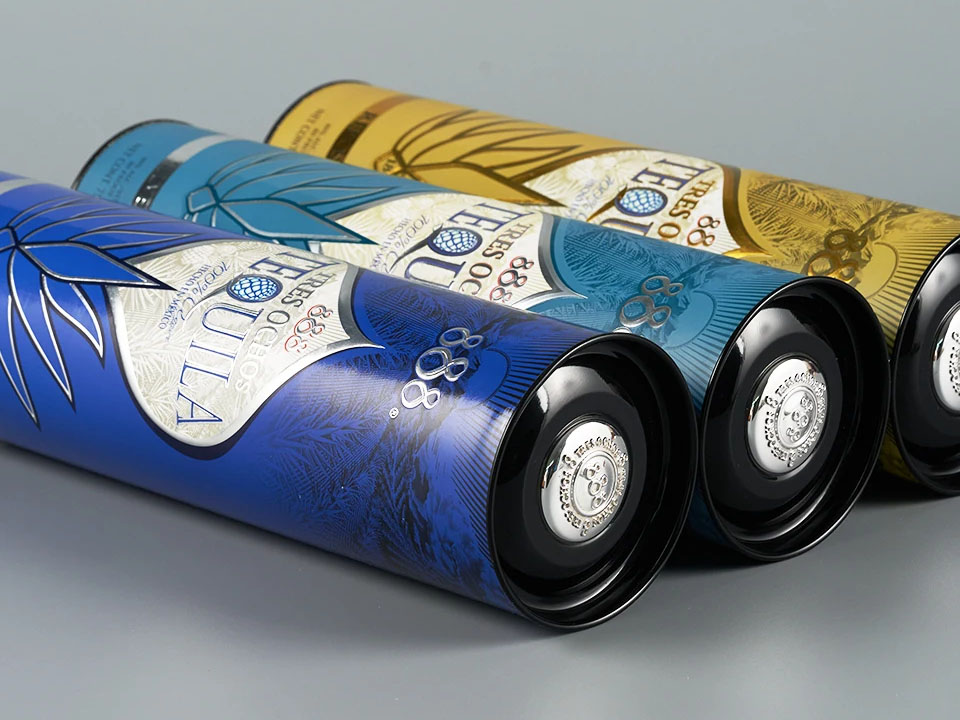
Some paper tube packaging for wine bottles also combines rigid paperboard bodies with metal lids or bottoms, creating a different strength profile and opening experience than an all-paper construction.
The right specification depends on the job.
A promotional bottle distributed inside a retail store does not face the same demands as a luxury wine shipped internationally, stored in a humid warehouse, palletized, and then sent through an e-commerce fulfillment network.
One tube specification should not be expected to do everything.
4. The Cylinder Becomes a 360-Degree Branding Surface
A conventional wine label gives designers a relatively limited canvas.
A tube gives them almost the entire circumference.
That opens up a very different design vocabulary.
Brands can use the surface for:
origin stories;
vineyard illustrations;
vintage information;
maps;
tasting notes;
food-pairing suggestions;
QR codes;
sustainability messaging;
batch numbering;
limited-edition artwork;
premium typography;
seasonal graphics.
Then there are the finishes.
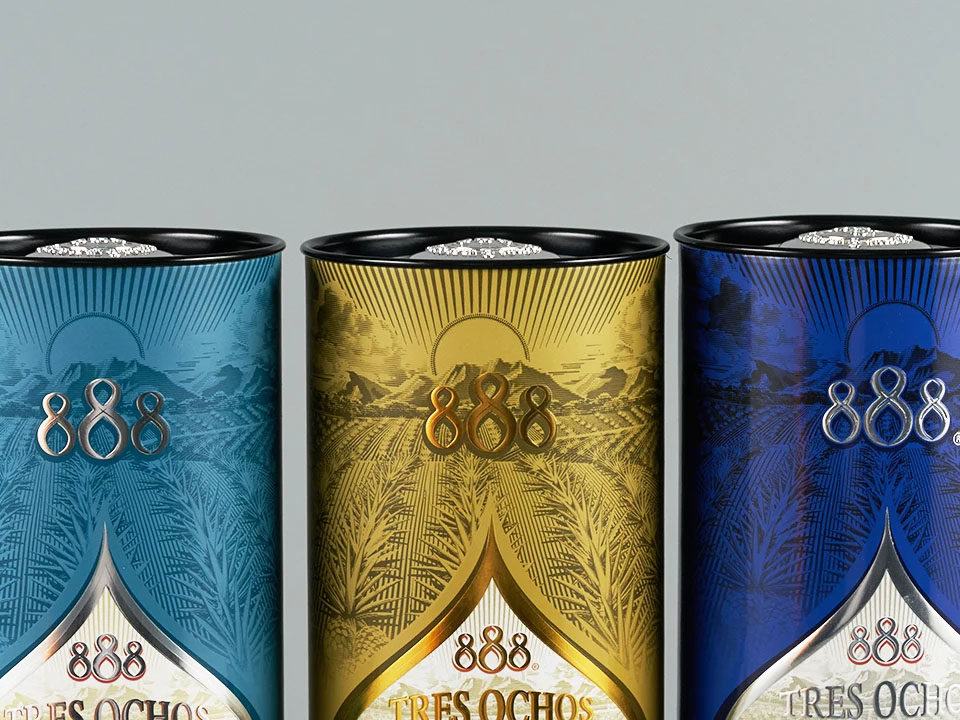
Depending on the structure and wrapping paper, paper tubes can incorporate offset or digital printing, Pantone colors, metallic foil, embossing, debossing, spot UV, matte lamination, gloss lamination, specialty papers, and textured surfaces.
For example, one current wine bottle gift tube configuration uses a rigid board core, art-paper wrap, offset printing, foil accents, and matte lamination—a good illustration of how structural packaging and decorative finishing can be combined in one format.
This flexibility matters when one structural platform needs to support multiple SKUs.
A winery might keep the same tube diameter and basic construction while changing the exterior artwork for:
different vintages;
regional collections;
retailer exclusives;
seasonal campaigns;
event editions;
private-label customers.
That can make packaging development more manageable than engineering an entirely new structure for every campaign.
5. Paper Tubes Turn a Bottle Into a Gift-Ready Product
Sometimes the packaging is not competing for attention on a supermarket shelf.
It is competing for a place under a Christmas tree.
That changes the design brief.
For gifting, buyers are not simply evaluating whether the bottle reaches the consumer intact. They are evaluating the entire handover experience.
Does the package look finished?
Can it be given without additional wrapping?
Does opening it feel intentional?
Does the packaging justify a higher-value presentation?
A rigid wine tube works particularly well here because the structure naturally creates an opening sequence: pick up the tube, remove the lid, reveal the bottle.
Simple. Physical. Memorable.
The cylindrical form can also make an ordinary bottle feel more substantial without adding the complexity of a multi-panel rigid box.
For wine clubs, promotional programs, VIP gifting, hotel programs, corporate orders, and limited releases, that extra presentation layer can be commercially useful because the packaging becomes part of the product experience rather than a disposable transport shell.
That does not mean every wine needs luxury embellishment.
In fact, over-decoration can work against the brand.
A natural textured paper, one-color print, and restrained emboss may communicate more value for an organic winery than gold foil across every visible surface.
Good packaging design starts with positioning—not a finishing-process checklist.
6. Paper-Based Structures Can Support Sustainability Goals
Sustainability claims need precision.
“Paper” does not automatically mean “recyclable everywhere,” and a mixed-material tube with plastic lamination, foam inserts, metal ends, adhesive layers, or other components should not be marketed as though the entire pack behaves like clean paperboard in every recycling stream.
Still, paper benefits from a mature recycling system in many markets.
The European Paper Recycling Council’s 2024 monitoring data reported a 75.1% recycling rate for paper products overall in Europe, while paper packaging reached 83.1%, the highest rate among the packaging materials reported by the organization.
That gives wine brands a meaningful reason to investigate paper-dominant secondary packaging.
The phrase to focus on is paper-dominant, not merely paper-looking.
What percentage of the package is paper or paperboard?
Is the decorative wrap recyclable with the tube body?
Is lamination necessary?
Can a plastic component be replaced?
Can metal ends be separated easily?
Is the insert removable?
Is recycled fiber available?
Is FSC-certified fiber available where required?
Can the structure be right-sized?
What recycling instructions should appear on pack?
That last question is becoming more important.
EU packaging rules are pushing recyclability into procurement discussions
The EU’s Packaging and Packaging Waste Regulation began applying on a phased basis from August 12, 2026. The European Commission states that the requirement for all packaging to be recyclable will apply from 2030.
The Commission also estimates that, without additional measures, EU packaging waste could have increased 19% by 2030, while plastic packaging waste could have risen by as much as 46%.
For packaging teams supplying Europe, this changes the conversation.
Recyclability can no longer sit at the bottom of a design brief underneath print color and foil position.
Material selection, component separation, right-sizing, labeling, and end-of-life design increasingly belong near the beginning of packaging development.
7. Wine Tubes Give Brands More Options Without Changing the Primary Bottle
Changing a wine bottle can be expensive and operationally messy.
It may affect filling lines, labeling equipment, palletization, bottle sourcing, glass qualification, closure compatibility, logistics, and existing retail specifications.
Secondary packaging gives brands another route.
The bottle can stay.
The label can stay.
The package around it changes.
For brand managers, this makes wine tube packaging useful for testing premium positioning or creating differentiated programs without immediately redesigning the entire primary package.
It can also support segmentation.
One core wine might be sold as:
a standard bottle for everyday retail;
a tube-packed version for gifting;
a premium-finish edition for duty-free;
a retailer-exclusive version;
a seasonal pack;
a corporate-gift edition.
There is also evidence that consumers are not universally resistant to changes in wine packaging.
A 2026 Journal of Cleaner Production study involving 153 UK wine consumers found 69.3% were willing to purchase wine in alternative packaging, while sustainability and price were significant drivers of acceptance. Among respondents initially resistant to alternative formats, 36.2% to 46.8% indicated they could reconsider under certain conditions.
There is an important distinction here.
That study examined alternatives to the conventional glass bottle. It did not test consumer preference for wine paper tubes.
So the correct takeaway is not “69.3% of consumers want paper tubes.”
It is this: packaging tradition is not untouchable, and sustainability or economic value can influence willingness to consider new formats.
For brands that want innovation without replacing the glass bottle, secondary paper packaging offers a much lower-disruption design space to explore.
Wine Paper Tube vs. Other Secondary Packaging Formats
There is no universally superior structure. The right format depends on bottle weight, positioning, volume, distribution, assembly requirements, sustainability objectives, and target cost.
Packaging Factor
Paper Tube
Folding Carton
Rigid Setup Box
Shelf differentiation
High due to cylindrical shape
Moderate
High
Premium presentation
High with suitable materials and finishes
Moderate to high
Very high
Bottle fit
Can be engineered closely around bottle
Depends heavily on inserts
Highly customizable
360° graphics
Excellent
Limited by panels and folds
Good
Gift presentation
Strong
Moderate
Strong
Storage efficiency before filling
Depends on tube construction; many rigid tubes ship assembled
The commercial decision should therefore be based on total packaging cost and performance, not the piece price alone.
A lower-cost tube that causes filling-line problems, requires excessive manual packing, ships inefficiently, or generates damage claims may be the expensive option.
Likewise, an elaborate package that customers immediately throw away may not justify its material use or cost.
What Should a Wine Brand Specify Before Requesting a Quote?
A vague RFQ produces vague pricing.
“Please quote 10,000 wine tubes” is not enough.
For useful quotations and comparable supplier bids, provide at least:
Bottle drawing or physical sample
Filled bottle weight
Required tube diameter and height, if already defined
Annual volume and order quantity
Target market
Distribution channel
Preferred paper and board
Insert requirements
Closure and bottom construction
Printing colors
Foil, embossing, UV, lamination, or specialty-paper requirements
Packing configuration
Master-carton requirements
Required sustainability documentation
Testing or performance requirements
And ask for a production-intent sample before mass production.
Do not approve solely from a digital rendering.
A rendering cannot tell you whether the lid drags, the bottle rattles, the bottom feels weak, the insert scratches the label, or the package feels awkward in the hand.
Physical packaging needs physical evaluation.
The Better Question Is Not “Paper Tube or Box?”
Packaging teams sometimes reduce the decision to a material-format debate:
Paper tube or folding carton?
Paper tube or rigid box?
Paper or plastic?
Those questions are too broad.
A better question is:
What packaging system delivers the required brand presentation, bottle protection, packing efficiency, distribution performance, sustainability profile, and landed cost for this exact program?
Sometimes the answer will be a paper tube.
Sometimes it will not.
That is healthy packaging engineering.
The job is not to defend a format. The job is to find the structure that works.
And when wine bottle paper tube packaging is properly specified—correct bottle fit, sensible materials, appropriate decoration, tested distribution packaging, and an end-of-life strategy—it can do something valuable: turn an ordinary secondary package into a genuine brand asset.
FAQs About Wine Bottle Paper Tube Packaging
What is wine bottle paper tube packaging?
Wine bottle paper tube packaging is a rigid cylindrical secondary package designed to hold, present, and help protect a wine bottle.
It is normally made from wound or rigid paperboard with a printed or specialty-paper outer wrap. Closures, bottoms, inserts, and decorative finishes can be customized for the bottle and brand.
Does a paper tube protect a wine bottle during shipping?
It can add protection, but a wine tube should not normally be treated as the complete parcel-shipping system.
The tube can reduce scuffing and movement when properly designed. Parcel distribution typically requires appropriate inner protection plus a sturdy corrugated shipping container; UPS, for example, specifies protective inner packaging and corrugated outer containers for wine shipments.
Are wine paper tubes recyclable?
Paper-dominant wine tubes may be recyclable, but actual recyclability depends on every material and component in the finished package.
Plastic films, foam, metal ends, coatings, adhesives, and composite materials can affect local recycling compatibility. Brands should evaluate the complete structure rather than making a recyclability claim based only on the paperboard body.
Is wine tube packaging suitable for luxury wine?
Yes. Paper tubes work particularly well for premium, gift, limited-edition, duty-free, and promotional wine programs.
Their cylindrical shape, rigid feel, large print area, specialty papers, foil stamping, embossing, and custom closures can create a high-value presentation without requiring the winery to redesign its bottle.
What information does a supplier need to customize a wine paper tube?
At minimum, provide bottle dimensions, filled weight, quantity, artwork requirements, target market, desired materials, inserts, closure type, and distribution conditions.
For engineering accuracy, a physical bottle sample or detailed technical drawing is preferable. Bottle diameter alone is not sufficient because shoulders, necks, bases, labels, and closures can affect fit.
Are paper tubes more sustainable than conventional wine gift boxes?
Not automatically. Sustainability depends on material quantity, recycled content, sourcing, recyclability, finishes, components, logistics, and disposal infrastructure.
A right-sized, paper-dominant tube with easily separable components can support sustainability goals, but brands should compare complete packaging systems rather than assuming one shape is inherently greener.
How should brands choose the right paper tube thickness?
Do not choose wall thickness in isolation; specify performance requirements first.
Bottle weight, tube diameter, height, insert design, stacking, warehouse conditions, distribution channel, closure structure, and master-carton protection all affect the required construction. Prototype and test the complete packed system before approving mass production.