Still Not Seeing The Right Packaging Solution? Talk to Our Boss.
If you’ve reviewed our website or spoken with sales and still don’t see a clear path, send your request here. Your message goes directly to our General Manager for an executive review of feasibility, cost, and lead time. You’ll get a clear next step—what we can do, what we need from you, and the fastest route to a quote.
Built for packaging managers, procurement, and packaging engineers. Specify size, quantity, and finish to receive moq, lead time, and spec guidance for us/eu programs.
Quote-ready customization: diameter, height, wall thickness, inserts, liners, and closures
Candle Paper Tube Packaging: 7 Benefits for Scented Candle Brands
Candle paper tube packaging combines a rigid cylindrical paperboard structure with customizable printing, finishes, closures, and optional inserts. For scented candle brands, its real value is not simply that the package looks different from a folding carton. A well-engineered tube can protect the candle jar, strengthen premium positioning, organize multiple SKUs, and create a gift-ready format without making the packaging unnecessarily complicated.
There is one qualification buyers should understand from the start: the tube itself is only one part of the protection system. Jar fit, insert design, materials, outer shipping packaging, and distribution conditions matter just as much.
Key Takeaways
Paper tubes work particularly well around cylindrical candle jars because the package geometry can closely follow the product.
A fitted insert is often more important than simply increasing the tube wall thickness.
Round tubes offer a large uninterrupted branding surface for printing, labels, foil, embossing, and specialty papers.
Paper-based construction can support sustainability goals, but a paper tube is not automatically recyclable simply because its main body is paper.
For e-commerce, the presentation tube normally works with—not instead of—a properly engineered outer shipping carton.
Standardizing diameters, inserts, and structural components across candle SKUs can make sourcing and repeat orders easier.
Premium finishes should be selected alongside recyclability, rub resistance, color consistency, cost, and production repeatability.
What Is Candle Paper Tube Packaging?
Candle paper tube packaging is a cylindrical rigid-paperboard package designed around a candle, candle jar, or related home-fragrance product. Common configurations use a wound paperboard body with a separate lid and base, although the exact construction can vary considerably.
The format can be customized by diameter and height, which makes it particularly suitable for round glass and ceramic candle vessels.
Brands looking at custom candle paper tubes can specify dimensions, paper wraps, print methods, surface finishes, inserts, and closure styles around the actual candle rather than forcing the product into a generic stock carton.
That product-specific fit is where many of the practical benefits begin.
1. Better Protection for Fragile Candle Jars
The first benefit is structural protection, but this advantage is often described too simplistically.
A rigid cylindrical wall can help protect a candle jar from scuffing and localized impacts during handling. More important, however, is controlling how much the vessel can move inside the package.
If the jar has excessive clearance, it can repeatedly strike the inner wall. If the insert is too tight, it may make packing difficult, mark decorated glass, or transmit loads badly. If the bottom support is weak, a heavy candle can load the base during handling.
That means buyers should specify the packaging around:
jar outside diameter;
total jar height;
jar weight;
lid dimensions;
decoration or label areas that should not rub;
acceptable radial clearance;
top and bottom restraint;
insert material and geometry;
opening and removal force.
For example, a candle tube with a fitted foam insert demonstrates how the secondary package can hold a glass jar rather than allowing it to move freely inside the cylinder.
For brands trying to reduce transit damage, this distinction matters.
A 2026 small-business discussion offers a useful caution. One premium candle seller using ceramic vessels reported roughly 6% shipping damage and described testing several cushioning configurations. That figure should not be treated as an industry benchmark, but the underlying lesson is useful: fragile candle packaging has to be evaluated as a complete distribution system, not as an attractive retail box alone.
ISTA likewise recommends retesting packaged products when changes are made to the product, package, interior components, materials, closures, weight, or distribution system.
Buying implication: ask your supplier how the jar is restrained before asking how thick the tube is.
2. A Premium, Gift-Ready Presentation
Scented candles sit somewhere between home décor, fragrance, wellness, and gifting. Packaging therefore carries more presentation weight than it does for many commodity products.
A round rigid tube creates a substantial physical presence around the candle. Opening a separate lid and revealing the vessel creates a different experience from opening a conventional folding carton.
That does not mean luxury requires elaborate decoration.
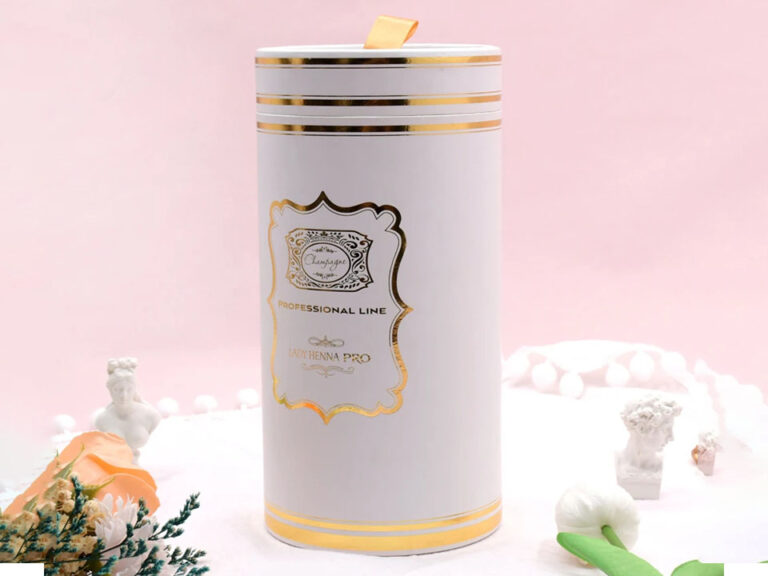
In fact, a restrained structure often works better. A minimal round candle tube packaging design can combine a clean white exterior with controlled typography and a small foil element instead of covering every surface with effects.
For premium candle collections, buyers can consider:
coated white paper for clean artwork;
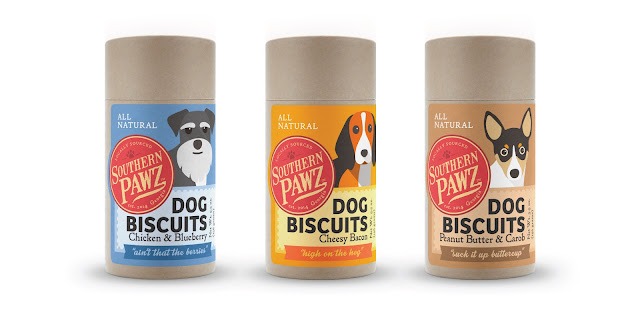
natural kraft for a deliberately less processed appearance;
textured specialty papers;
matte or gloss surface treatments;
embossing or debossing;
hot foil accents;
printed inner surfaces;
contrasting lid and body colors;
branded insert components.
The goal is not to maximize the number of finishes. It is to make the package look appropriate for the candle’s retail price and brand identity.
3. Strong 360-Degree Branding Space
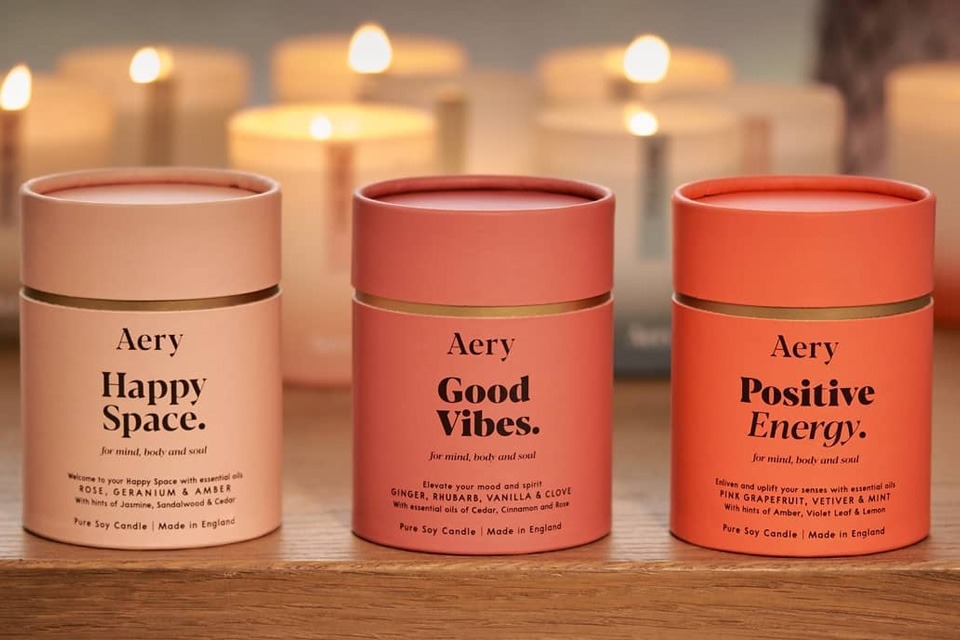
A cylindrical package gives designers an uninterrupted wraparound surface. That makes paper tubes particularly useful for fragrance families, seasonal candle collections, and brands that rely heavily on color or illustration.
The same base structure can support several visual strategies:
a continuous pattern around the tube;
large-format typography;
scent-specific colors;
botanical illustrations;
minimalist monochrome branding;
premium metallic accents;
removable seasonal labels;
QR codes linking to candle-care information or brand stories.
A black candle tube with hot foil branding illustrates a straightforward premium system: dark paper, a controlled matte appearance, and metallic logo detailing.
But print design has a manufacturing side.
For repeat production, packaging teams should define:
Pantone or approved CMYK references;
acceptable color tolerance;
foil position;
emboss/deboss registration;
seam position;
artwork orientation;
laminate or coating specification;
rub/scuff expectations.
That is particularly important if the candle line will remain on the market for several years. A beautiful first production run has limited value if subsequent batches drift noticeably in color or lid fit.
4. Easier Size Customization Around Candle Vessels
Paper tubes can be engineered around many vessel dimensions, which is useful for brands selling several candle sizes.
Typical applications include:
travel candles;
small glass jars;
ceramic vessels;
standard scented candles;
large-format candle jars;
pillar candles;
candle gift presentations.
Custom sizing reduces unnecessary empty space and can improve presentation because the package feels intentionally designed around the candle.
However, every new diameter has sourcing implications.
Creating a unique tube diameter for every fragrance or candle size can increase complexity, tooling requirements, component inventory, and minimum-order pressure. A better strategy is often to create a small number of packaging platforms.
For example:
Small platform: travel candles Medium platform: core fragrance range Large platform: premium or multi-wick candles
Then vary the outer artwork rather than the entire construction.
This is particularly useful for brands managing seasonal launches because structural parts can potentially remain consistent while graphics change.
5. Flexible Finishes Without Changing the Core Structure
A major benefit of paper tube packaging is the number of visual directions that can be created from essentially the same structural concept.
One brand might want a natural kraft finish. Another may want matte black with gold foil. A third may need a colorful wrap for a seasonal fragrance collection.
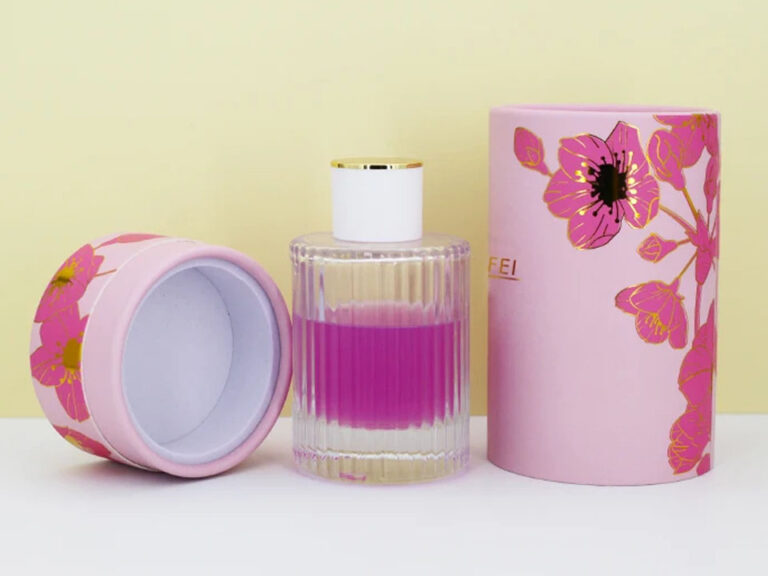
A luxury round candle tube packaging configuration, for example, can combine printed exterior graphics with a fitted holder while keeping the underlying cylinder familiar.
This modularity helps brands separate two decisions:
What structure protects and presents the candle correctly?
What decoration communicates the current collection or price point?
That separation is useful.
Once a structure is validated, a brand may be able to create fragrance variants through artwork changes instead of redesigning the entire package every season.
Still, premium finishing is not free from trade-offs.
Foils, laminates, coatings, foam components, magnets, metal parts, and mixed-material decorations can affect cost, lead time, recyclability, inspection requirements, and production consistency.
A good packaging brief therefore defines a hierarchy:
Structure first. Fit second. Graphics third. Decorative finishing fourth.
Reversing that order is how attractive prototypes become difficult mass-production programs.
6. Paper-Based Construction Can Support Sustainability Goals
Paper tubes can be a useful component of a lower-impact packaging strategy, particularly when the design remains predominantly paper-based and avoids unnecessary mixed-material components.
But “made of paper” and “recyclable” are not interchangeable claims.
In the United States, the American Forest & Paper Association reported a 60–64% paper recycling rate and 69–74% cardboard recycling rate for 2024. Those figures demonstrate substantial paper recovery infrastructure, but they do not mean that every particular candle tube will be accepted in every recycling program.
Actual recyclability depends on the complete construction.
A tube may contain:
paperboard;
printed wrap;
laminate;
adhesive;
foam insert;
plastic component;
metal base or lid;
foil decoration.
The more difficult those components are to separate or process, the more careful a brand needs to be when making environmental claims.
This matters even more for companies selling into Europe. The EU Packaging and Packaging Waste Regulation began applying on August 12, 2026, with requirements being phased in; among the major future requirements, packaging placed on the EU market must meet recyclability requirements beginning in 2030.
If responsibly sourced fiber matters to your program, FSC Chain of Custody documentation is another consideration. FSC’s Chain of Custody standard covers requirements around sourcing, processing, labeling, and sale of forest-based products represented as FSC certified.
For procurement teams, the practical sustainability questions are therefore:
Is the tube body paper-dominant?
Is the insert paper-based, molded pulp, foam, or plastic?
Can major components be separated?
Is lamination necessary?
What adhesives and coatings are used?
Is certified fiber required?
What environmental claim will appear on-pack?
Is that claim valid in the destination market?
A simpler package can sometimes tell a more defensible sustainability story than an elaborate “eco-looking” package containing several incompatible materials.
7. One Structure Can Serve Retail, Gifting, and E-Commerce
Paper tubes are versatile because they can perform as presentation packaging across several sales channels.
For physical retail, the tube provides:
shelf differentiation;
a strong branded surface;
protection against scuffing;
gift-ready presentation.
For direct-to-consumer sales, the same package can improve the product presentation when the customer opens the parcel.
For gifting, a rigid cylinder may reduce or eliminate the need for an additional decorative gift box.
Seasonal candle collections can also benefit because the core structural format can stay consistent while print or labels change.
There is an important engineering qualification, though:
A candle paper tube should not automatically be treated as the parcel shipping box.
A heavy glass or ceramic jar being shipped through a courier network normally needs an appropriately designed outer shipper and cushioning system as well.
Think of the layers separately:
Packaging Layer
Primary Job
Candle vessel
Contains the wax and fragrance
Insert / restraint
Controls vessel movement
Paper tube
Presentation + secondary protection
Outer shipping carton
Distribution protection
Void fill / cushioning if required
Manages shock and movement inside the shipper
This system-level approach is much more useful than asking whether a tube is simply “strong enough.”
How Should Buyers Specify Candle Paper Tube Packaging?
A good RFQ should contain more than artwork and an order quantity.
Before requesting pricing, provide the packaging manufacturer with the actual product dimensions and operating requirements.
Minimum specification checklist
Product
candle type;
vessel material;
vessel diameter;
vessel height;
total packed weight;
lid dimensions.
Tube
required inner diameter;
required overall height;
preferred construction;
lid style;
exterior paper;
interior appearance.
Insert
paperboard collar;
molded pulp;
EVA or other foam;
no insert, if validated;
top/bottom restraint requirements.
Decoration
CMYK or Pantone printing;
foil stamping;
emboss/deboss;
surface coating or lamination;
specialty paper;
required color matching.
Commercial requirements
quantity per SKU;
number of artwork versions;
destination market;
desired launch date;
shipment method;
required certificates or sourcing documentation.
The more completely those variables are defined before quotation, the easier it becomes to compare suppliers on the same basis.
What Should You Test Before Mass Production?
Do not approve a candle tube solely from a digital rendering.
At minimum, packaging teams should evaluate:
Jar fit
Check radial movement and whether the vessel can contact hard internal surfaces.
Insert retention
Invert and handle the package. The candle should remain in the intended position.
Lid fit
A lid that is too loose feels cheap and may separate during handling. A lid that is too tight frustrates the customer and can damage the tube during opening.
Surface durability
Test printed and finished samples for scuffing, fingerprints, abrasion, foil adhesion, and handling marks.
Pack-out
Have the production or fulfillment team actually insert and remove the candle repeatedly. A design that takes too long to assemble can create an operational cost that never appeared in the packaging quotation.
Distribution performance
Test the finished pack configuration, including its outer shipping carton, under conditions relevant to the real distribution system.
ISTA advises retesting when significant product, package, material, component, or distribution changes are introduced. If you switch the candle jar, increase the fill weight, change the insert, or change the shipping configuration, the old validation may no longer represent the new pack.
Candle Safety and Packaging Should Be Designed Together
Packaging engineering does not replace candle-product safety requirements.
For brands selling in the United States, the U.S. Consumer Product Safety Commission identifies several relevant ASTM standards, including ASTM F2058 for candle fire-safety labeling, ASTM F2179 for annealed soda-lime-silicate glass containers produced for candle use, and ASTM F2417 for candle fire safety.
That has a practical packaging implication: leave adequate space for required product and safety information and develop the secondary package around a properly specified candle vessel.
The prettiest tube in the market cannot compensate for an unsuitable candle container or missing safety information.
Paper Tube vs Folding Carton vs Rigid Box
No packaging structure is automatically best for every candle.
Format
Strongest Advantage
Main Limitation
Good Fit
Paper tube
Distinctive cylindrical presentation and close fit around round vessels
Less space-efficient to ship flat because rigid tubes are assembled
Premium jars, gifts, fragrance collections
Folding carton
Efficient storage and transportation before assembly
Generally less rigid without added structure
Higher-volume, cost-sensitive retail programs
Rigid rectangular box
Strong luxury presentation and many insert options
Higher material, storage, and freight burden in many configurations
Luxury gifting and premium sets
Stock box + label
Low initial commitment
Less differentiated brand presentation
Early-stage or market-testing programs
The right choice depends on retail positioning, candle weight, order quantity, sales channel, freight, and how much custom structure the brand can justify.
The Specification Matters More Than the Packaging Trend
Candle paper tubes can look premium. They can support a paper-focused material strategy. They can also create memorable gift presentation.
None of those outcomes happens automatically.
The highest-value decision is not choosing “paper tube packaging” from a list of packaging trends. It is specifying the tube correctly around the actual candle.
Do that well and the cylinder becomes more than an unusual box. It becomes a repeatable packaging platform that can support multiple fragrances, sales channels, and future product launches.
Frequently Asked Questions
Are paper tubes strong enough for glass candle jars?
Yes, rigid paper tubes can provide useful secondary protection for glass candle jars, but wall strength alone is not enough. The jar should be properly restrained with appropriate clearances and, when required, an insert. E-commerce orders may still require cushioning and a corrugated outer shipping carton.
What is the best insert for candle paper tube packaging?
There is no universal best insert. Paperboard collars, molded pulp, and foam can all work depending on jar weight, fragility, presentation requirements, cost, and sustainability objectives. The correct insert should secure the vessel without damaging labels, coatings, or decorated glass.
Are candle paper tubes recyclable?
Some paper-dominant tube constructions may be compatible with paper recycling systems, but recyclability depends on the complete package and local collection infrastructure. Foam inserts, plastic films, metal ends, laminates, and other components can alter the recycling pathway. Avoid making blanket recyclability claims without checking the finished construction.
Can paper tubes be customized for different candle sizes?
Yes. Diameter, height, wall construction, inserts, lid style, printing, and surface decoration can all be customized. For multiple SKUs, however, standardizing a few tube diameters can reduce component complexity and simplify purchasing and inventory management.
What finishes work well for luxury candle packaging?
Common options include matte finishes, specialty papers, hot foil stamping, embossing, debossing, and controlled Pantone printing. The best result usually comes from using one or two well-executed effects rather than combining every available finishing process.
What information should I send a candle tube manufacturer for a quote?
Send the candle jar diameter, height, weight, lid dimensions, required tube style, insert preference, artwork requirements, finishes, order quantity per SKU, delivery destination, target date, and any material or certification requirements. Physical product samples can be valuable when developing final fit.