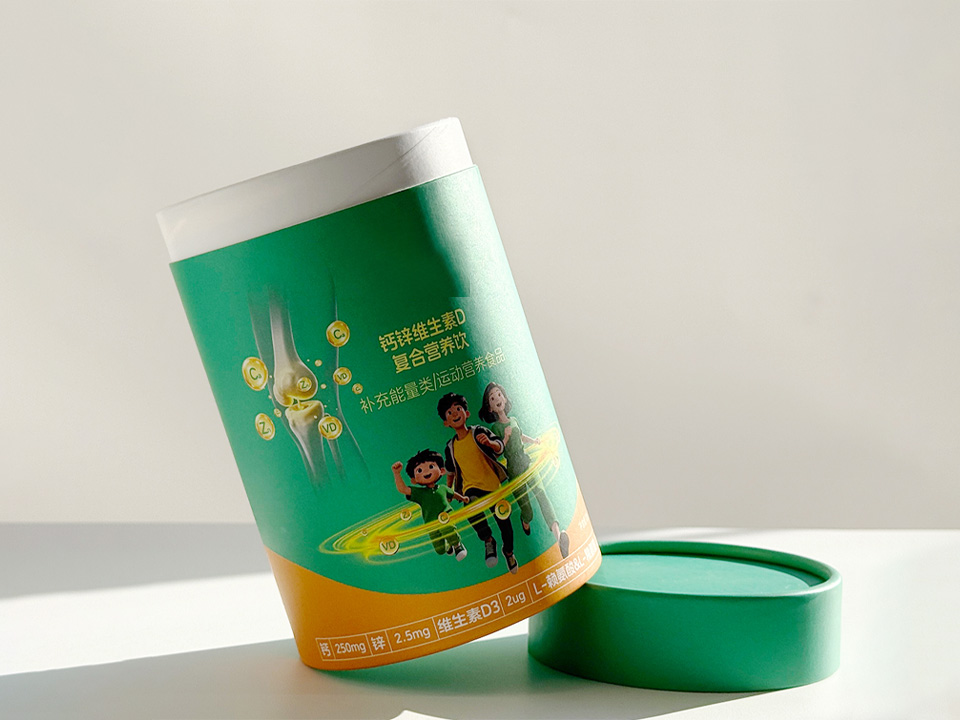
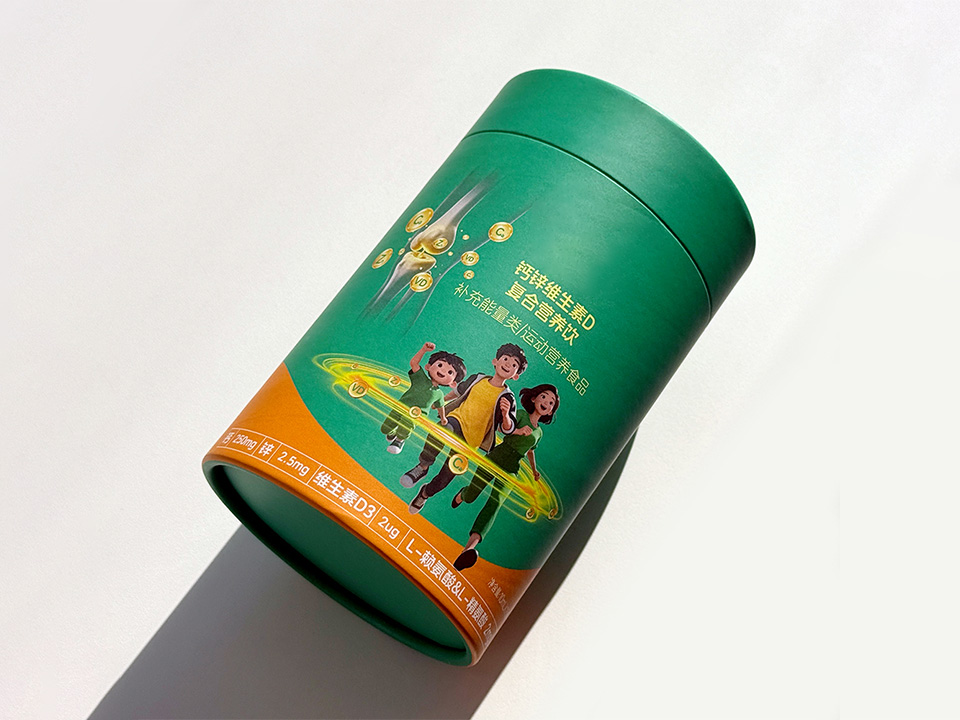
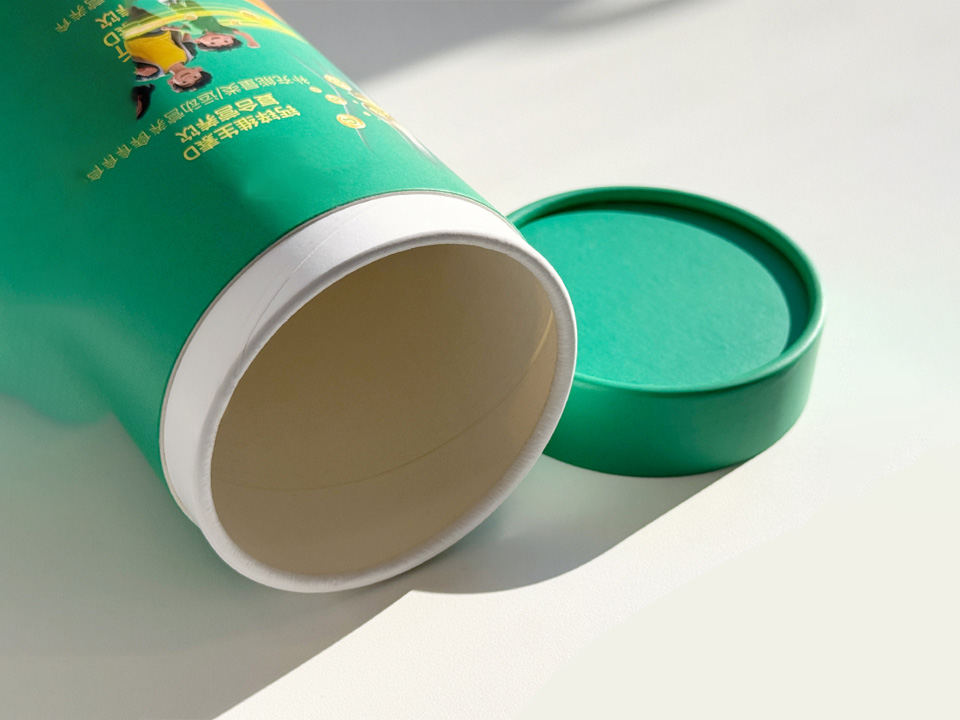
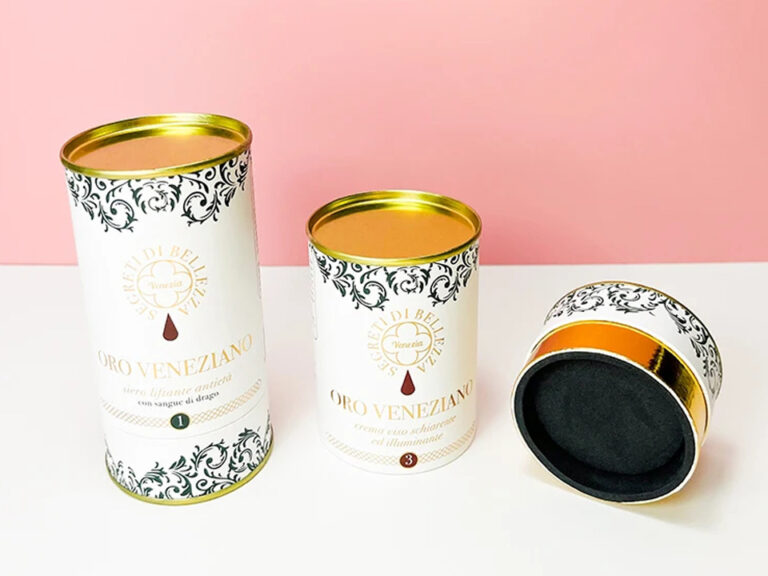
Still Not Seeing The Right Packaging Solution? Talk to Our Boss.
If you’ve reviewed our website or spoken with sales and still don’t see a clear path, send your request here. Your message goes directly to our General Manager for an executive review of feasibility, cost, and lead time. You’ll get a clear next step—what we can do, what we need from you, and the fastest route to a quote.
Built for packaging managers, procurement, and packaging engineers. Specify size, quantity, and finish to receive moq, lead time, and spec guidance for us/eu programs.
Quote-ready customization: diameter, height, wall thickness, inserts, liners, and closures
Paper Tube Packaging for Powder Supplements: Benefits, Barriers & Buyer Guide
Paper tube packaging can be an effective format for protein powders, collagen, greens, electrolyte blends, pre-workouts and other dry supplements—but only when the tube is designed as a complete packaging system.
The paperboard body provides rigidity, print area and shelf presentation. Product protection comes primarily from the food-contact liner, sealed membrane, bottom construction and reclosure system. For procurement and packaging teams, that distinction matters more than whether the package simply looks sustainable.
Key Takeaways
A paper tube should be specified as paperboard structure + barrier liner + primary seal + reclosure, not as paperboard alone.
Moisture sensitivity is usually one of the first technical issues to evaluate for powdered supplements; oxygen, aroma and light sensitivity may require additional barrier performance.
WVTR, OTR and seal-strength data are more useful than vague claims such as “airtight” or “moisture-proof.”
The best container dimensions depend on net weight and bulk density, plus scoop dimensions, fill-line requirements and required headspace.
A high-barrier composite construction may protect the product well but can make recycling more complicated. Sustainability claims should reflect the full bill of materials.
Paper tubes are most compelling when rigid presentation, large branding area, repeat use and custom sizing matter more than achieving the absolute lowest package weight.
Are Paper Tubes a Good Choice for Powder Supplements?
Yes—provided that the powder’s stability requirements can be met by the selected liner and closure system.
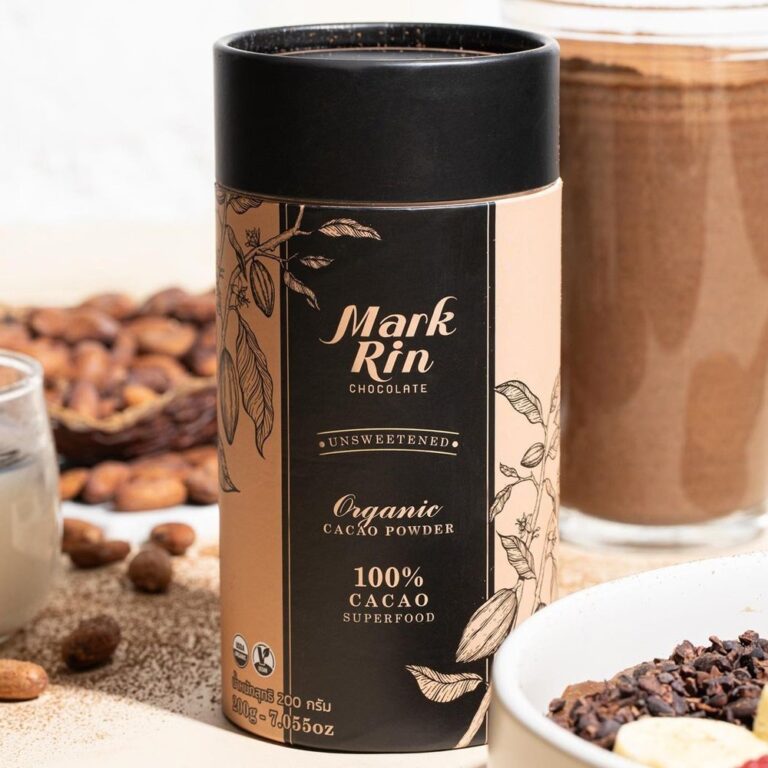
Paper tubes are particularly well suited to multi-serving powders sold in rigid containers, including protein blends, collagen powders, superfoods, greens, meal-replacement products, creatine blends and electrolyte products. Broader food supplement paper tubes can also accommodate other nutrition formats, while dedicated protein powder paper tubes are designed around larger powder volumes and barrier requirements.
Paper tubes are not automatically the right format for every program. A lightweight refill pouch may be preferable when freight efficiency dominates. Sachets or stick packs can be better for portion control and travel. Conventional HDPE or PET tubs may be preferable when a business already has validated filling lines, established component supply and an efficient recycling stream for that format.
The correct question is therefore not “Is paper better than plastic?”
It is:
Which packaging system protects this formula, runs reliably on our filling operation, presents the brand correctly and meets our commercial and regulatory requirements?
Paper Tube vs. Other Powder Packaging Formats
Format
Strongest Use Case
Main Advantages
Main Limitations
Composite paper tube / canister
Premium multi-serving supplements
Rigid shape, large print area, custom sizing, differentiated shelf appearance
Requires careful liner and end-component selection
HDPE/PET tub
High-volume conventional supplement programs
Familiar format, established closure systems, common filling equipment
Plastic-heavy format and limited material differentiation
Stand-up pouch
Lightweight multi-serving powders and refills
Low package weight, efficient storage before filling
Less rigid, different scoop/user experience
Stick pack / sachet
Single-serving powders
Accurate portions, portability, trial packs
Higher packaging-component count and specialized filling economics
Paper tube + refill pouch system
Premium reusable presentation
Separates long-life rigid container from refill packaging
Adds supply-chain and consumer-use complexity
What Makes Powder Supplements Difficult to Package?
Dry powders appear simple because they do not leak like liquids, but they introduce their own packaging risks.
Moisture Can Change Powder Behavior
Many powders are hygroscopic to some degree, meaning they can pick up moisture from the surrounding environment. The practical symptoms may include caking, hardening, reduced flowability or changes in sensory performance.
That is why a paper tube intended for a moisture-sensitive powder needs more than a thick wall.
The packaging engineer should identify:
target shelf life;
expected storage humidity and temperature;
moisture sensitivity of the formulation;
whether a desiccant is used;
frequency of consumer opening;
expected distribution conditions;
acceptable change in powder flow or texture over shelf life.
FDA dietary-supplement CGMP requirements reinforce the broader principle: packaging must meet specifications capable of ensuring product quality, and dietary supplements must be held under appropriate temperature, humidity and light conditions.
Oxygen, Aroma and Light May Also Matter
Moisture is not the only exposure route.
Flavor systems, fats, botanical ingredients and other sensitive components may also require oxygen or light management. An aluminum-containing structure may therefore be selected where stronger oxygen and light protection is justified.
The important procurement principle is to avoid applying the same liner automatically to every SKU. A plain collagen product, highly flavored protein blend and botanical greens powder may not have identical protection requirements.
How Does a Paper Tube Actually Protect the Powder?
A commercial powder canister should be evaluated component by component.
Material structure, compliance documentation, barrier performance
Primary membrane
Initial seal and tamper evidence
Seal material, peel behavior, compatibility with rim
Reclosure
Protection after opening
Fit, opening force, reseal performance
Bottom assembly
Structural and barrier closure
Material, seam construction, leakage risk
Secondary components
Scoop, desiccant, inserts
Food-contact suitability, fit and assembly method
This approach prevents an expensive but common mistake: over-specifying one feature while ignoring another.
A heavy paperboard wall cannot compensate for a poor membrane seal. A premium foil liner cannot compensate for an incorrectly fitted lid. A sophisticated package graphic cannot compensate for a mouth diameter that does not accept the customer’s scoop.
How Should Buyers Specify Moisture and Oxygen Barriers?
Ask for measurable performance where it matters.
For liner films or plastic-coated barrier structures, water vapor transmission rate (WVTR) and oxygen transmission rate (OTR) are useful engineering metrics.
ASTM F1249 is a recognized method for measuring WVTR through plastic film and sheeting, and ASTM notes that WVTR can relate directly to packaged-product stability and shelf life. ASTM D3985 measures oxygen transmission through films, laminates and certain coated materials.
Two cautions matter.
1. Ask for the Test Conditions
A barrier value without temperature, humidity and material-construction context can be misleading.
Your RFQ should therefore ask what structure was tested and under what conditions.
2. Do Not Confuse Liner Data with Complete-Package Performance
Excellent OTR or WVTR data from a sheet of barrier material does not prove that the finished canister will achieve the desired shelf life.
The complete package introduces:
membrane seals;
seams;
bottom interfaces;
lid fit;
filling contamination;
consumer opening cycles.
For important launches, material data should be followed by validation using the actual product, package and intended storage/distribution conditions.
That is a more defensible way to establish shelf-life performance than selecting a liner because a supplier calls it “high barrier.”
What Closure Works Best for Powder Supplements?
For many rigid powder canisters, a two-stage opening system works well:
an initial sealed membrane that provides the primary unopened barrier;
a cap or lid that allows the consumer to close the container after opening.
Easy-peel aluminum membranes are common where the brand wants visible first-opening protection and convenient access. A foil-lined peelable-lid paper canister demonstrates this type of construction.
Another easy-peel foil seal construction is used on a smaller rigid paper canister. Although that product is designed around another supplement format, the closure principle is relevant when evaluating membrane geometry and consumer opening.
Seal Strength Should Be Verified, Not Assumed
ASTM F88/F88M covers seal-strength testing for flexible barrier materials and can be applied to seals involving rigid or semi-rigid components. ASTM specifically describes seal strength as relevant to process validation, package integrity and consistent seal production.
For an easy-peel system, the goal is not simply the strongest possible bond.
The seal must be:
strong enough to survive handling and distribution;
consistent around the circumference;
resistant to powder contamination during sealing;
peelable without tearing unpredictably;
compatible with the rim material.
This is a good example of why “stronger” does not automatically mean “better.”
Size the Tube from the Powder, Not Only the Net Weight
A 500 g container is not a complete dimensional specification.
Two powders with the same net weight can occupy noticeably different volumes because bulk density, particle structure and aeration differ.
Before finalizing diameter and height, provide the packaging supplier with:
target net weight;
measured or expected bulk density;
desired headspace;
scoop dimensions;
required mouth opening;
filling method;
maximum case dimensions if relevant.
A pilot fill with the actual formula is preferable to estimating the package volume from weight alone.
Scoop Access Is an Engineering Requirement
For protein powders and similar products, mouth diameter affects:
scoop entry;
wrist clearance;
powder retrieval near the bottom;
filling-nozzle access;
membrane diameter and cost;
cap design.
A narrow cylinder may look elegant but create a poor daily-use experience. A very wide container may improve access while increasing material usage and shipping cube.
Diameter is therefore a commercial trade-off, not merely a design choice.
Paper Tubes Can Improve Brand Presentation Without Depending on Labels Alone
Rigid cylindrical packaging provides a large continuous decorating surface.
Depending on construction and brand positioning, manufacturers can use:
offset printing;
Pantone colors;
natural kraft surfaces;
matte or gloss laminations;
foil stamping;
embossing or debossing;
spot effects;
specialty papers.
For premium sports nutrition, wellness or botanical brands, the structural format itself can differentiate the product from conventional plastic tubs and flexible pouches.
The useful distinction for a buyer is between decoration value and product-protection value.
Foil stamping on the outside has no meaningful relationship to oxygen protection inside. A natural kraft appearance does not prove the package is recyclable. A thick tube does not prove the liner is food-contact compliant.
Keep those specifications separate.
What Food-Contact and Regulatory Issues Should US and EU Buyers Check?
Packaging compliance should be specified before artwork approval and mass production.
United States
FDA’s dietary-supplement CGMP framework requires companies manufacturing, packaging, labeling or holding dietary supplements to follow 21 CFR Part 111. Packaging for a given dietary supplement must meet established specifications so that the package condition ensures product quality.
FDA also regulates substances that come into contact with food. Packaging components, coatings, adhesives and related materials may fall within food-contact requirements depending on their composition and intended use. FDA’s evaluation framework considers migration and intended-use safety where authorization is required.
A US buyer should therefore request documentation covering the actual food-contact layer and associated components, rather than asking only whether the outer paper is “food grade.”
European Union
Materials intended to contact food in the EU fall under Regulation (EC) No 1935/2004 and related requirements. The core principle is that materials should not transfer constituents to food at levels that endanger health or unacceptably alter the food’s composition, taste or smell.
For EU-bound programs, buyers should confirm the regulatory status of:
liner;
adhesive system;
coatings;
membrane;
inks where migration is relevant;
plastic or metal food-contact components.
PPWR Changes the Sustainability Conversation
Regulation (EU) 2025/40 on packaging and packaging waste applies from August 12, 2026. Among other provisions, it establishes recyclability requirements and specific restrictions concerning PFAS in food-contact packaging. More detailed design-for-recycling compliance requirements become important toward 2030 under the timetable in Article 6.
For European sourcing programs, a material declaration and clear component-level bill of materials are therefore becoming more valuable procurement documents.
Is Paper Tube Packaging Really Recyclable?
Sometimes—but the correct answer depends on the complete construction and the local recycling system.
This is one of the most important areas in which supplement brands should avoid oversimplification.
A package may contain:
paperboard;
aluminum foil;
PE or another polymer layer;
metal bottom;
plastic overcap;
adhesive;
decorative laminate.
Calling the entire package “recyclable paper packaging” solely because the largest visible component is paper can therefore be misleading.
The EU’s PPWR defines recyclability around compatibility with collection, sorting and recycling systems rather than appearance alone. Its future recyclability grading framework likewise evaluates packaging at the packaging-unit level.
Better Design Questions
Instead of asking only, “Can we call this recyclable?”, ask:
Can unnecessary components be removed?
Can incompatible components be separated?
Can a lower-complexity liner meet the required shelf life?
Does a metal bottom materially improve performance?
Is a plastic reclosure necessary?
What recycling instructions are appropriate in each target market?
Can the supplier provide an accurate material declaration?
A slightly more complex package may sometimes be justified if it prevents product spoilage or loss. The objective should be to use only as much barrier and material complexity as the product actually requires.
The Cheapest Unit Price Is Not the Same as the Lowest Packaging Cost
Powder-packaging quotations are influenced by more than the paperboard body.
Typical cost drivers include:
diameter and height;
wall construction;
liner type;
bottom component;
membrane system;
cap material;
printing method;
surface finishing;
custom tooling;
number of SKUs;
order quantity;
assembly complexity;
inspection requirements;
export packing and freight cube.
A low-cost tube that causes difficult filling, seal failures or transit damage is not a low-cost solution.
The same applies to MOQ.
A real 2025 discussion from an energy-powder startup illustrates the issue. The founder wanted a relatively small validation run but encountered extremely high production minimums for individually filled stick packs. That experience does not establish a universal MOQ, but it demonstrates why brands should evaluate packaging format and filling economics before committing to artwork and launch architecture.
For a startup with a multi-serving powder, a rigid canister using an established diameter may sometimes be operationally simpler than launching many thousands of individually printed single-serve packs. For a mature brand with a high-speed stick-pack line, the opposite may be true.
Common Specification Mistakes to Avoid
Choosing the Liner from Appearance
A shiny foil interior may look protective, but barrier selection should follow product requirements.
Treating Every Powder the Same
Protein, creatine, greens, collagen and electrolyte blends can differ in sensitivity, density, aroma and flow characteristics.
Using Net Weight as the Only Size Input
Always consider volume, bulk density, scoop access and fill headspace.
Ignoring Powder Dust During Sealing
Fine powder around the sealing surface can affect membrane consistency. Filling and sealing should therefore be considered together.
Over-Specifying Barrier
Maximum barrier is not automatically optimal. It may increase cost and material complexity without delivering meaningful additional shelf-life value.
Approving Only a Perfect Hand-Made Sample
A prototype demonstrates appearance and basic fit. It does not prove that thousands of production units will hold the same diameter, closure fit, print position or seal performance.
Production tolerances and QC acceptance criteria should be agreed separately.
Making Recycling Claims from the Outer Material Alone
Ask for the complete bill of materials before approving environmental claims.
What Should Be Included in a Powder Supplement Packaging RFQ?
A strong RFQ reduces quotation ambiguity and makes competing suppliers easier to compare.
Provide:
Product type — whey, vegan protein, collagen, greens, electrolyte, creatine or other powder.
Net fill weight — preferably accompanied by powder bulk density or an actual product sample.
Target shelf life — and relevant storage/distribution conditions.
Target markets — for example US, EU, UK or multiple regions.
Food-contact requirements — including required declarations or test documentation.
Container dimensions — or permission for the manufacturer to recommend dimensions from product volume.
Scoop dimensions — if a scoop will be placed inside.
Closure system — easy-peel membrane, ring-pull system, plug cap, screw-style reclosure or other design.
Artwork and decoration — CMYK/Pantone, kraft, matte/gloss, foil, embossing and other finishes.
Quantity per SKU — plus expected annual volume if known.
Filling method — manual, semi-automatic or automated.
QC requirements — dimensions, closure fit, seal verification, print/color acceptance and sampling plan.
Delivery destination — required for realistic logistics and landed-cost comparison.
Once these inputs are defined, the packaging supplier can recommend a structure rather than simply quoting the most common tube in its catalog.
Frequently Asked Questions
Can paper tubes keep protein powder dry?
Yes, but the paperboard body alone is not what keeps the powder dry. Moisture protection depends primarily on the liner, sealed opening, bottom construction and reclosure. For moisture-sensitive formulas, request barrier information and validate the finished package under realistic shelf-life conditions.
What liner is best for powder supplement packaging?
There is no universal best liner. Aluminum-containing structures may be appropriate where strong moisture, oxygen or light protection is required, while simpler polymer or paper-based constructions may be sufficient for less demanding products. Select the liner from product-stability requirements, not appearance.
Are paper tubes food safe?
They can be, provided that the materials intended to contact the supplement comply with the applicable food-contact requirements in the destination market. Buyers should review documentation for the liner, adhesives, coatings, membrane and other food-contact components—not simply the outer paperboard.
Are paper protein powder tubes recyclable?
Some constructions may be recyclable in particular systems, but a paper exterior does not make every composite tube universally recyclable. Foil liners, polymer layers, metal bottoms and plastic caps can influence sorting and recycling. Evaluate the complete material structure and local recycling infrastructure before making claims.
Do powder canisters need an easy-peel membrane?
Not every design requires the same closure, but an easy-peel membrane can provide a controlled initial seal and visible evidence that the primary opening has not already been removed. The membrane should be engineered together with the rim material, filling process and reclosure.
What should I send a manufacturer before requesting a quotation?
At minimum, provide the powder type, fill weight, approximate bulk density or product sample, preferred size, target market, quantity, required barrier performance, closure preference, printing requirements and destination. Providing shelf-life and filling-process information usually produces a much more meaningful packaging recommendation.