Still Not Seeing The Right Packaging Solution? Talk to Our Boss.
If you’ve reviewed our website or spoken with sales and still don’t see a clear path, send your request here. Your message goes directly to our General Manager for an executive review of feasibility, cost, and lead time. You’ll get a clear next step—what we can do, what we need from you, and the fastest route to a quote.
Direct GM review of your specs, use case, and constraints
Print/finish recommendations to match brand + budget
Cost-down alternatives and lead-time improvement options
Quote path clarity: MOQ, sampling plan, and what to next
Talk to Our Boss
Get a Fast Quote for Custom Paper Tube Packaging
Built for packaging managers, procurement, and packaging engineers. Specify size, quantity, and finish to receive moq, lead time, and spec guidance for us/eu programs.
Quote-ready customization: diameter, height, wall thickness, inserts, liners, and closures
Material Revolution of Cylindrical Packaging: Decoding the Technological Code and Aesthetic Expression of Modern Packaging Boxes
Table of Contents
Cylindrical packaging isn’t just “a nicer box” anymore. It’s a performance spec, a brand touchpoint, and a supply-chain tool—rolled into one.
If you’re buying in bulk (OEM/ODM, wholesale, private label, retailer programs), your tube has to survive real life: humid warehouses, 3PL handling, cross-border transit, marketplace returns, and messy shelves. Material choices decide whether your pack stays crisp, seals tight, prints clean, and still looks premium after the last-mile drop.
Paper tubes look simple, but modern builds are layered. Think structure + barrier + finish. When you spec it right, paper composites handle stacking pressure, moisture risk, and brand presentation without turning the pack into a “plastic-feel” cylinder.
Barrier layers and moisture control
If you ship tea, coffee, supplements, or powders, humidity is the quiet villain. A paper composite tube can add a barrier liner, tighter fit closures, and surface protection so the pack doesn’t go soft or scuff during fulfillment.
Tubes naturally resist vertical compression better than many folding cartons. That matters when cartons get stacked high, strapped tight, or squeezed in mixed pallets.
For bulk nutrition SKUs, you’ll usually spec a thicker wall + a rigid core so the tube stays round and the lid stays aligned. Here’s a solid example for that category: protein powder paper tube packaging.
Print and tactile finishes
Paper wins when you want the “hand-feel” to do part of the selling. Soft-touch, embossing, kraft texture, matte lamination—those are all brand signals customers understand instantly.
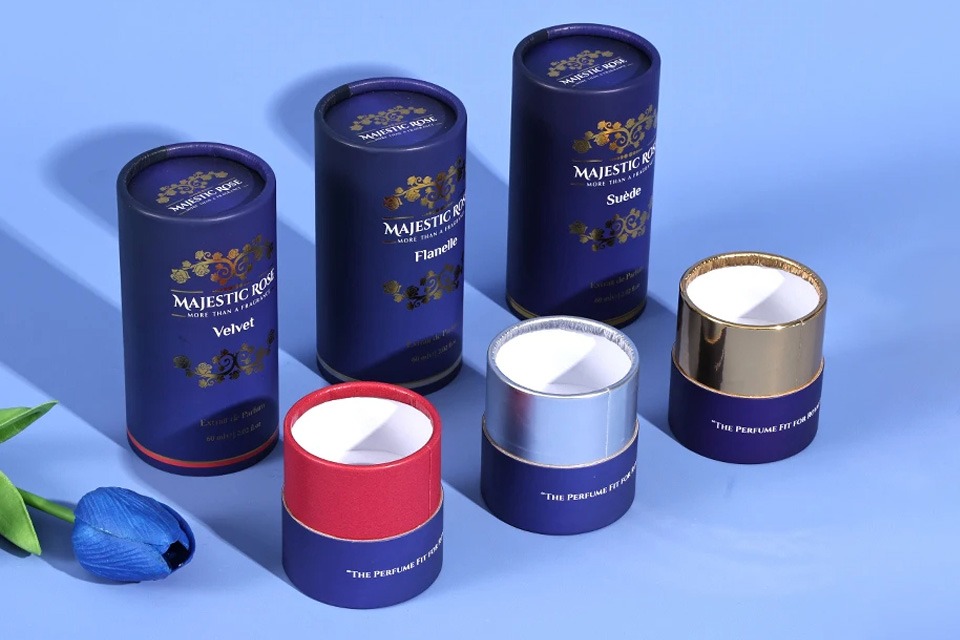
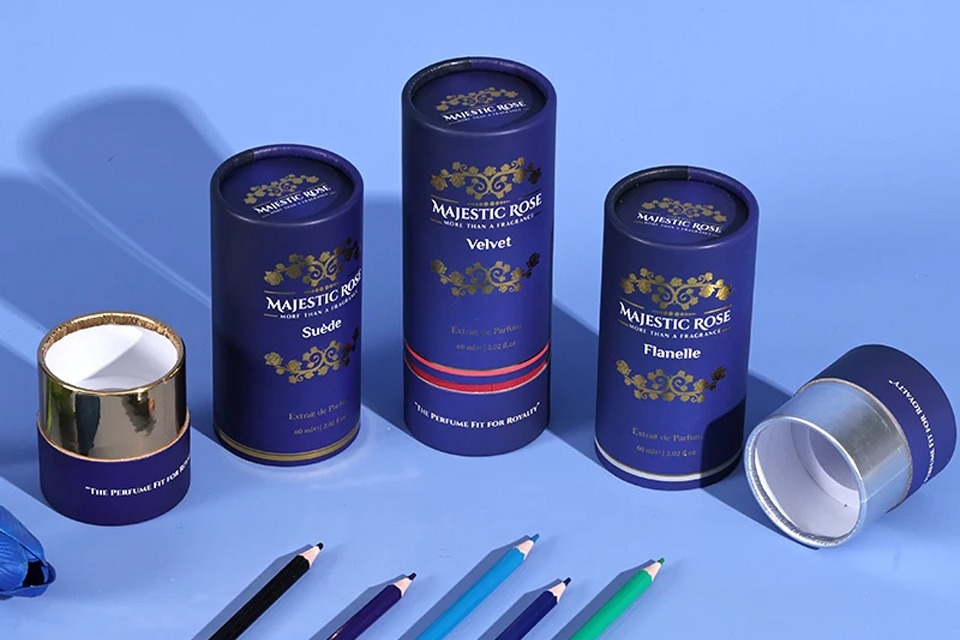
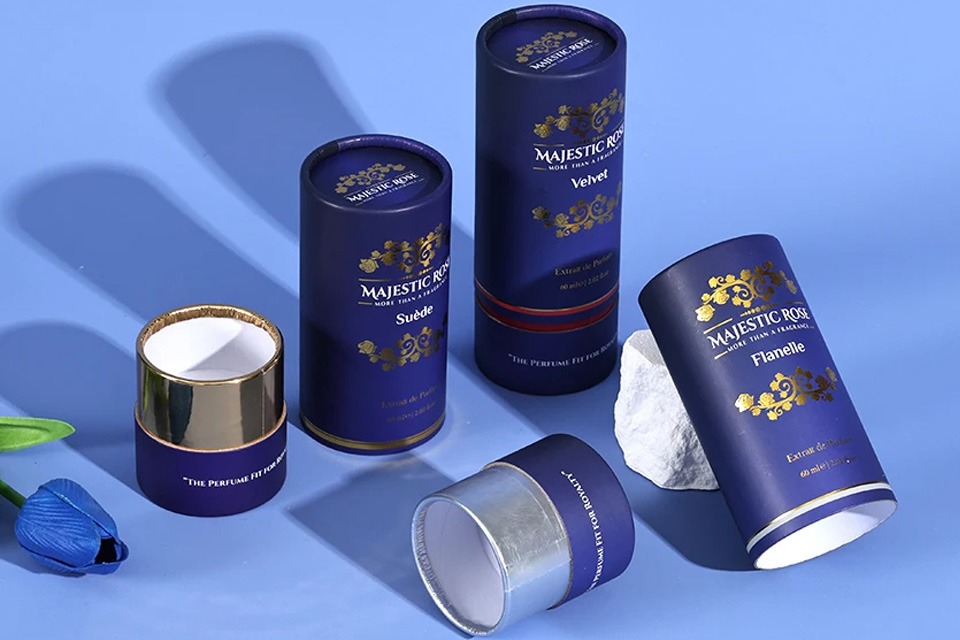
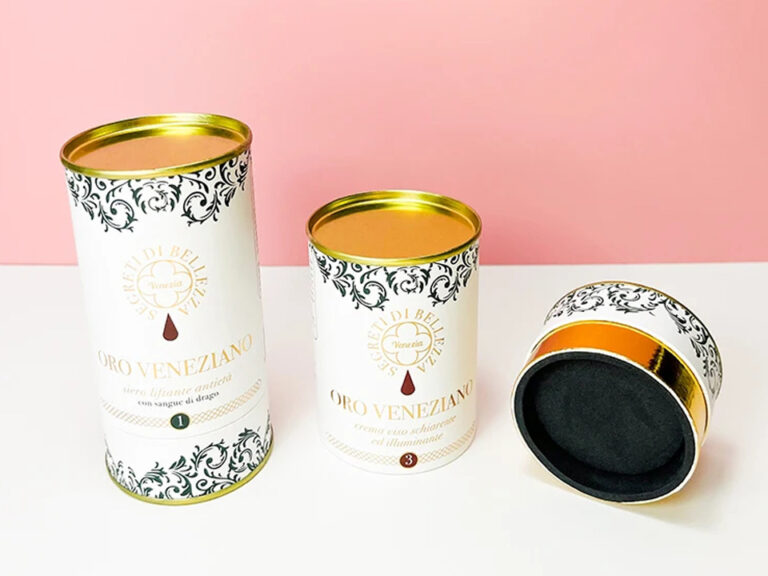
If you’re in beauty and you want that premium grip plus clean graphics, this style shows the direction: cosmetic cardboard tubes.
Engineering plastics
In tubes, plastics shouldn’t be a default. They should earn their spot. Use them when you need visibility, impact resistance, tighter tolerances, or a stable inner layer—especially for cross-border and marketplace-heavy SKUs.
Visibility and impact resistance
If customers want to “see it before they buy it,” a windowed tube boosts conversion and cuts hesitation. It also helps with variant clarity when you run lots of SKUs.
This is a common compromise for brands that want a paper-forward story but still need display behavior. In sourcing terms, it’s also easier to manage: you keep the paper tube supply stable, then tune the window size, film type, and glue spec based on your channel.
Metal alloys
Metal in cylindrical packaging is about trust and reuse. A metal closure feels secure. It signals “fresh and premium,” and it encourages customers to keep the tube on a shelf—long after the product is gone.
Tinplate lids and freshness cues
For tea, coffee, and confectionery, lid feel is not a detail. It’s a perception trigger. A solid metal lid reduces “is this stale?” doubts, and it can improve the unboxing moment without making it flashy.
Metals can also sharpen the look—especially when you need consistent color, crisp edges, or a more “collectible” feel. If your brand depends on a signature tone (Pantone matching, clean highlights, minimal design), metal closures help keep the pack looking intentional under retail lighting.
Bio-based materials
Bio-based doesn’t have to mean fragile. What buyers usually want is simple: fiber-forward structure that still hits performance targets and supports sustainability requirements across retail and export channels.
Fiber-based recyclable structures
For many brands, the practical win is the same: paper tubes that scale, ship well, and fit recycling expectations in key markets. That keeps your packaging story consistent while you grow from small runs into big replenishment cycles.
Child-resistant paper tube packaging
In regulated categories, “safe by design” matters. You need packaging that supports compliance, reduces risk, and still looks like a real brand—not a generic container.
“Smart” in packaging usually means one of two things: track-and-trace or condition cues. It’s not about gimmicks. It’s about fewer disputes, fewer counterfeits, and smoother channel control.
NFC and anti-counterfeit packaging
If you sell on marketplaces or through multiple distributors, counterfeit and channel leakage can become a weekly headache. Smart packaging features can support authentication flows, verify batches, and strengthen brand registry claims.
This matters a lot in categories like CBD, where buyers care about trust and provenance. Here’s a format that fits that scenario: paper tube boxes for CBD cartridge.
Temperature indicator inks and cold-chain risk
For products that can’t get overheated or mishandled, visual indicators help reduce “he said, she said” disputes in logistics. Even a simple temperature cue can support better claims handling and retailer conversations.
Material selection matrix
Here’s a sourcing-friendly way to map materials to real buyer pain points. Use it when you’re building your RFQ, tightening your dieline, or aligning with your 3PL.
Material system
Best-fit pain point
Typical build approach
Strong-fit categories
“Buyer outcome” language
Paper-based composite materials
crush resistance, scuff control, premium feel
rigid paper core + barrier liner + premium wrap
supplements, cosmetics, food gifting
fewer damaged units, cleaner shelf look
Engineering plastics
product visibility, drop performance, tighter tolerances
paper tube + clear window / stable inner layer
accessories, variant-heavy SKUs, kits
higher conversion, fewer “arrived broken” claims
Metal alloys
freshness confidence, reuse value
paper tube + tinplate lid
tea, coffee, confectionery
better perceived quality, stronger gifting appeal
Bio-based materials
sustainability alignment, scalable supply
fiber-forward structures, paper-first builds
wellness, beauty, regulated categories
easier retailer onboarding, cleaner compliance story
Smart materials
anti-counterfeit, traceability, cold-chain cues
NFC/QR-ready structure, indicator features
marketplace-heavy, regulated, export
fewer disputes, better channel control
Packaging scenarios that show up in the real world
Most projects don’t fail on design. They fail on operational friction: returns, scuffs, lid misfit, inconsistent color, or packaging that slows down picking and kitting.
E-commerce fulfillment and marketplace shipping
If your SKU is going through a 3PL, plan for friction: cartons packed too tight, conveyors, last-mile drops, and random weather.
A simple rule: spec for shape retention and closure stability. That keeps the tube round, keeps the lid aligned, and reduces customer complaints.
Retail planogram and shelf conversion
Retail is brutal. Your package has to look sharp after handling, not just fresh out of a box.
For beauty supplements or “daily routine” products, strong graphics and print consistency matter. This is the style direction many brands use: double sides printed paper tube packaging.
Variant management and SKU scaling
When your line grows, your packaging system needs to stay tidy. Cylindrical formats help by standardizing diameters and heights while letting you vary labels, finishes, and closures. That reduces production chaos and keeps procurement cleaner.
OEM/ODM wholesale execution for growing brands
Bulk buyers care about repeatability: color consistency, stable lead times, clean QC, and reliable output—especially when you’re supplying retailers or scaling cross-border.
That’s why we support OEM/ODM and wholesale programs designed for brand owners, manufacturers, cross-border sellers, distributors, agencies, and private label teams—so your packaging can scale without constant rework.