Still Not Seeing The Right Packaging Solution? Talk to Our Boss.
If you’ve reviewed our website or spoken with sales and still don’t see a clear path, send your request here. Your message goes directly to our General Manager for an executive review of feasibility, cost, and lead time. You’ll get a clear next step—what we can do, what we need from you, and the fastest route to a quote.
Built for packaging managers, procurement, and packaging engineers. Specify size, quantity, and finish to receive moq, lead time, and spec guidance for us/eu programs.
Quote-ready customization: diameter, height, wall thickness, inserts, liners, and closures
9 Cosmetic Paper Tube Packaging Innovations for Beauty Brands
Cosmetic paper tube packaging is moving beyond decorative cylindrical boxes. For beauty brands, the more meaningful developments are happening in structural engineering, material selection, product retention, recyclability, labeling, SKU management, and production control.
A successful paper tube has to perform several jobs at once. It must protect a serum bottle, cream jar, makeup tool, or other primary pack; present the brand correctly; survive distribution; provide adequate space for required information; and fit the sustainability strategy of the markets where it will be sold.
That makes innovation less about adding unusual features and more about making better engineering decisions.
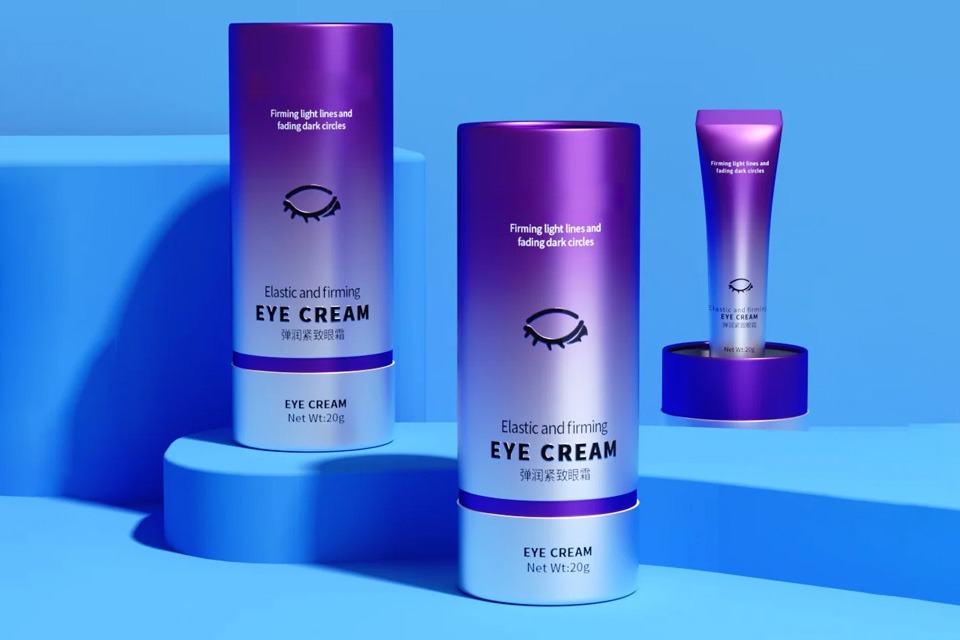
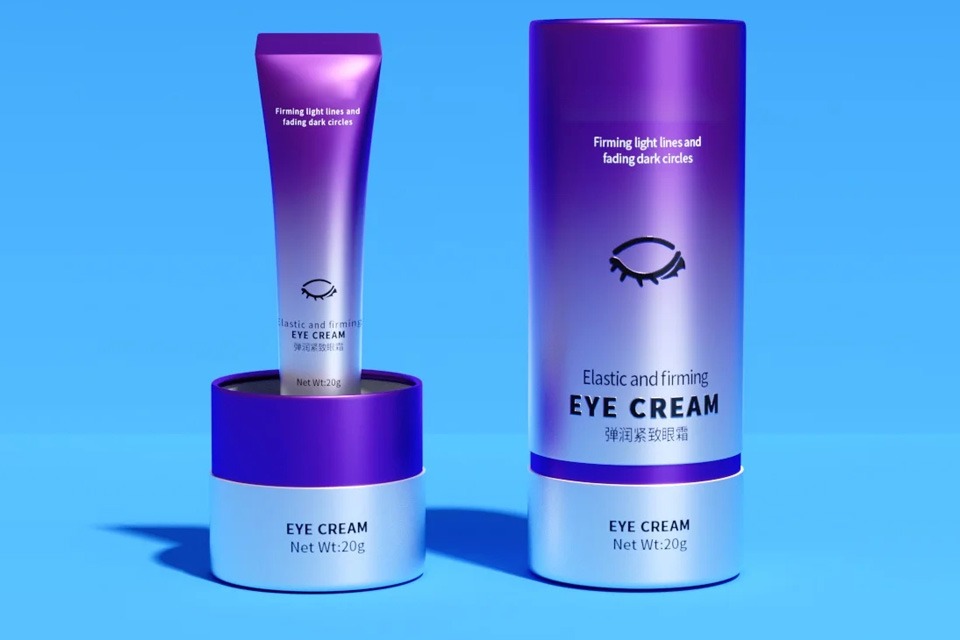
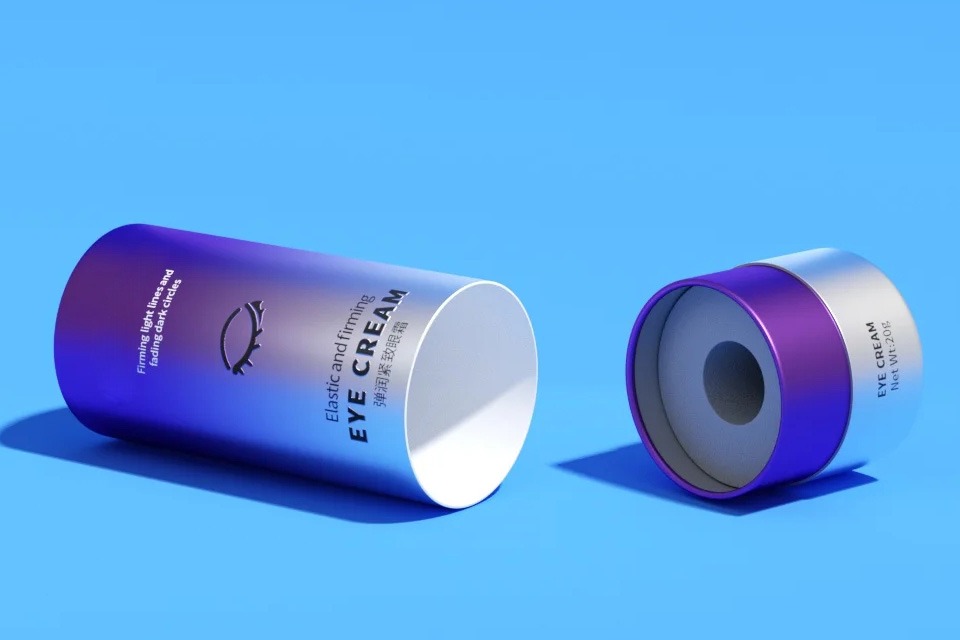
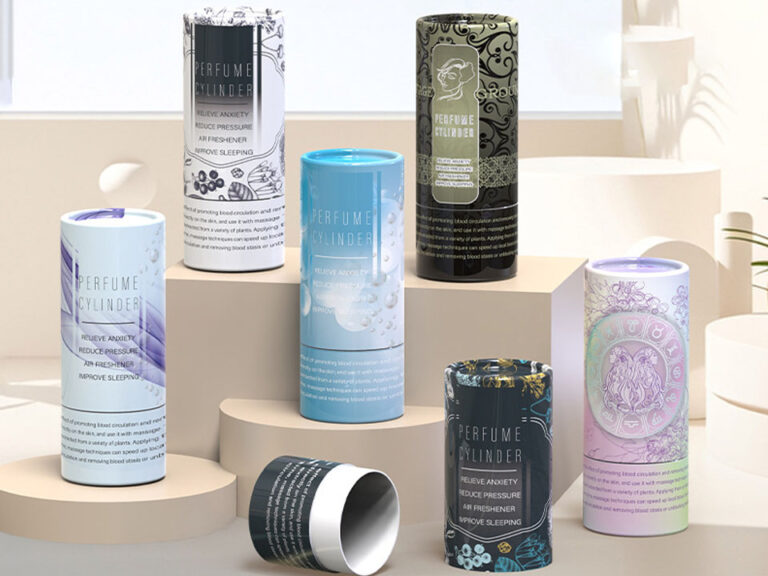
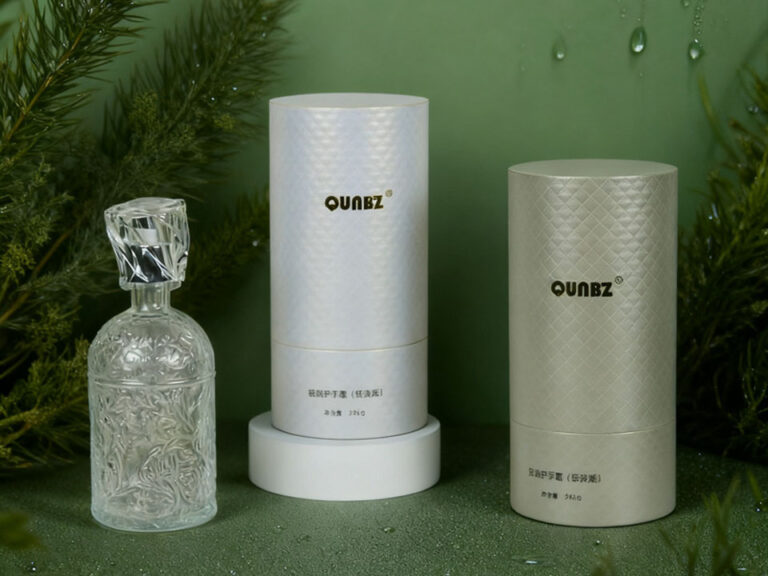
For brands comparing available formats, these cosmetic paper tube packaging options show how tube size, structure, printing, finishes, and inserts can be adapted to different beauty applications.
Key Takeaways
Engineer the tube around the actual product, not around a convenient stock diameter.
Paper-based packaging is not automatically recyclable simply because most of its weight is paper; inserts, windows, laminates, coatings, closures, and other components also matter.
Premium decoration should be selected after structure and product protection have been validated.
Shared tube platforms and interchangeable inserts can reduce SKU complexity and improve purchasing leverage.
Beauty packaging artwork must reserve enough usable space for regulatory information before decorative elements are finalized.
A physical pre-production sample and documented approval standard are more valuable than an impressive 3D rendering alone.
1. Product-Specific Tube Geometry Instead of Oversized Packaging
The first useful innovation is also one of the least glamorous: better dimensional engineering.
A cosmetic paper tube should be designed around the primary package’s actual diameter, height, center of gravity, closure, and vulnerable areas. Excessive internal clearance allows movement. Too little clearance can cause difficult loading, abrasion, or problems when normal manufacturing tolerances accumulate.
This is especially important with glass serum bottles and skincare jars.
A typical rigid tube specification should establish:
finished internal diameter;
finished tube height;
acceptable dimensional tolerance;
clearance around the primary container;
location of the retaining insert;
lid engagement depth;
opening and closing friction;
orientation of artwork relative to seams;
required headspace.
The goal is not simply to make the smallest possible package. It is to remove unnecessary space while retaining enough clearance for manufacturing, assembly, and product protection.
That direction also aligns with European packaging policy. Regulation (EU) 2025/40, the Packaging and Packaging Waste Regulation, applies from August 12, 2026. Among its provisions, packaging manufacturers and importers will be required from 2030 to ensure packaging weight and volume are reduced to the minimum necessary for functionality.
Why right-sizing matters to procurement
Right-sizing can affect more than material consumption.
A change in outside diameter may influence:
pieces packed per export carton;
pallet utilization;
warehouse cube;
dimensional shipping charges;
insert dimensions;
assembly speed;
display density;
tooling requirements.
For that reason, procurement should approve the assembled packaging system, rather than approving the tube body and insert as independent components.
2. Engineered Inserts That Control Product Movement
A cylindrical box becomes protective packaging only when the product inside is adequately restrained.
Glass serum bottles are a good example. The tube wall may survive distribution perfectly while the dropper bottle moves vertically or laterally inside the package. The resulting contact can damage decoration, loosen components, create rattling, or increase breakage risk.
A fitted insert should therefore control movement without requiring excessive force during packing or removal.
The best insert is not automatically the most padded one.
A packaging engineer should ask how much restraint the product actually needs and whether the insert can be simplified without increasing damage risk.
3. Paper-First Component Design for Better End-of-Life Compatibility
Calling a package a “paper tube” does not resolve its end-of-life question.
A tube may include:
a rigid fiber core;
printed wrap;
adhesive;
plastic film lamination;
foil decoration;
foam insert;
PET window;
plastic cap;
metal base;
labels or security seals.
Each component changes the material system.
4evergreen’s current Circularity by Design work specifically emphasizes that packaging components and design choices can affect sorting and recycling pathways. Its guidance encourages designers to consider collection, sorting, and recycling compatibility from the beginning of development.
The practical innovation is therefore paper-first engineering, not simply substituting a cardboard cylinder for a conventional carton.
That can include:
paperboard rather than foam inserts where protection allows;
paper closures where appropriate;
avoiding decorative layers that do not provide meaningful value;
selecting coatings according to actual wear requirements;
designing components for easier separation where mixed materials cannot be avoided.
This does not mean every plastic or metal element is automatically unacceptable. A transparent window, for example, may materially improve merchandising for lashes or makeup accessories. A lash package with a clear window demonstrates that tradeoff.
The buyer’s job is to decide whether the merchandising benefit justifies the additional component.
4. Verified Fiber Sourcing Instead of Generic “Eco-Friendly” Claims
One of the most significant changes in sustainable cosmetic packaging is the shift from vague language toward documentable material claims.
“Green,” “natural,” “earth-friendly,” and “eco-friendly” are weak procurement specifications because they do not identify what is being purchased.
More useful questions include:
Is the fiber virgin, recycled, or a mixture?
What recycled-content claim can be documented?
Is FSC-certified material required?
Does the converting supplier hold the necessary Chain-of-Custody status for the intended FSC claim?
Which components are included in the environmental claim?
What evidence supports a recyclability statement in each target market?
FSC explains that Chain-of-Custody certification enables qualifying manufacturers to produce and trade FSC-certified products and maintain the required supply-chain controls.
For a beauty tool or accessory, a recycled paper tube for makeup brushes can also provide a useful reference for combining recycled-paper positioning with premium decoration.
Be precise with claims
The FTC’s Green Guides advise against broad, unqualified environmental benefit claims. They also state that partially recycled products should qualify the recycled-content claim, while recyclable claims may need qualification depending on access to appropriate recycling facilities.
That makes a specific statement such as “outer tube made with X% recycled fiber,” when documented, much more defensible than simply printing “100% eco-friendly” across the package.
5. Premium Finishing Designed as a Decoration Stack
Foil stamping, embossing, debossing, textured papers, matte surfaces, spot UV, and specialty wraps can all work effectively on cosmetic paper tubes.
The innovation is in treating these elements as a controlled decoration stack, rather than choosing finishes independently from a sample book.
A beauty-brand packaging team should establish:
substrate or outer wrap;
base print process;
color standard;
surface coating or lamination;
foil or metallic detail;
emboss/deboss registration;
abrasion requirements;
acceptable production tolerances.
Premium does not mean “add everything”
A restrained finish can communicate luxury more effectively than five decorative processes competing for attention.
For example, a matte surface plus a carefully positioned hot-foil mark may provide enough contrast without adding holographic film, multiple varnishes, embossing, and a specialty cap.
The same principle applies to serum bottle paper tube packaging, where a comparatively simple foil accent can work with the cylindrical structure rather than overwhelm it.
Before approval, inspect the physical sample for:
foil edge definition;
emboss registration;
scuffing;
fingerprints;
glue marks;
color shift;
spiral or wrap seams;
surface cracking around rolled edges.
Premium finishing cannot compensate for poor structural execution.
6. Modular Tube Platforms for Multi-SKU Beauty Ranges
Beauty brands frequently accumulate packaging SKUs faster than procurement teams expect.
A serum line may eventually contain several formulas. A makeup collection can expand through shades, tools, gift sets, seasonal releases, and retailer exclusives. If every variant receives its own tube diameter, insert, board grade, finish combination, and construction, purchasing complexity increases rapidly.
A more scalable approach is to create a packaging platform.
For example:
one or two standard outer diameters;
common lid geometry;
common paperboard specification;
interchangeable inserts;
artwork variants by SKU;
selective sleeves or labels for short-run promotions.
This approach does not eliminate customization. It moves customization toward the components that consumers actually see while standardizing the components that procurement has to manage.
Why modularization matters
It can improve:
consolidated purchasing;
component forecasting;
spare inventory management;
supplier scheduling;
artwork version control;
repeat-order consistency.
It can also make MOQ negotiations more practical.
A real startup discussion illustrates the issue: one cosmetics buyer reported a proposed increase from a 1,000-unit MOQ for standard packaging to 24,000 when customization was introduced. That is one buyer’s experience, not an industry benchmark, but it highlights how quickly customized packaging can become an inventory problem.
The procurement lesson is simple: optimize total program complexity, not just the appearance of one SKU.
7. Regulatory-Aware Artwork Architecture
Packaging graphics are often developed in the wrong order.
Brand teams establish the visual concept first, then attempt to squeeze mandatory information into the remaining area.
For cosmetics, a better process is to reserve regulatory space during the dieline stage.
For US retail cosmetics, FDA guidance states that required label information may apply to both inner and outer packaging. The FDA also specifies requirements for product identity, net contents, business information, ingredient declarations, placement, prominence, and legibility.
For example, ingredient declarations generally use lettering at least 1/16 inch high, with a smaller 1/32-inch provision for packages with less than 12 square inches of available labeling area. Other type-size rules apply to net-content statements according to principal display panel area.
Those dimensions matter on a compact cylinder.
Design the information hierarchy before artwork approval
Reserve locations for:
product identity;
net contents;
ingredient declaration;
responsible company information;
warnings where applicable;
country-of-origin information where required;
batch/lot information;
barcode;
recycling information;
multilingual text for destination markets.
The regulatory review belongs before printing plates, foil dies, embossing tools, or bulk material commitments.
8. Connected Packaging That Adds Useful Information Without Crowding the Tube
QR codes and other digital carriers are increasingly appearing in beauty packaging because the physical package has limited space.
Current beauty-packaging trend coverage identifies paper formats, connected packaging, QR codes, personalization, and modular systems as active areas of development.
For cosmetic paper tubes, a QR code can be useful for:
application tutorials;
detailed product information;
disposal guidance;
authenticity checks;
batch-specific content;
localized instructions;
refill information;
loyalty or reorder flows.
But the code should solve a defined information problem.
A QR code that simply sends customers to the homepage adds little value.
Design considerations
Specify:
minimum scan area;
contrast;
quiet zone;
placement away from tube seams;
matte versus reflective surface;
expected scanning distance;
destination URL ownership;
long-term redirect management;
localization behavior.
Physical packaging may remain in distribution for months or years, so the digital destination should be controlled accordingly.
9. Digital Prototyping Followed by Physical Production Validation
3D rendering has improved packaging development dramatically. It helps teams evaluate proportions, artwork placement, colors, and shelf presentation before physical tooling is complete.
But it creates a risk: teams can mistake a realistic rendering for a validated package.
A digital model cannot fully demonstrate:
lid friction;
insert compression;
bottle movement;
foil consistency;
tactile coating;
visible glue;
tube roundness;
edge wear;
color under production printing;
scuffing during transit.
The strongest development process therefore combines fast digital prototyping with physical pre-production validation.
A practical approval sequence
Confirm the primary product dimensions.
Develop the tube structure and insert.
Issue the dieline.
Review 3D artwork.
Produce a structural white sample if necessary.
Produce a decorated physical sample.
Test product loading and removal.
Review appearance under expected handling conditions.
Record approved dimensions, color references, finish standards and fit.
Release mass production against an approved reference sample and QC specification.
For glass bottles, jars, or expensive decorative finishes, add appropriate transit and handling validation before a large production run.
How Should Beauty Brands Compare Cosmetic Paper Tube Options?
Do not compare suppliers only by unit quotation.
Compare the complete specification.
Decision Area
Questions to Ask
Structure
What finished diameter, wall construction and lid engagement are being quoted?
Product fit
How is the bottle, jar or tool prevented from moving?
Insert
Paperboard, molded fiber, foam or another material? Why?
Material sourcing
What paper specification and certification documentation are available?
Decoration
Which processes are included, and how are color and finish approved?
Recyclability
Which components affect sorting or recycling in the target market?
Compliance
Has sufficient artwork space been reserved for required information?
MOQ
Is the MOQ per size, artwork, color, construction or total program?
Tooling
Which dies, molds, printing plates or foil dies require one-time cost?
Sampling
Is a production-representative physical sample available?
QC
Which dimensional, cosmetic and functional characteristics are inspected?
Shipping
How many finished tubes fit per carton and pallet?
Repeat orders
How are approved specifications and master samples controlled?
What Specifications Should You Send a Paper Tube Manufacturer?
A useful RFQ should contain more than a logo.
Provide:
product type;
primary-container dimensions;
product weight;
desired tube diameter and height if already known;
target quantity by SKU;
destination country;
preferred tube structure;
preferred insert material;
printing requirements;
Pantone references where applicable;
finish requirements;
sustainability requirements;
certification requirements;
artwork status;
intended launch timing;
packing configuration;
testing or retailer requirements.
Photographs and CAD drawings of the product are also useful when the insert must locate pumps, droppers, caps, brushes, or irregular containers.
The more accurately the RFQ defines the system, the more meaningful competing quotations become.
Frequently Asked Questions
Are cosmetic paper tubes recyclable?
They can be designed for paper-recycling compatibility, but recyclability should not be assumed from the paper tube body alone. Windows, foam inserts, plastic laminates, metal closures, adhesives, coatings, and other components can influence the appropriate recycling route.
Assess the complete package against the collection and recycling system of the intended market, and qualify consumer-facing environmental claims appropriately.
What cosmetic products work well in paper tube packaging?
Rigid cosmetic paper tubes are commonly suited to secondary packaging for serum bottles, skincare jars, perfumes, lip products, makeup brushes, beauty tools, lashes, gift sets, and similar products.
The structure should be selected according to the primary container rather than assuming one standard cosmetic tube will work for every SKU.
Are paper tubes suitable for glass serum bottles?
Yes, provided the bottle is properly restrained.
A rigid tube alone does not prevent the bottle from moving. The package normally needs an accurately designed insert or cradle that controls lateral and vertical movement while allowing the consumer to remove the product without excessive force.
Is FSC-certified paper the same as recycled paper?
No.
FSC certification addresses responsible forest-material sourcing and Chain-of-Custody controls. FSC has several label categories, including FSC 100%, FSC Recycled, and FSC Mix. A buyer should specify the required claim and obtain the appropriate documentation rather than treating “FSC” and “recycled” as interchangeable terms.
What affects the MOQ for custom cosmetic paper tubes?
MOQ can be affected by tube diameter, board specification, printing method, specialty paper, foil or embossing setup, insert tooling, cap construction, and the number of artwork versions.
For multi-SKU programs, standardizing the core structure and varying artwork or inserts can sometimes create a more manageable sourcing program than developing a completely different package for every SKU.
Should beauty brands approve a physical sample before mass production?
For a fully customized tube, yes whenever the project risk justifies it.
A physical production-representative sample allows the team to check fit, closure friction, insert retention, color, foil, embossing, seams, scuff resistance, and actual product presentation—characteristics that cannot be fully validated through a rendering alone.
Cosmetic paper tube packaging is most effective when beauty brands stop treating the tube as a decorative outer shell and start treating it as an engineered packaging system. Structure, inserts, materials, decoration, claims, compliance, logistics, and production repeatability all interact.
The strongest innovation is therefore not the package with the most features. It is the package that protects the product, communicates the brand, uses materials deliberately, survives the supply chain, and remains practical to reproduce at scale.