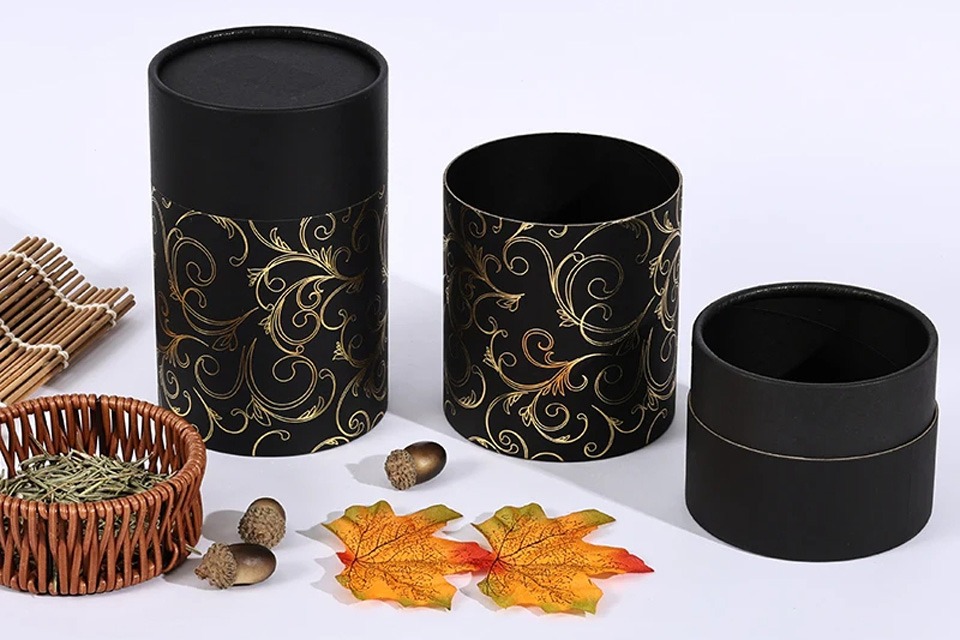
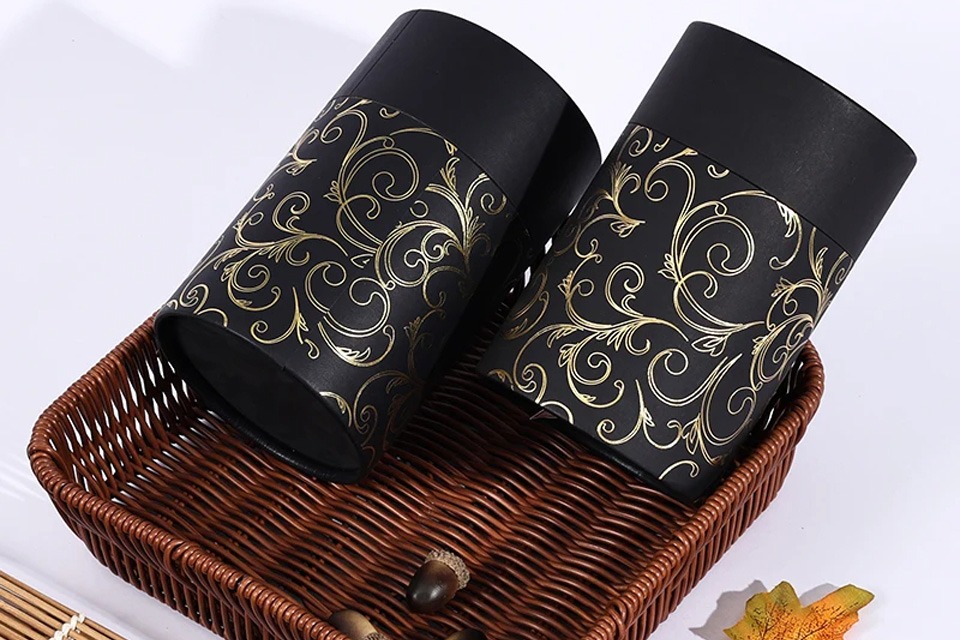
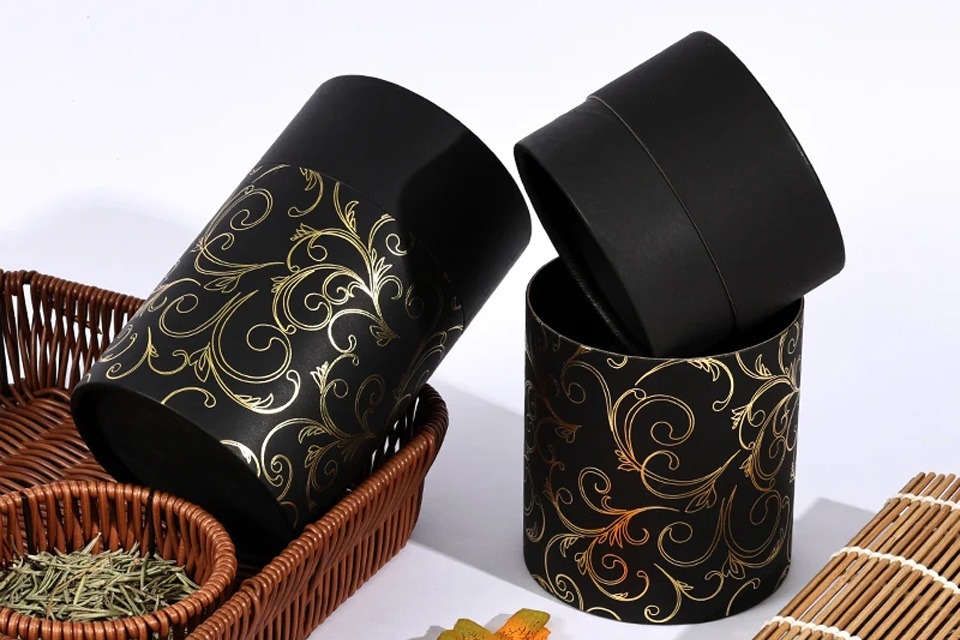
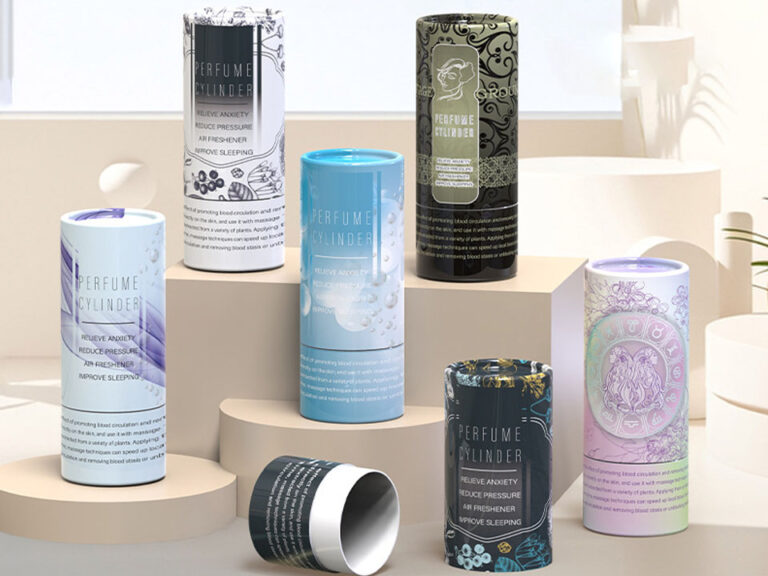
Still Not Seeing The Right Packaging Solution? Talk to Our Boss.
If you’ve reviewed our website or spoken with sales and still don’t see a clear path, send your request here. Your message goes directly to our General Manager for an executive review of feasibility, cost, and lead time. You’ll get a clear next step—what we can do, what we need from you, and the fastest route to a quote.
Built for packaging managers, procurement, and packaging engineers. Specify size, quantity, and finish to receive moq, lead time, and spec guidance for us/eu programs.
Quote-ready customization: diameter, height, wall thickness, inserts, liners, and closures
Custom Paper Can Packaging: 8 Design Strategies for Brands
Custom paper can packaging is a rigid cylindrical paperboard format used for products such as candles, fragrance, tea, cosmetics, incense, gifts, specialty foods, supplements, and consumer goods. It is also commonly described as paper tube packaging or paper canister packaging.
For brands buying custom packaging at scale, the design question is not simply how to make the cylinder look distinctive. A commercially successful paper can must fit the product correctly, open consistently, survive distribution, reproduce brand colors and finishes, support appropriate environmental claims, and remain economical across repeat orders.
The eight strategies below focus on those decisions.
Key Takeaways
Start with the product rather than the artwork. Diameter, height, weight, fragility, barrier needs, and removal method determine the structure.
Premium presentation is driven as much by fit, opening behavior, insert position, and interior reveal as by foil or specialty paper.
Treat the cylindrical surface as a 360-degree branding system, with deliberate seam and artwork positioning.
Standardizing tube diameters, lids, inner necks, or inserts across SKUs can reduce procurement complexity without making every product look identical.
An FSC-certified paper option does not automatically make an entire package environmentally preferable; liners, foam, coatings, closures, size, and local recycling systems still matter.
Approve production-representative physical samples and validate the completed packaged product—not only a rendering or empty tube.
What Is Custom Paper Can Packaging?
Custom paper can packaging is a cylindrical container made primarily from wound paperboard, usually combined with a printed or specialty-paper outer wrap and a separate lid, base, or inner-neck structure.
Depending on the application, the package may also contain:
paperboard inserts;
molded-fiber supports;
foam;
food-contact liners;
barrier layers;
foil decoration;
labels;
tamper-evident components;
QR codes;
metal or plastic closures.
The terms paper can, paper canister, and paper tube packaging overlap in commercial usage. For procurement, the terminology matters less than the construction specification.
A meaningful RFQ should define what the package has to do.
1. Design the Paper Can Around the Actual Product
The highest-value design decision happens before colors or graphics are selected: establish the correct internal geometry.
For a bottle, candle jar, cosmetic container, tea pouch, incense blend, or gift item, gather the actual product dimensions and weight first.
At minimum, determine:
maximum product diameter;
overall height;
closure or cap diameter;
product weight;
fragile areas;
required headspace;
insertion orientation;
removal method;
acceptable movement;
whether a retaining insert is required.
An oversized paper can may look substantial in a rendering but creates unnecessary void space. An overly tight package can create packing-line problems, damaged labels, difficult product removal, or inconsistent closure fit.
For bottle packaging, a rigid paper tube with a protective foam insert illustrates how the outer tube and internal retention need to be designed together. The example combines a telescoping rigid tube with a white foam support intended to cushion and position tall products.
What should procurement specify?
Instead of writing:
Custom blue tube for bottle
specify:
target finished inside diameter;
usable internal height;
lid overlap;
product dimensions;
product weight;
required insert;
acceptable clearance;
exterior material;
print/finish;
packed quantity per export carton.
This makes supplier quotations much easier to compare.
2. Use the Closure and Interior Reveal as Part of the Brand Experience
The lid is not merely a component that keeps the tube closed. It controls the first physical interaction with the package.
Common paper-can structures include:
two-piece lift-off tubes;
telescopic tubes;
shoulder-neck tubes;
plug-cap tubes;
paperboard lids;
metal or plastic closures for specific functional applications.
For premium gifting, tea, fragrance, and beauty applications, telescopic and raised-neck structures are useful because the consumer sees an inner component as the lid is removed.
A kraft tea tube with a raised inner neck uses a rigid spiral-wound paperboard body, natural kraft wrap, raised neck, rolled edges, and removable slip-fit lid. The visual language is restrained, but the structural transition from lid to inner neck creates the presentation.
Lid fit should be controlled, not maximized
A tighter lid does not automatically signal better quality.
Excessive friction can:
make opening difficult;
cause surface abrasion;
increase packing-line variation;
damage rolled edges;
make batch-to-batch differences more noticeable.
A lid that is too loose creates the opposite problem.
For purchasing teams, the goal should be repeatable opening behavior within agreed tolerances.
Ask the supplier how fit is checked during production and compare multiple samples rather than judging one hand-fitted prototype.
3. Build a Material and Finish Hierarchy Instead of Adding Every Premium Effect
Custom paper cans can support a broad range of exterior treatments:
natural kraft;
coated paper;
specialty paper;
textured wrap;
CMYK printing;
Pantone spot colors;
matte or gloss surfaces;
foil stamping;
embossing;
debossing;
spot UV.
The mistake is assuming that more processes always make the package feel more expensive.
They can also mean:
additional setup;
more proofing stages;
more potential registration variation;
more scuff-sensitive surfaces;
higher scrap risk;
additional tooling;
greater recycling complexity.
Select one dominant design signal
For a premium candle, a restrained metallic detail can be more coherent than combining foil, embossing, UV, holographic material, lamination, and multiple metallic colors.
The foil-banded candle tube packaging uses pastel printed wraps, minimalist typography and a narrow metallic band rather than covering the package with metallic decoration.
A very different approach appears in this textured perfume paper tube, where the ivory crocodile-style specialty paper becomes the dominant tactile element and metallic gold is used as contrast.
Match the finish to actual handling
A finish should be reviewed under the conditions the package will experience.
Check:
fingerprints;
rubbing;
abrasion;
foil edge definition;
glue contamination;
paper cracking;
surface dust;
color variation;
scuffing between tubes in export cartons.
The pack that looks best immediately after hand assembly is not necessarily the pack that looks best after manufacturing, freight, warehousing and retail handling.
4. Design the Cylinder as a 360-Degree Brand System
A paper can has no permanent rectangular front panel.
Consumers can rotate it, which creates an opportunity for continuous graphics—but it also introduces artwork-control issues that do not occur in the same way on flat cartons.
Before final artwork, define:
primary facing position;
vertical wrap seam;
barcode position;
QR-code location;
statutory information area;
lid artwork orientation;
direction of typography;
areas containing critical logos;
position of foil and embossing;
transition between repeated graphics.
Build product families, not isolated packages
For a brand selling several fragrances, candle scents, incense formulas, tea blends, or supplement flavors, use a repeatable visual architecture.
For example:
common logo position;
common type hierarchy;
common foil treatment;
SKU-specific body colors;
variable illustrations;
standard closure and tube diameter.
The foil-stamped incense paper tubes demonstrate this type of family system: multiple earthy colorways share a common cylindrical structure, matte graphic treatment and gold-foil branding.
That approach gives consumers differentiation while giving procurement commonality.
Protect critical artwork from manufacturing transitions
Do not place tiny regulatory copy, narrow foil elements, barcodes, or key logo details directly across seams unless the production method has been validated for it.
Ask for a dimensioned dieline or wrap layout rather than designing from a generic rectangle.
5. Engineer Inserts and Barriers for the Product—not for Appearance
The inner structure is often more important than the decorative wrap.
An insert can control:
lateral movement;
vertical movement;
orientation;
presentation height;
removal;
contact between fragile components.
Typical choices include:
Insert Type
Best For
Main Advantage
Main Limitation
Die-cut paperboard
Lightweight bottles, tools and sets
Paper-dominant and printable
Limited cushioning
Folded paper cradle
Bottles and retail products
Efficient structural support
Requires careful engineering
Molded fiber
Shaped products
Formed cavities and fiber appearance
Tooling and surface texture
Foam
Glass, fragile products, precision fit
Strong cushioning and retention
Adds another material
No insert
Products already closely fitted
Fewer components
Product movement may be unacceptable
The correct answer is not automatically foam.
If a paperboard cradle gives sufficient retention, adding foam may provide little additional value while complicating material separation.
Barrier performance is a separate question
A paper can for a candle jar has different requirements from one used for loose tea or powdered food.
If the paper can is the direct or functional barrier package, determine whether the product requires protection from:
moisture;
oxygen;
aroma transfer;
grease;
light;
contamination.
Do not specify a generic “food-grade liner” and assume every barrier problem has been solved. Define what the packed product requires and which component actually provides that performance.
6. Standardize Hidden Components Across SKUs
Customization does not require every SKU to have a different physical structure.
One of the strongest procurement strategies for growing brands is to standardize components customers rarely notice while varying the parts that drive brand recognition.
A multi-SKU program might use:
two standard diameters;
one common lid construction;
common paperboard core specifications;
common raised-neck height;
interchangeable inserts;
SKU-specific printed wraps;
different labels or foil colors.
This reduces the number of unique items procurement needs to forecast.
Why this matters to MOQ
MOQ is usually influenced by setup economics.
Depending on the supplier and specification, these can include:
tube winding setup;
diameter-specific requirements;
printed wrap setup;
foil tooling;
embossing dies;
insert tooling;
specialty material minimums;
number of artwork versions.
A 2026 paper-tube sourcing discussion shows the issue clearly. A coffee startup wanted approximately 2,000 paper tubes after encountering suppliers with much larger minimums. The buyer later reported sourcing 1,000 custom-printed units, but sampling still required additional cost.
That anecdote should not be treated as an industry-standard MOQ. It demonstrates why the question should be:
What quantity minimizes total commercial risk for this SKU?
—not—
Which supplier offers the smallest number?
Consider artwork stability
A brand that is still changing:
product claims;
ingredients;
regulatory copy;
formula;
barcode;
branding;
dimensions;
should be cautious about purchasing excessive quantities simply to reach a lower piece price.
Packaging inventory can become obsolete before it is consumed.
7. Make Sustainability and Smart-Packaging Claims Verifiable
Paper creates an intuitive sustainability association, but procurement teams should avoid converting that perception into unsupported claims.
Define what FSC means in the specification
FSC explains that Chain of Custody certification verifies eligible forest-based materials through successive stages in the supply chain and enables qualifying organizations to produce or sell FSC-certified products with applicable claims.
That means a purchasing brief should distinguish between:
FSC-certified material requested;
recycled content requested;
FSC Recycled or another specific claim;
recyclability;
plastic-free construction;
reusable packaging.
These are not interchangeable statements.
Avoid vague environmental language
The FTC Green Guides caution against broad, unqualified general environmental benefit claims such as “green” or “eco-friendly.” The guidance also explains that recyclability and recycled-content claims may need qualification.
For packaging artwork, a documented statement about a defined component is more useful than a broad claim about the entire package.
For example, where properly substantiated:
“Outer paper contains X% recycled material”
is clearer than:
“100% eco-friendly packaging.”
European brands also need to think about right-sizing
The EU Packaging and Packaging Waste Regulation applies from August 12, 2026. Article 10 requires manufacturers or importers, from January 1, 2030, to ensure packaging weight and volume are reduced to the minimum necessary for functionality and addresses features intended merely to increase apparent product volume, subject to stated exceptions.
This matters for premium paper cans because “luxury” has historically sometimes been expressed through excess volume or unnecessary layers.
The stronger future design strategy is to create perceived value through:
structure;
opening behavior;
printing;
texture;
product positioning;
controlled contrast;
rather than avoidable empty space.
Use QR codes for a defined information task
A QR code can extend limited cylindrical print space.
GS1 notes that QR Codes using GS1 Digital Link can connect packaging to online information such as ingredients, sustainability information and usage instructions while also carrying standardized product data.
Useful applications include:
product instructions;
authenticity checking;
multilingual content;
disposal guidance;
warranty registration;
refills;
batch information;
reordering.
A QR code that only links to the homepage is usually a missed opportunity.
8. Validate the Production Package, Not the Rendering
A rendered package can prove that a design looks attractive.
It cannot prove that mass-produced tubes will:
open consistently;
retain the product;
resist rubbing;
remain round;
hold the correct color;
survive fulfillment;
arrive without crushed edges;
maintain foil registration;
pack efficiently in master cartons.
Use staged approval
A sensible custom-development sequence is:
Confirm product dimensions.
Establish the paper-can structure.
Engineer the insert or liner.
Issue the production dieline.
Review digital artwork.
Produce a structural or white sample if required.
Produce a decorated physical sample.
Load the real product.
Evaluate opening, removal, fit and appearance.
Validate transportation requirements.
Create an approved production reference.
Release mass production.
Transit testing should reflect the route
ISTA describes its 3-Series procedures as general simulation tests intended to reproduce damage-producing transportation conditions such as vibration, drops and atmospheric exposure. Procedure 3A applies to individual packaged products shipped through parcel-delivery systems.
That does not mean every paper can project requires ISTA 3A.
Testing should match:
distribution channel;
packed product;
fragility;
unit weight;
export configuration;
retailer or customer requirements.
A candle jar shipped individually by parcel has a different risk profile from empty paper tubes shipped palletized to a local co-packer.
How Should Brands Compare Paper Can Packaging Designs?
Use the complete commercial specification rather than visual appearance alone.
Decision Area
What to Compare
Product fit
Internal diameter, height, clearance, product movement
Structure
Telescopic, shoulder-neck, lift-off, plug cap or other closure
Insert
Paperboard, molded fiber, foam or none
Core material
Construction, thickness and dimensional consistency
Exterior
Kraft, coated paper, specialty paper or printed wrap
Printing
CMYK, Pantone, digital, offset or other process
Finishes
Foil, embossing, debossing, UV, coating or lamination
Seam position, barcode, QR code, mandatory information
MOQ
MOQ per structure, diameter, artwork and finish
Tooling
Foil dies, embossing dies, insert tooling and other setup
Sampling
Structural, printed and production-representative samples
QC
Dimensions, closure fit, appearance, print and insert retention
Shipping
Master-carton configuration, protection and freight cube
Repeat orders
Approved specification, master sample and artwork version control
What Should You Send a Paper Can Manufacturer for a Quote?
A professional RFQ should include enough information for the supplier to quote the same package you actually intend to buy.
Provide:
product name and application;
product dimensions;
product weight;
photographs or drawings;
desired internal diameter and height if known;
preferred structure;
quantity by SKU;
number of artwork versions;
destination country;
insert requirements;
barrier or liner requirements;
paper preference;
printing requirements;
Pantone references;
foil or embossing requirements;
sustainability requirements;
certification requirements;
barcode/QR requirements;
retail or ecommerce channel;
testing requirements;
target delivery timing.
Also ask the manufacturer to identify which specifications drive MOQ, tooling cost, unit cost, sampling cost and lead time.
That information is far more useful than collecting five quotations that appear cheaper because they are based on five different specifications.
Common Paper Can Packaging Mistakes
Choosing the outside diameter before measuring the product
Start from the contents. Allow appropriate functional clearance, then build outward.
Using a thick foam insert automatically
Choose an insert according to retention and cushioning requirements. More material is not automatically better engineering.
Treating foil as the definition of premium
Premium presentation depends on structural accuracy, material quality, fit and controlled decoration.
Ignoring seams during artwork design
Cylindrical graphics need production-aware seam placement.
Creating a new tube size for every SKU
Standardizing hidden components can reduce tooling, inventory and forecasting complexity.
Ordering excess packaging solely for a lower piece price
The lowest unit price can create the highest obsolete-inventory cost if the product or artwork changes.
Approving only a digital rendering
A render cannot validate physical fit, surface feel, lid friction or transit performance.
Calling the whole package “eco-friendly” because the tube body is paper
Evaluate every meaningful component and make environmental claims that can actually be supported.
Frequently Asked Questions
What is the difference between paper can packaging and paper tube packaging?
In many packaging markets, the terms overlap. Both commonly refer to cylindrical paperboard containers made from wound paper layers. “Paper canister” is another common term. The practical differences usually come from closure type, liners, inserts, end construction and intended application rather than the terminology alone.
What products are suitable for custom paper cans?
Paper cans can be suitable for candles, fragrance bottles, cosmetics, tea, coffee, incense, supplements, specialty foods, apparel accessories, electronics, gifts and other retail products. The construction must be engineered around the specific product’s weight, fragility, barrier requirements and distribution channel.
Can paper cans use premium finishes?
Yes. Common options include specialty papers, CMYK or Pantone printing, matte surfaces, foil stamping, embossing, debossing and spot UV. A good design normally uses a limited finish hierarchy rather than applying every process available.
Are custom paper cans recyclable?
Some paper-can structures can be designed to work well with paper-recycling systems, but recyclability depends on the complete construction and local collection infrastructure. Liners, plastic films, foam, metallic components, adhesives and closures can all influence end-of-life handling.
What determines the MOQ for custom paper can packaging?
MOQ depends on the supplier and specification. Diameter, tube structure, printing process, specialty materials, finishes, insert tooling and number of artwork versions can all affect production economics. Ask whether the quoted MOQ applies per artwork, per diameter, per structure, or across the total program.
Should a brand order a physical sample before mass production?
For a fully customized paper can, physical sampling is strongly advisable when fit, appearance or product protection is important. A production-representative sample allows the buyer to evaluate lid behavior, dimensions, product retention, print, foil, texture, color and overall presentation before committing to bulk manufacturing.
Custom paper can packaging performs best when the brand stops treating the tube as a decorated cylinder and starts treating it as a complete packaging system.
Get the product fit, structure, closure and inner support correct first. Standardize hidden components where practical. Use materials and finishes deliberately. Make environmental claims specific. Then prove through physical sampling and appropriate testing that the design can be repeated in production.
That approach creates packaging that is not only distinctive on screen or on a shelf, but practical to purchase, manufacture, ship and reorder at scale.