Still Not Seeing The Right Packaging Solution? Talk to Our Boss.
If you’ve reviewed our website or spoken with sales and still don’t see a clear path, send your request here. Your message goes directly to our General Manager for an executive review of feasibility, cost, and lead time. You’ll get a clear next step—what we can do, what we need from you, and the fastest route to a quote.
Built for packaging managers, procurement, and packaging engineers. Specify size, quantity, and finish to receive moq, lead time, and spec guidance for us/eu programs.
Quote-ready customization: diameter, height, wall thickness, inserts, liners, and closures
Recyclable Candle Paper Tube Packaging: A Guide for Candle Brands
Recyclable candle paper tube packaging can give candle brands a rigid, gift-ready format with a large printable surface, but the word paper does not automatically make a finished package recyclable. The core, outer wrap, lid, base, insert, coatings, laminates, windows, adhesives, and decorative components all influence what happens after disposal.
For procurement and packaging teams, the practical question is therefore not simply, “Can we use a paper tube?” It is: Can we build a tube that protects the candle, supports the brand, meets target-market recycling requirements, and can be produced repeatedly at an acceptable landed cost?
That requires treating sustainability, structural design, decoration, logistics, and sourcing as one packaging system.
What Makes Candle Paper Tube Packaging Recyclable?
A typical candle paper tube uses a wound paperboard body with a separate lid and base. The tube may then receive a printed paper wrap, specialty paper, foil decoration, varnish, lamination, an insert, or other components.
Can the complete package enter an established paper recycling stream?
Can the brand substantiate the recycling claim it plans to print on the package?
These questions are related, but they are not interchangeable.
The U.S. Environmental Protection Agency reports that paper and paperboard packaging had a high aggregate recycling rate in its latest national municipal-solid-waste dataset, but that figure is heavily influenced by corrugated boxes. It does not establish that every rigid paper tube, laminated tube, or mixed-material package will be accepted by every recycling program.
For a candle brand, recyclability should therefore be evaluated at the finished-package level, not inferred from the presence of paperboard.
Paper Is the Starting Material, Not the Finished Sustainability Specification
One assumption deserves qualification: choosing kraft paper or recycled-looking brown board does not by itself create more recyclable packaging.
A kraft-colored tube can still contain polymer films, metallic components, foam, plastic windows, or difficult-to-separate elements. Conversely, a printed white or black paper tube may have a relatively straightforward fiber-based structure.
The specification matters more than the visual language.
For procurement purposes, ask the supplier to identify:
paperboard/core construction;
outer wrap material;
recycled-fiber content where claimed;
lid and base construction;
insert material;
coatings or laminates;
metallic or plastic components;
window material, if any;
whether components are intended to be separated before disposal.
That information gives your sustainability or compliance team something concrete to evaluate.
Recycled content and recyclability are also different claims
A package can contain recycled fiber but still have features that complicate recycling. Likewise, a recyclable fiber package does not necessarily contain a high percentage of recycled content.
Keep these attributes separate in specifications, supplier documentation, artwork claims, and sustainability reporting.
Which Candle Tube Components Deserve the Most Attention?
A recyclable design usually becomes easier to evaluate when unnecessary material combinations are removed.
Packaging decision
Simpler recycling-oriented direction
Potential complication
What to ask in the RFQ
Tube body
Fiber-dominant paperboard construction
Mixed-material structural layers
What materials make up the body by weight?
Lid and base
Paperboard/paper components where performance allows
Permanent plastic or metal components
Are the ends paper-based or separable?
Insert
Paperboard or molded-fiber restraint where suitable
Foam or mixed-material inserts
Can the jar be secured with a fiber insert?
Surface protection
Minimal compatible coating
Heavy film lamination
What coating or laminate is being applied?
Decoration
Printing, embossing, debossing, limited foil
Large-area metallic/plastic films
How much non-paper decoration is added?
Window
No window where unnecessary
Bonded clear plastic window
Is a window commercially necessary?
Structure
Right-sized tube around the vessel
Oversized tube plus excessive cushioning
What clearance is required around the jar?
This does not mean that every non-paper component must automatically be banned. The correct design depends on protection, appearance, manufacturing, local recycling infrastructure, and the markets where the candle will be sold.
The objective is to avoid adding material complexity without a measurable function.
How Should a Paper Tube Protect a Glass Candle Jar?
For glass candle vessels, fit is often more important than simply increasing tube wall thickness.
A thick tube with excessive internal clearance can still allow the jar to move, strike the sidewall, or experience concentrated impact. A correctly dimensioned package with suitable top, bottom, or radial restraint can perform better without simply adding more board.
Start with the physical product rather than a generic packaging size.
The supplier should receive:
maximum vessel diameter;
vessel height;
candle lid diameter and profile;
total packed candle weight;
any dimensional variation between production lots;
desired top and bottom clearance;
whether an insert is required;
whether the tube is for retail presentation only or also part of an e-commerce packout.
A rigid black candle tube with custom logo printing, for example, can be specified around the dimensions and presentation requirements of a premium jar rather than forcing the candle into an unrelated stock cylinder.
Do not assume thicker board solves every protection problem
More material can increase stiffness, weight, and cost, but protection failures frequently start elsewhere:
the jar is loose inside the tube;
the base restraint is inadequate;
the candle lid contacts the tube lid;
the insert compresses inconsistently;
the presentation package is used as though it were a shipping carton.
Those problems require structural changes, not simply a heavier wall.
The Presentation Tube Is Not Automatically the Shipping Package
This distinction matters particularly for direct-to-consumer candle brands.
Community discussions among candle makers repeatedly focus on controlling movement around glass vessels, cushioning products inside an outer carton, and in some cases using a box-within-a-box approach. One candle maker reported breakage despite extensive protective packing, while other participants emphasized preventing movement and using secondary outer packaging. This is qualitative experience rather than laboratory test data, but the failure mode is highly relevant: glass candles need a validated distribution packout, not just attractive retail packaging.
A practical packaging system can include:
Candle vessel → restraint/insert → paper presentation tube → shipping carton → transport cushioning as required.
The tube can contribute compression resistance, surface protection, branding, and organization. The shipper must handle the distribution environment.
For larger programs, brands should define their required transit-testing protocol with the packaging engineer or logistics team instead of assuming that an attractive tube is shipment-ready.
Which Materials and Finishes Work Best for Recyclable Candle Tubes?
There is no single correct material specification for every candle brand.
Kraft paper
Kraft gives a natural appearance and works well when the visual identity calls for visible fiber texture or restrained printing. It can also reduce the need to create an artificial “sustainable” aesthetic through extra decoration.
However, kraft appearance should not be used as evidence of recyclability. Check the complete construction.
White or coated printing paper
A smooth outer wrap can provide more predictable reproduction of photography, gradients, fine typography, and Pantone colors.
This is useful for fragrance collections where different scents are distinguished through color systems or illustration.
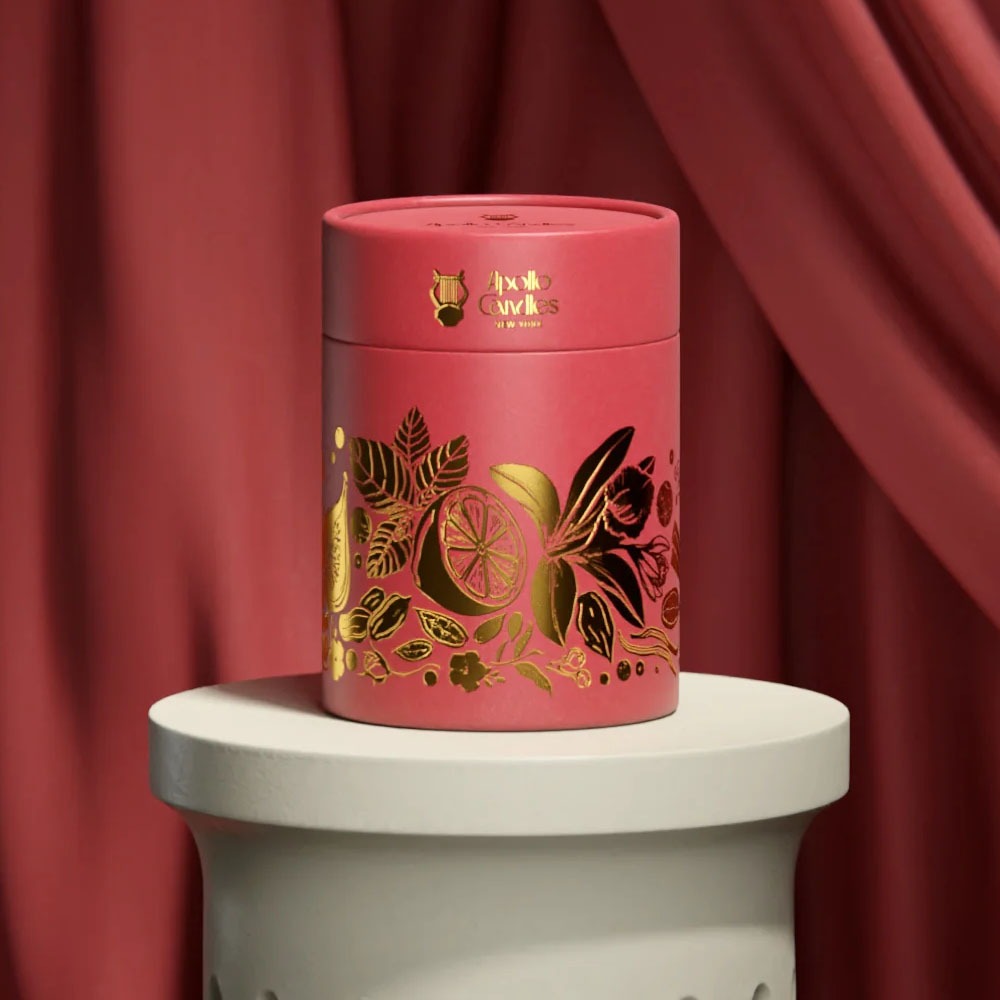
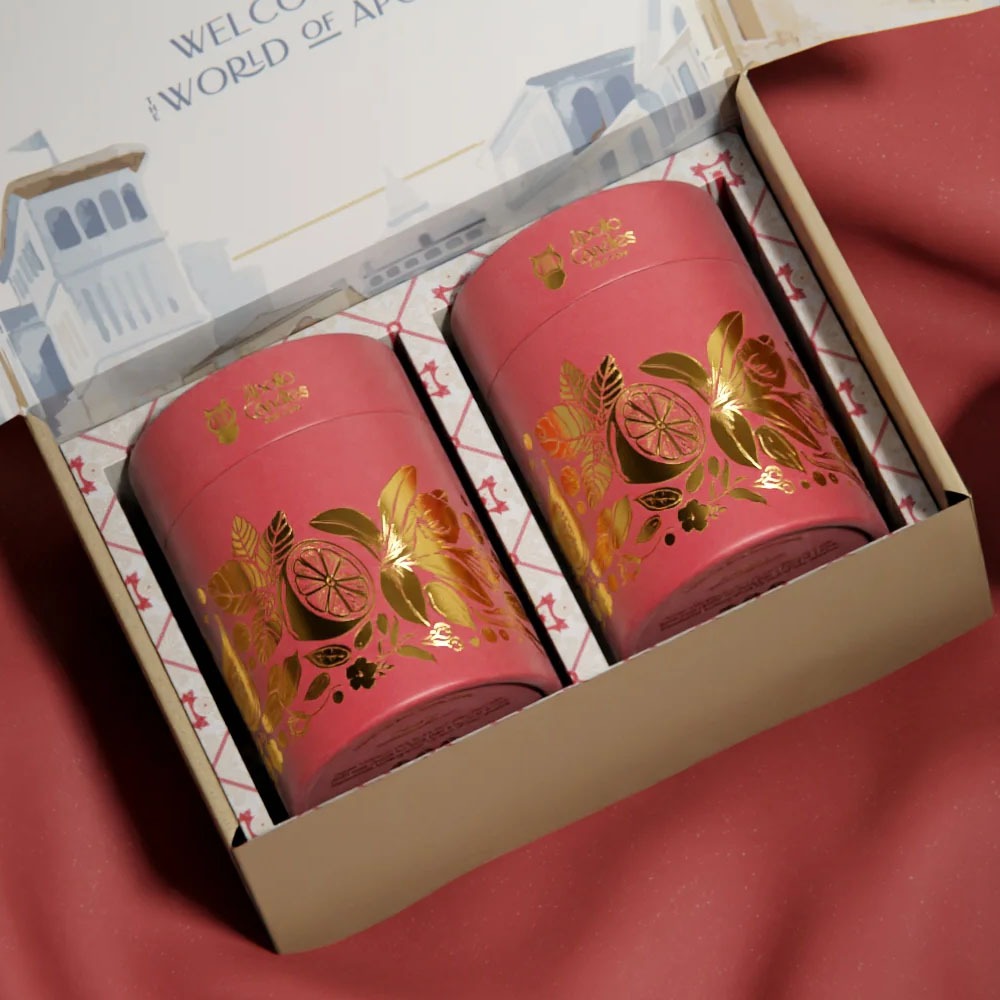
For example, custom printed pink paper tube packaging demonstrates how a decorative printed surface can create a highly differentiated retail identity while retaining a rigid cylindrical structure.
Black and specialty papers
Dark specialty papers are commonly used for luxury candles because they can create strong contrast with foil, embossing, debossing, or restrained logo printing.
The sourcing question is not whether luxury decoration is forbidden. It is whether each additional finish contributes enough commercial value to justify its cost, production complexity, and effect on the intended recovery route.
How Much Finishing Is Actually Necessary?
Premium candle packaging is often overspecified.
A buyer may request matte lamination, soft-touch film, foil stamping, embossing, spot UV, inside printing, a specialty insert, and multiple custom components because each feature sounds premium individually.
The combined result can be expensive and difficult to reproduce consistently.
A more disciplined approach is to identify the one or two visual cues that carry most of the brand value.
For example:
textured paper + blind embossing;
black paper + one foil color;
full-color printing + uncoated tactile surface;
simple exterior + contrasting printed interior.
This can reduce setup complexity and make color, registration, and finishing QC easier.
When recyclability is a priority, ask the converter specifically how the chosen coating, lamination, foil coverage, adhesive, and specialty paper affect the proposed recycling claim.
Paper Tube vs. Folding Carton: Which Is Better for a Candle?
Paper tubes are not automatically the correct answer for every candle range.
A custom printed candle paper box based on folding paperboard can be shipped flat before packing, which may reduce packaging storage volume and inbound freight compared with a pre-formed rigid tube.
Paper tubes, meanwhile, offer other advantages:
Requirement
Paper tube
Folding paperboard carton
Premium rigid presentation
Strong
Moderate to strong depending on board/structure
Natural fit around round jars
Very good
Requires rectangular internal geometry or insert
360-degree branding area
Excellent
Four primary panels
Ships flat before filling
Usually no
Usually yes
Warehouse volume before packing
Higher
Lower
Structural customization
Diameter, height, lid, shoulder, insert
Dieline, flaps, insert, board grade
Gift-box perception
High
Depends strongly on board and finishing
Cost efficiency at scale
Project-dependent
Project-dependent
Brands should compare total packaging cost, not just unit price.
A rigid tube that costs more per piece may reduce the need for a separate gift box. Conversely, a folding carton may produce lower inbound freight and warehouse costs.
What Drives the Cost of Custom Candle Tube Packaging?
Quotation differences usually come from specifications rather than a single supplier markup.
Major cost drivers include:
Diameter and height
Larger tubes consume more board and wrap material. Non-standard diameters may also require different production setup or tooling depending on the manufacturer.
Wall construction
Adding board thickness changes material consumption, production parameters, weight, and freight.
Specify the performance requirement rather than simply requesting the thickest tube available.
Quantity per design
A 10,000-piece order divided among ten fragrance artworks does not necessarily behave like one 10,000-piece design.
Printing setup, artwork changes, foil plates, embossing tools, and production changeovers can affect the economics.
Printing and finishing
Standard printing is generally easier to scale than multiple specialty processes. Foil dies, embossing tools, special papers, interior printing, and extensive manual assembly can increase unit cost and setup charges.
Inserts
A paperboard collar, molded-fiber insert, foam insert, or multi-component restraint system changes both packaging cost and assembly labor.
Freight
Rigid tubes occupy volume even when empty. When importing packaging, carton dimensions, units per export carton, palletization, shipping mode, and destination can materially affect landed cost.
A low ex-factory unit price is therefore not necessarily the lowest-cost sourcing option.
Can a Candle Brand Simply Print “100% Recyclable” on the Tube?
Not without substantiation appropriate to the market.
In the United States, the Federal Trade Commission’s current Green Guides state that an unqualified recyclable claim should be qualified when appropriate recycling facilities are not available to at least 60% of consumers or communities where the product is sold. The FTC also emphasizes that environmental claims should be truthful and supported rather than based on broad “green” implications.
For packaging teams, that means a supplier statement such as “paper is recyclable” should not automatically become a consumer-facing “100% recyclable” claim.
Verify:
the exact finished packaging construction;
the market where the claim will appear;
the applicable collection and recycling system;
whether components need to be removed;
what qualification or disposal instruction is appropriate.
Packaging engineers and marketing teams should approve environmental claims together.
What Do EU Candle Brands Need to Know About the PPWR?
For companies placing packaged candles on the European Union market, recyclability is also becoming a regulatory design requirement rather than simply a brand-positioning issue.
The EU Packaging and Packaging Waste Regulation (PPWR) began applying on 12 August 2026. The European Commission states that the regulation introduces a harmonized packaging framework and that requirements for all packaging to be recyclable will apply from 2030, alongside other phased measures.
For candle brands planning packaging that may remain in market for several years, this changes the sourcing conversation.
A 2026 development brief should not focus only on what can legally be sold today. Procurement teams should also ask whether the structure is moving toward upcoming design-for-recycling requirements.
That makes simpler material architectures, documented composition, supplier traceability, and controlled specification changes increasingly valuable.
How Should Buyers Evaluate a Candle Tube Supplier?
The strongest supplier is not necessarily the one offering the lowest MOQ or the thickest tube.
Evaluate whether the manufacturer can convert your commercial brief into a controlled packaging specification.
Structural capability
Ask whether the supplier can recommend inner diameter, tube height, wall construction, lid overlap, and inserts based on an actual candle sample or dimensional drawing.
Material transparency
Request the material specification rather than accepting terms such as “eco paper” or “environmentally friendly cardboard.”
Prototype quality
A physical sample should allow you to evaluate:
jar insertion and removal;
lid friction;
tube roundness;
visible seams;
surface scratching;
insert retention;
color and foil positioning;
packed-product movement.
Production QC
Clarify which tolerances will be controlled in mass production and how appearance defects are classified.
For premium tubes, color deviation, lid fit, foil registration, glue marks, edge damage, and surface scuffing can become more commercially important than small differences in nominal board thickness.
Change control
If a supplier changes paper, adhesive, finish, insert material, or structural construction after approval, the sustainability and performance assumptions may also change.
Critical material substitutions should therefore require buyer approval.
What Should Buyers Specify Before Requesting a Quote?
A quotation becomes much more useful when every supplier prices the same specification.
Send the following information:
Product data
candle vessel diameter and height;
candle lid dimensions;
packed weight;
vessel material;
physical sample or technical drawing if possible.
Tube requirements
target inner diameter and overall height;
preferred structure;
lid/base style;
material preference;
insert requirements;
recyclability objective.
Artwork and decoration
number of SKUs;
printing colors;
Pantone requirements where applicable;
foil, embossing, debossing, varnish, or coating;
interior printing;
required environmental claims.
Commercial information
quantity per SKU;
annual estimated demand;
sample requirements;
target market;
destination;
required delivery date;
shipping method;
compliance or documentation requirements.
Then ask the supplier to identify any specification that could materially increase cost, lead time, recycling complexity, or production risk.
That conversation is more valuable than requesting a generic price for “an eco-friendly candle tube.”
Frequently Asked Questions
Are candle paper tubes recyclable?
They can be, but recyclability depends on the complete construction and local recycling system. The paperboard body, coatings, lids, bases, inserts, plastic windows, films, and other components should be evaluated together.
Is kraft candle packaging more recyclable than printed paper packaging?
Not automatically. Kraft appearance describes the material or visual finish, not the complete recovery pathway. A printed paper tube with a simpler material structure may be easier to evaluate than a kraft tube containing permanent mixed-material components.
Can paper tubes protect glass candle jars during shipping?
Paper tubes can provide secondary protection, but they should not automatically replace a properly designed shipping carton. Jar fit, inserts, cushioning, outer packaging, packed weight, and distribution conditions should be validated together.
What dimensions does a candle tube supplier need?
Provide the maximum candle-vessel diameter, vessel height, lid dimensions, packed weight, and required clearances. Sending the physical candle or an accurate technical drawing reduces the risk of incorrect fit.
Which insert is best for recyclable candle packaging?
Where performance allows, paperboard or molded-fiber restraint can simplify a fiber-oriented packaging concept. The correct insert still depends on vessel weight, fragility, clearance, presentation requirements, and transit testing.
Do foil stamping and premium finishes make a paper tube non-recyclable?
Not necessarily, but finishes should be assessed as part of the complete packaging structure. Ask the converter how foil coverage, coatings, laminates, adhesives, and specialty materials affect the intended recycling pathway.
What should candle brands include in a packaging RFQ?
Include vessel dimensions, packed weight, tube size, material construction, insert, printing, finishes, order quantity by SKU, target market, environmental claims, destination, delivery schedule, and any testing or compliance requirements.