Still Not Seeing The Right Packaging Solution? Talk to Our Boss.
If you’ve reviewed our website or spoken with sales and still don’t see a clear path, send your request here. Your message goes directly to our General Manager for an executive review of feasibility, cost, and lead time. You’ll get a clear next step—what we can do, what we need from you, and the fastest route to a quote.
Built for packaging managers, procurement, and packaging engineers. Specify size, quantity, and finish to receive moq, lead time, and spec guidance for us/eu programs.
Quote-ready customization: diameter, height, wall thickness, inserts, liners, and closures
Sustainable Perfume Paper Tube Packaging: A Guide for Fragrance Brands
Perfume packaging has an unusual job. It must protect a relatively heavy, fragile glass bottle while also communicating the value of a product whose sensory experience cannot be evaluated from the box alone. At the same time, fragrance brands face increasing pressure to reduce packaging waste and substantiate environmental claims.
That makes perfume paper tube packaging an attractive option—but a cylindrical paperboard box is not automatically sustainable because its main material is paper. The tube body, insert, lid, coatings, adhesives, decorative finishes, overall size, and disposal route all affect the result.
For professional buyers, the useful question is therefore not simply “Should we switch to paper tubes?” It is “How should we engineer a paper tube so that protection, premium presentation, manufacturability, cost, and end-of-life performance work together?”
What Makes Perfume Paper Tube Packaging Genuinely Sustainable?
Sustainable perfume paper tube packaging should use the minimum material necessary to protect and present the fragrance, favor fiber-based components that can enter established recycling systems, avoid unnecessary mixed-material complexity, and provide substantiated environmental claims.
The material name alone does not answer the sustainability question.
A thick rigid tube wrapped in laminated paper, fitted with EVA foam, a plastic shoulder, a metal lid, magnets, and multiple decorative components may contain substantial paper while still being difficult for consumers to separate and recycle. A simpler tube with a paperboard insert, paper-based lid and restrained finishing can be much easier to understand at end of life.
This distinction is becoming commercially significant in Europe. The EU’s Packaging and Packaging Waste Regulation, Regulation (EU) 2025/40, has applied since 12 August 2026. Among its broader requirements, the regulation introduces packaging recyclability and waste-prevention measures and states that, by 2030, packaging should be reduced to the minimum weight and volume necessary to maintain functionality. EU Packaging and Packaging Waste Regulation (EUR-Lex)
For a fragrance buyer, the implication is practical: premium appearance alone is a weak reason for unnecessary layers, oversized presentation cavities, false bottoms, or redundant secondary components. Product protection remains a legitimate performance requirement; decorative excess increasingly deserves harder scrutiny.
How Is a Perfume Paper Tube Constructed?
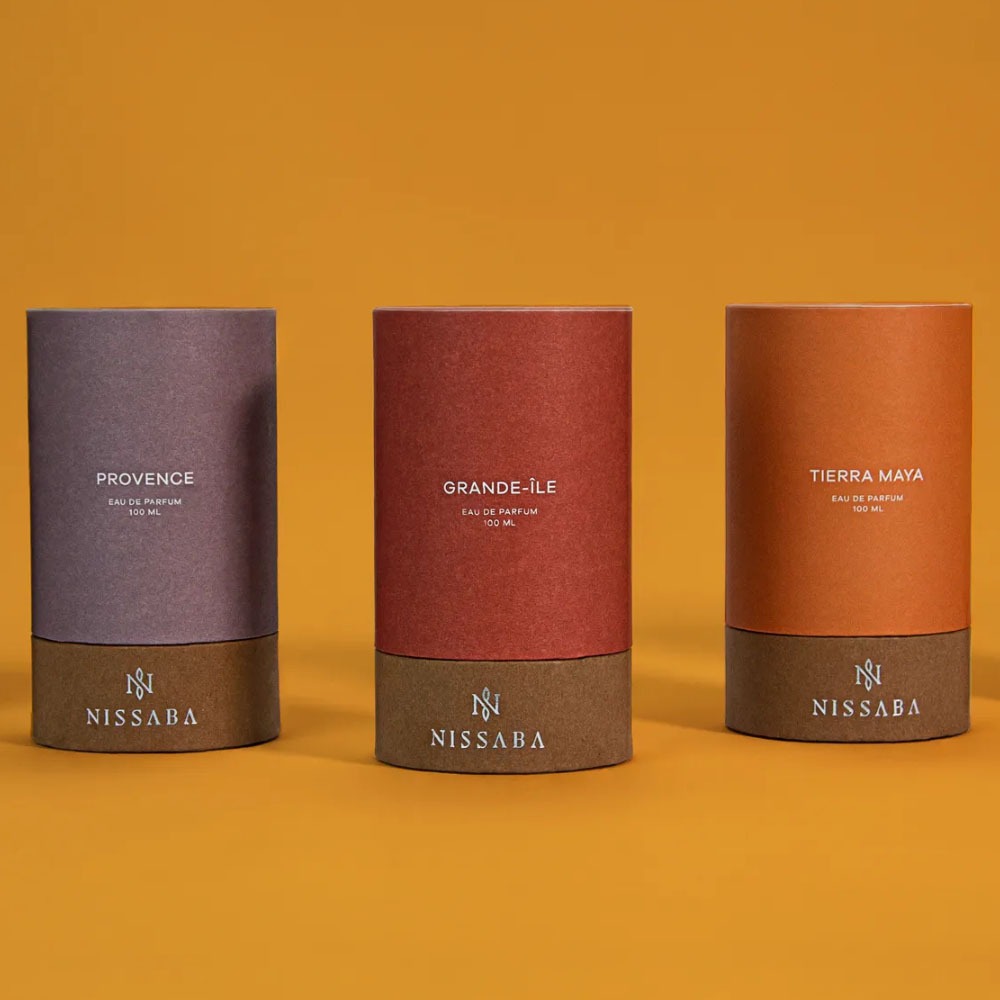
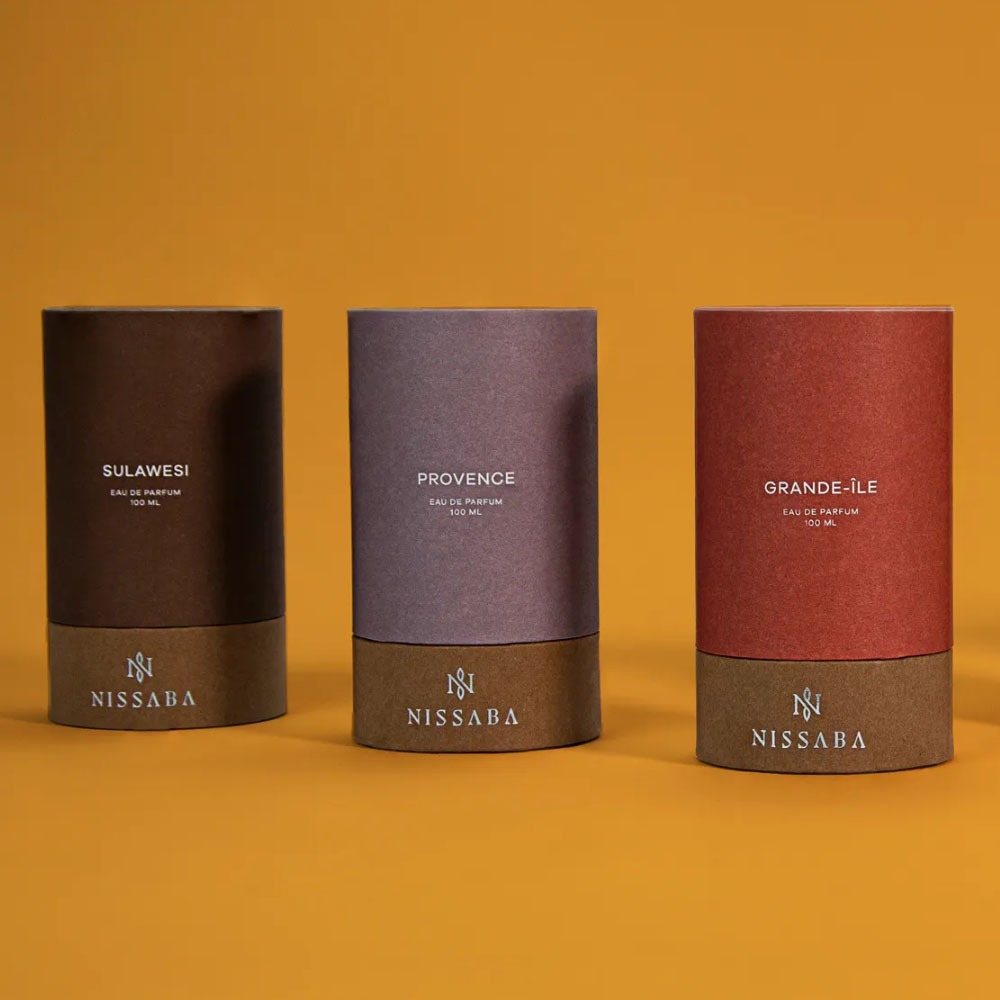
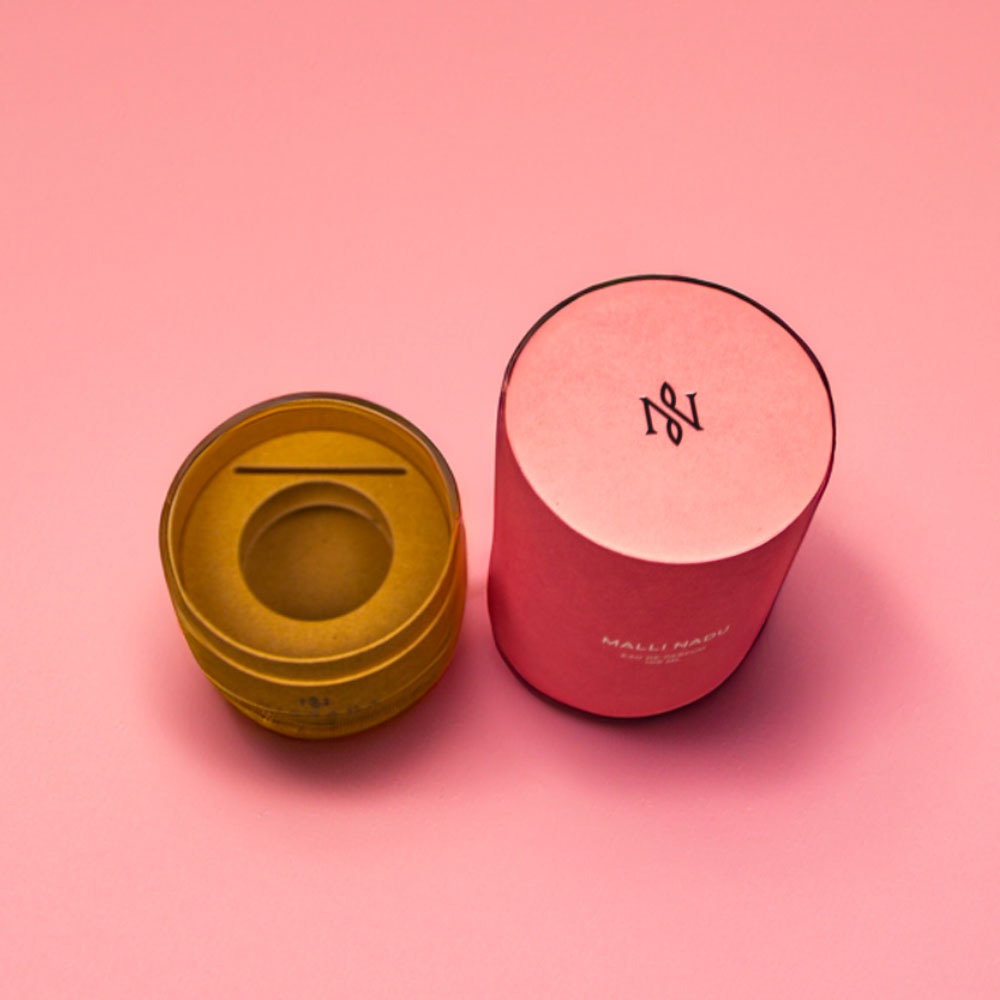
A typical perfume paper tube is a rigid cylindrical secondary package built around a wound paperboard body. A printed or specialty-paper outer wrap creates the visible surface, while the lid, shoulder or neck, base, and insert complete the structure.
The sustainability profile changes considerably depending on those secondary components.
Packaging element
Lower-complexity approach
More elaborate approach
What the buyer should evaluate
Tube body
Multi-ply paperboard sized to required strength
Extra-heavy board or oversized double structures
Is the additional material required for bottle protection?
Outer wrap
Kraft, uncoated or printed paper
Laminated specialty or metallized paper
Print quality, scuff resistance and recycling compatibility
Insert
Die-cut paperboard or molded fiber where feasible
EVA/EPE foam or mixed-material fitment
Bottle retention, shock protection, separability and disposal
Lid/shoulder
Predominantly paper-based structure
Plastic, metal-look or mixed-material components
Whether components can be separated and correctly sorted
Decoration
Printing, embossing or debossing
Foil, film lamination, multiple coatings and accessories
Whether the added process delivers enough commercial value to justify complexity
Shipping pack
Right-sized corrugated mailer
Oversized gift box plus distribution carton
Transit performance versus additional material and freight volume
The correct structure depends on the bottle, distribution channel and price positioning. A niche eau de parfum sold through boutiques has a different packaging brief from a room spray shipped individually through e-commerce.
The geometry should follow the product rather than forcing every fragrance SKU into one oversized presentation format.
Protect the Glass Bottle Before Optimizing the Decoration
For perfume packaging, poor bottle retention can erase the value of an otherwise sophisticated package.
The insert should prevent uncontrolled lateral and vertical movement while avoiding excessive compression against labels, painted glass, decorative caps or other vulnerable bottle surfaces. Buyers should therefore provide the physical bottle—or a dimensionally accurate prototype—to the packaging supplier rather than relying only on nominal capacity such as “50 ml” or “100 ml.”
Two 100 ml perfume bottles can have completely different footprints.
Check the entire bottle assembly
A packaging drawing should account for:
maximum bottle width and depth;
overall height including atomizer and cap;
protruding shoulders or decorative features;
base geometry;
weight and center of gravity;
cap retention;
label or coating areas vulnerable to abrasion;
required finger clearance for removal.
Cap movement deserves particular attention. In one fragrance-user discussion, a buyer described heavy perfume caps coming loose during shipment and damaging the box, activating the nozzle, or contributing to bottle/nozzle damage. The discussion is anecdotal rather than statistical evidence, but it illustrates a useful packaging-engineering failure mode: the bottle may fit the box while the complete bottle-and-cap system remains insufficiently restrained. (Reddit)
A prototype should therefore be evaluated as a complete packed unit, not merely inspected while standing on a presentation table.
Avoid solving every fit problem with more foam
Foam is convenient because it can be precisely cut around irregular bottles and provides cushioning. But it also creates another material stream.
For suitable bottle geometries, paperboard fitments, folded shoulders, molded-fiber components or engineered neck supports may reduce mixed-material complexity. They must still pass the required protection tests. Replacing foam with paper and then increasing breakage would simply move the environmental and commercial impact elsewhere.
This is one reason sustainable packaging should be evaluated as a system rather than as a list of preferred materials.
Can Luxury Perfume Packaging Still Use Foil, Embossing and Premium Finishes?
Yes. Sustainable design does not require every fragrance tube to become an undecorated brown kraft cylinder.
The better approach is to allocate decorative complexity where it delivers visible brand value.
Embossing and debossing are useful examples because they can create tactile differentiation without covering the entire pack in a decorative film. Selective foil can emphasize a logo or fragrance name. Printing can do most of the visual work, leaving more complex processes for small focal areas.
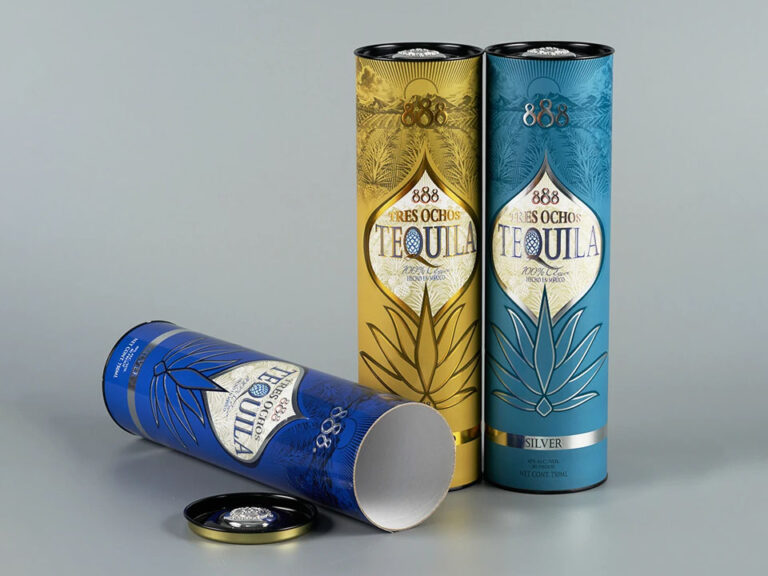
A gold-printed luxury perfume paper tube shows how metallic branding can be concentrated on specific graphic elements rather than treating the entire cylinder as a metallic surface. Brands needing broader color, foil, embossing and coating possibilities can also examine custom printed perfume cylinder tubes when developing the finishing brief.
The decision should still be made component by component.
4evergreen’s 2026 Circularity by Design Guideline emphasizes that paper-based packaging must be designed for actual collection, sorting and recycling pathways. The current guidance also addresses “sorting disruptors”—design choices or integrated components capable of directing fiber-based packaging into the wrong waste stream or reducing recovery efficiency. 4evergreen Circularity by Design Guideline (4evergreen Forum)
That leads to a useful specification principle:
Do not ask only whether a finish is technically available. Ask what the finish does to the complete packaging structure and its intended recycling route.
“Paper-Based” and “Recyclable” Are Not the Same Claim
This is one of the most important distinctions for fragrance brands.
A paper tube may contain a highly recoverable fiber body while also containing a permanent plastic insert, laminated surface, plastic end cap or metal component. Whether the consumer can place the complete package into a paper recycling stream depends on its construction and the infrastructure of the target market.
The U.S. Federal Trade Commission’s Green Guides also caution against broad environmental claims. For recyclable claims specifically, the FTC says claims should be qualified when appropriate recycling facilities are not available to at least 60% of consumers or communities where the product is sold. FTC Environmental Claims: Summary of the Green Guides (Federal Trade Commission)
For packaging teams, that means wording matters.
Claims such as:
“paper-based tube”;
“made with X% recycled fiber”;
“FSC-certified paper available”;
“remove foam insert before recycling”;
“check local recycling guidance”;
can convey very different things from an unconditional statement that the entire pack is “100% recyclable.”
Specific, supportable language is normally more defensible than broad “eco-friendly” positioning.
When Does a Paper Tube Reduce Packaging Rather Than Add More Packaging?
A cylinder is not a sustainability improvement if it simply becomes one more decorative layer.
Consider a hypothetical fragrance order containing:
a glass perfume bottle;
a large rigid paper tube;
a foam insert;
a decorative sleeve;
tissue;
a branded presentation carton;
an oversized e-commerce mailer.
The main package might be paper-rich, yet the complete system still uses more material and shipping volume than necessary.
This is where the concept of right-sizing becomes commercially relevant.
For retail distribution, the tube may function as the primary secondary package. For direct-to-consumer shipping, the tube still needs an appropriate transit package—but the two should be engineered together.
A slightly more expensive tube that allows a smaller distribution carton may produce a better total landed cost than the lowest-priced tube considered in isolation.
What Drives the Cost of Custom Perfume Paper Tubes?
Unit price is influenced by more than paper weight.
The largest cost changes usually come from structural complexity, order quantity, decorative operations, specialized inserts, tooling, and production requirements.
Cost driver
Why it affects the quotation
Buyer action
Diameter and height
Determines material use and production setup
Provide exact bottle and required internal dimensions
Wall construction
More material and processing can increase cost and freight
Specify performance requirement rather than “maximum thickness”
Order quantity
Setup and tooling are distributed across more units
Quote realistic annual and batch volumes
Printed wrap
Color control and print process affect setup
Supply final artwork and Pantone references where required
Foil/emboss/deboss
Requires tooling and additional production operations
Restrict premium effects to brand-critical areas
Custom insert
Adds design, tooling, material and assembly
Send the actual bottle for fit validation
Special lid/components
Can introduce additional suppliers and assembly stages
Simplify where visual or functional value is limited
Packaging assembly
Complex packs require more labor
Ask whether tubes ship assembled and how they are packed
QC requirements
Additional testing and inspection add process time
Define measurable acceptance criteria in the RFQ
The lowest unit price should not automatically determine the supplier.
An insert that is slightly cheaper but allows bottle movement can increase breakage risk. An oversized tube may increase master-carton dimensions. A delicate surface finish may require extra protective wrapping. These downstream effects belong in the sourcing decision.
How Should Fragrance Brands Balance Sustainability and Premium Positioning?
A useful way to approach the project is to decide which design objective takes priority before artwork begins.
Sustainability-led fragrance line
Start with:
predominantly fiber-based body, lid and fitment;
minimum viable tube dimensions;
reduced number of components;
printing rather than large decorative laminates;
embossing/debossing for tactile differentiation;
clear disposal instructions where appropriate.
This format suits natural fragrance, wellness, independent perfumery and brands whose sustainability positioning is central to the product proposition.
Premium fragrance with controlled decorative complexity
Use the rigid paper tube as the main presentation architecture, then add only the brand-defining finish—for example selective foil, an embossed logo or specialty paper.
This usually creates a stronger hierarchy than applying foil, UV, lamination, texture, ribbon and metallic hardware simultaneously.
E-commerce fragrance
Protection may deserve higher priority than minimal material weight.
The sustainable option is not necessarily the lightest possible tube. It is the packaging system that protects the product with the least unnecessary material and avoids replacement shipments caused by damage.
Common Specification Mistakes to Avoid
Specifying the tube before the bottle is frozen
Bottle tooling, cap changes or atomizer changes can invalidate an insert that was approved too early.
Freeze the critical bottle dimensions before final packaging tooling whenever possible.
Ordering by fragrance volume
“50 ml perfume tube” is not a useful structural specification. Bottle geometry, not liquid capacity, determines the required internal dimensions.
Requesting “premium” without defining the finish
One supplier may interpret premium as hot foil and embossing; another may quote specialty paper, lamination and multiple coatings. The quotations will not be comparable.
Define the processes explicitly.
Assuming thicker board is always safer
More material can increase rigidity, but bottle retention and structural geometry often matter just as much. Use prototypes and distribution testing to determine the required performance rather than specifying excessive wall construction as a substitute for engineering.
Approving appearance without evaluating packed performance
A golden sample on an empty tube proves very little about bottle movement, removal ergonomics, shipping resistance or insert stability.
Approve a completely packed sample.
What Should Be Checked During Sampling and Quality Control?
Perfume tube QC should combine appearance requirements with functional packaging checks.
Structural checks
Inspect:
internal and external dimensions;
tube roundness and visible deformation;
lid fit and opening behavior;
top/bottom alignment;
insert position;
bottle movement;
bottle removal ergonomics;
adhesive seams;
visible gaps between structural components.
Printing and finishing checks
Agree on measurable acceptance criteria for:
brand color;
print registration;
foil position;
emboss/deboss registration;
scratches and scuffs;
glue contamination;
surface bubbles or wrinkles;
edge quality;
consistency between tube and lid.
Color approval is especially important when the same fragrance family uses bottles, cartons, paper tubes and retail displays from different production processes.
Distribution checks
For parcel-delivered perfume, evaluate the fully packed configuration under the distribution conditions relevant to the actual sales channel.
The packaging team should inspect not only whether the glass survives, but also whether:
the cap stays attached;
the atomizer remains protected;
the bottle surface avoids abrasion;
the insert stays seated;
the lid remains closed;
the decorative tube does not develop unacceptable dents or scuffs.
A cosmetic defect may not destroy the product, but it can still make a luxury fragrance unsellable.
How Should Buyers Evaluate a Perfume Paper Tube Supplier?
Supplier assessment should go beyond a gallery of attractive packaging photographs.
Ask whether the supplier can translate bottle geometry into a controlled production specification.
Useful questions include:
Can the supplier develop the insert from an actual bottle sample?
Which parts of the structure are made in-house?
What dimensional tolerances can the supplier maintain?
Which print and finishing operations are internal versus subcontracted?
How are Pantone colors approved and controlled between production batches?
Can the supplier provide material declarations for the body, wrap, insert and lid?
Can mixed-material components be changed to fiber-based alternatives?
What evidence supports recycled-content or recyclability claims?
What QC checks are performed during mass production?
How are finished tubes protected during international freight?
What happens if the production sample differs from the approved golden sample?
A capable supplier should also explain when a requested design creates unnecessary cost or manufacturing risk. “Yes, we can make it” is less useful than DFM feedback that prevents problems before tooling.
What Should Buyers Specify Before Requesting a Quote?
An accurate RFQ for perfume paper tube packaging should contain enough information for suppliers to quote the same project rather than five different interpretations of it.
Provide:
Bottle dimensions and weight — ideally with a physical sample or 3D drawing.
Order quantity — initial batch plus expected annual volume when available.
Required tube dimensions — or permission for the supplier to engineer them around the bottle.
Tube structure — lid style, shoulder/neck construction and required opening experience.
Insert requirement — paperboard, molded fiber, foam or supplier recommendation.
Outer paper — coated paper, kraft, specialty paper or another specified substrate.
Print requirements — CMYK, Pantone or both.
Finishing — foil, embossing, debossing, varnish, lamination or other processes.
Destination market — particularly where packaging regulations or environmental-claim rules differ.
Distribution channel — retail case pack, distributor, e-commerce parcel or mixed channel.
Testing and QC expectations — including any customer-specific inspection or transit protocol.
Required delivery date and shipping destination — needed to evaluate manufacturing lead time and freight.
This information also makes supplier quotations easier to compare.
A buyer who sends only “Need sustainable luxury perfume tube, 10,000 pcs, please quote” will usually receive prices based on different assumptions. The lowest number in that group may simply represent the least complete specification.
Frequently Asked Questions
Is perfume paper tube packaging recyclable?
It can be, but recyclability depends on the complete construction and local recycling infrastructure. Paper body material alone does not prove that a tube containing foam, plastic, metal, laminates or other components can be recycled as one unit.
What is the most sustainable insert for a perfume paper tube?
Paperboard or molded-fiber inserts can reduce mixed-material complexity when they provide sufficient bottle retention and protection. Foam may still be justified for difficult bottle geometries or demanding distribution conditions.
Can luxury perfume tubes use gold foil and still support a sustainability strategy?
Yes. Sustainability does not require eliminating all decoration. Selective foil, embossing or specialty papers can be used strategically. Buyers should evaluate the complete package’s material composition, recyclability pathway and actual need for each finish.
Are paper tubes suitable for glass perfume bottles?
Yes, when the tube and insert are engineered around the bottle’s dimensions, weight, cap and distribution conditions. The insert is particularly important because glass-bottle movement can damage the bottle, atomizer, cap or presentation package.
What information is needed to quote custom perfume paper tube packaging?
Suppliers typically need bottle dimensions, quantity, tube size, structure, insert type, printing, finishes, material requirements, destination market and delivery requirements. Providing the actual bottle significantly improves insert and fit development.
Should fragrance brands choose the thickest paper tube available?
No. Additional thickness should solve a defined performance requirement. Tube geometry, insert design, bottle retention and distribution packaging can be as important as wall thickness. Prototype testing should determine the appropriate construction.
How can fragrance brands make environmental claims about paper packaging more credible?
Use specific, substantiated claims about material, recycled content, sourcing or recyclability conditions rather than broad terms such as “green” or “eco-friendly.” Claims should match both the packaging construction and the disposal infrastructure in the target market.